
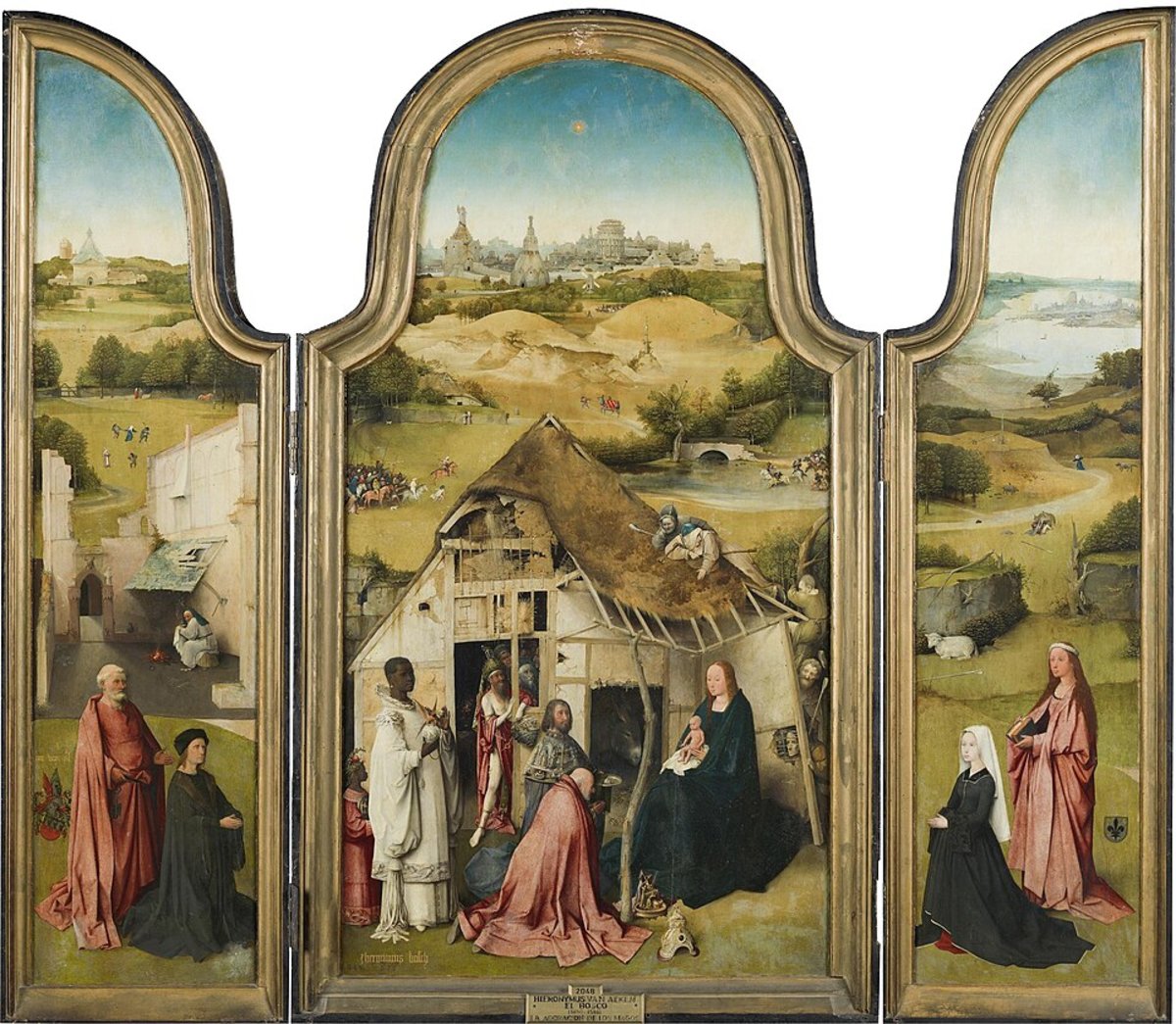
Adoration of the Magi
Adoration of the Magi triptych — Bosch, Prado
Hieronymus Bosch, Public domain, via Wikimedia Commons
Bosch's Adoration of the Magi triptych in the Prado is both a conventional Epiphany scene and a deeply unconventional meditation on the presence of evil in the world. The central panel shows the three Magi presenting gifts to the Virgin and Child in a ruined stable; the left and right wings show the donors with their patron saints.
What makes the Bosch treatment distinctive — and deeply strange — is the background and middle ground of the central panel: behind the stable, a crowd of figures (some clearly representing demonic presences) watches the sacred scene; in an upper window of the ruin, a sinister figure wearing a crown of thorns peers out. The scene is read as an allegory of redemption within a world still populated by sin.
Bosch was deeply engaged with the theological question of the Incarnation: the entry of divine holiness into a world corrupted by the Fall. His Adoration of the Magi places the sacred event in a broken, ambiguous world — the stable is a ruin, the crowd is sinister, the figure in the window (identified as Antichrist, or as original sin personified) watches with an expression that is knowing and malevolent.
This is a world that needs a saviour — and the saviour has come. The painting was in the collection of Pieter Brandt in Amsterdam before entering the Spanish Royal Collection.
The central panel's background requires careful study: the crowd behind the stable is not merely incidental — it is the world watching the Incarnation with a mixture of genuine wonder, incomprehension, and hostility. The gifts of the Magi are depicted with extraordinary detail: the gold casket, the incense burner, and the myrrh container are each miniature objects of goldsmiths' art. The wings show the donors — a man and woman — with their patron saints in attitudes of prayer that frame the central mystery.
When standing before this work, look carefully: Adoration of the Magi triptych — Bosch, Prado. Give it time — what seems decorative often carries the central meaning.
When standing before this work, look carefully: Central panel — Virgin, Child, and Magi. Give it time — what seems decorative often carries the central meaning.
When standing before this work, look carefully: Background figures — ambiguous presences. Give it time — what seems decorative often carries the central meaning.
When standing before this work, look carefully: The sinister figure in the window. Give it time — what seems decorative often carries the central meaning.
Museo del Prado, Paseo del Prado s/n, Madrid 28014. Open Tuesday-Sunday 10:00-20:00 (21:00 on Saturdays, June-September). Admission fee applies; free entry last two hours daily.