
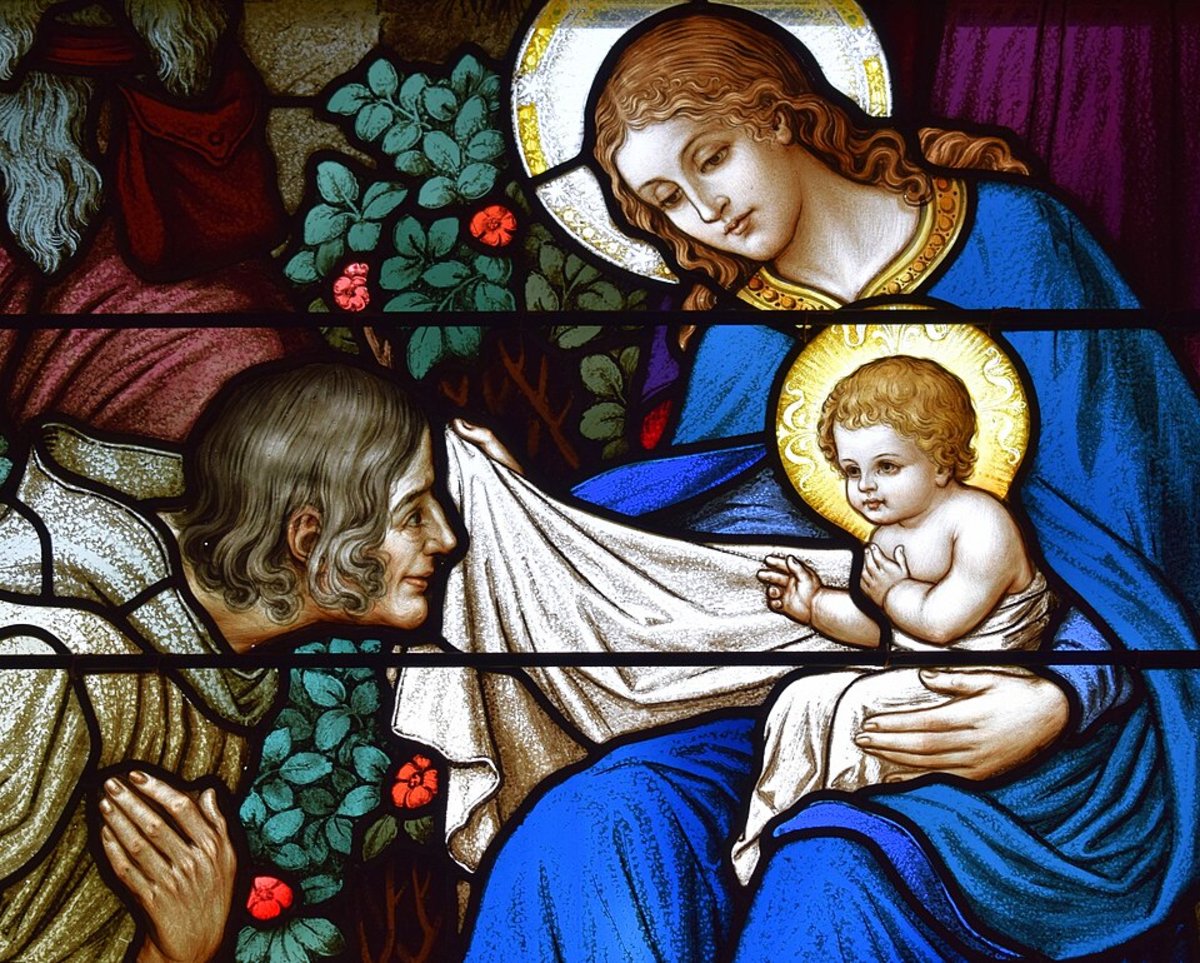
Adoration of the Shepherds
Adoration of the Shepherds — Murillo, c.1650
Bartolomé Esteban Murillo, Public domain, via Wikimedia Commons
Murillo's Adoration of the Shepherds in the Prado is one of his finest devotional paintings — a large canvas (approximately 187 by 228 cm) showing the Nativity scene with shepherds gathered around the manger at Bethlehem. The composition centres on the radiant infant Christ lying in the manger, whose body emits a warm golden light that illuminates the surrounding faces (a Licht-kind or 'Christ-child-as-light-source' technique).
The shepherd at the left leans forward in wonder; another kneels; the Virgin looks down at the Child with a tenderness that is Murillo's characteristic emotional quality. The painting belongs to a series of Nativity and infancy scenes that Murillo painted for the Hospital de la Caridad in Seville and for private collectors — images designed to inspire warm, tender piety rather than theological instruction.
Bartolomé Esteban Murillo (1617-1682) was the most beloved Spanish painter of his day and the favourite of European collectors in the 18th and early 19th centuries — his popularity then exceeding that of Velázquez. His religious paintings are characterised by an emotional warmth, a softness of light (influenced by Titian and Ribera), and a tenderness toward the poor and the humble that reflected the Franciscan spirituality of Seville.
He was himself a lay member of a Franciscan confraternity and painted many works for the Franciscan convents of Seville. His reputation declined sharply in the late 19th century (when critics found his sweetness sentimental) and has been partially rehabilitated in recent decades.
The Christ-child-as-light-source technique — the infant body emitting light that illuminates all the surrounding faces — is a devotional statement: Christ is the Light of the World (John 8:12), and his physical body in the manger is literally the light of the Nativity. The faces illuminated by this light include the rough, work-worn faces of shepherds — Murillo's consistent social democratisation of the sacred subjects. Compare his Nativity paintings with Caravaggio's for the contrast between Spanish warm tenderness and Italian dramatic chiaroscuro.
When standing before this work, look carefully: Adoration of the Shepherds — Murillo, c.1650. Give it time — what seems decorative often carries the central meaning.
When standing before this work, look carefully: The Christ Child as light source — Licht-kind technique. Give it time — what seems decorative often carries the central meaning.
When standing before this work, look carefully: The shepherds' faces — illuminated from below. Give it time — what seems decorative often carries the central meaning.
When standing before this work, look carefully: The Virgin's tenderness — Murillo's emotional quality. Give it time — what seems decorative often carries the central meaning.
Museo Nacional del Prado, Paseo del Prado, Madrid. Open Monday-Saturday; admission fee (free for under-18s and evenings). The Murillo collection is among the finest in the world.