
Annunciation and Nativity reliefs (Pulpit of Pisa Baptistery)
Nativity relief — Nicola Pisano, 1255-1260, Pisa Baptistery
Nicola Pisano, Public domain, via Wikimedia Commons
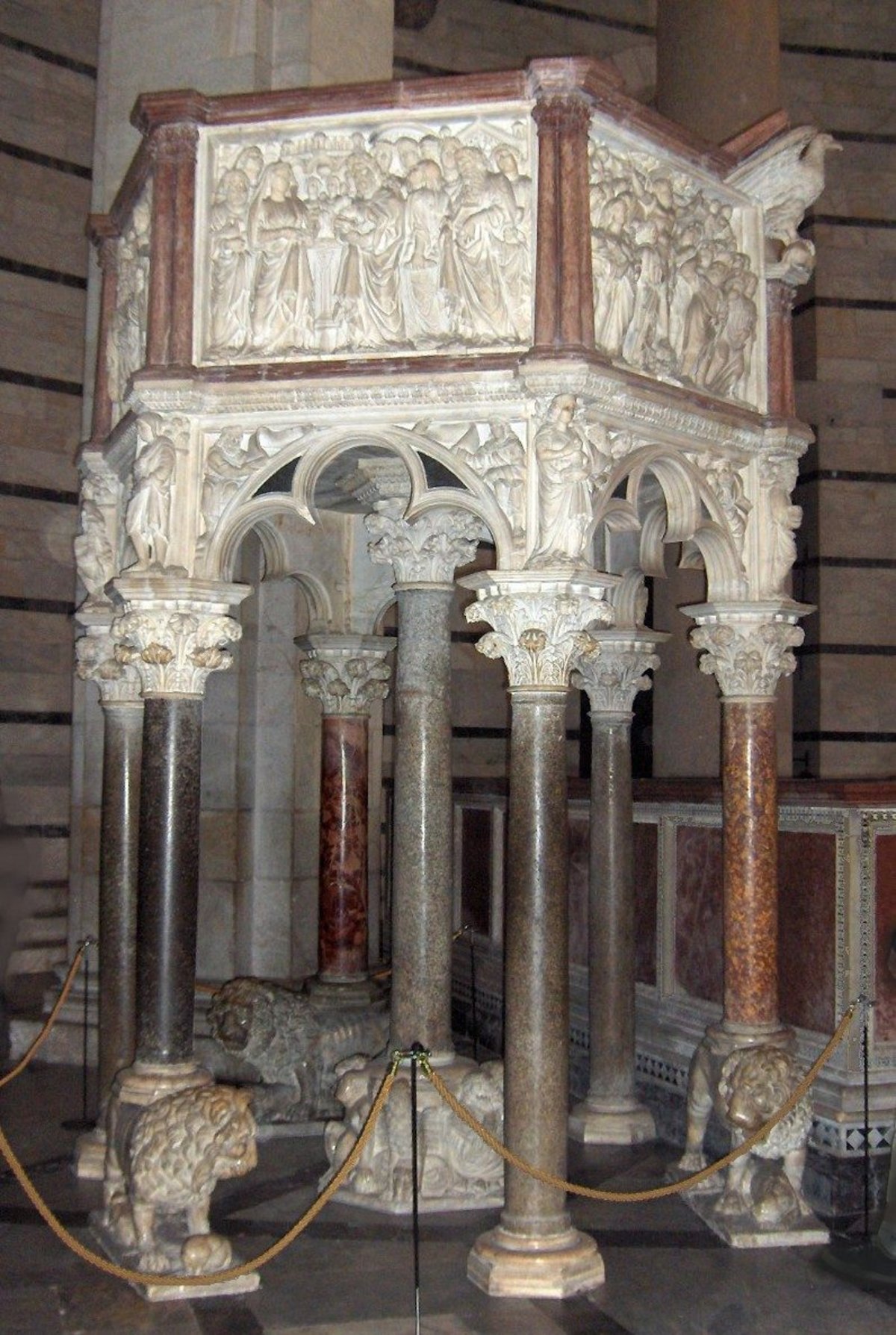
Nicola Pisano's marble pulpit in the Baptistery of Pisa (1255-1260) is the foundational document of Italian Gothic sculpture — the work in which the classical Roman tradition (Nicola had studied sarcophagi and late antique reliefs in Pisa) was fused with the contemporary Gothic vocabulary to create a new style. The hexagonal pulpit has six narrative relief panels on the exterior: the Nativity, the Adoration of the Magi, the Presentation in the Temple, the Crucifixion, the Last Judgment (two panels).
The Nativity panel is particularly celebrated: the figures have a physical solidity and classical gravitas — the reclining Virgin, the swaddled Child, the attending midwives — derived from Roman sarcophagus reliefs but transformed by Christian subject matter. The pulpit is supported by columns resting on lions and on a central figure of a man (a classical Atlas type).
Nicola Pisano (c.1220/1225-c.1284) arrived in Pisa from Southern Italy, where he had been formed in the classical revival promoted by the court of Frederick II. His Baptistery pulpit fused this Southern Italian classicism with the French Gothic style then arriving in Italy through French cathedrals and their Italian imitators. Nicola's innovation was to apply the physical mass and psychological gravitas of classical sculpture to Gothic narrative subjects — the result was a new style that his son Giovanni Pisano would develop further in the direction of emotional intensity.
The Nativity panel shows the Virgin reclining full-length in the classical pose of a river deity or a figure from a Roman sarcophagus — a shocking appropriation of classical form for Christian subject matter. The swaddled Christ Child in the manger is shown twice (as was the convention): once in the manger, once being bathed by the midwives.
The three Magi and their horses on the right add movement and depth. Compare this panel with Giovanni Pisano's treatment of the same subjects on the Pisa Cathedral pulpit (1302-1310) to understand the development from Nicola's classical gravitas to Giovanni's Gothic emotionalism.
When standing before this work, look carefully: Nativity relief — Nicola Pisano, 1255-1260, Pisa Baptistery. Give it time — what seems decorative often carries the central meaning.
When standing before this work, look carefully: Baptistery pulpit — hexagonal form with lion supports. Give it time — what seems decorative often carries the central meaning.
When standing before this work, look carefully: Adoration of the Magi relief — classical mass and Gothic narrative. Give it time — what seems decorative often carries the central meaning.
When standing before this work, look carefully: Crucifixion relief — physical gravitas of classical form. Give it time — what seems decorative often carries the central meaning.
Baptistery of Pisa, Piazza del Duomo, Pisa. Open daily (hours vary by season). Admission fee applies; combined ticket available with the Cathedral and Campo Santo.