
Boyana Church Frescoes
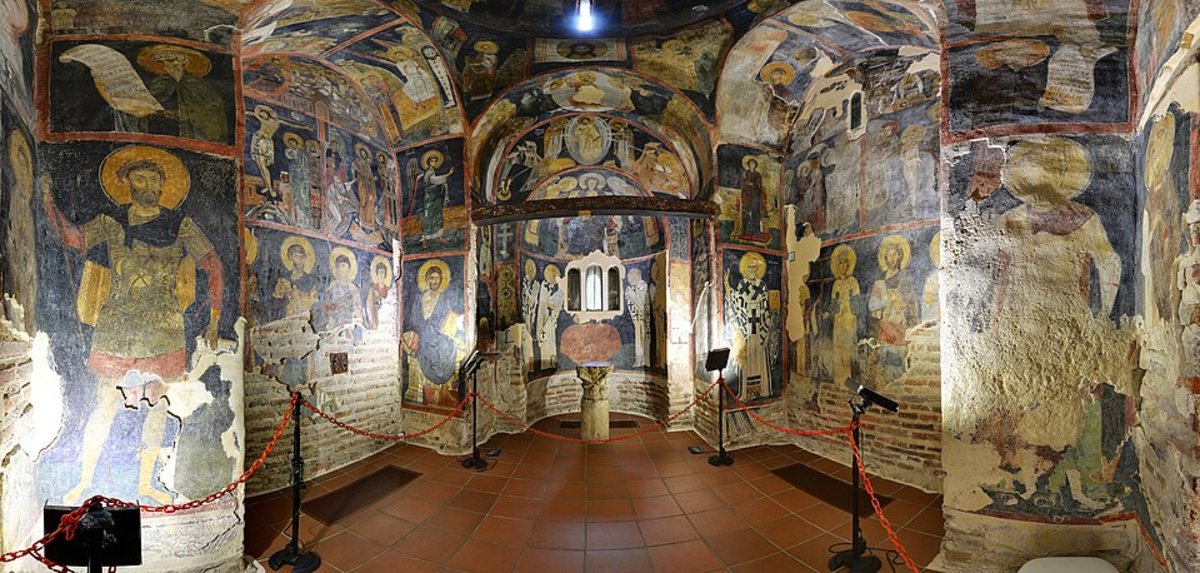
Boyana Church frescoes — 1259, detail
Public domain, via Wikimedia Commons
The Boyana Church frescoes (1259) are among the most significant and earliest surviving examples of the proto-realistic revolution in medieval European painting — and they predate Cimabue and Giotto by approximately two decades. The 1259 frescoes in the middle nave of the church (added by the Bulgarian boyar Kaloyan) depict the Nativity, the Entry into Jerusalem, the Last Supper, Christ Pantocrator, and portraits of Kaloyan and his wife Desislava with extraordinary psychological specificity: the faces are individualised, specific, naturalistic, and psychologically vivid in a way not seen anywhere in European painting of this date.
The Bulgarian master who painted these frescoes remains unknown — he may have been trained in Constantinople but the quality and independence of his approach suggest a strong individual artistic personality. The portraits of Kaloyan and Desislava are among the finest medieval portraits in the Balkan tradition.
The Boyana Church was built in stages: the original east church (c.10th century), the middle nave added by Kaloyan in 1259, and the west nave added in the 14th century. The 1259 frescoes are exclusively in the middle nave — the other sections have later frescoes.
The church is a UNESCO World Heritage Site (1979); access is strictly limited (maximum 10 visitors at a time) to protect the frescoes from humidity and CO2. Pre-booking is essential. The church is approximately 8 km from central Sofia in the Vitosha suburb.
The Kaloyan portrait (with his wife Desislava, both depicted as donors presenting a model of the church) is the primary example of the 1259 master's approach: the faces have a specific, observed quality — the specific shape of the nose, the expression in the eyes, the way Desislava holds her hands — that goes beyond the conventional idealised formula of Byzantine portraiture. The Christ Pantocrator in the dome is also of high quality, with the same individuated facial expression.
When standing before this work, look carefully: Boyana Church frescoes — 1259, detail. Give it time — what seems decorative often carries the central meaning.
When standing before this work, look carefully: Kaloyan and Desislava — donor portraits, 1259. Give it time — what seems decorative often carries the central meaning.
When standing before this work, look carefully: The Last Supper — psychological specificity. Give it time — what seems decorative often carries the central meaning.
When standing before this work, look carefully: Boyana Church exterior, Sofia. Give it time — what seems decorative often carries the central meaning.
Boyana Church, Boyansko Ezero Street 1-3, Boyana quarter, Sofia, Bulgaria. Entry strictly limited to 10 persons at a time, maximum 10 minutes; pre-booking essential through the National History Museum website.
Admission fee. Open daily except Monday.