
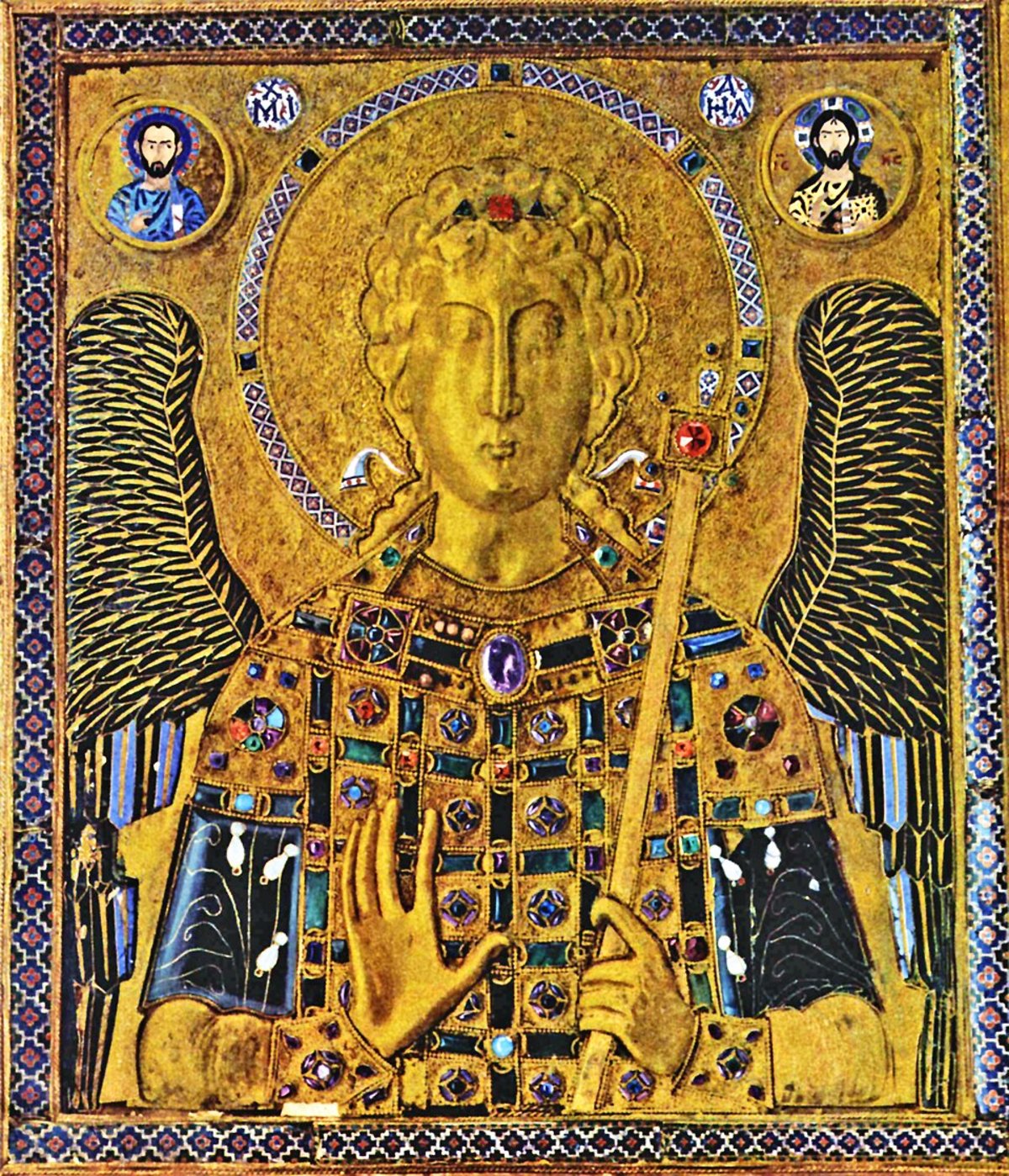
Byzantine Enamels and Reliquaries (Treasury Collection)
Byzantine cloisonné enamel — Met Cloisters Treasury
Byzantine, Public domain, via Wikimedia Commons
The Met Cloisters Treasury holds a significant collection of Byzantine enamels and reliquaries — among the finest in the United States. The primary objects include: a group of Byzantine cloisonné enamel plaques from the 10th-12th century depicting saints and narrative scenes (the technique of cloisonné — small wires forming compartments filled with coloured glass paste — was the Byzantine equivalent of stained glass at miniature scale); a portable reliquary cross (staurotheke) in gilt silver with enamel decoration; and a series of ivory carvings including carved triptychs of the 10th-11th century comparable to the Harbaville Triptych (entry 187). These objects represent the pinnacle of Byzantine applied arts in the period of the Macedonian and Komnenian emperors.
The Cloisters' Byzantine collection was assembled as part of the Met's wider programme of acquiring medieval objects for the purpose-built Cloisters museum (opened 1938). The cloisonné enamels are particularly important: the technique (gold wire partitions on a gold base plate, the compartments filled with coloured glass paste and fired) was developed to a peak of refinement in Constantinople in the 9th-12th centuries and was the primary medium for high-quality small-scale devotional objects in the Byzantine world. For the context of Byzantine devotional objects, see also entry 187 (Harbaville Triptych, Louvre) and entries 143-149 for Byzantine sacred images in situ.
The Treasury room at the Cloisters displays the most precious small objects in the collection in dedicated cases with controlled lighting. The enamel plaques, when seen under magnification or at close range with good lighting, reveal a density of colour and a quality of line that is comparable to manuscript illumination. The individual saint portraits in cloisonné enamel — each face and garment rendered in multiple coloured compartments — are among the finest small-scale portraits from the medieval world.
When standing before this work, look carefully: Byzantine cloisonné enamel — Met Cloisters Treasury. Give it time — what seems decorative often carries the central meaning.
When standing before this work, look carefully: Staurotheke — portable reliquary cross in gilt silver. Give it time — what seems decorative often carries the central meaning.
When standing before this work, look carefully: Byzantine ivory triptych — 10th-11th century. Give it time — what seems decorative often carries the central meaning.
When standing before this work, look carefully: The Cloisters Treasury room. Give it time — what seems decorative often carries the central meaning.
The Met Cloisters, Fort Tryon Park, New York. The Treasury room is on the ground floor of the Cloisters building. See entry 135 for visiting details.