
Frescoes of the Peribleptos and Pantanassa Churches
Dormition of the Virgin — Peribleptos, Mystras, c.1360
Byzantine, Public domain, via Wikimedia Commons
The Palaeologan frescoes of Mystras — particularly those in the Peribleptos Church (c.1360) and the Pantanassa Church (c.1428-1430) in the Byzantine city of Mystras in the Peloponnese — represent the latest flowering of Byzantine fresco painting before the Ottoman conquest of 1453. The Peribleptos frescoes include a remarkable cycle of the Twelve Feasts (the major events of Christ's life celebrated liturgically by the Orthodox Church) and a Dormition of the Virgin of extraordinary spatial complexity.
The Pantanassa frescoes (later, more Italianate in influence) include an Entry into Jerusalem with individuated figures and a specific sense of spatial depth that shows the influence of the Italian proto-Renaissance. Mystras was the last Byzantine capital — it fell to the Turks in 1460, seven years after Constantinople — and its art represents the intellectual and artistic culture of the final Byzantine generations.
Mystras (ancient Sparta/Lacedaemon area) was a late Byzantine city founded by the Franks in 1249 and subsequently taken by the Byzantines; it became the Despotate of the Morea (a Byzantine principality) and was one of the last centres of Byzantine culture. Its court attracted Greek humanist scholars (including Gemistos Plethon, who influenced Cosimo de' Medici's Platonic Academy) and artists who developed a distinctive late Byzantine style influenced by contact with Italian painting. The Mystras frescoes are therefore one of the points of contact between the Byzantine tradition and the Italian Renaissance.
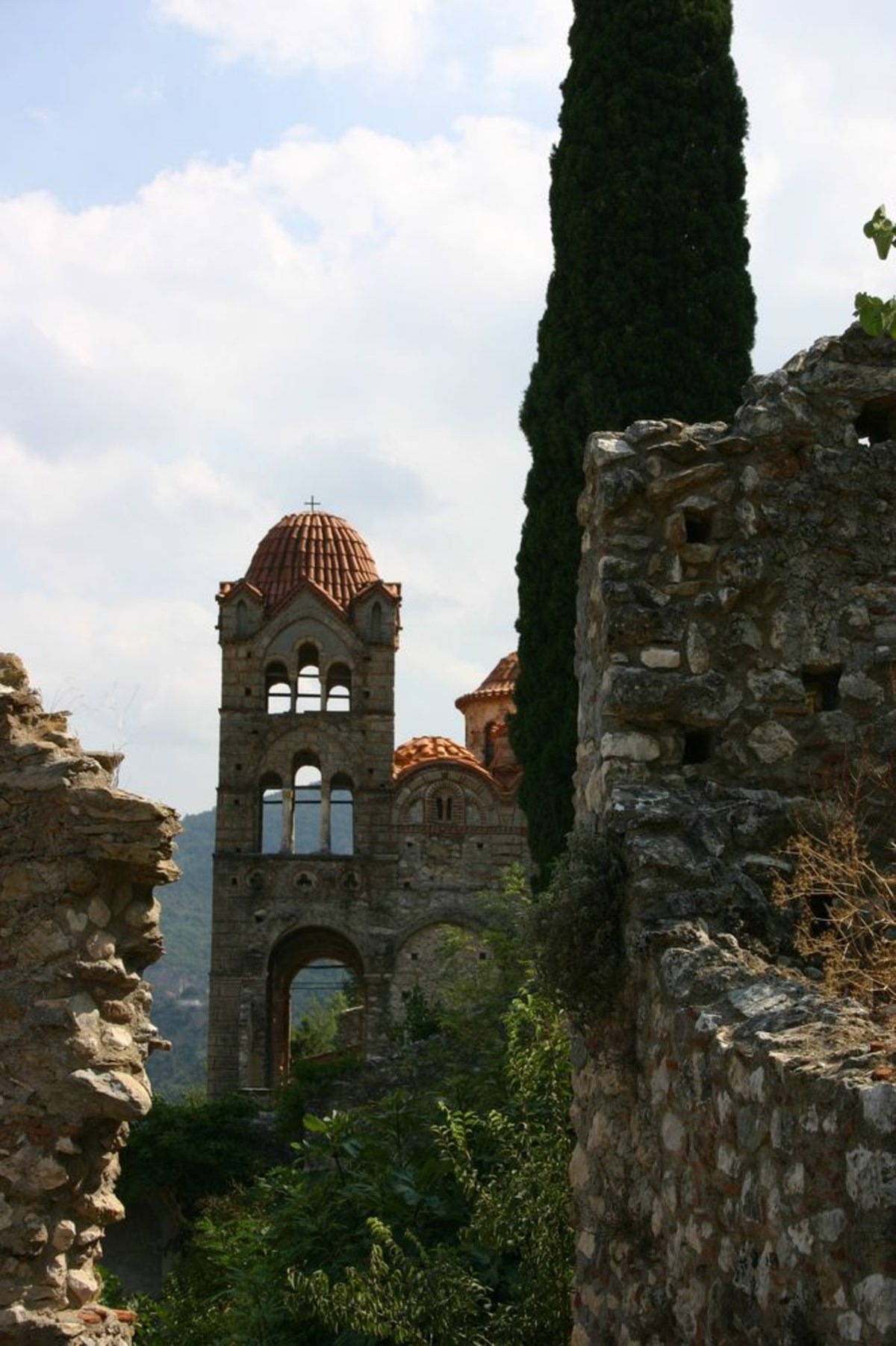
Mystras is a ruined Byzantine city on a hillside — exploring it requires walking between churches and palaces on steep paths. The Peribleptos Church (well preserved frescoes) is at the lower city level; the Pantanassa (still a functioning convent) is higher on the hill.
Both reward slow study. The quality of the individual faces in the fresco compositions — particularly in the crowd scenes of the Peribleptos Entry into Jerusalem — is extraordinary.
When standing before this work, look carefully: Dormition of the Virgin — Peribleptos, Mystras, c.1360. Give it time — what seems decorative often carries the central meaning.
When standing before this work, look carefully: Entry into Jerusalem — Pantanassa, Mystras, c.1428. Give it time — what seems decorative often carries the central meaning.
When standing before this work, look carefully: Nativity — Peribleptos fresco. Give it time — what seems decorative often carries the central meaning.
When standing before this work, look carefully: Mystras Byzantine city — hillside ruins. Give it time — what seems decorative often carries the central meaning.
Mystras Archaeological Site, Peloponnese, Greece. Open daily (hours vary by season); admission fee.
Mystras is approximately 5 km from Sparta. UNESCO World Heritage Site.