
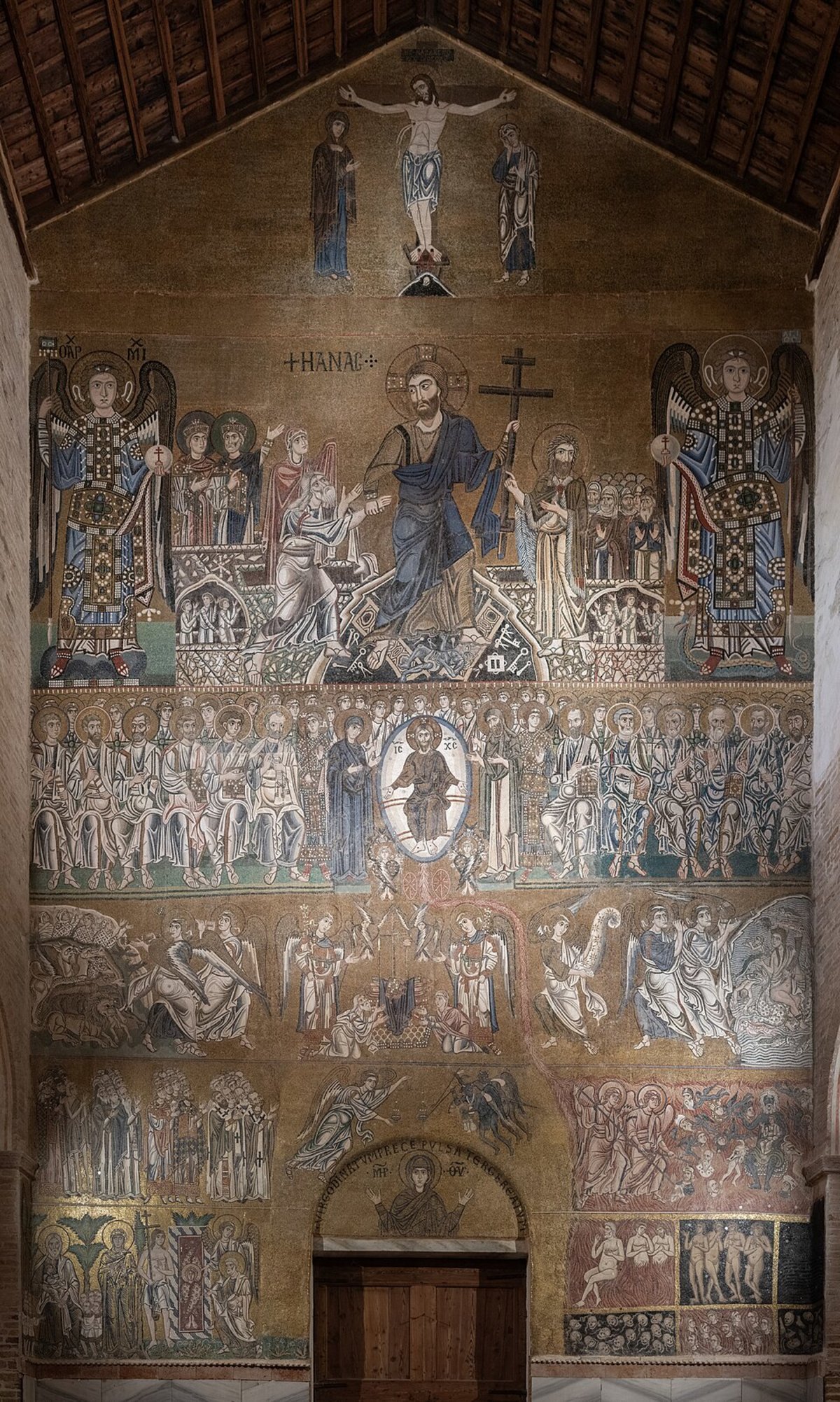
Last Judgment Mosaic (Cathedral of Santa Maria Assunta)
Last Judgment mosaic — Torcello Cathedral, c.1190-1220
Byzantine-Venetian, Public domain, via Wikimedia Commons
The Last Judgment mosaic in the Cathedral of Santa Maria Assunta on the island of Torcello in the Venice Lagoon is the most complete and visually overwhelming Last Judgment in the Byzantine-Venetian mosaic tradition — covering the entire west wall of the cathedral's nave (approximately 10 by 15 metres) in a six-register programme executed approximately 1190-1220. The registers from top to bottom show: the Deposition from the Cross and the Descent into Hell (Anastasis); then Christ in Judgment flanked by the Virgin and John the Baptist (the Deesis) with the Apostles; then the resurrection of the dead and the weighing of souls; then Paradise (Abraham, Isaac, and Jacob with the souls of the blessed); then Hell (the River of Fire, the demons and the damned). The iconographic programme is the fullest surviving example of the Byzantine Last Judgment tradition, and the scale — the entire western wall of the cathedral — gives it an authority and visual impact unmatched in any other mosaic programme.
The Cathedral of Santa Maria Assunta on Torcello is the oldest building in the Venice Lagoon — the island of Torcello was the first major settlement in the lagoon (it was colonised by refugees from the mainland in the 5th-7th centuries) and its cathedral was begun in 639 AD. The mosaic programme is of two primary periods: the gold-ground Theotokos in the apse (c.1190) and the Last Judgment on the west wall (c.1190-1220). The cathedral is now a museum as well as an occasional place of worship.
Stand at the entrance of the cathedral and look west (toward the door through which you entered): the entire west wall is the Last Judgment, reading from top to bottom and left to right. Allow 20 minutes to read the complete programme. The Hell zone at the bottom is particularly detailed: the River of Fire, with the souls of the damned in its current, the demons sorting the damned into different punishments, the specific depictions of particular sins and sinners.
When standing before this work, look carefully: Last Judgment mosaic — Torcello Cathedral, c.1190-1220. Give it time — what seems decorative often carries the central meaning.
When standing before this work, look carefully: The Deesis — Christ with Virgin and John in Judgment. Give it time — what seems decorative often carries the central meaning.
When standing before this work, look carefully: The Hell zone — River of Fire and the damned. Give it time — what seems decorative often carries the central meaning.
When standing before this work, look carefully: The apse Theotokos — c.1190, gold ground. Give it time — what seems decorative often carries the central meaning.
Cathedral of Santa Maria Assunta, Torcello, Venice Lagoon. Torcello is reached by vaporetto (water bus) from Venice, approximately 40 minutes from Fondamenta Nuove.
Open daily; admission fee. The island of Torcello is very quiet — few tourists make the journey from Venice.