
Madonna of Burgomaster Meyer (Darmstadt Madonna)
Darmstadt Madonna — Holbein the Younger, 1526-1528
Hans Holbein the Younger, Public domain, via Wikimedia Commons
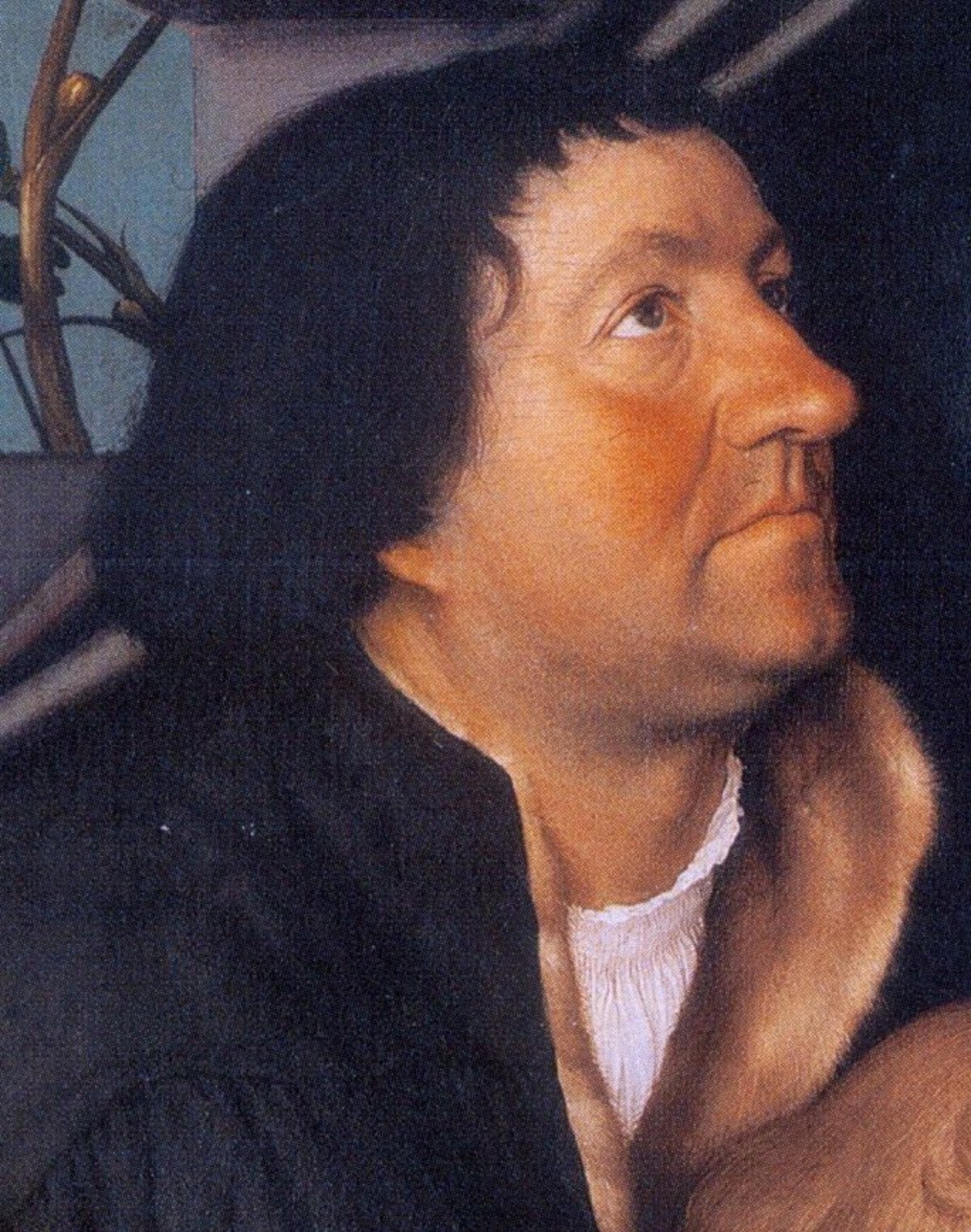
Holbein's Darmstadt Madonna is one of the most important altarpieces produced in northern Europe in the first half of the sixteenth century. Jakob Meyer zum Hasen, Burgomaster of Basel, commissioned the work from Holbein in 1526 as a private devotional altarpiece for his family. The Virgin and Child stand at the centre, with the Meyer family (including Meyer himself, his wife, and his children) kneeling on either side in attitudes of devotion.
The Infant Christ is one of Holbein's most naturalistically observed child figures. The altarpiece was painted at the moment of the Reformation in Basel — Meyer was a Catholic, and this altarpiece is a statement of Catholic piety at a time of religious crisis. A copy (now in Dresden) was long considered the original; the authenticity of the Darmstadt panel was established definitively in the 20th century.
Hans Holbein the Younger (1497-1543) is best known for his portraits (he was court painter to Henry VIII of England from 1536), but his religious paintings — particularly the Darmstadt Madonna and the Dead Christ in the Tomb (Basel) — demonstrate a range and depth equal to his portraiture. The Darmstadt Madonna was painted in Basel during Holbein's second Swiss period (1526-1532) before his definitive move to England. The altarpiece remained in the Meyer family until the 17th century; it passed through several collections before entering the Darmstadt Schlossmuseum.
The Virgin's mantle spreads out to enfold the kneeling donors — an iconographic type known as the 'Madonna of Mercy' (Madonna della Misericordia). The Infant Christ looks out at the viewer with an alert, naturalistic expression. The donor figures — Meyer, his first wife (deceased, shown in a veil), his second wife, and his children — are Holbein's finest group portrait work from the Basel years, each face individually characterised with the precision of his portraiture.
When standing before this work, look carefully: Darmstadt Madonna — Holbein the Younger, 1526-1528. Give it time — what seems decorative often carries the central meaning.
When standing before this work, look carefully: Virgin and Child — naturalistic Infant Christ. Give it time — what seems decorative often carries the central meaning.
When standing before this work, look carefully: The Meyer family donors — individual portraiture. Give it time — what seems decorative often carries the central meaning.
When standing before this work, look carefully: Full altarpiece — Madonna of Mercy iconography. Give it time — what seems decorative often carries the central meaning.
Schlossmuseum Darmstadt, Residenzschloss, Darmstadt, Germany. Open Tuesday-Sunday. Admission fee applies.