
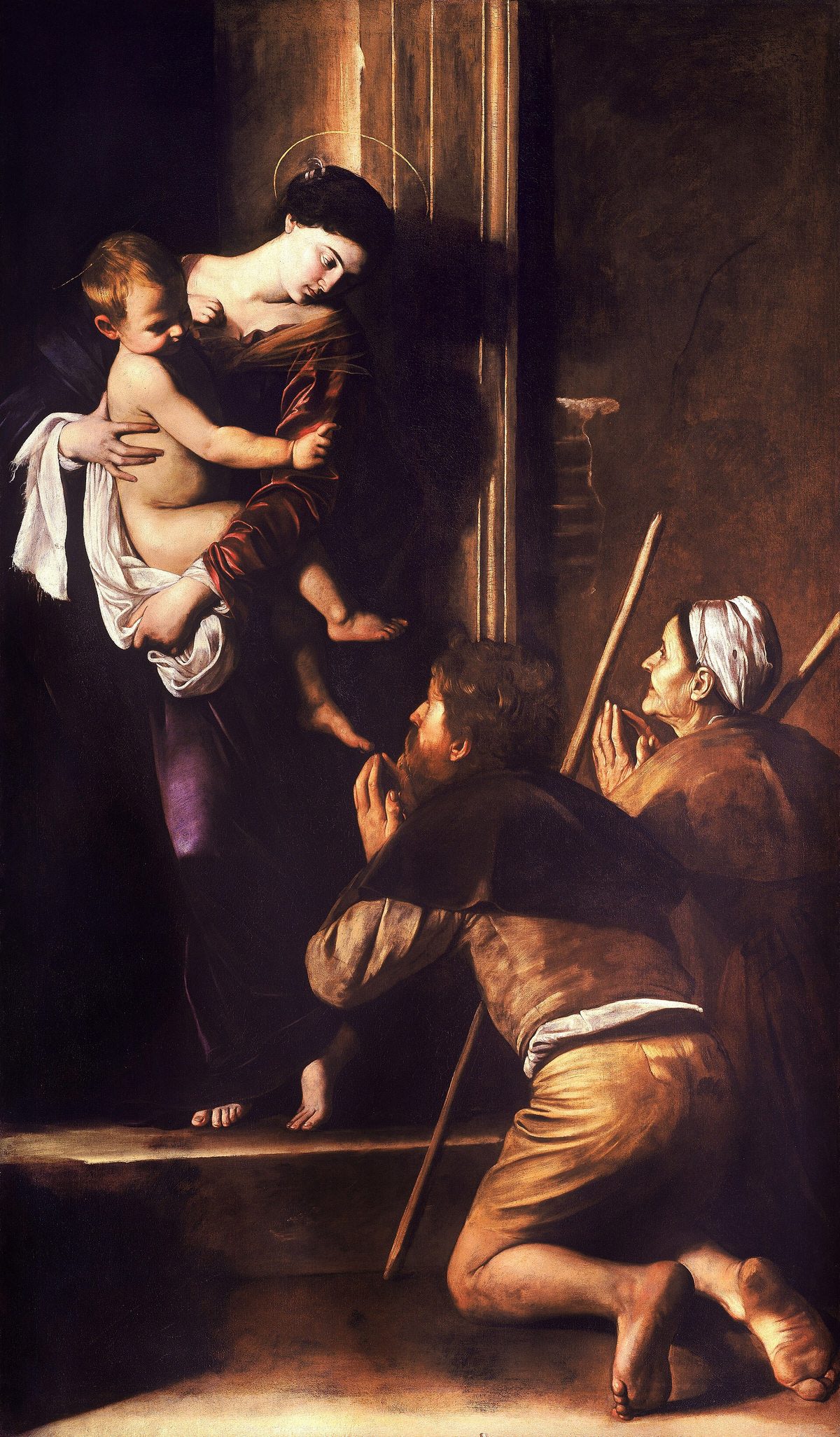
Madonna of Loreto (Madonna of the Pilgrims)
Madonna of Loreto — full painting
Caravaggio, Public domain, via Wikimedia Commons
The Madonna of Loreto — also known as the Madonna of the Pilgrims — was painted for the Cavalletti Chapel in Sant'Agostino and caused an immediate scandal upon its unveiling. Caravaggio depicted the Virgin standing in a doorway, holding the Child Jesus, while two pilgrims kneel before her in worship.
The Virgin is idealized and beautiful; the pilgrims are very explicitly not — they are old, wrinkled, rough-footed, their backs to the viewer, their bare feet (dirty, with cracked heels, prominently displayed) the detail that caused the scandal. The poor who worshipped this painting recognized themselves in the pilgrims; the cardinal patrons of Rome found the dirty feet indecorous. Both responses confirm the painting's radical intent.
Sant'Agostino is near the Piazza Navona and contains several important art works. Caravaggio received the Cavalletti Chapel commission around 1603-04.
The Madonna of Loreto relates to the cult of the Santa Casa (Holy House) of Loreto — the house where the Annunciation occurred, which was supposedly transported by angels to Loreto in Marche. Pilgrims to Loreto would make the journey on foot, crawling the last section on their knees; the dirty feet and battered bodies of Caravaggio's pilgrims are an exact documentary record of what such pilgrims actually looked like. The painting proposes that these broken, travel-worn bodies are the appropriate worshippers at the Madonna's door.
The Madonna in the doorway is painted with genuine formal beauty — tall, elegant, with the Christ child in her arms — but the painting's meaning lies in the two pilgrims who dominate the lower two-thirds of the canvas. Their bare feet are the most confrontational element: the soles of their feet are turned toward the viewer, with all the visual emphasis given to the physical evidence of their journey.
The Virgin looks down at them with a tender patience that is the theological answer to their physical state. Look also at the Christ child, who has the weight and solid presence of an actual infant rather than a symbolic figure.
When standing before this work, look carefully: Madonna of Loreto — full painting. Give it time — what seems decorative often carries the central meaning.
When standing before this work, look carefully: The pilgrims' dirty bare feet — the scandalous detail. Give it time — what seems decorative often carries the central meaning.
When standing before this work, look carefully: The Christ child — solid, present, infant. Give it time — what seems decorative often carries the central meaning.
When standing before this work, look carefully: Interior of Sant'Agostino, Rome. Give it time — what seems decorative often carries the central meaning.
Basilica of Sant'Agostino, Via della Scrofa, Rome. The Cavalletti Chapel is the first on the left as you enter. The painting is relatively accessible and not usually as crowded as the Contarelli Chapel nearby.