
Pala d'Oro
Pala d'Oro — the full altarpiece
Public domain, via Wikimedia Commons
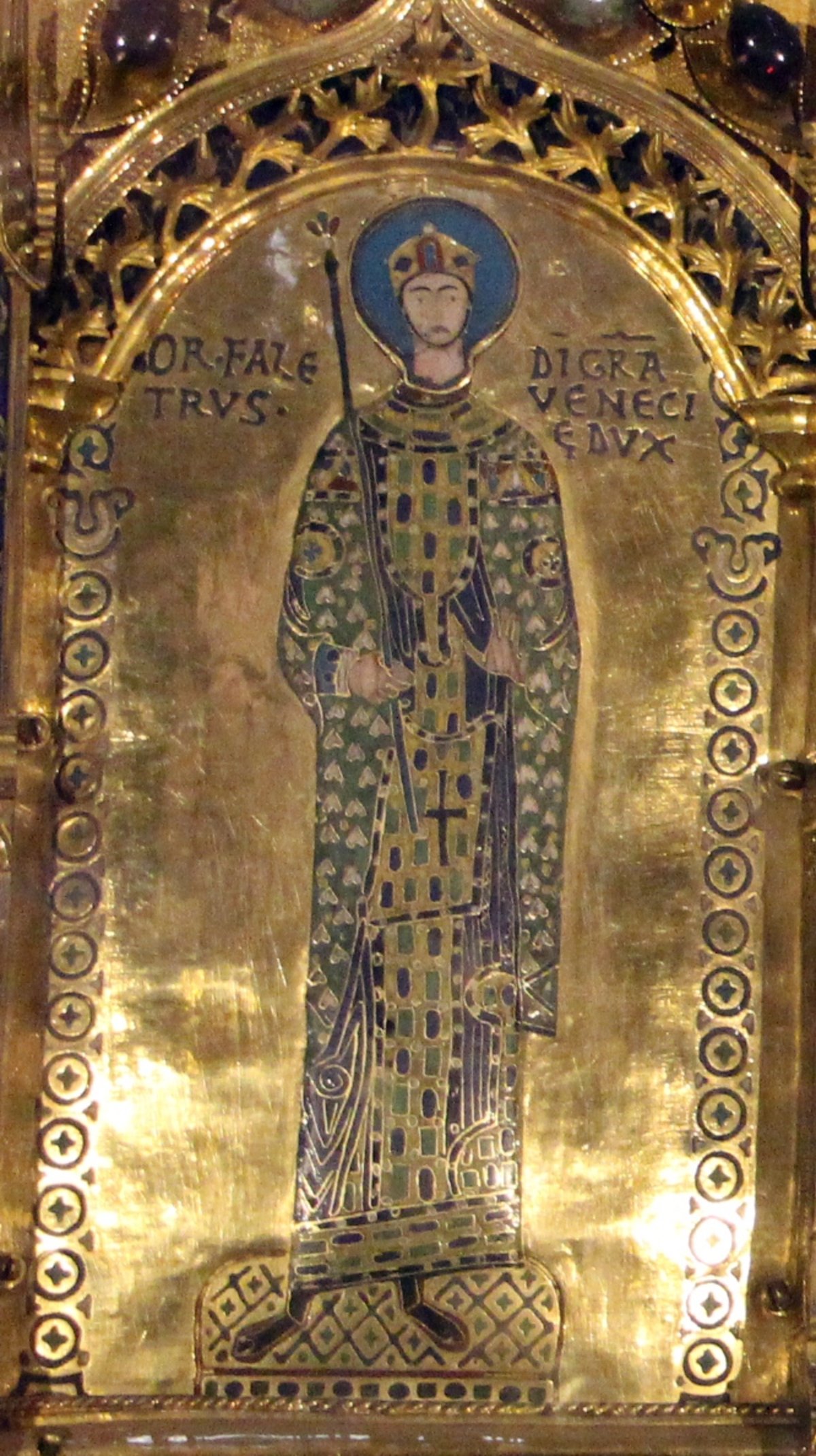
The Pala d'Oro (Golden Altarpiece) behind the high altar of St Mark's Basilica is the most valuable decorative artwork in Venice and among the most important examples of Byzantine goldwork in the world. It is a gilded altarpiece approximately 3.4 metres wide and 1.4 metres tall, encrusted with approximately 1,927 authentic gems (including emeralds, rubies, sapphires, pearls, and amethysts), 300 cloisonné enamel miniatures, and an unknown quantity of additional decorative elements. Created in Constantinople in 976 for the Doge Pietro Orseolo I and subsequently enriched over four centuries (in 1105, 1209, and 1345), the Pala d'Oro is simultaneously a reliquary, an altarpiece, and a treasury — a physical embodiment of the political and spiritual ambitions of medieval Venice.
The Pala d'Oro was created in stages. The original 976 commission was to Constantinople goldsmiths; in 1105, Doge Ordelaffo Falier had it enlarged and enriched. After the sack of Constantinople in 1204 (the Fourth Crusade, in which Venice played a leading role), additional Byzantine enamels taken from Constantinople were incorporated.
The final major revision came in 1345 under Doge Andrea Dandolo, who had it reframed in a Gothic architectural setting. The 300 enamel miniatures depict scenes from the lives of Christ, the Virgin, the Evangelists, and St Mark; the largest central enamel shows Christ Pantocrator enthroned. The Pala is shown behind the high altar; a small admission charge allows closer viewing.
The scale of craft required to produce the Pala d'Oro was unparalleled in medieval Europe: each of the 300 cloisonné enamel miniatures required a goldsmith to create cells (cloisons) of bent gold wire on a gold base, fill them with coloured glass paste, and fire them. The scale of the figures — many are only a few centimetres high — and the precision of the colour and line are extraordinary.
The gem arrangement along the borders follows the Revelation of St John's description of the New Jerusalem (Revelation 21:19-20): the jasper, sapphires, and emeralds of the heavenly city are made literal in the altarpiece. When candles burn before the Pala, the reflections multiply across the curved enamel surfaces into a field of light that transforms the choir into a terrestrial vision of heaven.
When standing before this work, look carefully: Pala d'Oro — the full altarpiece. Give it time — what seems decorative often carries the central meaning.
When standing before this work, look carefully: Cloisonné enamel detail — Byzantine miniatures. Give it time — what seems decorative often carries the central meaning.
When standing before this work, look carefully: The gem borders — emeralds, rubies, sapphires. Give it time — what seems decorative often carries the central meaning.
When standing before this work, look carefully: St Mark's Basilica interior — the altar context. Give it time — what seems decorative often carries the central meaning.
St Mark's Basilica, Piazza San Marco, Venice. The Pala d'Oro is visible behind the high altar from the nave (free); a closer view (from the treasury entrance behind the altar) requires a small admission fee.
Photography is not permitted in the treasury area. Queues can be long; arrive early.