
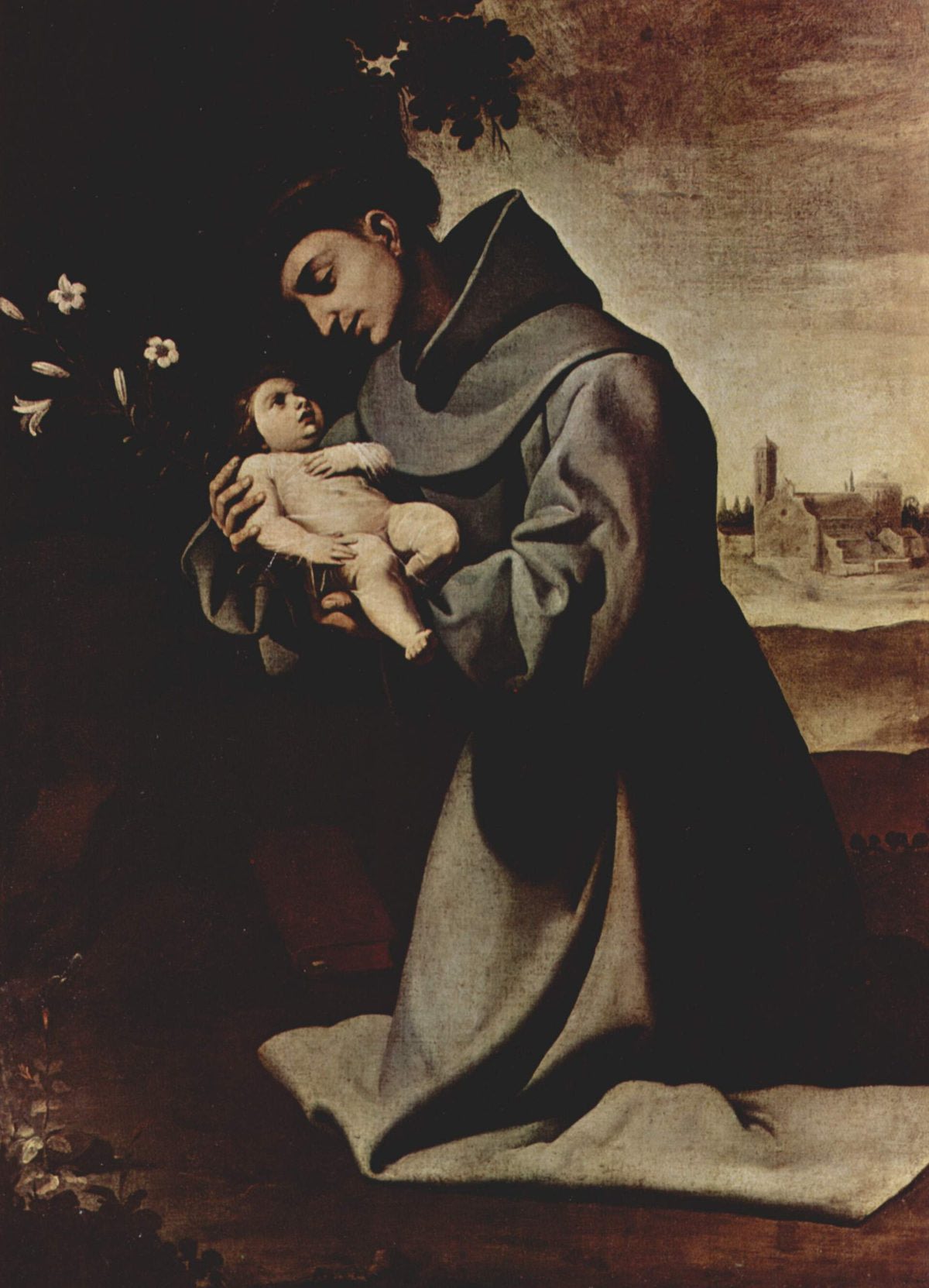
Saint Francis Kneeling in Meditation
Saint Francis Kneeling — Zurbarán, c.1635
Francisco de Zurbarán, Public domain, via Wikimedia Commons
Zurbarán's Saint Francis Kneeling in Meditation in the National Gallery is one of the finest images of Franciscan spirituality in the history of Christian art — a large canvas (approximately 162 by 137 cm) showing Francis kneeling in prayer before a skull placed on a stone ledge, his brown habit around him, his face lifted upward in meditative absorption. The skull on the ledge (the memento mori — reminder of death) and Francis's posture of kneeling prayer create a composition of extreme formal simplicity and extreme spiritual intensity. The dark brown of the habit against the dark ground, the specific rendering of the fabric folds, and the quality of light on Francis's face (the only bright element in the painting) are all characteristic of Zurbarán's austere devotional aesthetic.
Zurbarán painted Francis in meditation multiple times. This National Gallery version is among his finest treatments of the subject: the specificity of the skull (placed at precise eye level, as if Francis is in direct conversation with death), the quality of the habit fabric (rough woven cloth in thick impasto), and the face (half in shadow, the eyes raised toward a light source above and to the left that is outside the frame of the painting) create a devotional image of absolute concentration. The painting was made for a Franciscan community context — probably as an image for a cell or chapter house.
Francis's relationship with death was central to his spirituality: his composition of the 'Canticle of the Creatures' praises 'Sister Bodily Death, from which no living man can escape', and his meditative practice included contemplation of his own mortality. The skull in the painting is not a symbol of despair but of liberation — death is the gateway to the divine encounter Francis seeks. The kneeling posture and the upturned face express the paradox: proximity to death and proximity to God are the same gesture.
When standing before this work, look carefully: Saint Francis Kneeling — Zurbarán, c.1635. Give it time — what seems decorative often carries the central meaning.
When standing before this work, look carefully: The skull — memento mori at eye level. Give it time — what seems decorative often carries the central meaning.
When standing before this work, look carefully: The brown habit — rough fabric in thick impasto. Give it time — what seems decorative often carries the central meaning.
When standing before this work, look carefully: Francis's face — light and upturned gaze. Give it time — what seems decorative often carries the central meaning.
National Gallery, Room 30 (Spanish and French paintings), London.