
Scrovegni (Arena) Chapel Frescoes
Lamentation of Christ — Giotto, Arena Chapel
Giotto di Bondone, Public domain, via Wikimedia Commons
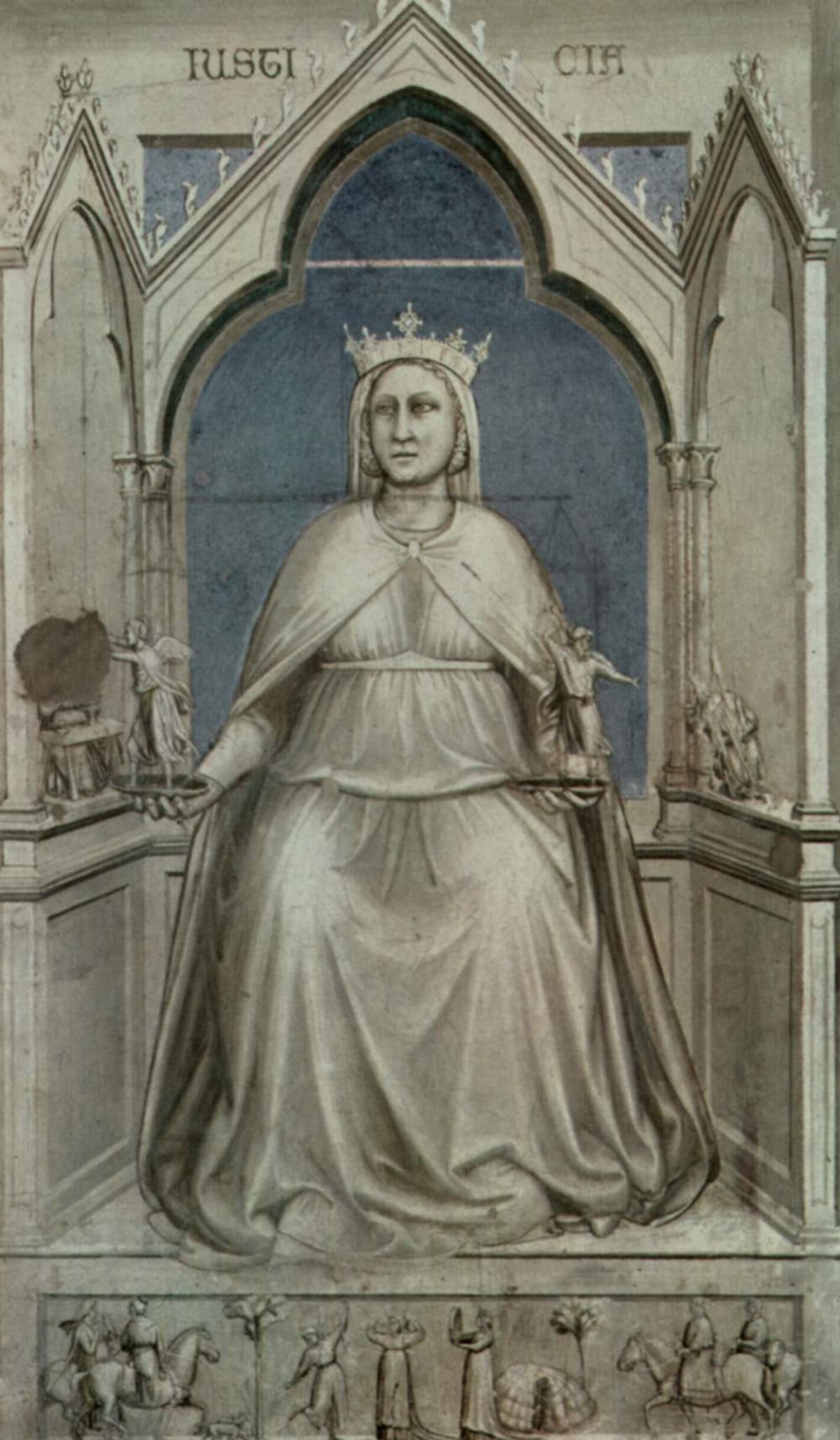
The Arena Chapel frescoes are Giotto's masterwork and the founding programme of Western narrative painting — the most completely preserved medieval fresco cycle in existence, covering the entire interior of a small private chapel built by Enrico Scrovegni as an act of penance for his father's usury. The programme is a complete visual Bible: the nave walls carry three registers of narrative (Life of Joachim and Anna, Life of the Virgin, and Life and Passion of Christ) with thirty-eight large scenes; below them, a register of fourteen Virtues and Vices in grisaille; at the west end above the entrance, a monumental Last Judgment with portraits of Scrovegni and members of his family.
The ceiling is a night-blue vault with gold stars. The entire interior is a single unified vision of sacred history, from Joachim's rejected sacrifice to Christ's Resurrection and the Final Judgment.
Giotto painted the chapel between approximately 1304 and 1306 — two years of intense work with a large workshop. The chronological sequence of scenes follows the walls in a reading order that winds through the chapel's space, each scene advancing the narrative, each figure psychologically present and specifically characterised.
The Kiss of Judas — in which Judas envelops Christ in his yellow cloak in the act of betrayal while soldiers press forward — is one of the most cited examples: every figure in the crowd has a specific emotional response, and the locked gazes of Christ and Judas (Christ's calm, Judas's fixity of purpose) are a psychological confrontation of absolute intensity. The Lamentation below the Deposition is another supreme example: the angels in the sky above the dead Christ scream in grief, and each of the human mourners expresses a specific quality of sorrow.
Plan to spend the maximum permitted time in the chapel (access is limited to 15-20 minutes due to humidity and conservation). Before entering, use the waiting room to orient yourself with the printed guide.
Inside: read the three registers from right to left as you face the altar (the narrative begins with Joachim and Anna in the upper register on the north wall and ends with the Resurrection on the south wall). The floor is the original terra-cotta (preserved); the walls are the original plaster. The colour — the deep lapis-lazuli blue of the ceiling, the warm ochres and reds of the figures — is as close to its original state as any medieval fresco anywhere.
When standing before this work, look carefully: Lamentation of Christ — Giotto, Arena Chapel. Give it time — what seems decorative often carries the central meaning.
When standing before this work, look carefully: The Arena Chapel interior — full fresco programme. Give it time — what seems decorative often carries the central meaning.
When standing before this work, look carefully: The Kiss of Judas — psychological confrontation. Give it time — what seems decorative often carries the central meaning.
When standing before this work, look carefully: The Last Judgment — west wall above the entrance. Give it time — what seems decorative often carries the central meaning.
Scrovegni Chapel, Piazza Eremitani 8, Padua. Strictly timed entry (maximum 25 visitors for 20 minutes); must be booked weeks or months in advance, especially in peak season.
A companion museum (Musei Civici agli Eremitani) provides an extended waiting and contextual experience. One of the most important works of art in existence.