
The Adoration of the Magi
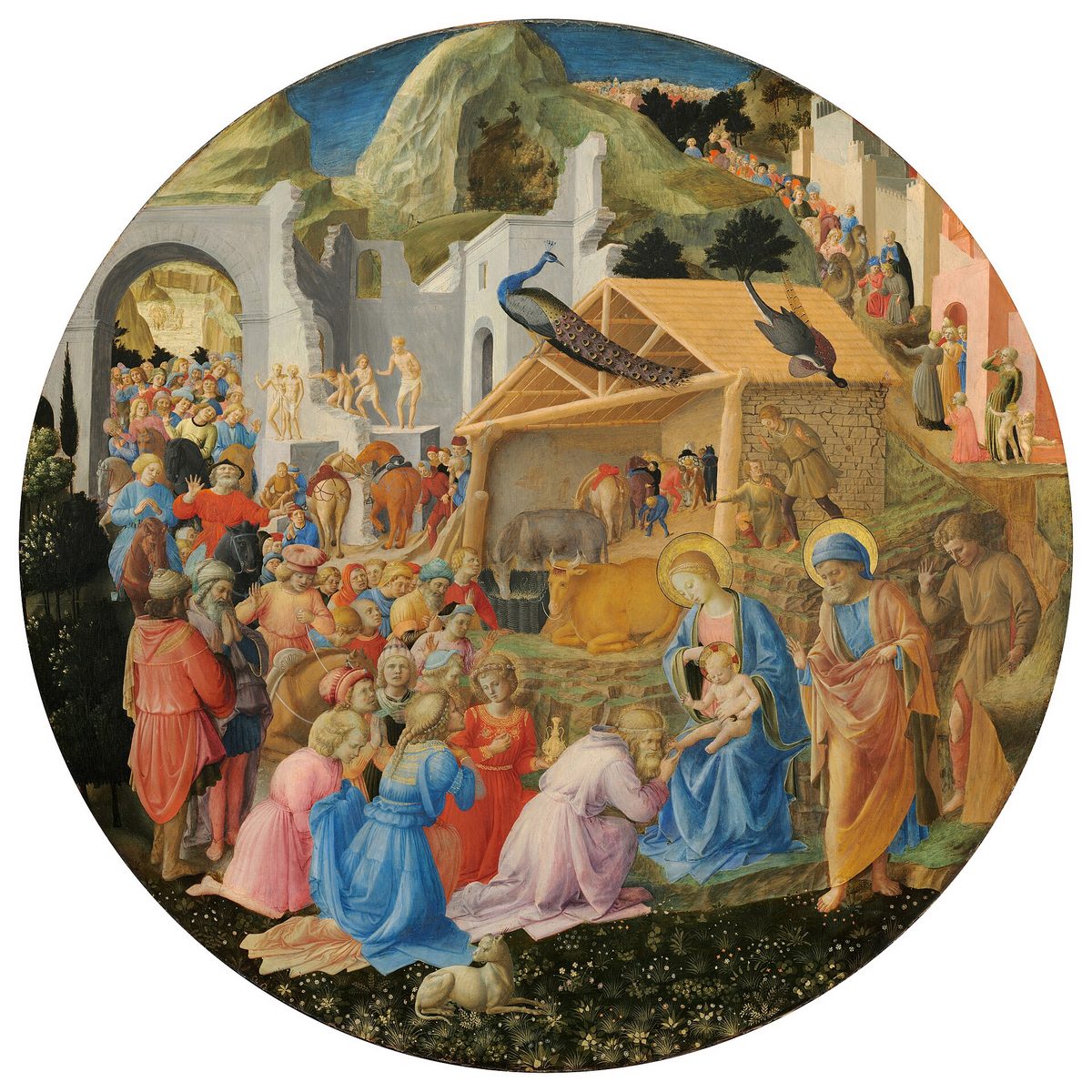
Adoration of the Magi — Fra Angelico and Lippi, c.1445
Fra Angelico, Public domain, via Wikimedia Commons
The Adoration of the Magi tondo at the National Gallery of Art is one of the most elaborate and beautiful circular devotional paintings of the Italian Renaissance — approximately 137.4 cm in diameter, crowded with figures in a rocky landscape around the stable of Bethlehem. The complex multi-figure composition shows the three Magi with their procession (including horses, camels, exotic attendants, and a magnificent crowd of courtiers) approaching the Holy Family; the architecture of the stable is a classical ruin, following the convention that Christ's birth occurs within the ruins of the classical world (superseded by the new dispensation). The tondo was begun by Fra Angelico and completed after his move to Rome by Filippo Lippi — the two painters' hands are distinguishable in different parts of the composition.
Fra Angelico (c.1395-1455) and Filippo Lippi (c.1406-1469) represent complementary aspects of Florentine devotional painting in the early Quattrocento: Angelico's figures are serene, gold-touched, spiritually absorbed; Lippi's are more worldly, psychologically vivid, and physically specific. The division of labour in this tondo is discussed by art historians: the general consensus is that Angelico began the work and Lippi completed it, with the middle ground landscape and some of the figure groups being Lippi's contribution. The NGA tondo was acquired from the Palazzo Medici collection (where it appears in a 1492 inventory) — it was one of the Medici family's prized devotional objects.
The tondo rewards slow, detailed study of the procession. Begin at the Holy Family at the left — the Virgin and Child, St Joseph, and the two youngest Magi kneeling before Christ (one Magus has removed his crown).
Then follow the procession as it winds back through the rocky landscape to the right: horses, camels, richly dressed attendants, and in the distance, the rest of the procession still arriving. Look also at the angels in the upper portions of the composition — they carry symbols of the Passion (the instruments of Christ's torture and death), reminding the viewer that this Adoration anticipates the sacrifice. The quality of the individual heads in the procession is remarkable: each is a specific portrait type.
When standing before this work, look carefully: Adoration of the Magi — Fra Angelico and Lippi, c.1445. Give it time — what seems decorative often carries the central meaning.
When standing before this work, look carefully: The Holy Family and kneeling Magi. Give it time — what seems decorative often carries the central meaning.
When standing before this work, look carefully: The procession — horses, camels, courtiers. Give it time — what seems decorative often carries the central meaning.
When standing before this work, look carefully: The angels with instruments of the Passion. Give it time — what seems decorative often carries the central meaning.
National Gallery of Art, West Building, Washington DC.