
The Book of Kells
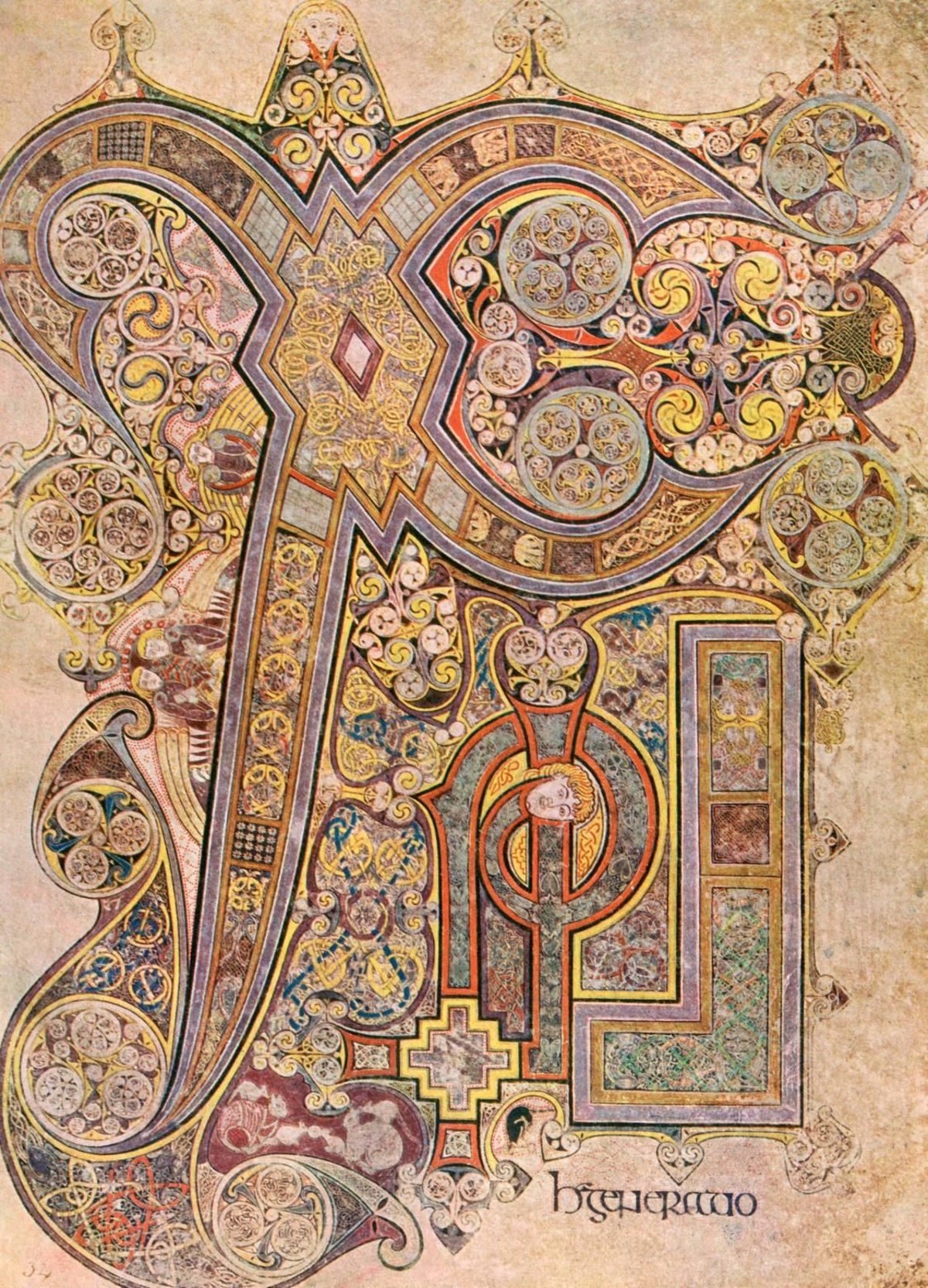
Book of Kells — Christ enthroned, folio 32v
Public domain, via Wikimedia Commons
The Book of Kells is the supreme achievement of Insular illuminated manuscript art — a Gospel book (the four Gospels in Latin) written and decorated by Celtic Christian monks in approximately 800 AD, probably begun at the monastery of Iona (Scotland) and completed at the monastery of Kells (County Meath, Ireland) after the Viking raid on Iona in 806 forced the monks to flee. The book contains 340 vellum folios (originally more; some are lost or damaged) and is decorated with an extraordinary density of ornamental and figurative illumination: the Chi Rho page (the opening words of Matthew's infancy narrative, 'XPI autem generatio'), the portrait pages of the four evangelists, the carpet pages (full pages of abstract interlace ornament), and the historiated initials throughout.
The Chi Rho page alone contains over 1,000 interlaced spirals, zoomorphic figures, and floral elements in an area the size of a modern A3 sheet — requiring, scholars estimate, weeks of continuous work by a single highly skilled artist. The book has been at Trinity College Dublin since the 17th century and is on permanent display in the Long Room Library.
The Book of Kells was created in the context of Celtic Christianity — the distinctively Irish and Scottish form of early medieval Christianity that maintained the monastic tradition with extraordinary intensity. The visual programme of the manuscript combines the abstract ornament of pre-Christian Celtic metalwork (spirals, interlace, zoomorphic knotwork) with the iconographic vocabulary of Mediterranean Christian manuscript painting (evangelist portraits, canon tables), producing a synthesis that has no parallel in any other manuscript tradition. The specific artists are unknown; art historians have identified at least three different hands in the manuscript, suggesting collaborative production.
The Book of Kells is displayed in a purpose-built exhibition (The Book of Kells and the Old Library) in Trinity College Dublin — two pages of the manuscript are visible at a time through the glass case. The exhibition includes a facsimile (complete reproduction) for close study.
Look at the Chi Rho page in facsimile: the interlaced spirals, the small faces hidden in the knotwork, the tiny figures of cats and mice playing with Eucharistic wafers. These hidden figures — unexpected within an abstract ornamental programme — give the work a quality of sacred playfulness that was characteristic of Celtic monastic culture.
When standing before this work, look carefully: Book of Kells — Christ enthroned, folio 32v. Give it time — what seems decorative often carries the central meaning.
When standing before this work, look carefully: The Chi Rho page — opening of Matthew's infancy narrative. Give it time — what seems decorative often carries the central meaning.
When standing before this work, look carefully: Evangelist portrait — St Mark. Give it time — what seems decorative often carries the central meaning.
When standing before this work, look carefully: The Long Room, Trinity College Library, Dublin. Give it time — what seems decorative often carries the central meaning.
Trinity College Library, College Green, Dublin 2. Open daily (hours vary by season).
Admission fee to the Book of Kells exhibition (includes access to the Long Room). Advance booking recommended — the exhibition is very popular.