
The Burial of the Count of Orgaz
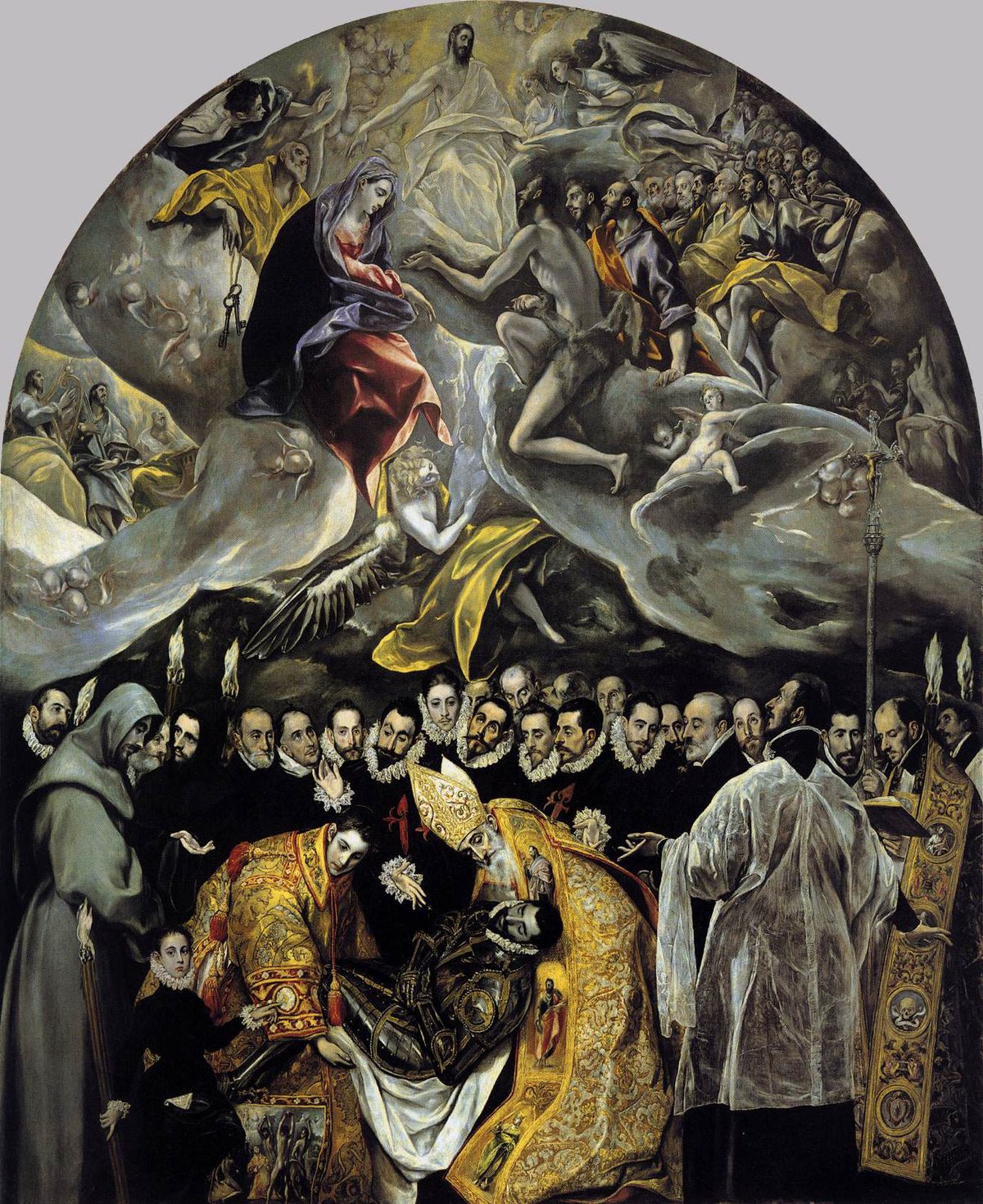
Burial of the Count of Orgaz — El Greco, 1586-1588
El Greco, Public domain, via Wikimedia Commons
El Greco's Burial of the Count of Orgaz is the most important painting in Toledo and one of the masterpieces of European religious art — a painting divided into two zones that enact the Christian theology of death: in the lower half, the burial of the 14th-century Don Gonzalo Ruiz (Count of Orgaz) is attended by Sts Stephen and Augustine, who have miraculously descended from heaven to lay the Count in his tomb; in the upper half, the Count's soul rises toward heaven where Christ in glory, the Virgin, and the assembled saints await him. The lower zone is a documentary record of 16th-century Toledano society (the row of noblemen behind the burial scene are portraits of Toledo's aristocracy; El Greco's son Jorge Manuel, approximately 8 years old, stands at the lower left with a handkerchief); the upper zone is a visionary landscape of heavenly light and figure.
El Greco received the commission from the priest of Santo Tomé, Andrés Núñez de Madrid, in 1586, to commemorate the miraculous events reported at the Count's burial in 1323. The painting was finished in 1588 and has hung in its original location — low on the wall of the chapel, at approximately the height at which a lying coffin would be placed — ever since.
El Greco's self-portrait appears among the row of noblemen: the only figure who looks directly out at the viewer rather than down at the burial scene. The vertical division of the painting between the earthly lower zone and the heavenly upper zone is achieved through a dramatic change in colour, scale, and spatial logic: below is naturalistic, specific, warm-toned; above is visionary, dynamic, cold-lit.
The lower zone is El Greco's most sustained piece of group portraiture — approximately twenty-five individuated faces of Toledo noblemen arranged behind the burial scene, each one a specific person. The Count's gold and black armour, the episcopal vestments of Augustine and the deacon's dalmatic of Stephen, the white surplice of the officiating priest — all depicted with Flemish precision of fabric and surface.
Then look at the upper zone: the soul of the Count (a small transparent figure, like a foetus of light) is being carried upward by an angel through a narrow passage in the clouds toward the heavenly company. The figures in heaven are elongated to El Greco's most extreme proportions — attenuated, weightless, lit from within.
When standing before this work, look carefully: Burial of the Count of Orgaz — El Greco, 1586-1588. Give it time — what seems decorative often carries the central meaning.
When standing before this work, look carefully: The upper zone — heaven and the Count's ascending soul. Give it time — what seems decorative often carries the central meaning.
When standing before this work, look carefully: The lower zone — Toledo's nobility at the burial. Give it time — what seems decorative often carries the central meaning.
When standing before this work, look carefully: El Greco's self-portrait — the figure looking at the viewer. Give it time — what seems decorative often carries the central meaning.
Iglesia de Santo Tomé, Plaza del Conde 4, Toledo. The painting is in its original location in the south aisle of the church; a small entrance fee allows access.
Toledo is 70 km from Madrid by high-speed train (approximately 30 minutes). The painting should be seen in person — no reproduction communicates its scale (approximately 4.8 by 3.6 metres) or the quality of the lower portraits.