
The Death of the Virgin
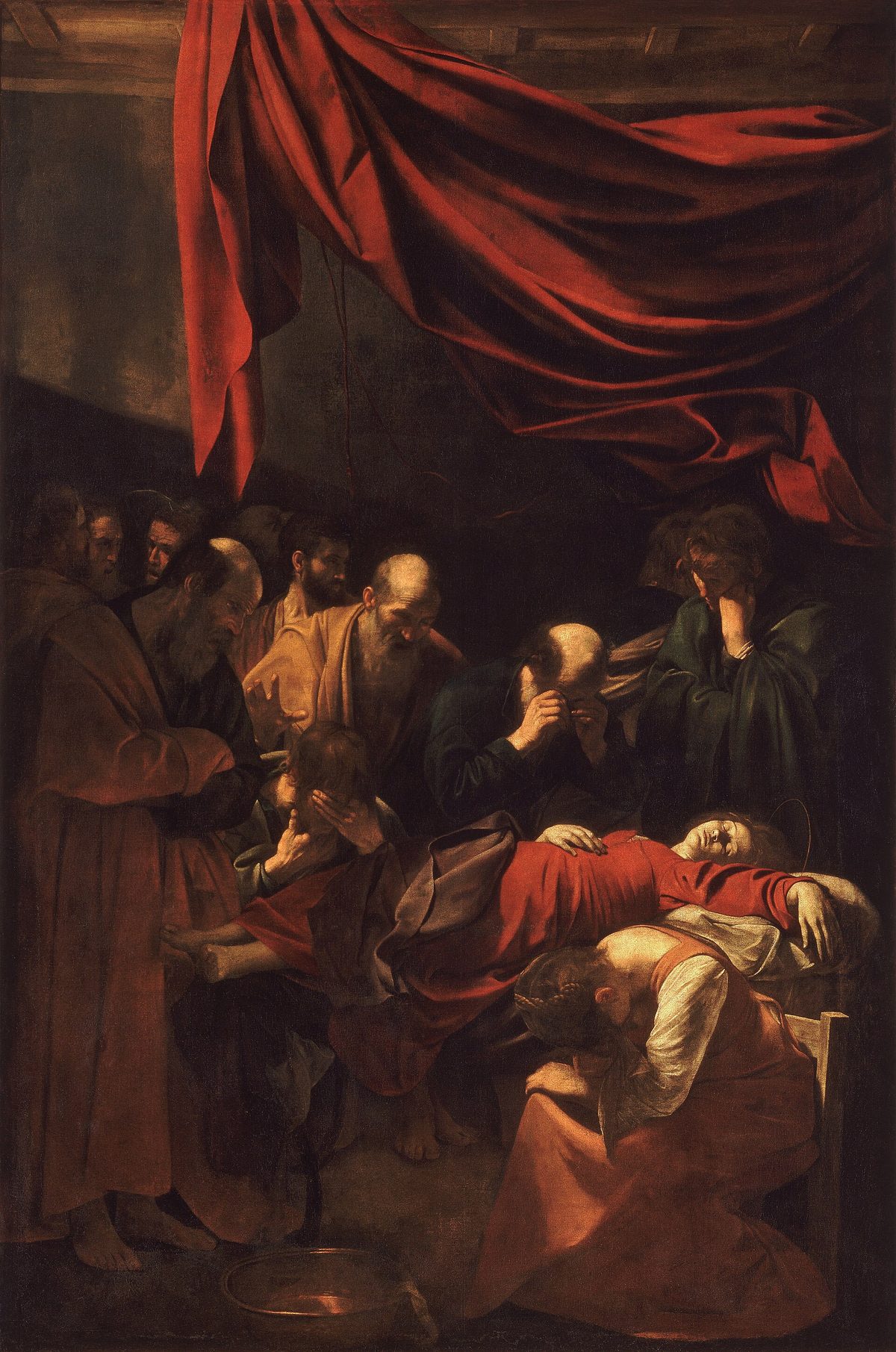
Death of the Virgin — Caravaggio, c.1601-1606
Caravaggio, Public domain, via Wikimedia Commons
Caravaggio's Death of the Virgin was commissioned for the altar of the Cherubini Chapel in Santa Maria della Scala in Rome and was rejected — a rejection that prompted immediate purchase by the Duke of Mantua on the advice of Rubens. It was later acquired by Charles I of England, then entered French collections, and has been in the Louvre since the Revolution.
The painting shows the Virgin Mary laid out on a low bed, her feet toward the viewer, surrounded by the apostles in grief — the conventional iconography of the Dormition of the Virgin. But Caravaggio's Virgin is not gracefully sleeping: she is dead, with the quality of a body that has passed beyond sleep — her feet swollen and blueish, her face slack, her abdomen slightly bloated. The apostles' grief is shown through physical posture rather than devotional convention: they are weeping, leaning together, turned away.
The rejection of the Death of the Virgin was allegedly based on the claim that Caravaggio had used the body of a drowned prostitute from the Tiber as his model for the Virgin — a story possibly invented but widely believed. Whatever its origin, the painting's refusal of conventional Marian dignity (the graceful dormition, the gentle sleep) in favour of the documentary reality of death was the apparent cause of the rejection.
The swollen feet and the blueish cast of the skin are the specific details that most offended: they are forensic observations, not devotional conventions. Rubens's admiration was immediate: he saw the painting as the fullest achievement of the naturalistic approach to religious narrative.
The composition is organised around the horizontal axis of the dead Virgin's body — the feet toward the viewer, the head receding away. Above this horizontal, the apostles form a curved group: some standing, some seated, some with their faces in their hands. A red curtain drawn across the upper half of the canvas creates a theatrical frame.
The Magdalene (identified by her red dress) sits at the bed's head, her face entirely covered by her hands in a gesture of total grief. The quality of light — a warm, low light from the upper left — picks out the red cloak at the centre and the apostles' faces. A young John (or a female figure — the identity is contested) kneels at the foot of the bed.
When standing before this work, look carefully: Death of the Virgin — Caravaggio, c.1601-1606. Give it time — what seems decorative often carries the central meaning.
When standing before this work, look carefully: The Virgin's swollen feet — documentary observation. Give it time — what seems decorative often carries the central meaning.
When standing before this work, look carefully: The Magdalene — face hidden in grief. Give it time — what seems decorative often carries the central meaning.
When standing before this work, look carefully: The apostles in grief — physical rather than devotional. Give it time — what seems decorative often carries the central meaning.
Musée du Louvre, Room 731, Denon Wing, Paris.