
The Last Judgment (San Brizio Chapel)
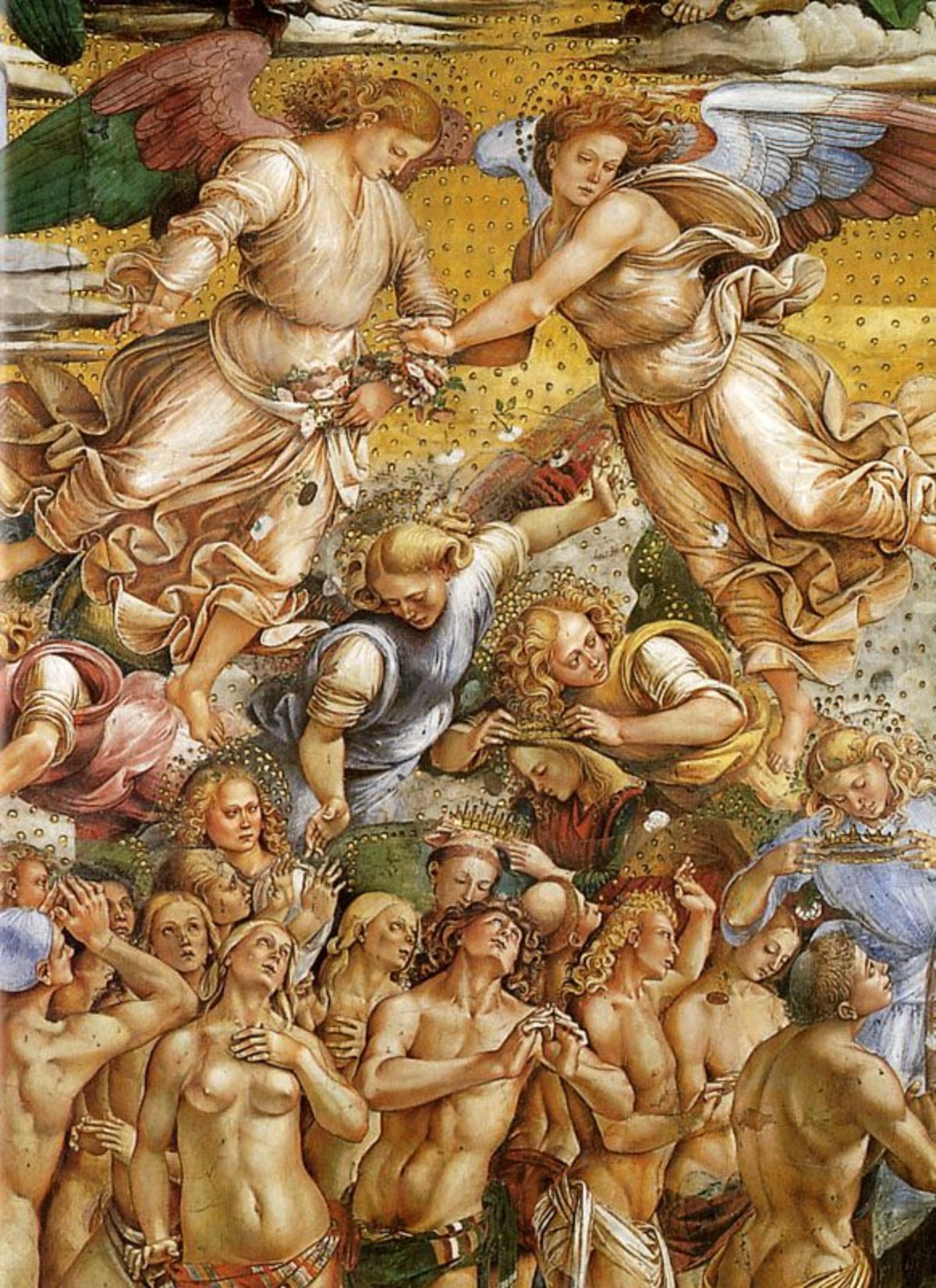
Resurrection of the Flesh — Signorelli, Orvieto
Luca Signorelli, Public domain, via Wikimedia Commons
Luca Signorelli's Last Judgment frescoes in the San Brizio Chapel of Orvieto Cathedral are among the most extraordinary and most influential fresco cycles in Italy — a programme of seven large compositions depicting the end of the world: the Preaching of the Antichrist, the End of the World, the Resurrection of the Flesh, the Gathering of the Elect, the Damned Consigned to Hell, the Crowning of the Elect in Heaven, and the Angels Guiding the Elect to Heaven. They were commissioned in 1499 (the year before the Jubilee of 1500, a year of intense apocalyptic expectation) and completed in 1504, just before Michelangelo received the Sistine Chapel commission. Michelangelo is documented to have visited Orvieto and studied these frescoes before starting the Sistine Last Judgment.
Luca Signorelli (c.1441-1523) had trained with Piero della Francesca and was the finest anatomist among 15th-century Italian painters before Michelangelo. The San Brizio programme gave him the opportunity to deploy his anatomical mastery at monumental scale in the most dramatic subject available: the resurrection and judgment of all human bodies.
The Resurrection of the Flesh is the key scene: hundreds of male nudes emerge from the earth in various stages of reintegration — bones acquiring flesh, flesh acquiring skin, the dead sitting up, standing, brushing earth from their bodies. The quality of anatomical observation — muscles, tendons, bones correctly understood and depicted — establishes the programme's influence on Michelangelo's approach to the human figure.
The Resurrection of the Flesh panel is the most studied: stand in front of it and count the variety of figure poses — seated, standing, prone, emerging, half-buried, complete, skeleton — all rendered in a coherent space of emerging bodies. Then look at the Damned Consigned to Hell: the damned are tormented by demons of inventive malevolence, the expressions of despair and terror on human faces are among the most specific in pre-Baroque Italian art.
Signorelli included his own self-portrait among the standing figures in the lower border, looking directly at the viewer. In the Antichrist scene, he also included portraits of himself and Fra Angelico (who had painted the vault of the chapel in 1447) watching the scene from the side.
When standing before this work, look carefully: Resurrection of the Flesh — Signorelli, Orvieto. Give it time — what seems decorative often carries the central meaning.
When standing before this work, look carefully: The Damned Consigned to Hell. Give it time — what seems decorative often carries the central meaning.
When standing before this work, look carefully: The San Brizio Chapel — the complete programme. Give it time — what seems decorative often carries the central meaning.
When standing before this work, look carefully: Preaching of the Antichrist — with Signorelli's self-portrait. Give it time — what seems decorative often carries the central meaning.
Orvieto Cathedral (Duomo di Orvieto), Piazza del Duomo, Orvieto. The San Brizio Chapel is the second chapel to the right of the apse.
A separate admission ticket is required for the chapel. The cathedral facade is also one of the masterpieces of Italian Gothic architecture.