
The St Vincent Panels (Panels of St Vincent)
The St Vincent Panels — Nuno Gonçalves, c.1470-1480
Nuno Gonçalves, Public domain, via Wikimedia Commons
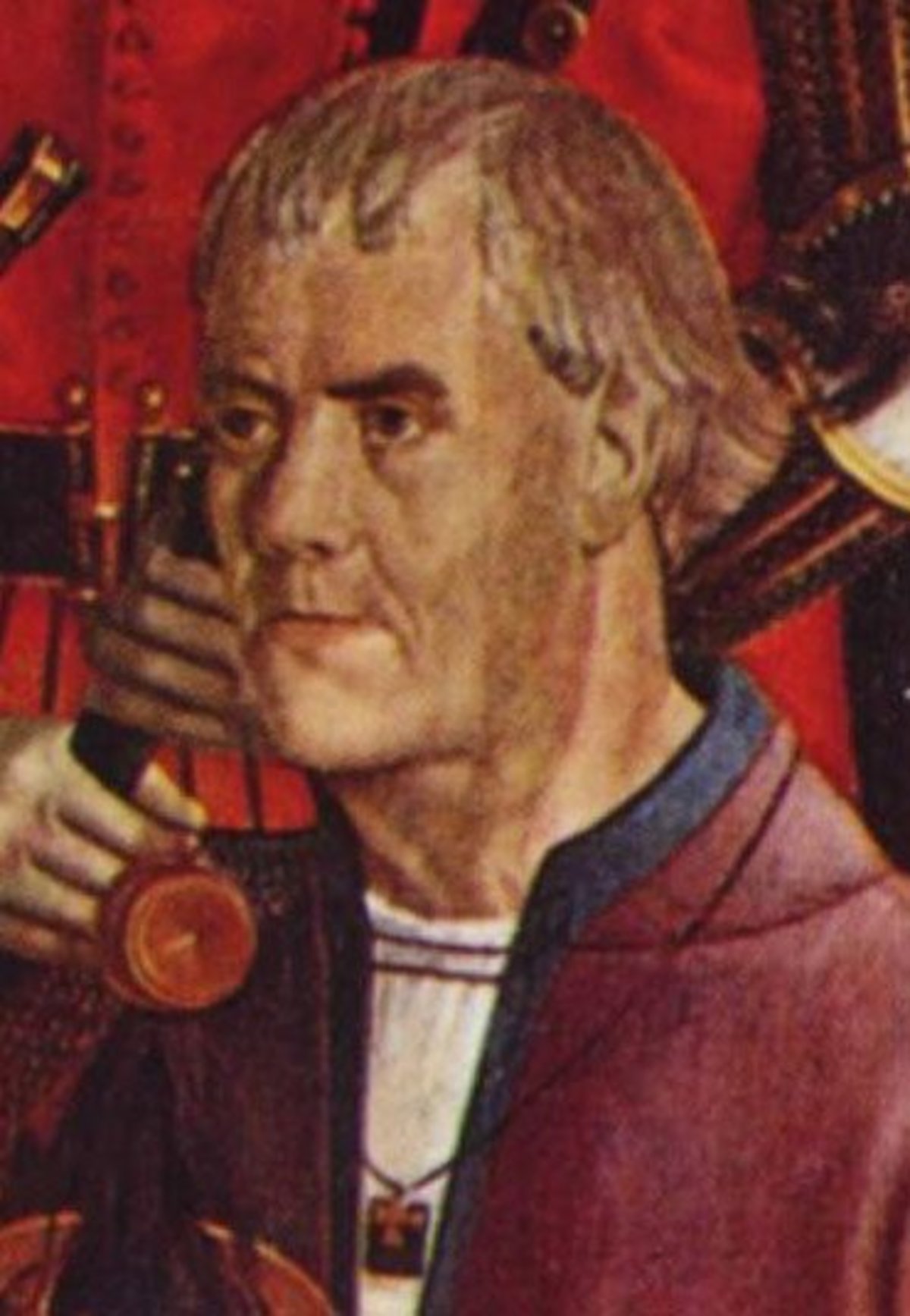
The Panels of St Vincent are six large oak panels depicting approximately 60 figures in a polyptych composition centred on St Vincent of Saragossa (patron saint of Lisbon and Portugal), attributed to Nuno Gonçalves — court painter to King Afonso V of Portugal — and dated approximately 1470-1480. The panels were rediscovered in 1882 in the monastery of St Vicente de Fora in Lisbon and are now considered the masterpiece of 15th-century Portuguese painting and one of the supreme achievements of European Realist portraiture.
The six panels are arranged in pairs: the outermost panels show fishermen and monks; the middle panels show the central scene (St Vincent holding the gospel and the palm of martyrdom, attended by figures from all levels of Portuguese society); the central panels show the royal court, including the identifiable portrait of King Afonso V kneeling before the saint. The portraits of approximately 60 identifiable historical figures make this altarpiece the most significant documentary source for the appearance of Portuguese court figures in the 15th century.
Nuno Gonçalves (active c.1450-1492) was the court painter of Afonso V and the greatest Portuguese painter of his era. Very little is known about him — no paintings are securely documented to him apart from these panels (which were attributed to him only after their rediscovery).
The panels were probably made for the Chapel of São Vicente do Castelo or for the monastery of São Vicente de Fora; the exact programme and purpose of the polyptych remains somewhat uncertain. The attribution to Gonçalves is based on the mention of his name in documents and the high quality of the work; the possibility of workshop assistance in the less distinguished passages is debated.
The portraits in the panels are the primary source of fascination. The faces are depicted with a psychological directness and specificity reminiscent of Flemish portraiture — the influence of Jan van Eyck and Roger van der Weyden is clear, but the faces have a Portuguese character distinct from either Flemish or Italian models. King Afonso V (identifiable from medals and documents) kneels in the second panel; the panel that includes the portrait of Henry the Navigator (one of the most debated identifications in Portuguese art history) is the fourth panel from the left.
When standing before this work, look carefully: The St Vincent Panels — Nuno Gonçalves, c.1470-1480. Give it time — what seems decorative often carries the central meaning.
When standing before this work, look carefully: The central panels — St Vincent with courtiers. Give it time — what seems decorative often carries the central meaning.
When standing before this work, look carefully: King Afonso V kneeling — portrait detail. Give it time — what seems decorative often carries the central meaning.
When standing before this work, look carefully: The fishermen panel — Portuguese realist portraiture. Give it time — what seems decorative often carries the central meaning.
Museu Nacional de Arte Antiga (MNAA), Rua das Janelas Verdes, Lisbon. Open Tuesday-Sunday; admission fee. The Panels are displayed in a dedicated gallery in the museum's medieval Portuguese art section.