
Triumph of Death and Last Judgment Frescoes
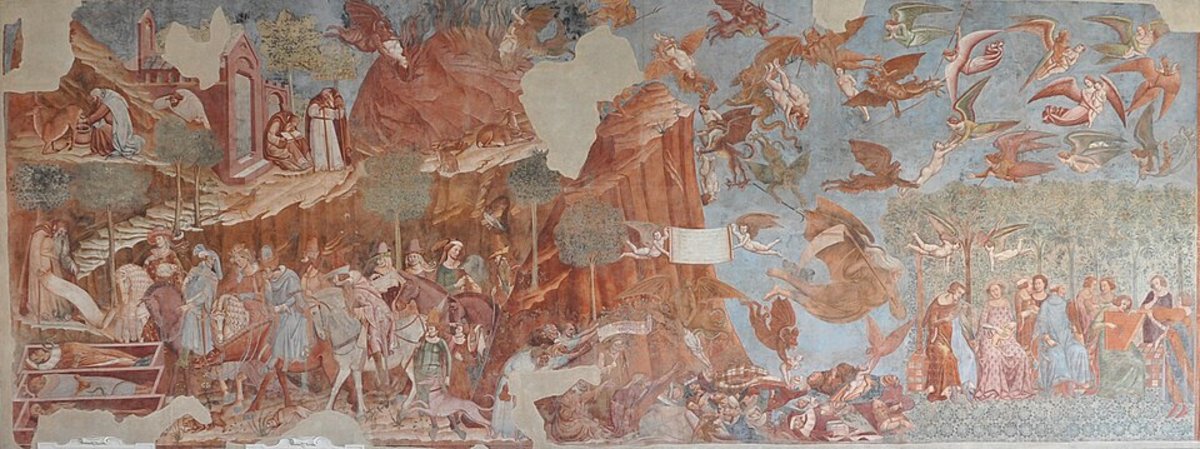
Triumph of Death — Buffalmacco, Camposanto Pisa, c.1336-1341
Buonamico Buffalmacco, Public domain, via Wikimedia Commons
The Triumph of Death fresco cycle in the Camposanto Monumentale (the monumental cemetery of Pisa) is the most celebrated and most historically significant image of death in medieval Western art — a large fresco cycle (the Triumph of Death, the Last Judgment, the Inferno, and the Thebaid, totalling approximately 600 square metres) generally attributed to Buonamico Buffalmacco (although the attribution has been disputed and revised multiple times). The Triumph of Death shows Death (depicted as an old woman with a scythe, flying through the air) descending on a group of elegant aristocrats in a garden of pleasures, while a pile of freshly killed bodies accumulates below her and the souls of the dead are weighed.
The scene of the aristocrats in their garden is the most famous image: three noble horsemen (one is a king, one a pope, one an emperor) encounter three open coffins containing decomposing bodies — the 'Three Living and Three Dead' motif that was central to medieval meditations on mortality. The fresco was severely damaged in World War II (American incendiary bombs hit the roof of the Camposanto in 1944, melting the lead of the roof onto the frescoes) and is partially restored.
Buonamico Buffalmacco (active c.1315-1336) was one of the most famous Florentine painters of his day — Boccaccio and Sacchetti tell comic stories about him, and Vasari gives him an affectionate biography. The attribution of the Camposanto cycle to Buffalmacco was proposed in the 1970s and is now widely accepted. The frescoes were made in the period just before the Black Death of 1348 — their preoccupation with death and judgment anticipates the catastrophic mortality of the plague, which killed approximately one-third of Europe's population.
The sinopia drawings (underdrawings in red ochre on the wall) were detached from the Camposanto walls after the 1944 damage and are displayed in the adjacent Sinopie Museum — they allow an unprecedented view of the creative process behind the fresco cycle. The restored frescoes in the Camposanto itself are fragmentary but still powerful: the Three Living and Three Dead encounter, the pile of bodies beneath Death's scythe, and the souls being weighed retain their medieval force.
When standing before this work, look carefully: Triumph of Death — Buffalmacco, Camposanto Pisa, c.1336-1341. Give it time — what seems decorative often carries the central meaning.
When standing before this work, look carefully: Three Living and Three Dead — the king, pope, and emperor. Give it time — what seems decorative often carries the central meaning.
When standing before this work, look carefully: The Last Judgment fresco — adjacent to the Triumph. Give it time — what seems decorative often carries the central meaning.
When standing before this work, look carefully: Sinopia drawing — underdrawing detached after 1944 damage. Give it time — what seems decorative often carries the central meaning.
Camposanto Monumentale, Piazza dei Miracoli, Pisa. Open daily; admission fee (combined ticket with the Duomo, Baptistery, and museums). The Sinopie Museum is directly across the Piazza.