
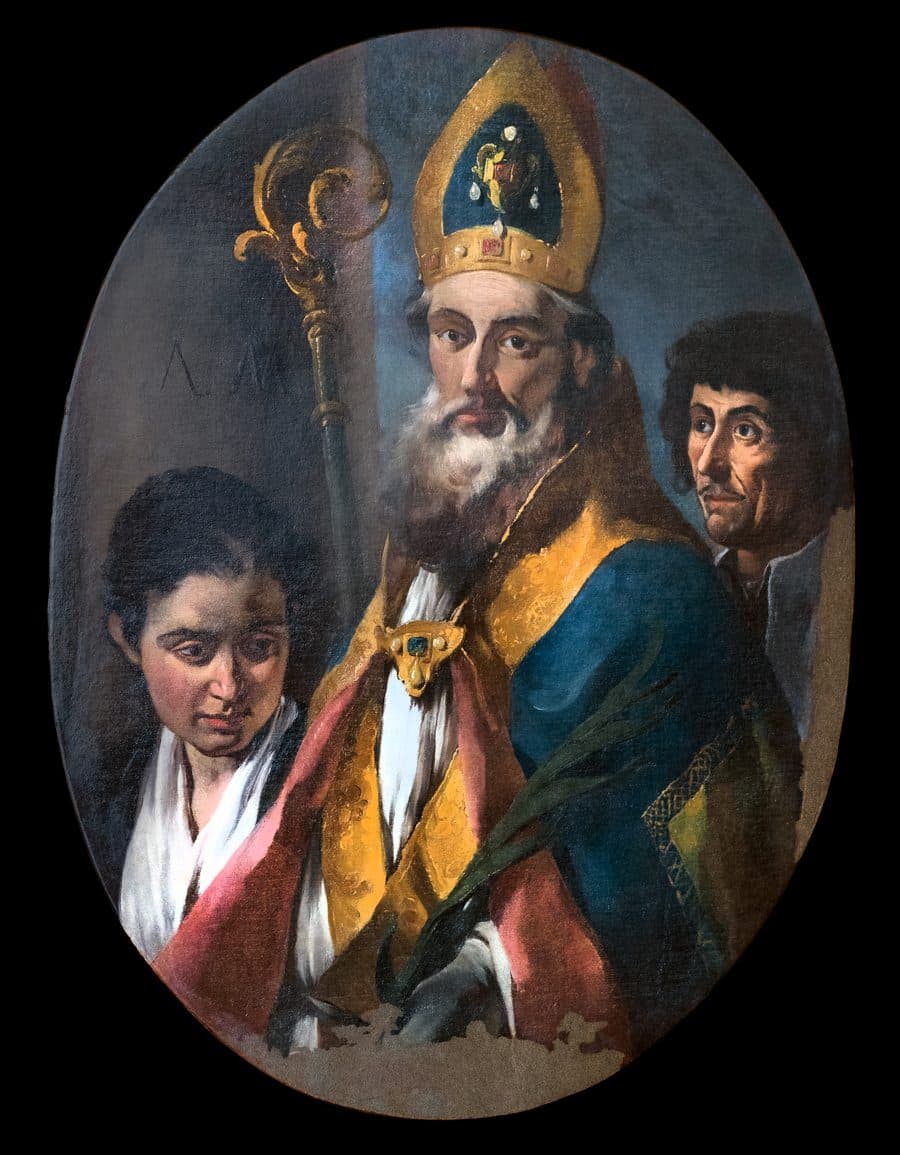
The Life
Blaise of Sebaste (modern Sivas, Turkey) was a bishop in the early 4th century who was martyred during the persecution of Licinius, around 316 AD. The historical record is sparse; the hagiographic tradition is rich. He is primarily known through the miracle attributed to him: healing a boy who was choking on a fishbone, who had been brought to him while he was imprisoned awaiting execution. He commanded the bone to move; the boy was freed. From this single miracle, his patronage of all throat conditions developed, and the Blessing of Throats on his feast day (February 3) became one of the most widely practised rituals in the Catholic calendar.
The Blessing of Throats — in which two candles tied together in the form of a cross are held against the throat of each person while the priest prays the invocation — is observed in Catholic churches on February 3 across the world. It is one of those Catholic rituals that maintains its popularity even among the marginally practising: people who come to Mass rarely come for the Blessing of Throats on Blaise's feast day, because the connection between faith and physical health is one of the most concrete and accessible of the sacramental connections.
Blaise is also the patron saint of Dubrovnik, the Croatian coastal city, under his Croatian name Sveti Vlaho. His relics have been venerated in Dubrovnik since the 10th century, and his image appears on the city's official seal, on the fountain in the main square, in the Baroque church of St Blaise in the Stradun, and on the painted banners that hang across the city on his feast day. February 3 is Dubrovnik's principal civic and religious festival, with processions, Mass, and the city effectively closing for celebration.
The second tradition associated with Blaise — that he blessed the wild animals that came to him in the caves of Mount Argaeus where he had retreated as a hermit — gives him his secondary patronage of animals and veterinarians. The wild beasts of the mountain came to him peacefully, were blessed, and went away without harm.
The Fishbone Miracle
A woman came to Blaise in his prison cell, bringing her son who was choking on a fishbone lodged in his throat. Blaise commanded the fishbone to move and it did. The boy was freed. This miracle — simple, specific, physical — is the foundation of one of the most widely practised Catholic devotional rituals. Every February 3, in Catholic churches around the world, priests hold two crossed candles to the throats of their parishioners and pray: through the intercession of St Blaise, bishop and martyr, may God free you from ailments of the throat. The fishbone miracle two thousand years later. The Wild Animals of Mount Argaeus Before his martyrdom, Blaise had retreated to the caves of Mount Argaeus to live as a hermit. The wild animals of the mountain — wolves, bears, leopards — came to him peacefully and allowed him to bless them. He healed them when they were ill. They gathered around him in the cave. Hunters who came to catch animals for Licinius's games found Blaise in the cave surrounded by his animal companions and arrested him. His gentleness with wild animals gave him his secondary patronage of veterinarians and animals. Dubrovnik — the city of Sveti Vlaho Dubrovnik's devotion to Blaise is one of the most intense civic-religious bonds between a city and its patron in the Catholic world. His relics have been in Dubrovnik since the 10th century, when the city's patron miraculously warned the city of an impending Venetian attack. The Baroque Church of St Blaise (1715) in the Stradun is the principal place of devotion. His image is everywhere in the city: on fountains, on the city seal, on painted banners. February 3 is Dubrovnik's great day. The Blessing of Throats The ritual of the Blessing of Throats on February 3 is one of the most accessible and widely practised of Catholic sacramentals. The priest holds two candles crossed in an X shape against the throat of each person and prays: Through the intercession of St Blaise, bishop and martyr, may the Lord deliver you from all ailments of the throat and from every other evil. In the name of the Father, and of the Son, and of the Holy Spirit. Amen. The concreteness of the prayer — for the specific physical organ of the throat — is characteristic of Catholic sacramental theology: the physical and the spiritual meeting in a specific act.
Walk in Their Footsteps
Pilgrimage sites connected to St Blaise
Ask St Blaise to Intercede
Bring these intentions to this saint in prayer:
Blaise healed a boy choking on a fishbone while he himself was in prison awaiting execution. The conditions for his miracle were the worst imaginable: he had nothing, he was about to die, he had no freedom of movement or action. He prayed. The bone moved. This is the structure of saintly intercession at its most concentrated: not power from a position of strength, but prayer from the lowest possible position, directed toward the specific physical need of the person in front of you.
“Who forgives all your sins and heals all your diseases.”
St Blaise, bishop and martyr — pray for my throat and my voice, for all that is lodged and will not move, for all that is inflamed and will not heal. Through your intercession, may what is stuck be freed, what is damaged be restored, what is lost be returned. I hold the crossed candles of your feast day to my throat and ask: Amen.