
Lorenzetti Frescoes (Life of Christ cycle)
Crucifixion — Pietro Lorenzetti, Lower Basilica Assisi
Pietro Lorenzetti, Public domain, via Wikimedia Commons
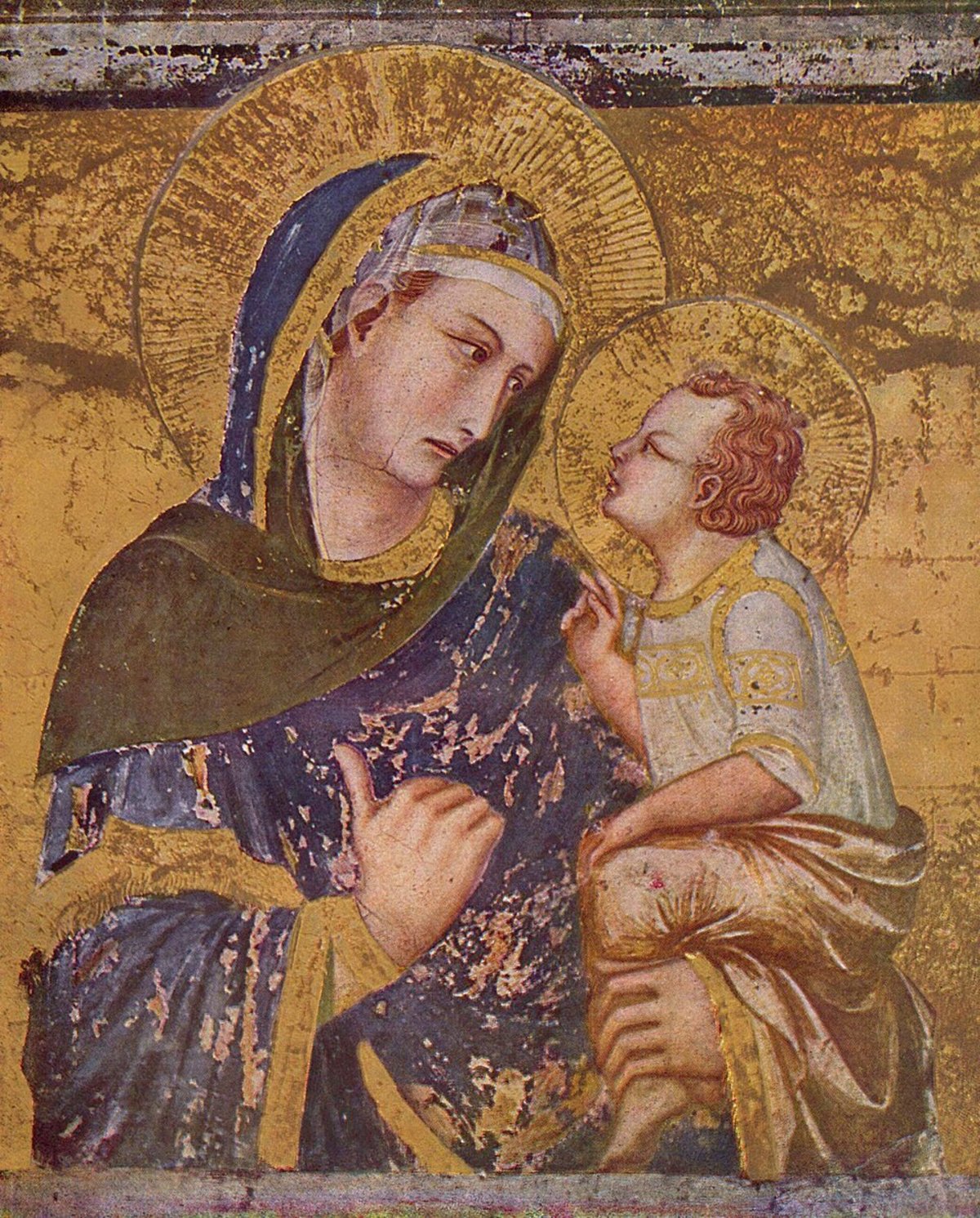
The Lorenzetti frescoes in the Lower Basilica of St Francis at Assisi represent the most important body of Trecento painting after Giotto's Arena Chapel cycle. Pietro Lorenzetti's Passion cycle in the left transept of the Lower Basilica (c.1315-1320) includes a Entry into Jerusalem, the Last Supper, the Washing of the Feet, the Betrayal, the Crucifixion, and the Deposition — a complete Passion narrative in fresco of extraordinary quality.
Ambrogio Lorenzetti's frescoes in the right transept (c.1325-1330) include a Madonna and Child enthroned with saints and a Stigmatisation of St Francis. Pietro's Crucifixion is frequently cited as the greatest single fresco by either brother: the emotional force of the figure of Christ, the psychological complexity of the bystanders, and the spatial depth of the composition go beyond anything in contemporary Sienese painting except Giotto.
Pietro Lorenzetti (c.1280-1348) and Ambrogio Lorenzetti (c.1290-1348) were brothers who both probably died in the Black Death of 1348 — the catastrophe that ended the first great period of Trecento painting. Their Assisi frescoes are their most ambitious works; the comparison between Pietro's dramatic, emotionally intense Passion narrative and Ambrogio's more contemplative devotional compositions reveals two distinct temperaments working within the same family tradition. Ambrogio's Allegory of Good and Bad Government in the Palazzo Pubblico in Siena (a secular commission) is his other masterpiece, but the Assisi frescoes show his devotional intensity at its fullest.
The Lower Basilica at Assisi is a complex multi-layered building with four crossing chapels decorated by the great Trecento painters — Giotto (right nave), Simone Martini (left nave, St Martin Chapel), and the Lorenzetti brothers (transepts). Allow at least a full day for the complete complex.
Pietro's left transept is entered from the crossing: the scale of the Crucifixion (approximately 5 by 8 metres) makes it one of the largest and most complex single fresco compositions of the period. The Deposition below it — Christ taken from the cross, the Virgin embracing his body — is equally powerful.
When standing before this work, look carefully: Crucifixion — Pietro Lorenzetti, Lower Basilica Assisi. Give it time — what seems decorative often carries the central meaning.
When standing before this work, look carefully: Last Supper — Pietro Lorenzetti, spatial innovation. Give it time — what seems decorative often carries the central meaning.
When standing before this work, look carefully: Madonna enthroned — Ambrogio Lorenzetti, right transept. Give it time — what seems decorative often carries the central meaning.
When standing before this work, look carefully: Lower Basilica interior — the four crossing chapels. Give it time — what seems decorative often carries the central meaning.
Basilica of St Francis, Assisi, Umbria. Free admission (donations welcome).
Both the Upper and Lower Basilicas are open daily; modest dress required. Photography without flash permitted. Assisi is approximately 2.5 hours from Rome by train (Foligno or Assisi station).