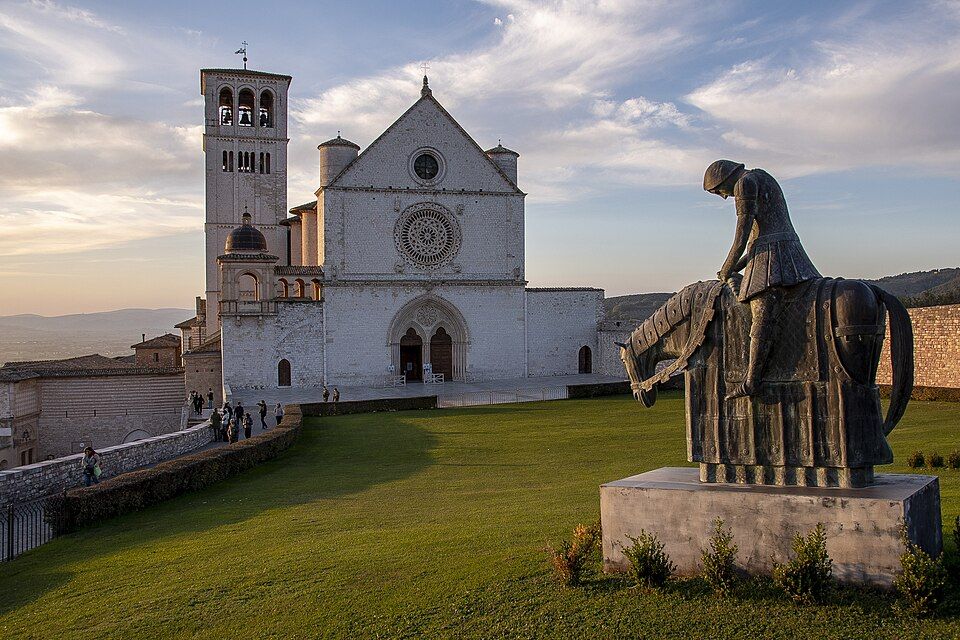
Basilica of St Francis of Assisi
Assisi, Italy
"The Basilica di San Francesco in Assisi is one of the most important pilgrimage churches in Christendom, bu..."
Highlights
- 1One of the most important pilgrimage basilicas in Christendom — tomb of St Francis, the most beloved saint The Giotto frescoes in the Upper Church are foundational to the history of Western art St Francis received the stigmata on La Verna mountain in September 1224 — two years before his death
- 2Pope Francis chose his name in honour of this saint from Assisi
- 3Approximately 5 million pilgrims and visitors per year
Getting There
Address
Piazza Inferiore di San Francesco, 2, 06081 Assisi PG, Italy
Directions
Assisi is 25 km from Perugia. Regular trains from Perugia and direct trains from Rome (3h). From Assisi railway station, bus to the historic centre (10 minutes). The basilica is on the western edge of the medieval town.
Timings
Current time — Rome Time (CET)
--:--:--
| When | Hours |
|---|---|
| Lower Church | 6:00 AM - 6:45 PM |
| Upper Church | 8:30 AM - 6:45 PM |
| Tomb of St Francis (crypt) | 6:00 AM - 6:45 PM |
Entry to the basilica is free. Photography in the Upper Church is not permitted. Silence is required. The tomb of St Francis in the crypt is the central pilgrimage destination. Modest dress required.
Masses & Events
Daily Mass
7, 8, 9 AM; 10:30 AM (Conventual High Mass); 5, 6 PM
Active daily schedule
Feast of St Francis
October 4
The principal feast; pilgrims from across
Canticle of the Creatures
Sung at Sunday Conventual Mass
The composition of St Francis, performed in the place of his burial
Must See
The Tomb of St Francis
Crypt beneath the Lower Church The tomb of St Francis
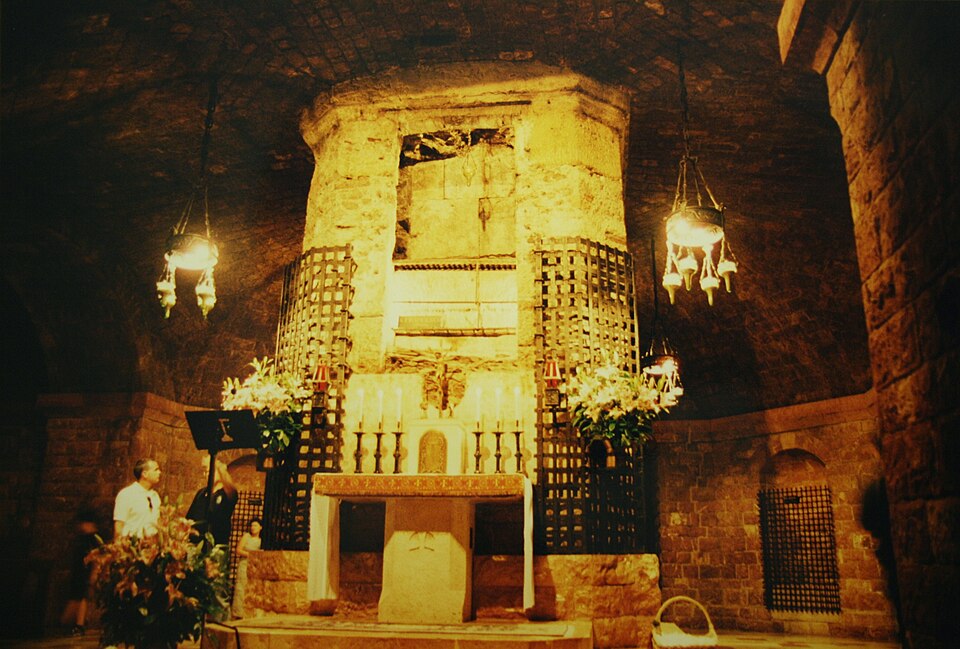
the man who gave away everything — is in a stone crypt in the lowest level of the basilica. It was hidden after his death and only rediscovered in the 19th century. Pilgrims kneel around the central stone sarcophagus in silence. The remains of his four closest companions are in the four corners of the crypt. It is one of the most simply moving pilgrimage destinations in Italy.
The Giotto Frescoes
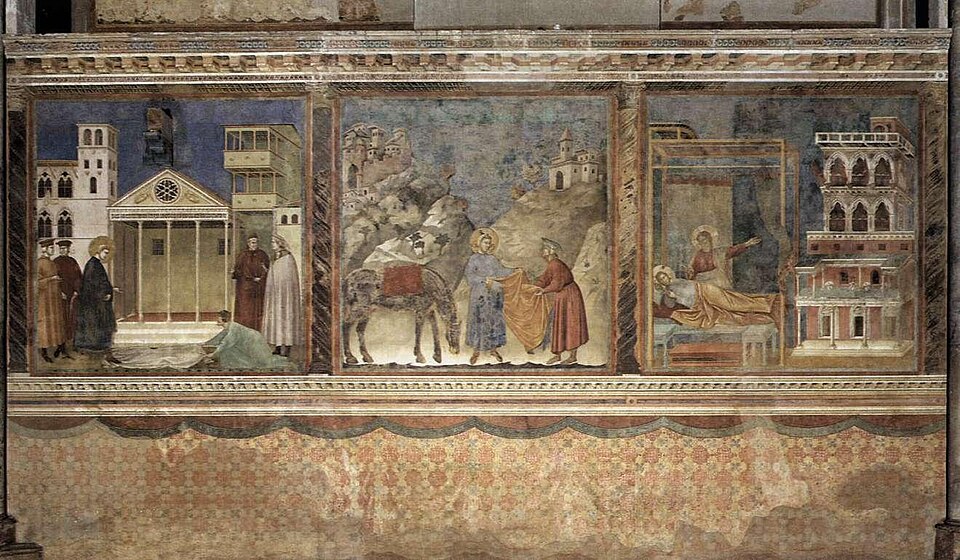
Upper Church Twenty-eight frescoes attributed to Giotto depicting the life of St Francis line the walls of the Upper Church. They represent the moment at which Italian painting moved from Byzantine flatness to the three-dimensional, humanly observed world. To walk through them is to watch Francis's life from his renunciation of his father to his death
and to understand why Giotto was the first great revolutionary in Western painting.
The Lower Church
Below the Upper Church The Lower Church, with its maze of chapels and frescoes by Cimabue, Pietro Lorenzetti, and Simone Martini, is the most visually dense part of the basilica
every surface covered, every chapel rich with medieval painting. The atmosphere is intimate and charged. Pilgrims who find the Upper Church too grand often find the Lower Church the more devotional space.
The Porziuncola
Basilica di Santa Maria degli Angeli, in the plain below Assisi The tiny original chapel
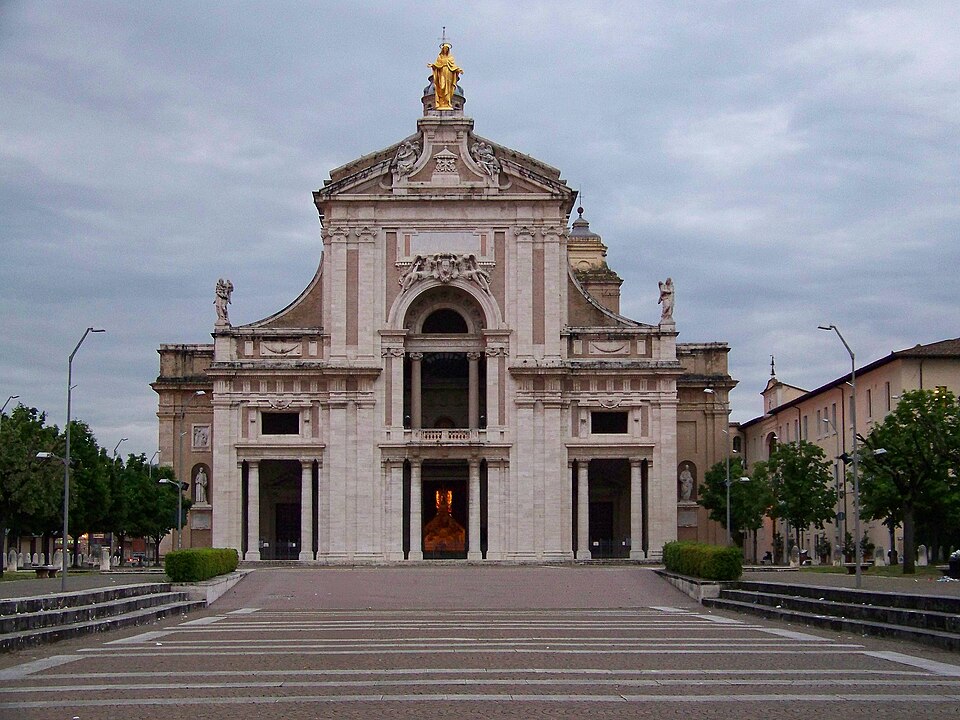
8 metres by 4 metres — where Francis gathered his first companions, received the rule of life, and died, is now entirely enclosed within the enormous 16th-century baroque basilica of Santa Maria degli Angeli.
Standing inside the tiny Porziuncola inside the vast basilica
the small within the great
is the most concentrated expression of Franciscan paradox.
The Medieval Town of Assisi
Entire historic centre [OUTDOOR] Assisi is a perfectly preserved medieval hilltop town in the Umbrian countryside. The pink-grey Subasio stone of its streets and buildings has not changed since Francis walked them in the 13th century. Walking the streets from the Piazza del Comune to the basilica, through the lanes and under the arches, is itself a pilgrimage. The view of the Umbrian plain below from the basilica terrace at sunset is unforgettable.
Intentions
Carry these intentions into the Basilica with you — pause at each sacred spot and lift them to God.
For creation and for the environment — Francis is the patron saint of ecology
For animals and all living beings in the created world
For the poor and for voluntary simplicity
For those who have left wealth to follow God
For Pope Francis and the Franciscan Order worldwide
For peace — Francis sought peace between Christians, Muslims, and enemies
For those who receive wounds they did not ask for — the stigmatics of our own lives
For a Church that is poor as Francis was poor
Reflection
Francis was the son of a rich merchant. He had everything. He gave it all away, embraced a leper, rebuilt a church with his own hands, and died on the bare ground with his face turned to the sky, singing. His tomb is in a basilica that is the most visited saint shrine in Italy. The man who had nothing is remembered in one of the richest pilgrimage structures in the world. This is the paradox of Francis: he wanted nothing, and everything gathered around him.
Suggested Scripture — Matthew 5:3
Blessed are the poor in spirit, for theirs is the kingdom of heaven.
Read in full on Bible Gateway →A Pilgrim's Prayer
Francis, poor man, rich in God — I come to your tomb in a basilica covered in gold and frescoes. I know you would have preferred the bare ground. But you are here in the stone beneath, and I kneel to it. Teach me what you learned by giving everything away. Teach me that the less I hold on to, the more I have. And let the Canticle you wrote be the last thing I hum when I leave. Amen.
More
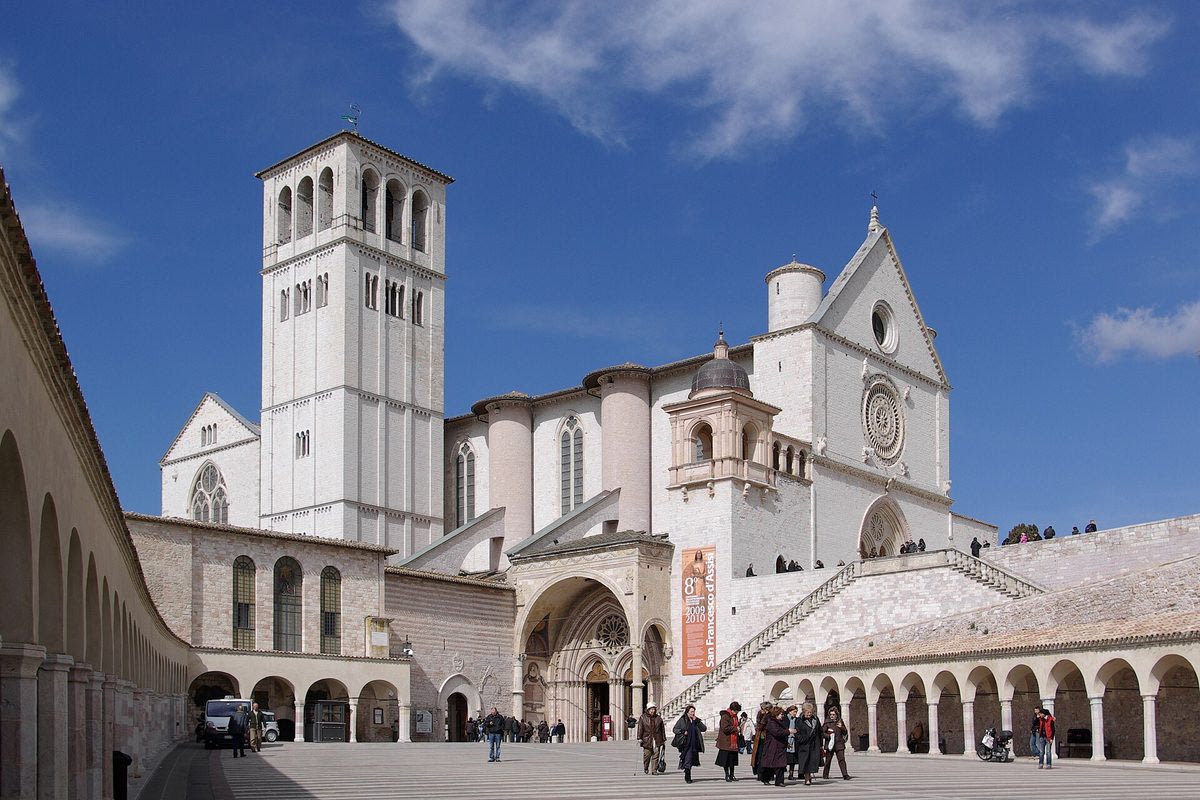
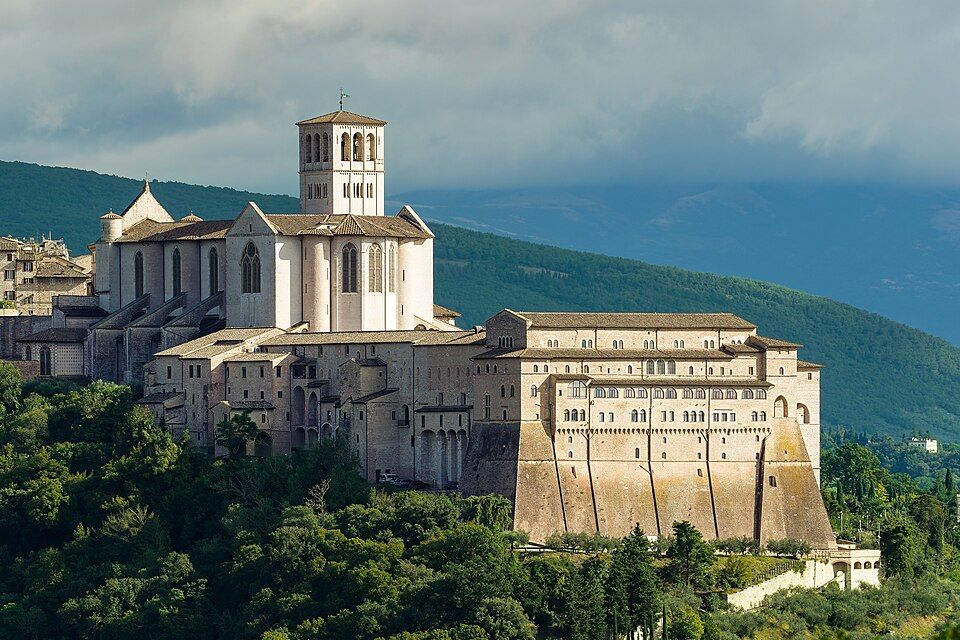
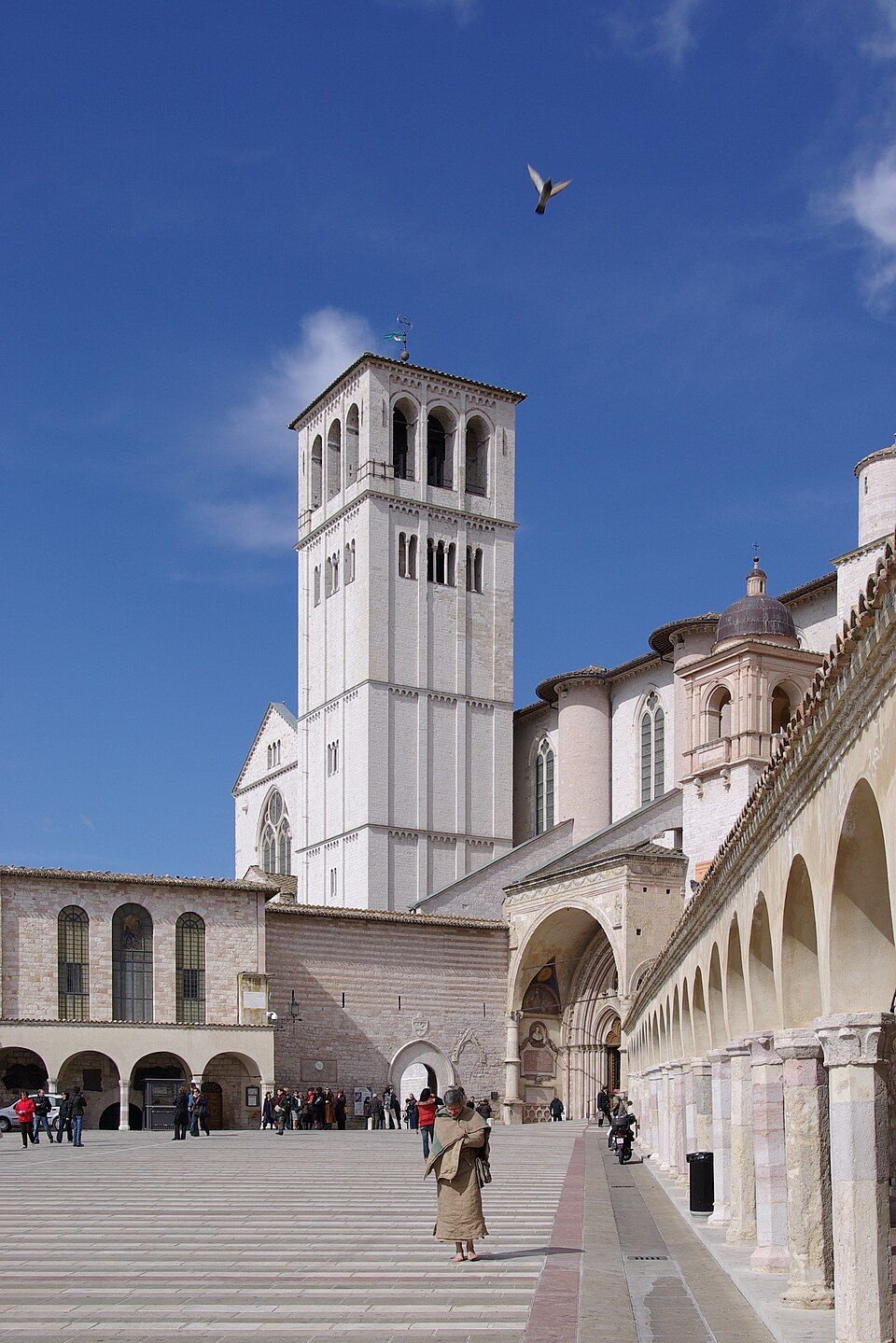
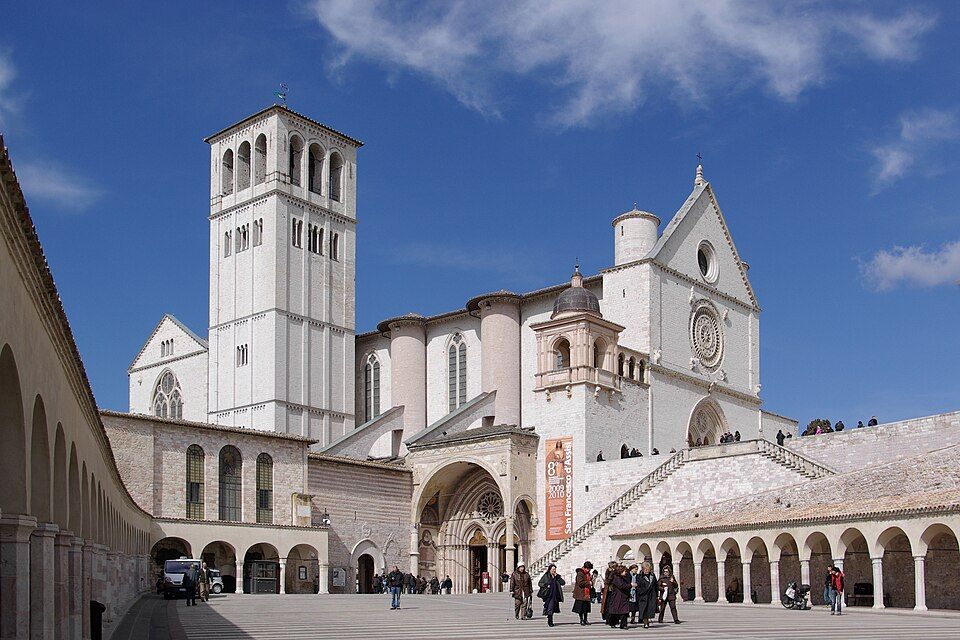
The Basilica di San Francesco in Assisi is one of the most important pilgrimage churches in Christendom, built to house the tomb of St Francis of Assisi, who died in 1226 and was canonised by Gregory IX in 1228. The double basilica — Upper Church and Lower Church — was begun immediately after canonisation and consecrated in 1253. The walls of the Upper Church are covered with a cycle of 28 frescoes attributed to Giotto depicting the life of St Francis — among the most important works of art in Western history.
St Francis
Francis of Assisi is among the most beloved figures in Christian history: the son of a wealthy cloth merchant who renounced his inheritance, embraced radical poverty, received the stigmata in 1224, rebuilt the Church at a time of corruption, founded the Franciscan Order, and composed the Canticle of the Creatures — the first major literary work in Italian. He is the patron saint of Italy, ecology, animals and merchants, among many others. Pope Francis chose his name in honour of this saint.
The Porziuncola
The Porziuncola — the tiny chapel where Francis first gathered his followers, and where he died — is enclosed within the enormous Basilica di Santa Maria degli Angeli in the plain below Assisi. Both the Porziuncola and the hilltop basilica are essential to the complete Assisi pilgrimage.
Photo Gallery
5 photosKey Facts
- Type
- Basilica
- Region
- Italy / Vatican
- Location
- Assisi, Italy
Open in Google Maps
Piazza Inferiore di San Francesco, 2, 06081 Assisi PG, Italy
Pilgrim's Note
We encourage all visitors to enter in a spirit of prayer and respect for the faith traditions of each place.