
Portinari Altarpiece
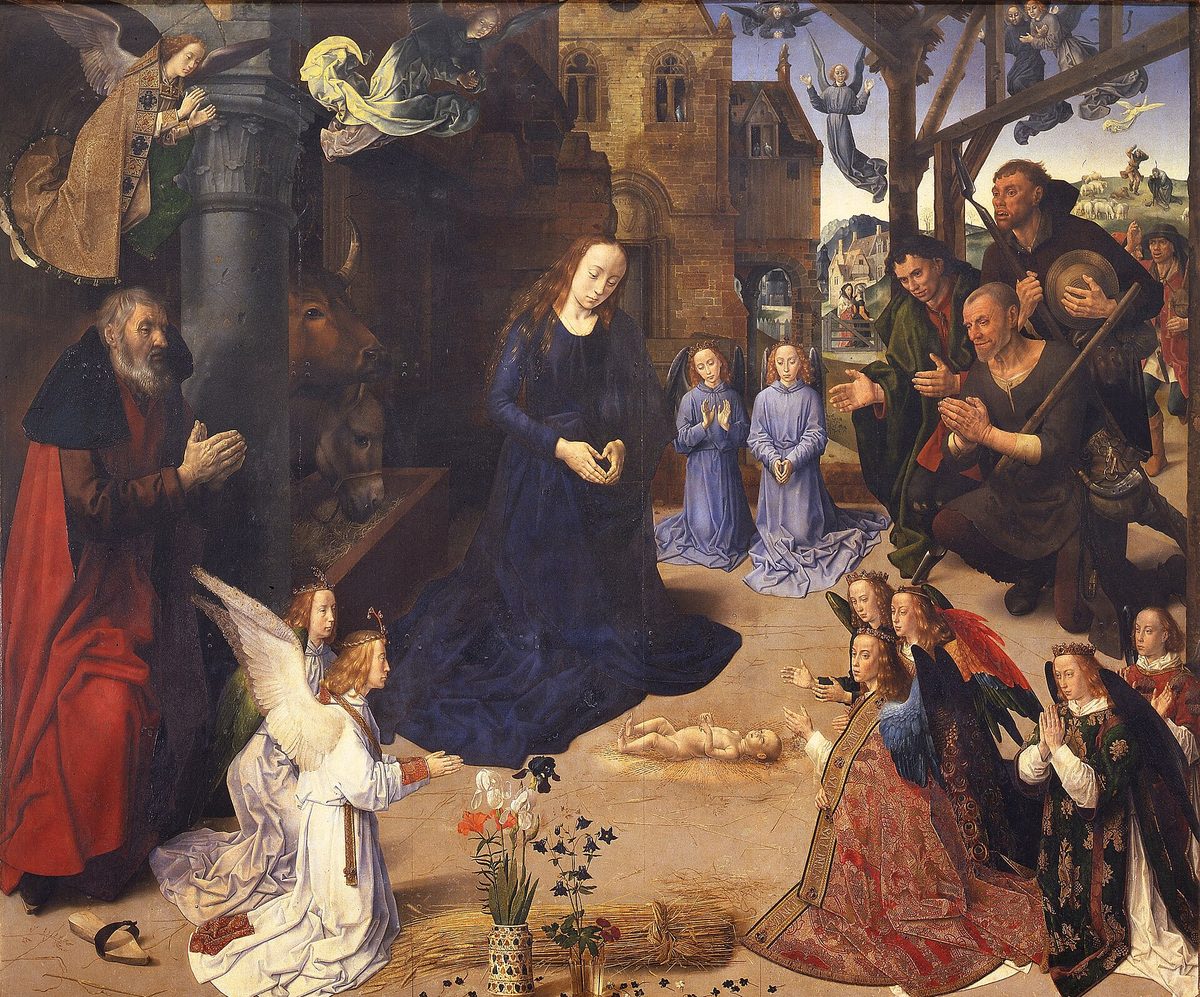
Portinari Altarpiece — Hugo van der Goes, c.1475
Hugo van der Goes, Public domain, via Wikimedia Commons
Hugo van der Goes's Portinari Altarpiece arrived in Florence in 1483 and transformed Italian painting. Commissioned by Tommaso Portinari, the Medici agent in Bruges, for the hospital church of Sant'Egidio in Florence, it was the largest Flemish altarpiece ever shipped to Italy — a triptych approximately 253 cm high when the wings are opened.
Florentine painters crowded to study it. The altarpiece depicts the Nativity in the central panel, with the shepherds, angels, and adoring Magi; the donor Portinari and his sons with St Thomas and St Anthony on the left wing; his wife and daughters with Margaret and Mary Magdalene on the right. The extraordinary Flemish naturalism — the physiognomy of the shepherds, the still-life of flowers, the atmospheric landscape — challenged everything Florentines thought they knew about painting.
Hugo van der Goes (c.1440-1482) was the most powerful Flemish painter of the generation after van Eyck and van der Weyden. His psychological intensity — the anguished faces of the shepherds, the concentrated grief visible in the Virgin's features — gave Flemish naturalism an emotional depth that went beyond decorative realism.
The Portinari Altarpiece's impact on Florentine painting was immediate: Ghirlandaio's Adoration of the Magi (1485, Ognissanti) and other works show direct responses to the Flemish shepherds' physiognomy and the still-life conventions. Leonardo's early works also respond to the atmospheric sfumato effects in the Portinari landscape. The altarpiece effectively introduced the Northern European approach to painting to the Italian tradition.
The three shepherds in the central panel are faces of extraordinary individuality and psychological force — old, rough, awed, unidealized. They are as far from Botticelli's graceful figures as it is possible to be.
Look at the flower-filled glass vase in the central panel's foreground — a still-life with irises (symbolising the Virgin's sorrow), columbines (references to the Trinity), and other flowers of symbolic weight, rendered with a naturalism that Italian painting had not achieved. The three donor portraits on the wings also have a psychological intensity rare in Italian portraiture of the period.
When standing before this work, look carefully: Portinari Altarpiece — Hugo van der Goes, c.1475. Give it time — what seems decorative often carries the central meaning.
When standing before this work, look carefully: The three shepherds — Flemish naturalism. Give it time — what seems decorative often carries the central meaning.
When standing before this work, look carefully: The flower vase still life — symbolic naturalism. Give it time — what seems decorative often carries the central meaning.
When standing before this work, look carefully: The donor wings — Portinari family portraits. Give it time — what seems decorative often carries the central meaning.
Uffizi Gallery, Room 22. The Portinari Altarpiece is the principal Flemish painting in the Uffizi and the most important Flemish work in Italy.