
Saint Francis Altarpiece (Sassetta Altarpiece)
Stigmatisation of St Francis — Sassetta, National Gallery
Sassetta, Public domain, via Wikimedia Commons
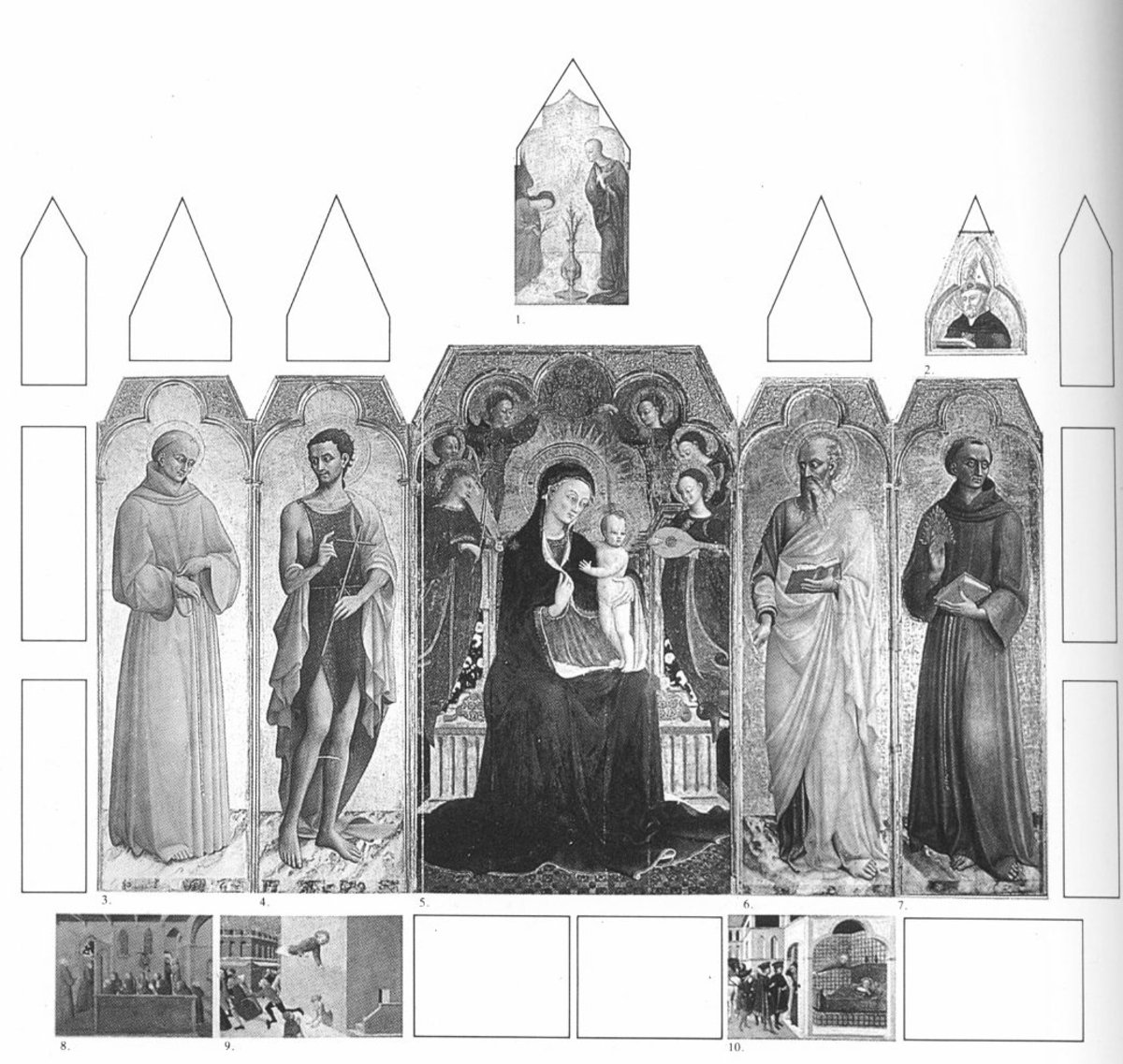
Sassetta's Saint Francis altarpiece — of which seven panels are in the National Gallery London — was originally a double-sided polyptych made for the church of San Francesco in Sansepolcro, Piero della Francesca's home town. The front side (now dispersed between London, Paris, Florence, and Chantilly) showed the enthroned Saint Francis with narrative scenes from his life; the back side showed the Blessed Ranieri Rasini and scenes from his life. The seven London panels include the Marriage of St Francis to Poverty, the Stigmatisation of St Francis, and other scenes from the saint's life, painted in Sassetta's highly personal style — a late Sienese Gothic mode that combines traditional gold backgrounds with a tender, lyrical handling of landscape and narrative.
Sassetta (c.1392-1450) was the most important Sienese painter of the first half of the 15th century — a painter who absorbed the influence of the International Gothic style while maintaining the Sienese tradition of emotionally intense, spiritually concentrated altarpiece painting. His treatment of the life of St Francis is one of the most beautiful narrative cycles in Italian art — small panels of great imaginative delicacy, in which the Franciscan themes of poverty, joy, and union with nature are expressed through colour, light, and landscape.
The Marriage of St Francis to Poverty is the most visually striking of the London panels: Francis, in his brown habit, places a ring on the finger of a figure representing Lady Poverty, while three female figures (Poverty, Chastity, and Obedience) are presented in an outdoor setting with gold background. The Stigmatisation panel shows the seraph appearing to Francis at La Verna in a landscape of extraordinary delicacy.
When standing before this work, look carefully: Stigmatisation of St Francis — Sassetta, National Gallery. Give it time — what seems decorative often carries the central meaning.
When standing before this work, look carefully: Marriage of St Francis to Poverty — Sienese lyricism. Give it time — what seems decorative often carries the central meaning.
When standing before this work, look carefully: Multiple panels from the altarpiece — London group. Give it time — what seems decorative often carries the central meaning.
When standing before this work, look carefully: Reconstructed altarpiece diagram — original polyptych. Give it time — what seems decorative often carries the central meaning.
National Gallery, Trafalgar Square, London WC2N 5DN. Free admission.
Open daily. The Sassetta panels are displayed together in a dedicated display case in the Early Italian rooms.