
The Immaculate Conception (Soult Immaculate Conception)
Soult Immaculate Conception — Murillo, c.1678
Bartolomé Esteban Murillo, Public domain, via Wikimedia Commons
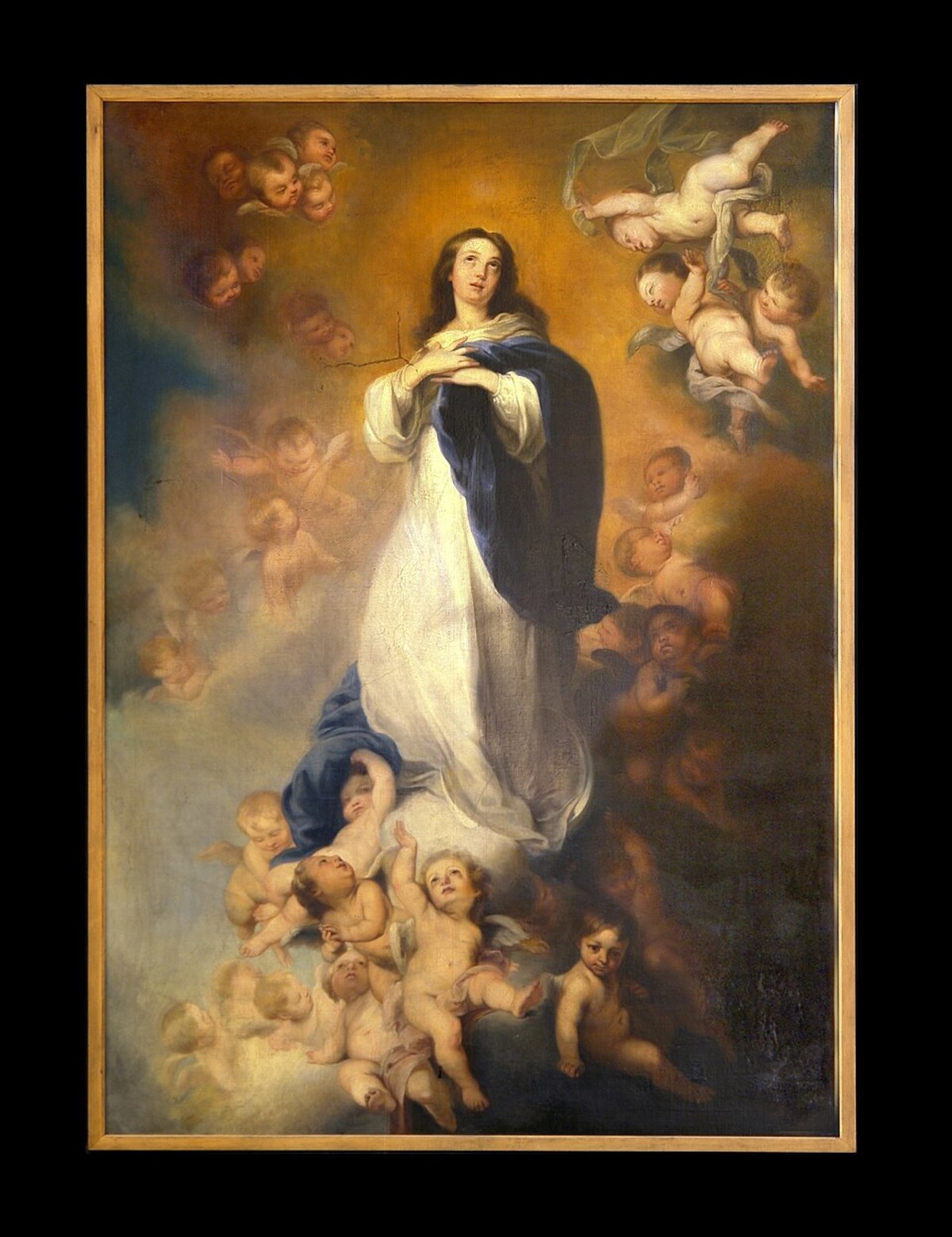
Murillo's Soult Immaculate Conception (named after Marshal Soult who took it from Seville during the Napoleonic occupation) is the greatest of his many treatments of the Immaculada — a large canvas (approximately 274 by 190 cm) showing the Virgin floating on clouds in a golden heavenly light, surrounded by a choir of cherubs and angels, her blue mantle spread around her, her eyes lifted toward heaven. The Immaculate Conception was one of the dominant devotional subjects of 17th-century Seville, where the Franciscan and Dominican orders had waged a century-long theological dispute about whether Mary was conceived without original sin.
The Franciscan (pro-Immaculate) position was championed in Seville with extraordinary popular intensity; Murillo's Immaculadas were the visual expression of this popular devotion. This painting, made for the Hospital de la Caridad (c.1678), is the culminating work of his Immaculada series.
Murillo painted approximately twenty versions of the Immaculate Conception — more than any other single subject in his career. The Soult Immaculate Conception is the largest and most elaborate: the cloud throne of the Virgin, the choir of approximately fifteen cherubs and angels (some playing musical instruments, some adoring), and the golden light that seems to emanate from the Virgin's figure make it one of the most visually impressive religious paintings of the Spanish Baroque. Marshal Soult took it from Seville in 1813; it was sold at auction in Paris in 1852 and purchased by the Spanish government.
The Virgin's upturned gaze and the golden light surrounding her are the visual expression of the Immaculada theology: the Virgin chosen from eternity to be without sin, preserved by divine grace from the moment of her conception. The cherubs around her are not merely decorative but express the Franciscan theology of angelic witness to the Immaculate Conception. Compare this canvas with the earlier Immaculada (c.1678) in Seville Cathedral (still in situ) — the two works are close in date and style.
When standing before this work, look carefully: Soult Immaculate Conception — Murillo, c.1678. Give it time — what seems decorative often carries the central meaning.
When standing before this work, look carefully: The Virgin's face — eyes lifted toward heaven. Give it time — what seems decorative often carries the central meaning.
When standing before this work, look carefully: The choir of cherubs and angels. Give it time — what seems decorative often carries the central meaning.
When standing before this work, look carefully: The golden light emanating from the Virgin. Give it time — what seems decorative often carries the central meaning.
Museo Nacional del Prado, Madrid. See entry 189 for visiting details.