Aachen Cathedral
Cathedral · Other

Aachen Cathedral

Aachen, Germany

"Aachen Cathedral is one of the oldest and most historically significant churches in Germany — the first Ger..."

Highlights

  • 1The first German UNESCO World Heritage Site (1978) — inscribed for its universal significance
  • 2The Palatine Chapel was built by Charlemagne in 796-806 AD as his private court
  • 3church Charlemagne is buried here — the emperor who founded the Holy Roman Empire
  • 4and Christian Europe The Aachen Pilgrimage (septennial) draws over one million pilgrims from across
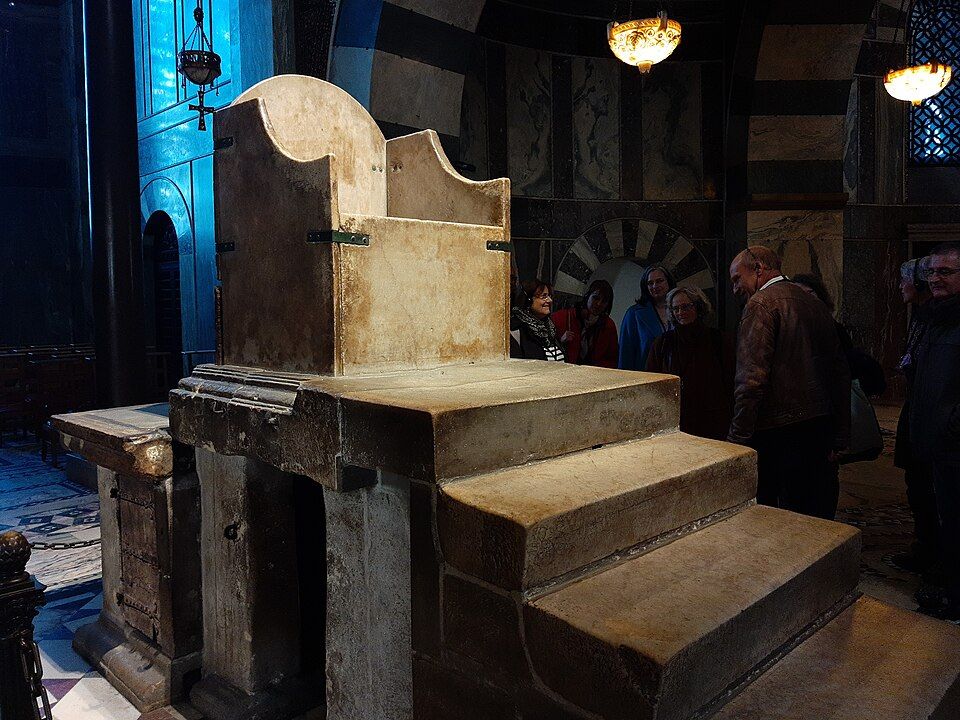
  • 5Europe German kings were crowned on the Aachen throne from Charlemagne until 1531 —

Getting There

📍

Address

Domhof 1, 52062 Aachen, Germany

🗺

Directions

Aachen is 80 km from Cologne and 60 km from Brussels. Direct ICE trains from Cologne (40 minutes) and Brussels (1h). The cathedral is in the centre of the old city, 10 minutes walk from Aachen Hauptbahnhof.

Open in Google Maps

Timings

Current time — Berlin Time (CET)

--:--:--

WhenHours
Cathedral7:00 AM - 7:00 PM
Mon-Fri;10:00 AM - 6:00 PM

Sat-Sun; ticket required Entry to the cathedral is free. The Domschatzkammer (treasury) requires a ticket and is one of the finest cathedral treasuries in Europe. Guided tours of the cathedral are strongly recommended. The next Aachen Pilgrimage is in 2028.

Masses & Events

Daily Mass

Various times from 7:00 AM

Active cathedral schedule

Feast of Charlemagne

January 28

Civic and religious celebration of the emperor-saint

Aachener Heiligtumsfahrt

Every 7 years

next 2028 — The septennial pilgrimage displaying the four holy relics

Must See

1

The Palatine Chapel (Octagon)

Heart of the cathedral Charlemagne's original 8th-century octagonal chapel, modelled on San Vitale in Ravenna, is the oldest surviving parts of the building. The gold mosaic dome, the ancient columns brought from Rome and Ravenna by Charlemagne's architects, and the atmosphere of the oldest royal chapel in northern Europe are extraordinary.

2

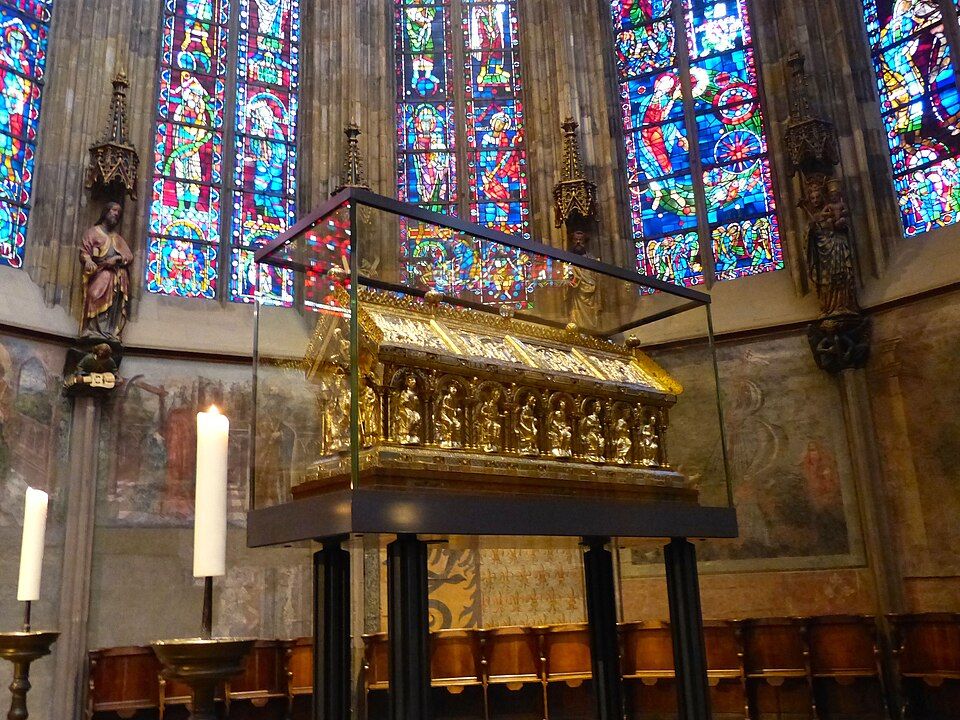
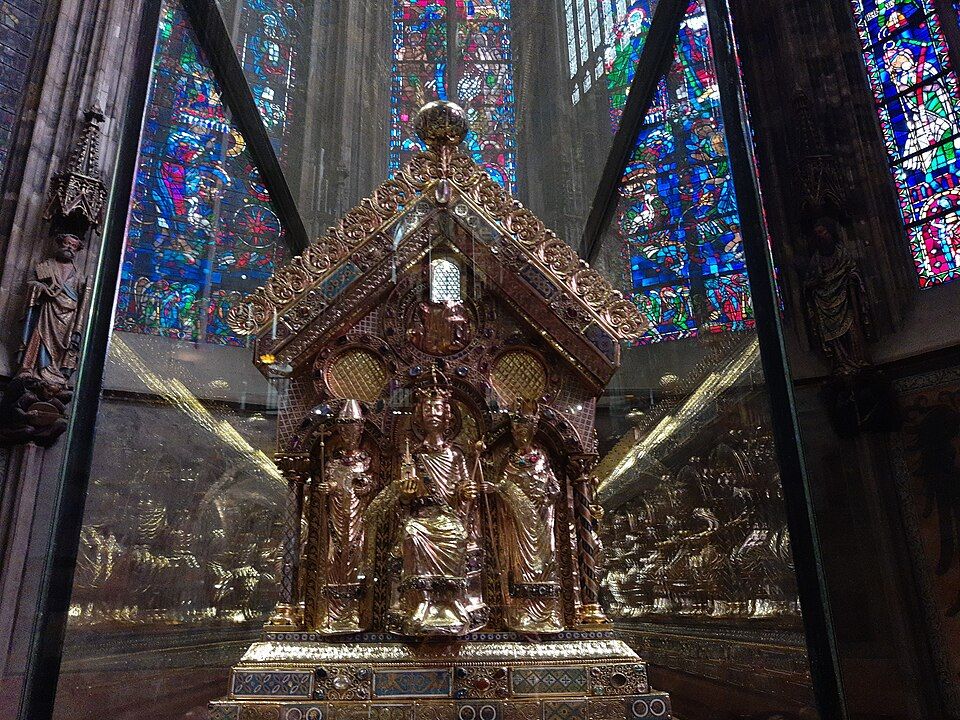
The Shrine of Charlemagne

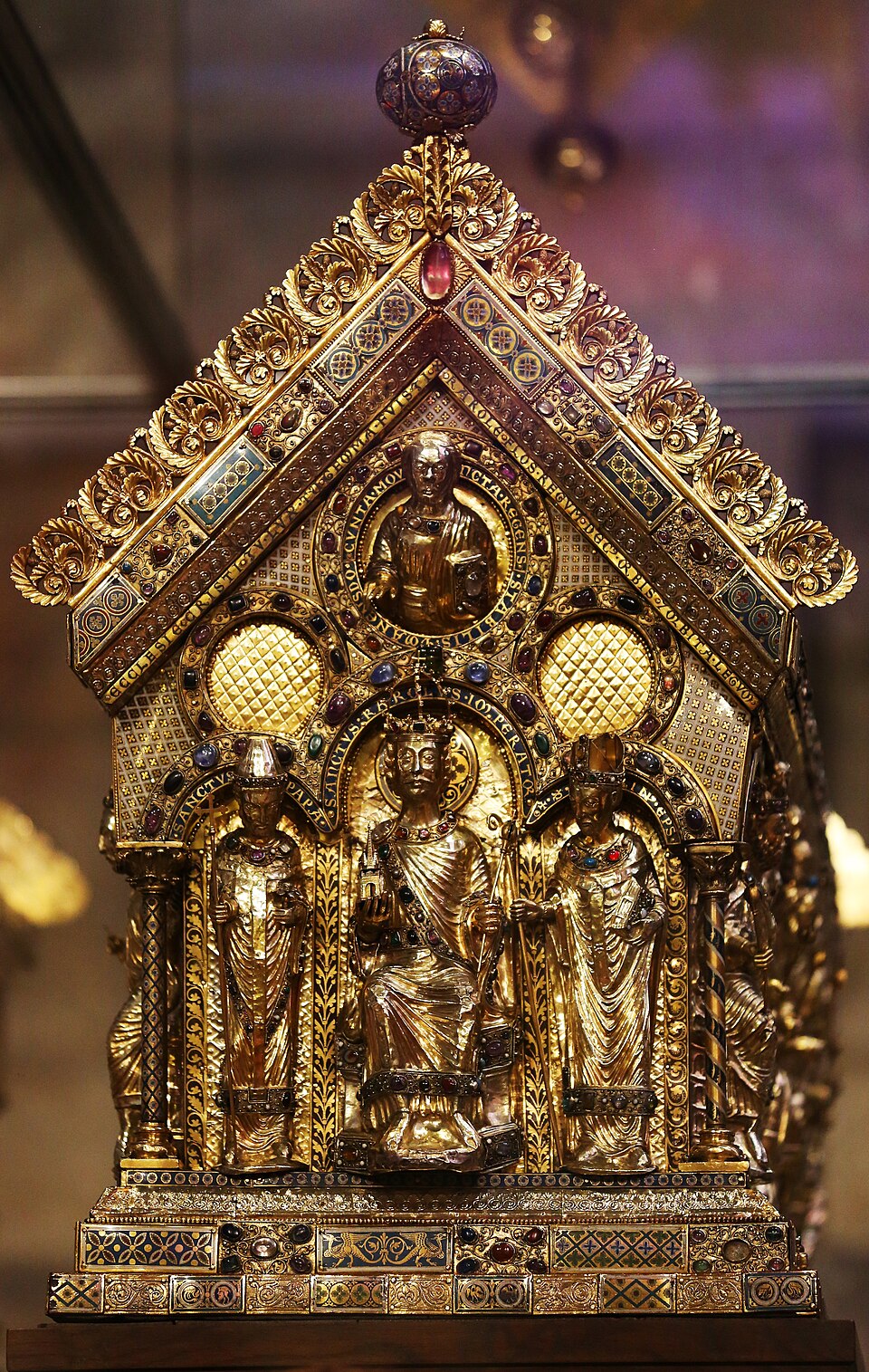
Gothic choir The gilded reliquary chest containing the bones of Charlemagne, decorated in the 13th century, is one of the most historically significant objects in European Christianity. On the shrine are depicted 32 kings and emperors

Charlemagne's heirs in Christian governance.

3

The Gothic Choir

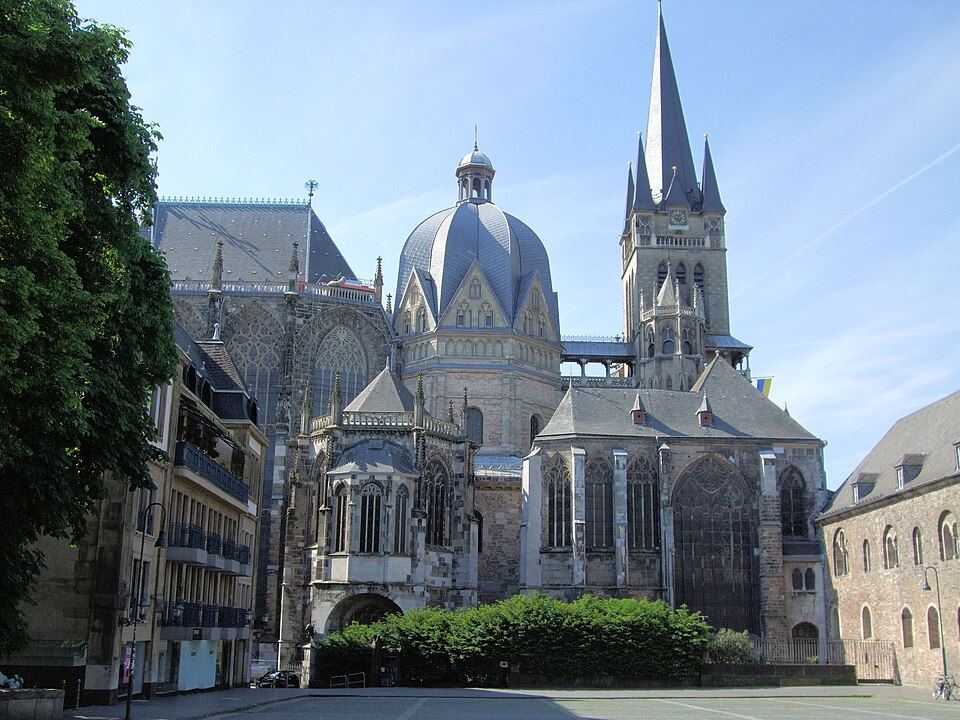
14th-century addition to the east The soaring Gothic choir, 32 metres high, with its enormous windows flooding the interior with light, contains the Marienschrein

the shrine of the Virgin with the four holy relics — and the golden altarpiece. The contrast between the dark intimate Palatine Chapel and the luminous Gothic choir makes the evolution of Christian sacred architecture comprehensible in a single building. The Domschatzkammer (Treasury) — Adjacent to the cathedral The cathedral treasury is one of the finest in Europe: Charlemagne's bust reliquary (1349), his personal cross, the Lothar Cross (c. 1000 AD), the Marienschrein, and textiles spanning twelve centuries. To stand before the Lothar Cross is to stand before a thousand years of sacred goldsmithing.

4

The View of the Old City

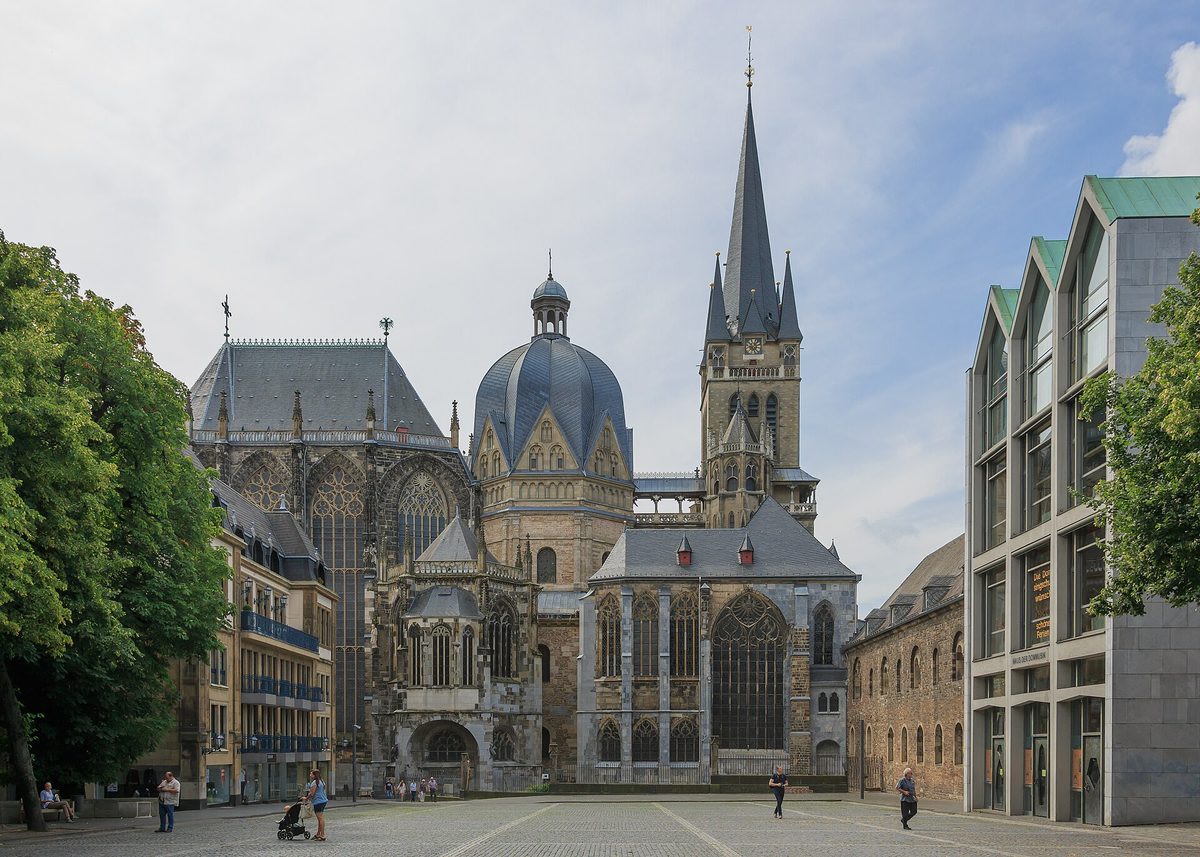
From the cathedral square [OUTDOOR] The cathedral rises above the old city of Aachen

the only part of Germany where France, Belgium, and Germany meet. The border character of the city has always given it a particular political and religious significance: Charlemagne's Europe began here.

Intentions

Carry these intentions into the Basilica with you — pause at each sacred spot and lift them to God.

🙏

For Europe and for the Christian civilisation that built it

🙏

For Charlemagne, who unified Christian Europe and is buried here

🙏

For the unity of the European nations, which began in this city

🙏

For those who have worked to build a Christian governance of political life

🙏

For Germany and its Catholic tradition

🙏

For all who come to this place where three nations meet

🙏

For the septennal pilgrimage tradition and all who make it

🙏

For the long project of building a world worth inheriting

Reflection

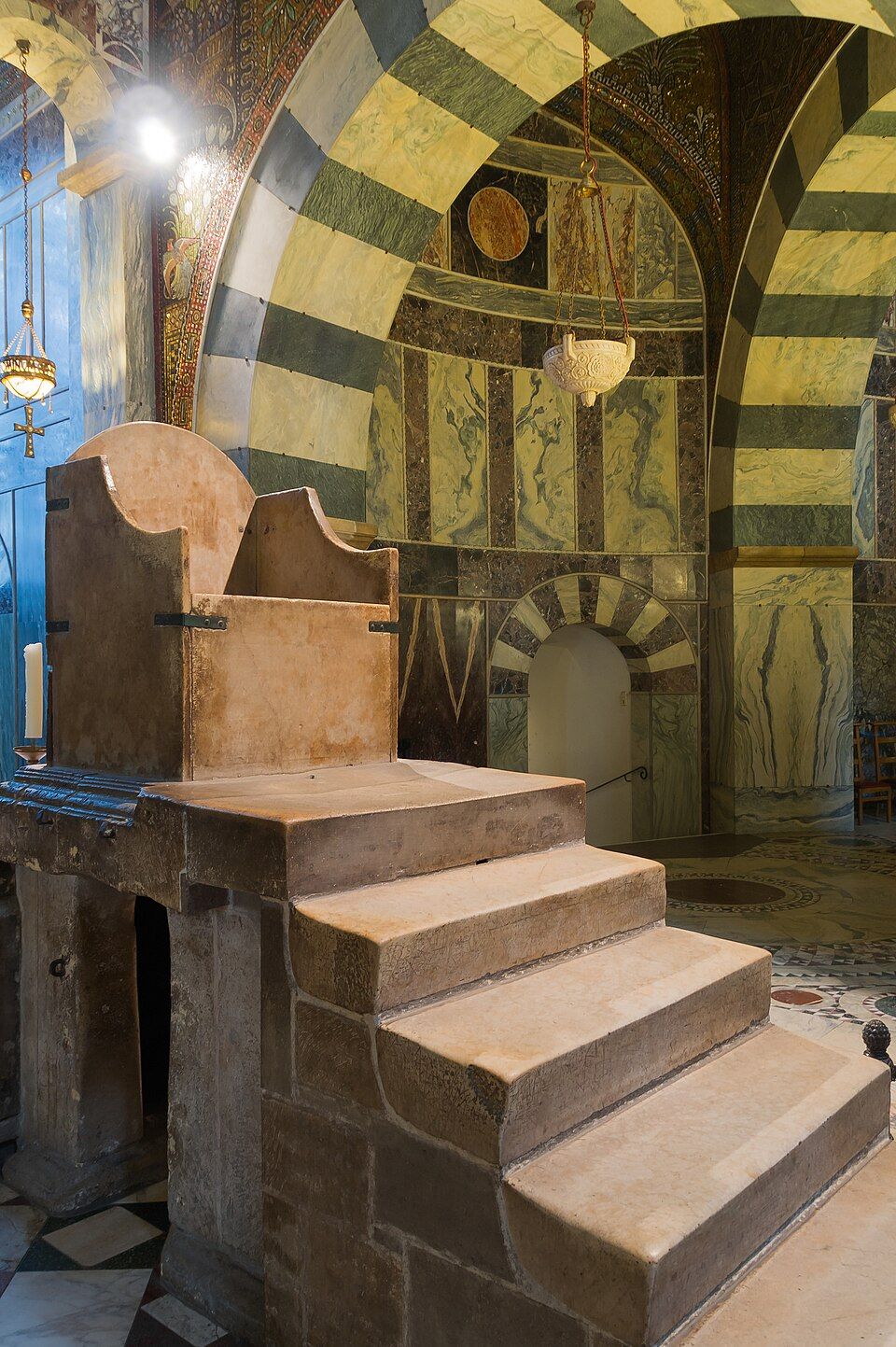
Charlemagne built a chapel for himself in 796 AD and he was buried in it. He was declared a saint by Pope Paschal III in 1165. His bones are in a golden shrine in the choir. Thirty German kings were crowned on his throne. The European Union is sometimes described as a continuation of the vision of a single Christian Europe. Whether that is true or not, the vision began here, in a small octagonal chapel on the Belgian border, with one man's prayer.

Suggested Scripture — Proverbs 29:2

When the righteous thrive, the people rejoice; when the wicked rule, the people groan.

Read in full on Bible Gateway →

A Pilgrim's Prayer

Charlemagne, emperor and patron of this church, you tried to build a Christian Europe with sword and prayer. The sword was impermanent; the prayer lasted. Let your chapel — the oldest place of Christian worship still in use in the German north — remind me that prayer outlasts power, that the chapel survives the empire, and that what we build for God outlasts what we build for ourselves. Amen.

More

Aachen Cathedral is one of the oldest and most historically significant churches in Germany — the first German site inscribed as a UNESCO World Heritage Site, in 1978. The Palatine Chapel at its core was built by Emperor Charlemagne in 796–806 AD as his private chapel and court church, making it the oldest cathedral in the German-speaking world still in use. Charlemagne, who united Western Europe under Christian governance, is buried here beneath a gold shrine that is one of the most important reliquaries of the medieval world.

Architecture and Treasures

The cathedral complex has grown around the original octagonal Palatine Chapel across twelve centuries. The Gothic choir, added in the 14th century, contains the Pala d’Oro — a golden altarpiece — and the throne on which all German kings from Charlemagne’s time until 1531 were crowned. The Karlsreliquiar (Charlemagne’s Bust Reliquary, 1349) and the Marienschrein (Shrine of the Virgin, c. 1230) are among the supreme masterpieces of medieval goldsmithing and are displayed in the Domschatzkammer (Cathedral Treasury).

The Septennial Pilgrimage

The Aachen Pilgrimage (Aachener Heiligtumsfahrt) is held every seven years — a septennial event in which four sacred relics associated with Marian and Christological devotion are displayed to pilgrims for ten days. The next pilgrimage is scheduled for 2028. On pilgrimage years, over one million pilgrims visit Aachen from across Europe.