Basilica of the Black Christ of Esquipulas
Basilica · Other

Basilica of the Black Christ of Esquipulas

Esquipulas, Guatemala

"The Basilica of Esquipulas in eastern Guatemala is the most revered Catholic shrine in Central America, dra..."

Highlights

  • 1The most revered Catholic shrine in Central America — 4.5 million pilgrims annually The Señor
  • 2de Esquipulas (Black Christ) was carved in 1594 and darkened by five centuries of candle
  • 3smoke and devotion The January 15 feast draws 1.5 million pilgrims from across Central America
  • 4in a single weekend The 1987 Esquipulas Peace Accords ending Central American civil wars were
  • 5signed in this town The devotion has spread throughout the USA among Central American immigrant

Getting There

📍

Address

Esquipulas, Chiquimula, Guatemala

🗺

Directions

Esquipulas is 220 km east of Guatemala City. Buses from Guatemala City's Zona 1 terminal take 4-5 hours. The town is near the Honduran and El Salvador borders and serves as a gateway for cross-border pilgrimages.

Open in Google Maps

Timings

Current time — Guatemala Time (CST)

--:--:--

WhenHours
Basilica5:00 AM - 8:00 PM

Feast period Jan 14-15 Open 24 hours The January 15 feast weekend is the principal pilgrimage time. Pilgrims approach the image on their knees and touch the glass case. The image is preserved behind glass due to its age and fragility. Photography from a distance is permitted.

Masses & Events

Daily Mass

5, 6, 7, 8 AM; 12, 3, 5, 7 PM

Multiple daily

Masses Feast of the Black Christ

January 15, Solemn Pontifical Mass

The principal feast; 1.5 million pilgrims converge

Pilgrimage Season

January through March, and major Central American feasts

Peak pilgrimage months

Must See

1

The Señor de Esquipulas (Black Christ)

Main altar sanctuary The dark wood figure of the crucified Christ stands above the high altar behind a glass case, dressed in a purple tunic. Pilgrims file past on a moving walkway below the altar, pressing rosaries and medals to the glass, stretching hands toward the image.

2

The face of the Black Christ

gaunt, dark, enduring

is one of the most powerful expressions of suffering divinity in the Americas.

3

The Basilica Exterior

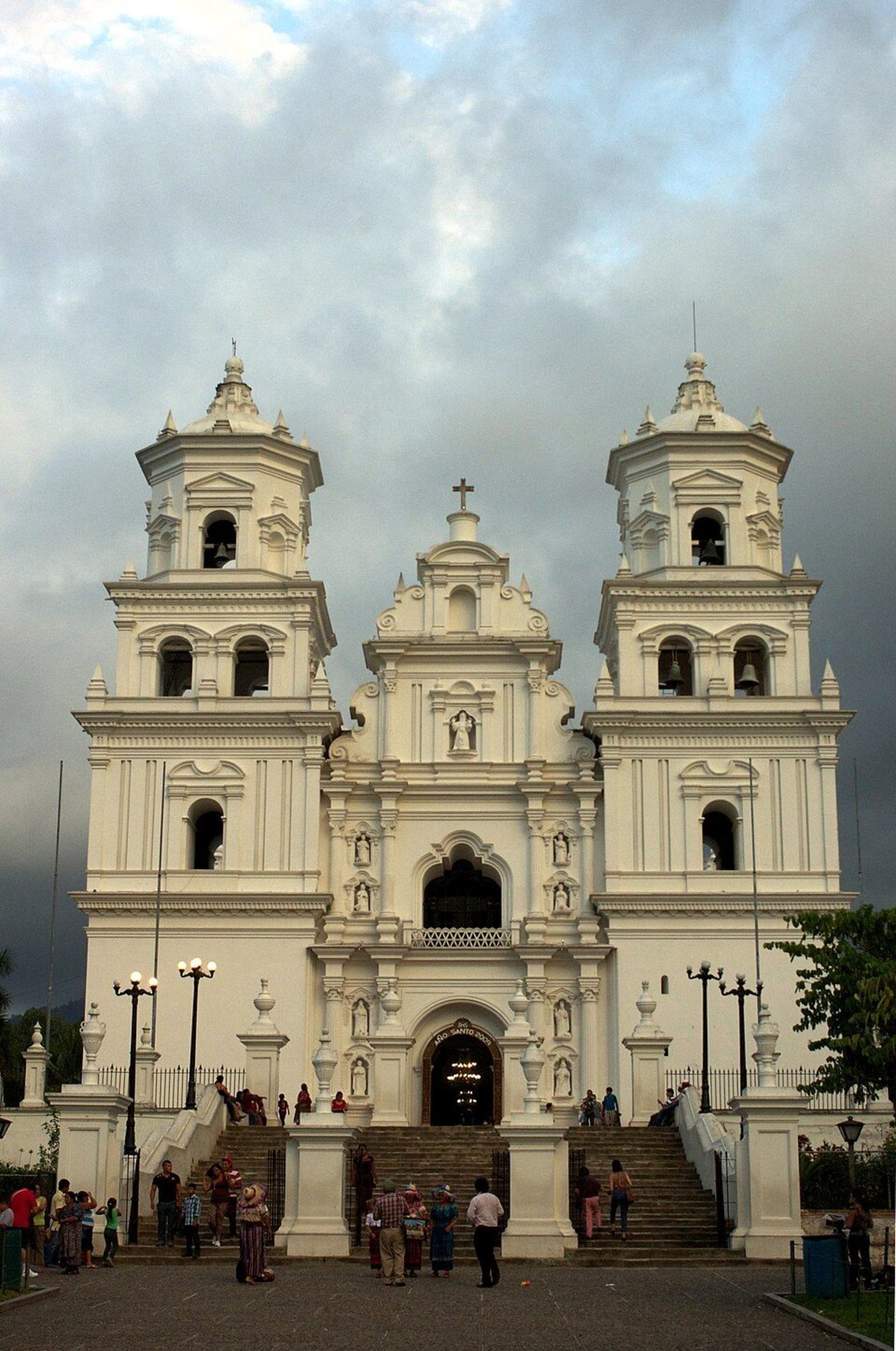
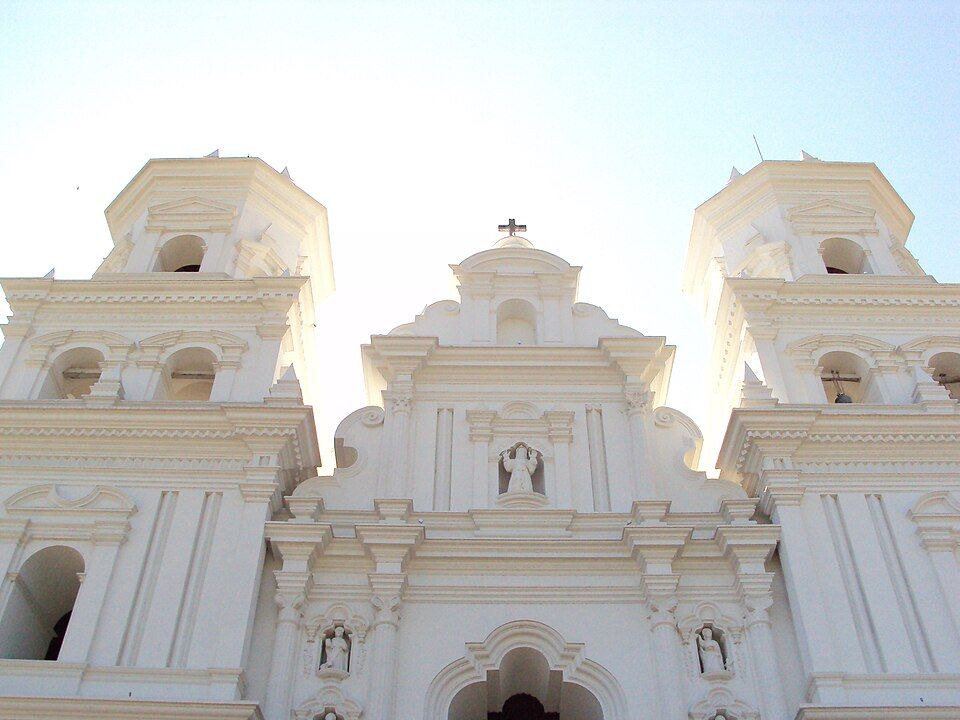
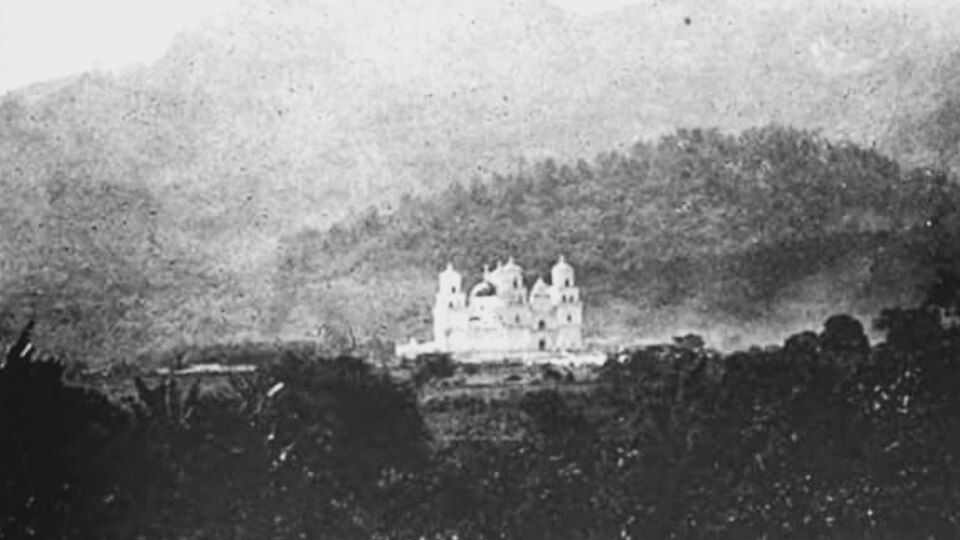
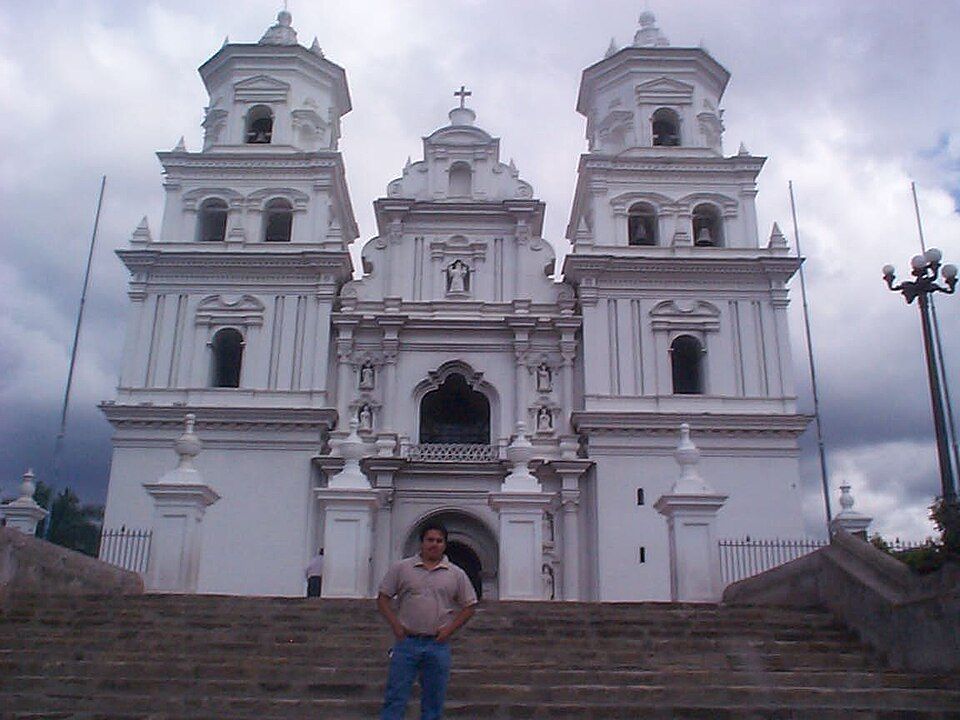
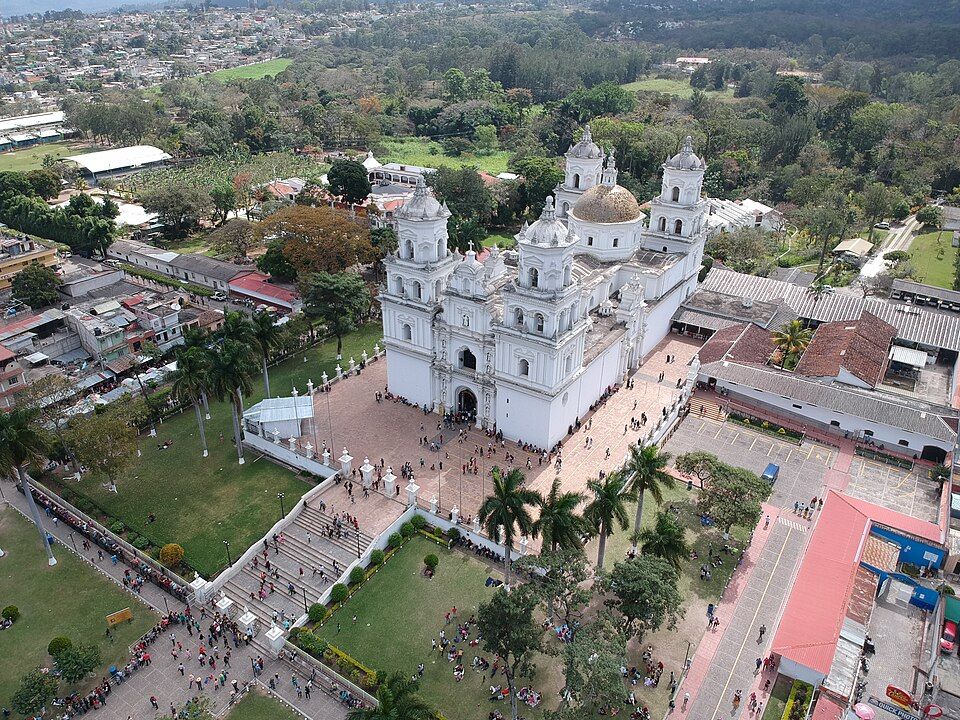
Hilltop above the town [OUTDOOR] The great white baroque basilica, completed in 1758, dominates the Esquipulas valley from its hilltop. Visible from many kilometres in the surrounding mountains, it served as a landmark for centuries of pilgrims approaching on foot through the Guatemala highlands.

4

The Pilgrim Approach

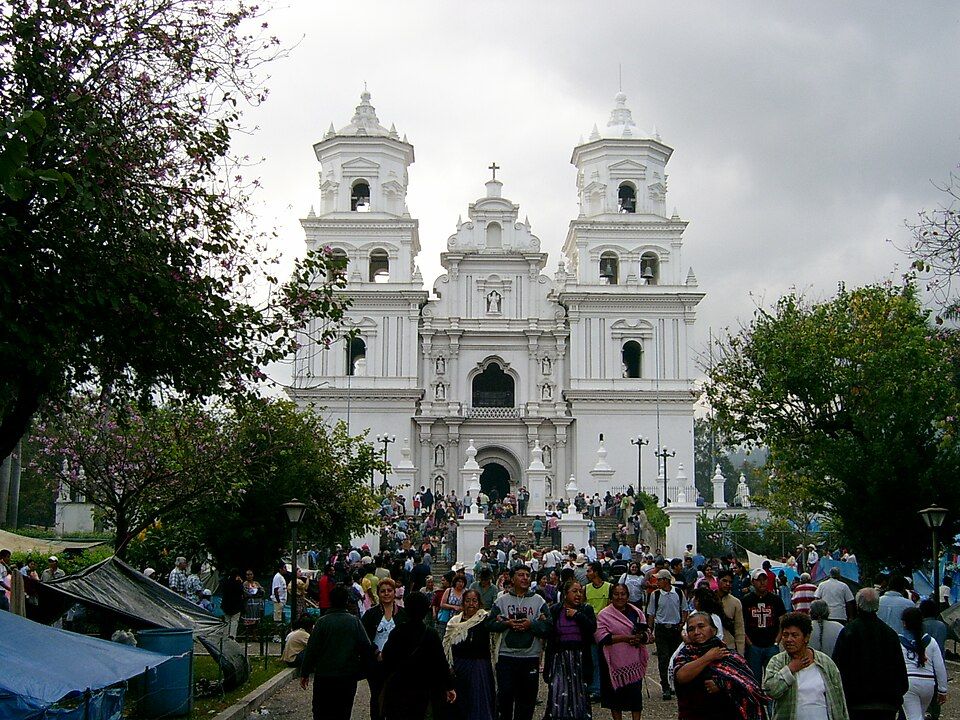
Along the main street below the basilica [OUTDOOR] Pilgrims approach the basilica along a long, wide boulevard lined with religious vendors and food stalls. Many complete the final stretch on their knees. The approach is lined with pilgrims from every Central American nation, distinguished by their regional dress and religious objects.

5

The Hilltop View

From the basilica esplanade [OUTDOOR] The esplanade in front of the basilica looks out over the town and the surrounding mountains of eastern Guatemala and Honduras. At dawn, the mist in the valleys and the pale facade of the basilica create a scene of extraordinary natural beauty.

6

The Peace Accords Site

Town of Esquipulas The 1987 Esquipulas Peace Accords, signed in the town's meeting rooms, ended the civil wars of Guatemala, El Salvador, Honduras, Nicaragua, and Costa Rica. The combination of religious pilgrimage and political peace-making gives Esquipulas a significance beyond Catholicism alone.

Intentions

Carry these intentions into the Basilica with you — pause at each sacred spot and lift them to God.

🙏

For peace in Central America and an end to violence, corruption, and poverty

🙏

For those who suffer — as the Black Christ suffers — with no end in sight

🙏

For migrants and those crossing borders in danger

🙏

For reconciliation between peoples and nations

🙏

For the indigenous communities of Guatemala whose faith sustains them

🙏

For those making long journeys to seek healing or intercession

🙏

For the children of Central America, living in poverty and violence

🙏

For those who have signed or broken peace agreements — that justice and mercy may meet

Reflection

The Black Christ of Esquipulas is black not from race but from centuries of candle smoke and devotion — from the accumulation of millions of prayers pressed against the glass that protects him. He has been darkened by the faith of the poor. This is the most accurate theological statement about the Señor de Esquipulas: he takes on the colour of the suffering he receives. He becomes what he absorbs. This is also a description of the Passion.

Suggested Scripture — Isaiah 53:3

He was despised and rejected by mankind, a man of suffering, and familiar with pain.

Read in full on Bible Gateway →

A Pilgrim's Prayer

Señor de Esquipulas, Black Christ of Central America, you have been darkened by five centuries of the prayers of the poor. Receive mine. I come with whatever I have carried across whatever distance I have crossed. I come on behalf of those who could not come. I press my prayer against the glass and trust that you receive it. Amen.

More

The Basilica of Esquipulas in eastern Guatemala is the most revered Catholic shrine in Central America, drawing approximately 4.5 million pilgrims annually — a remarkable number for a country of 17 million. The object of veneration is the Señor de Esquipulas — the Black Christ — a dark carved wood figure of the crucified Christ made in 1594 by the sculptor Quirio Cataño. The image turned black over the centuries from the incense of millions of candles and the touch of millions of hands.

The Shrine

The devotion began when the Bishop of Guatemala visited Esquipulas in 1737 and was cured of a chronic illness after praying before the image. He ordered the present massive white baroque basilica to be built — visible for many kilometres across the Guatemalan highlands. The January 15 feast draws 1.5 million pilgrims in a single weekend from Guatemala, Mexico, El Salvador, Honduras, and throughout Central America. The Señor de Esquipulas is also venerated throughout the southwestern United States wherever Central American immigrant communities have settled.

A Symbol of Peace

The Esquipulas II Accords of 1987 — the peace agreement that ended the civil wars devastating Central America — were signed in Esquipulas, in the shadow of the basilica. The town gave its name to the peace process. The Black Christ of Esquipulas thus carries not only religious but historical and political significance: a figure of suffering who has become a symbol of reconciliation.