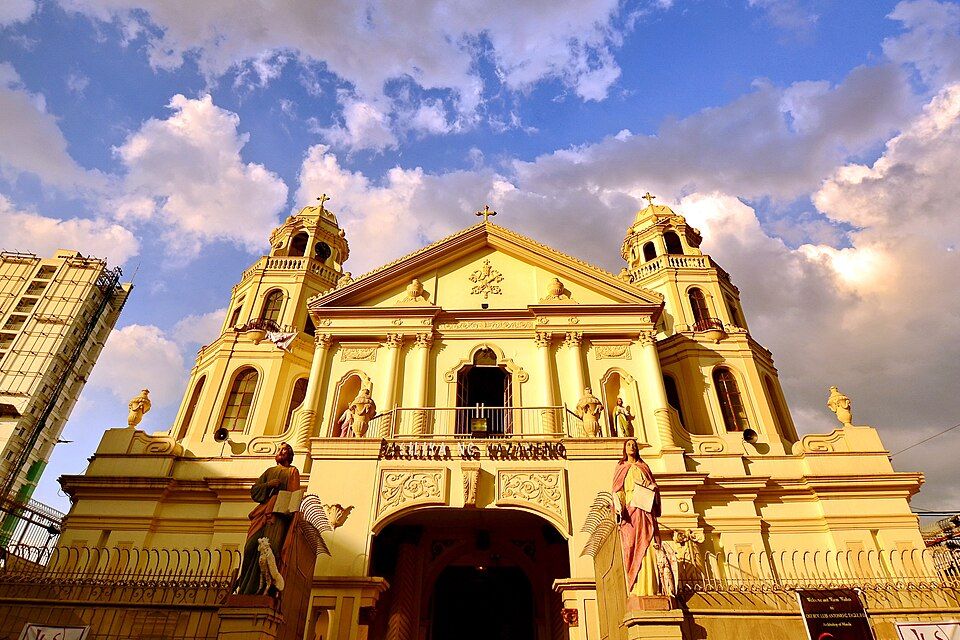
Minor Basilica of the Black Nazarene
Manila, Philippines
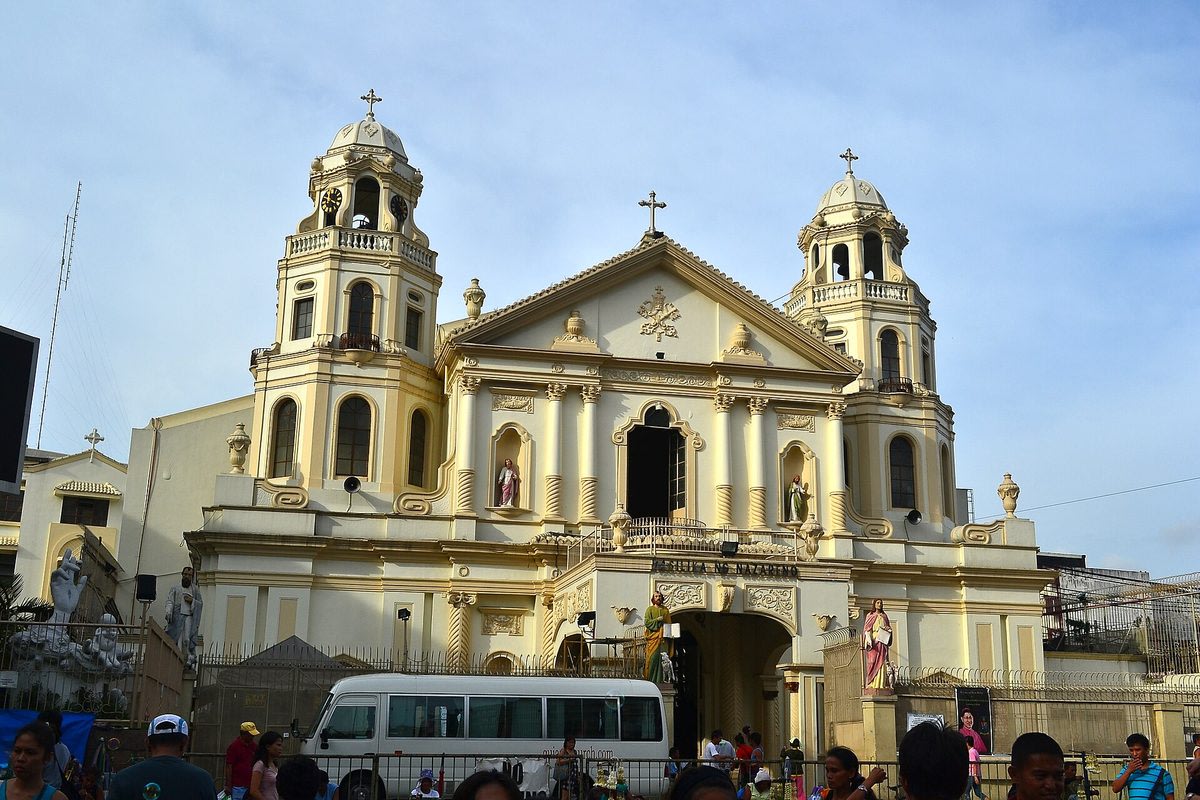
"The Minor Basilica of the Black Nazarene in Quiapo, Manila is the centre of one of the world's most extraor..."
Highlights
- 1A record 9.64 million devotees joined the Traslacion procession in 2026 — the world's largest one-day religious
- 2gathering The Black Nazarene statue was carved in Mexico in the early 17th century and brought to
- 3Manila in 1606 The procession through Manila can take 18-22 hours to travel just 6 km due
- 4to the crowd density The devotion to the Black Nazarene crosses all social classes — presidents and
- 5the poor walk barefoot together The Friday novena draws thousands every week, making Quiapo one of the
Getting There
Address
Plaza Miranda, Quiapo, Manila, 1001 Metro Manila, Philippines
Directions
Quiapo is in central Manila, accessible by LRT Line 1 (Central station) or by jeepney from many points in Metro Manila. From Intramuros (Old Manila), Quiapo is a 15-minute walk north across the Jones Bridge.
Timings
Current time — Manila Time (PHT)
--:--:--
| When | Hours |
|---|---|
| Basilica | 5:00 AM - 8:00 PM |
Feast period (Jan 8-9) Open 24 hours Friday Novena Extended hours from early morning The Traslacion (January 9) requires extraordinary crowd management — arrive days early for prime position. The statue can be venerated daily in the church. Friday novenas begin from early morning. Modest dress required.
Masses & Events
Daily Mass
5, 6, 7, 8, 9 AM; 12, 3, 6, 7, 8 PM
Multiple daily
Masses Friday Novena
Multiple times throughout Friday
The weekly devotional gathering to the
Black Nazarene Traslacion Procession
January 9
begins dawn from Port Area — The annual procession; the largest religious gathering in the Philippines
Must See
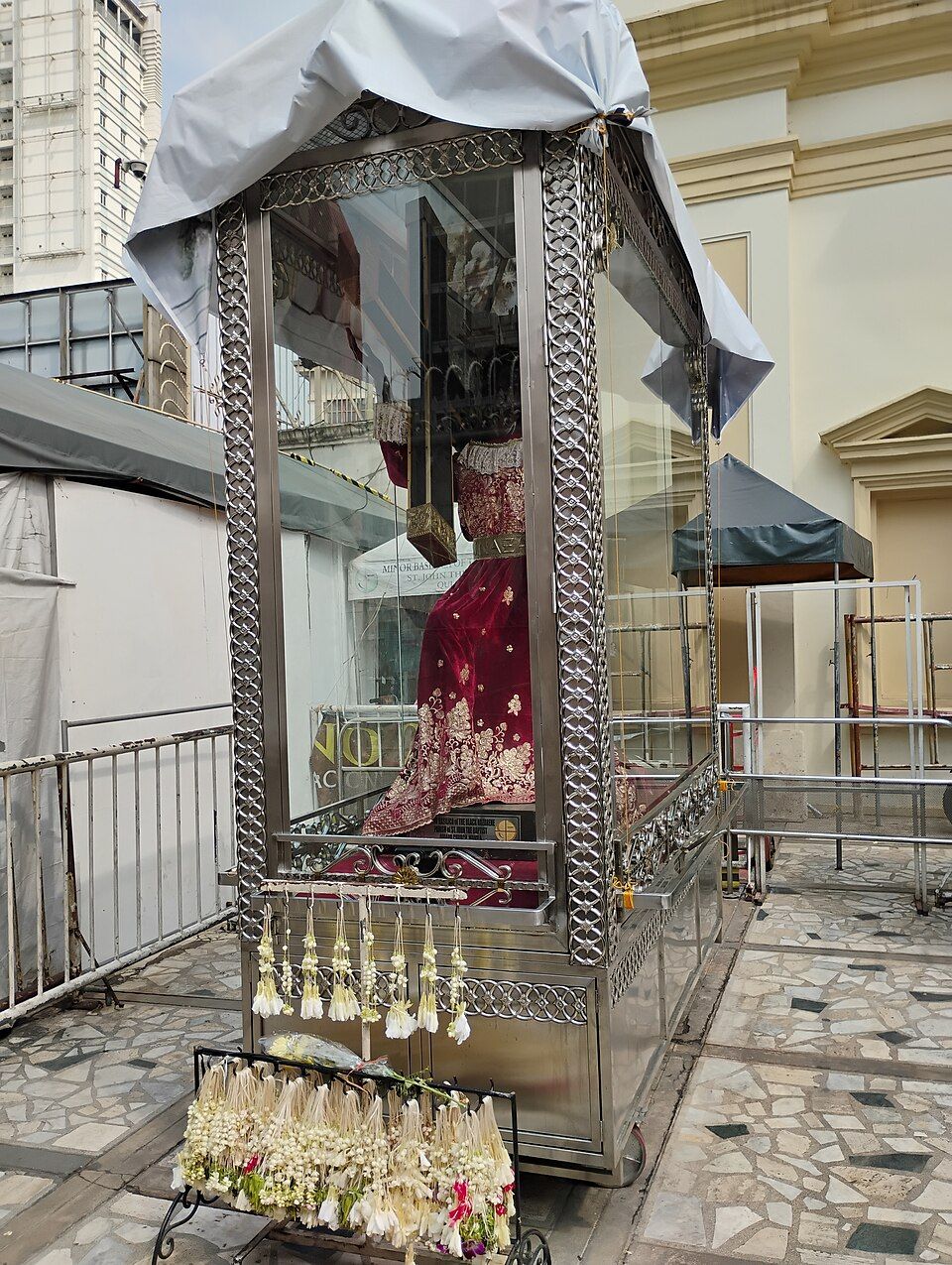
The Black Nazarene Statue
Main altar of the basilica The dark wood figure of Christ carrying the cross, slightly forward-bent under its weight, with an expression of sorrowful endurance that Filipino Catholics find deeply resonant. The statue has been touched, kissed, and pressed with towels (rags for healing called panyo) by millions of devotees for four centuries. To approach the altar is to enter a living tradition of extraordinary intensity.
The Traslacion Route
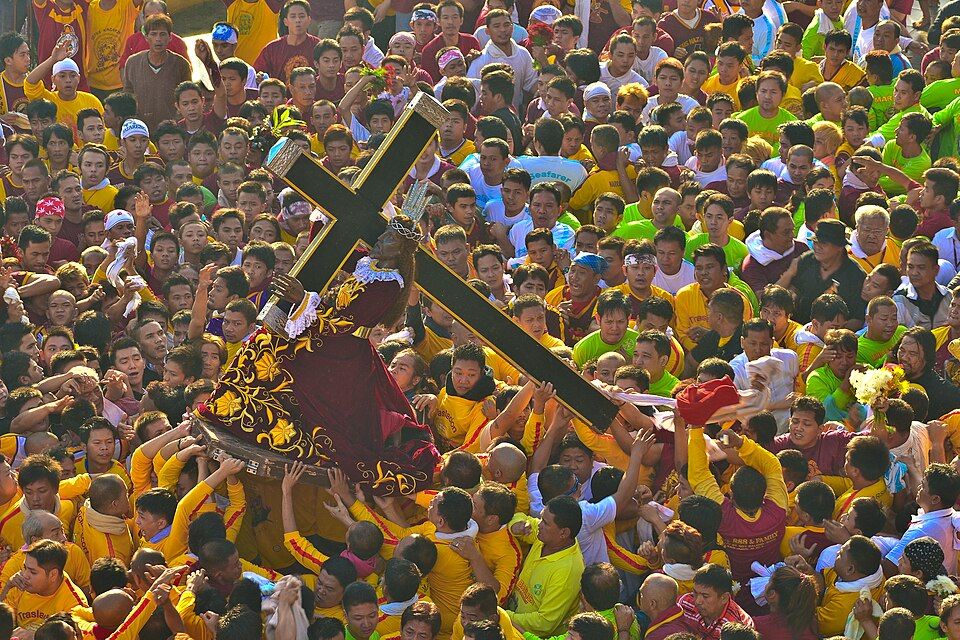
Through Manila streets from Port Area to Quiapo [OUTDOOR] The annual procession route covers 6 km through Manila's streets
a distance that takes nearly 24 hours to complete because of the density of millions of barefoot devotees. The sight of the sea of human bodies surrounding the andas, the sound of the crowd's devotional cries, and the image of bare feet on Manila asphalt in January is one of the most overwhelming spectacles in world religion.
The Ropes of the Andas
During the Traslacion [OUTDOOR] Thick ropes attached to the float allow devotees to pull the image through the streets.
Being allowed to hold the rope
even for a moment
is considered a great blessing. People climb over each other to reach it. The rope system has been in use for over three centuries and is the defining image of Traslacion devotion.
The Plaza Miranda and Quiapo Market
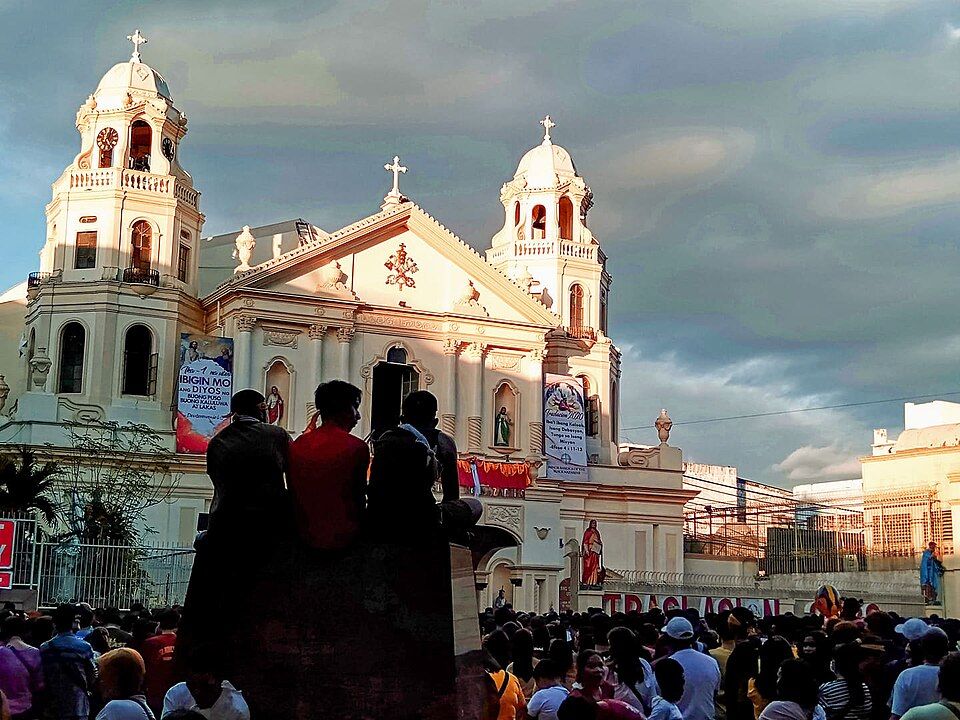
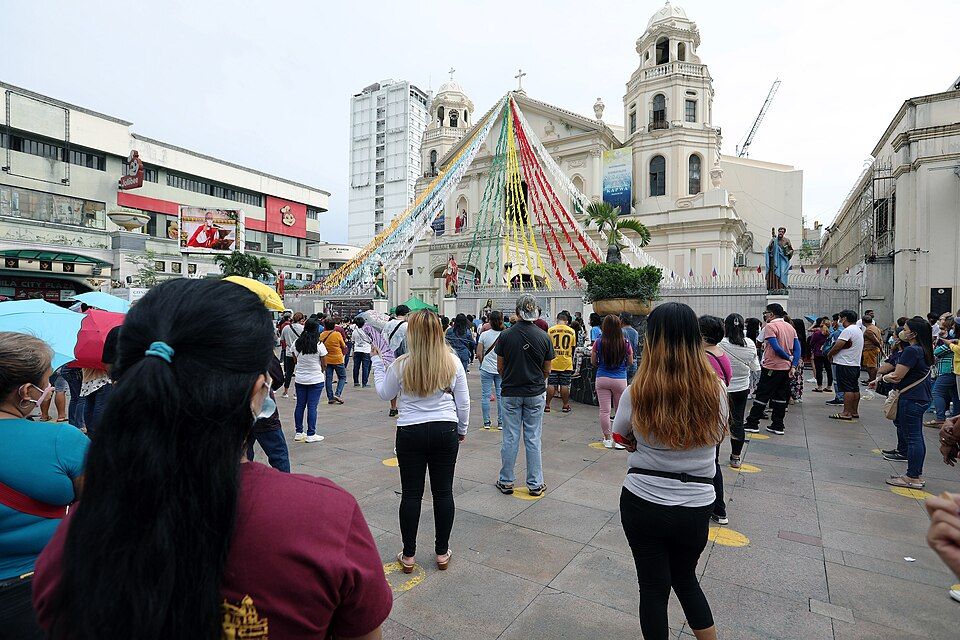
Outside the basilica [OUTDOOR] The square in front of Quiapo Church is one of Manila's most intense public spaces: herb sellers, fortune tellers, religious image vendors, food stalls, and the constant coming and going of pilgrims. The atmosphere is pre-industrial Filipino Catholicism at its most exuberant.
The Basilica Interior During Novena
Main nave, Fridays On Fridays, the church fills to overflowing and crowds spill into the plaza. The sound of the novena prayers in Filipino and the sight of the bare feet and bowed heads
of an entire city's poorest and richest citizens kneeling together before a dark wooden figure — is unlike anything else in Asian Catholicism.
Intentions
Carry these intentions into the Basilica with you — pause at each sacred spot and lift them to God.
For the Filipino people and the Catholic faith that defines them
For the poor of Manila — the devotees who walk barefoot on the concrete and the ones who cannot
For healing of every kind — the intercession the Black Nazarene is most sought for
For families scattered by overseas work and economic migration
For social justice and equality — for a city where all classes walk barefoot on the same road
For those who suffer carrying their cross — that Christ the Nazarene may walk beside them
For the safety of all who attend the Traslacion
For a Filipino Church that is alive, popular, and deeply incarnate
Reflection
Nine million people walk barefoot through Manila for 24 hours in January to be near a wooden statue. They are domestic workers, senators, doctors, jeepney drivers. They are barefoot because they promised God they would walk barefoot. They do not stop walking until they have touched the rope or the mantle or at least stood near enough to say: I was there. This is what faith looks like when it is not polite. This is what it looks like when it is real.
Suggested Scripture — Mark 8:34
Whoever wants to be my disciple must deny themselves and take up their cross and follow me.
Read in full on Bible Gateway →A Pilgrim's Prayer
Black Nazarene, you carry your cross on a dark wooden face with an expression that Filipino Catholics have recognised for four centuries: this is what endurance looks like. This is what love costs. I come to you with my own cross — lighter than yours, heavier than I expected. Walk with me. And at the end of the road, let me have arrived somewhere worth the journey. Amen.
More
The Minor Basilica of the Black Nazarene in Quiapo, Manila is the centre of one of the world’s most extraordinary acts of popular Catholic devotion. The Black Nazarene is a life-size dark wood statue of Jesus Christ carrying the cross, carved in Mexico in the early 17th century and brought to Manila in 1606. The Traslación — the annual procession translating the image from the Port of Manila to Quiapo Church on January 9 — drew a record 9.64 million devotees in 2026, making it the largest single-day religious gathering on earth.
A Devotion Across Classes
The devotion to the Black Nazarene is rooted in Filipino folk Catholicism and transcends class boundaries: presidents, senators and informal settlers all participate alongside each other in the barefoot procession, pulling the andas (the float carrying the statue) through Manila’s streets by means of a thick rope. The procession takes 18–22 hours to travel approximately 6 km, because of the density of the crowd and the devotional intensity of the participants. Every few minutes, a sea of hands reaches for the rope or the statue’s mantle.
The Church
The Quiapo Church is not only significant during the feast: the Friday novena to the Black Nazarene draws enormous crowds weekly, and on any given day the church is among the busiest in Asia. Vendors outside sell religious images, herbal remedies and lottery tickets in one of Manila’s most vivid street markets — an urban pilgrimage landscape unlike any other.
Photo Gallery
5 photosKey Facts
- Type
- Basilica
- Region
- Other
- Location
- Manila, Philippines
Open in Google Maps
Plaza Miranda, Quiapo, Manila, 1001 Metro Manila, Philippines
Pilgrim's Note
We encourage all visitors to enter in a spirit of prayer and respect for the faith traditions of each place.