Einsiedeln Abbey
Site · Other

Einsiedeln Abbey

Einsiedeln, Switzerland

"The Benedictine Abbey of Einsiedeln in the Swiss canton of Schwyz is the most visited pilgrimage site in Sw..."

Highlights

  • 1The most visited pilgrimage site in Switzerland — 800,000 pilgrims per year The
  • 2Angelus bell tradition — now universal in the Catholic world — is historically
  • 3associated with Einsiedeln St Meinrad, founder of the first hermitage here, was martyred
  • 4by robbers in 861 AD The Black Madonna has been venerated continuously since
  • 5the 10th century A Benedictine community of ~60 monks maintains the Divine Office

Getting There

📍

Address

Klosterplatz 1, 8840 Einsiedeln, Schwyz, Switzerland

🗺

Directions

Einsiedeln is 40 km from Zurich. Direct S-Bahn trains from Zurich HB (1h) via Wädenswil. The abbey is a 5-minute walk from Einsiedeln station. By car: A3 from Zurich, exit at Reichenburg.

Open in Google Maps

Timings

Current time — Zurich Time (CET)

--:--:--

WhenHours
Abbey Church5:00 AM - 9:00 PM
Chapel of Grace Open throughout church hours Abbey Museum10:00 AM - 5:00 PM

Masses & Events

Our Lady of Einsiedeln

September 14

The principal feast; pilgrims from Switzerland and neighbouring countries

Lady of the Snows

August 5

Second Marian feast celebrated at Einsiedeln

Must See

1

The Chapel of Grace

Within the abbey church The barrel-vaulted chapel at the west end of the nave encloses the Black Madonna. The chapel is itself entirely clad in black marble, with silver decorations and hundreds of flickering candles. Entering from the nave into the black chapel is a dramatic transition. The Madonna, small, dark, enthroned, looks down with an expression of grave tenderness.

2

The Forecourt Fountain

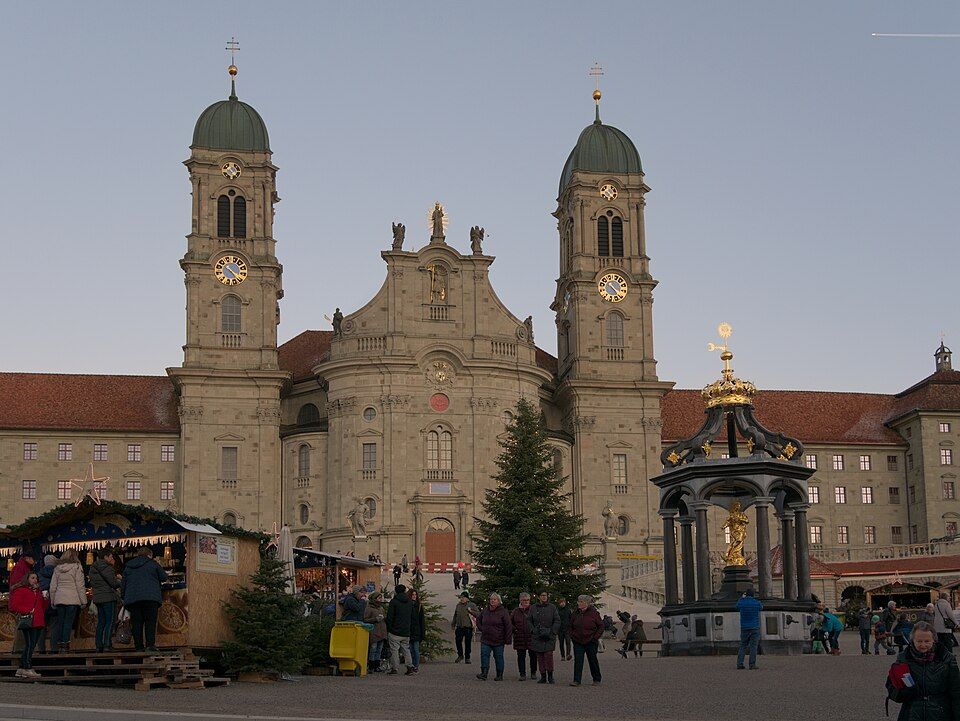
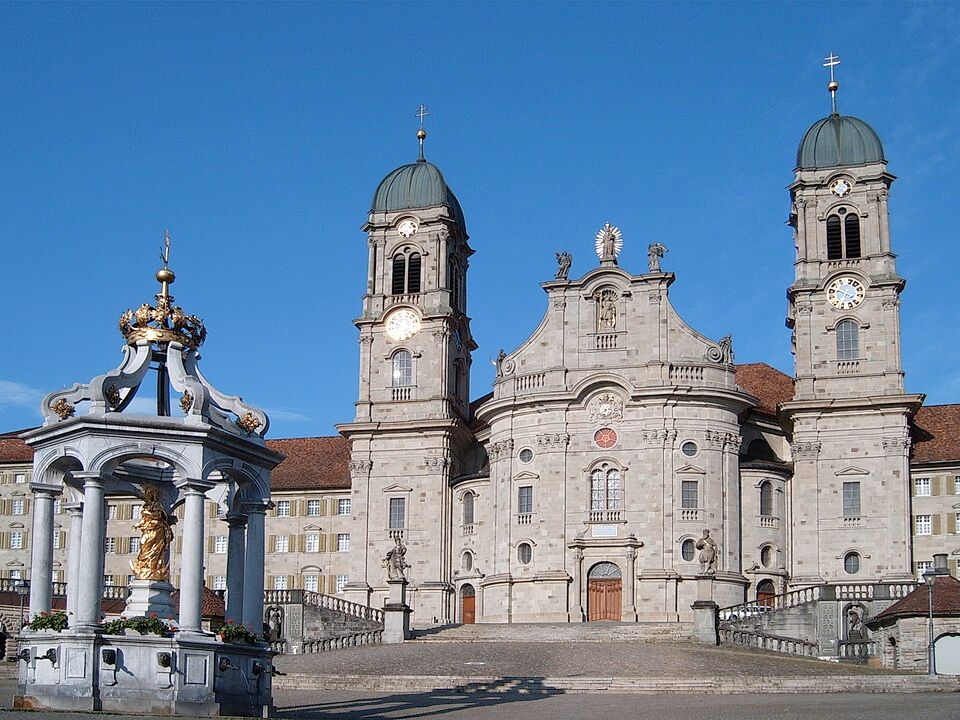
In front of the abbey church [OUTDOOR] The large forecourt fountain with 14 spouts of spring water is where pilgrims gather to bathe hands, faces, and fill containers. The tradition of washing in the sacred water of Einsiedeln is centuries old. At the major feasts the forecourt is filled with thousands of pilgrims.

3

The Vespers Service

Abbey church choir The Benedictine monks' Vespers at 5:30 PM, sung in Latin with Gregorian chant, is one of the most moving daily liturgical experiences available to pilgrims in Europe. The choir, the incense, the candlelight, and the voices of the monastic community are exactly what Einsiedeln has been for over a thousand years.

4

The Great Forecourt

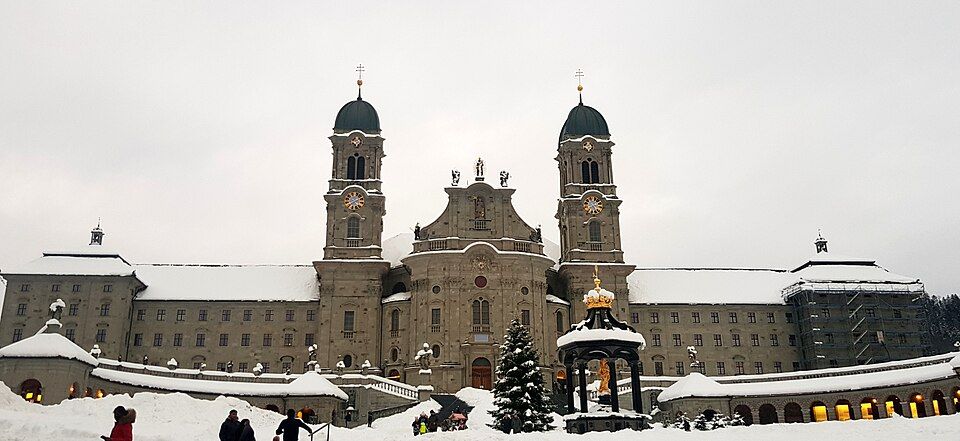
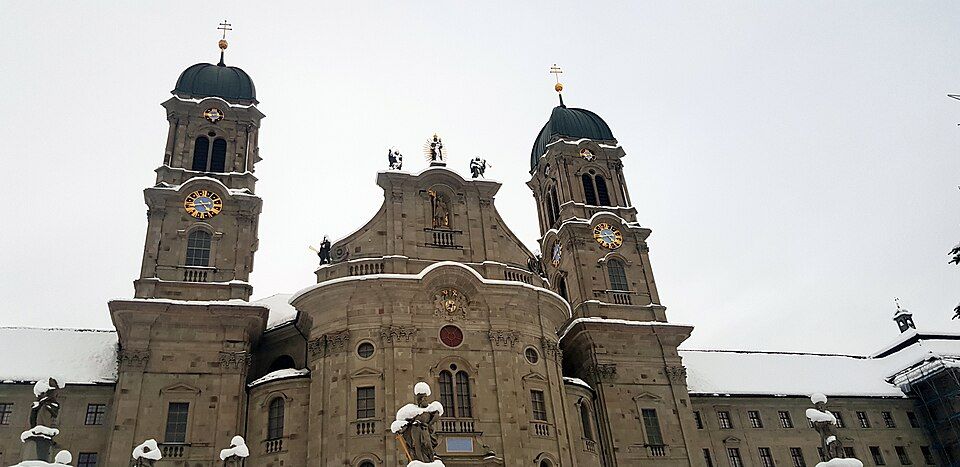
In front of the abbey [OUTDOOR] The immense semicircular forecourt, designed by the architect Caspar Moosbrugger, is one of the finest Baroque spaces in Switzerland. Two wings of the monastery frame the church behind. On feast days it fills with tens of thousands of pilgrims; on weekday mornings it is peaceful, the fountain sounding in the silence.

5

The Forest and Hermitage Path

Behind and around the abbey [OUTDOOR] Marked paths through the forest lead to a replica of the Bethlehem cave, the Lourdes grotto, and various shrines. St Meinrad's spiritual lineage connects Einsiedeln to the earliest hermit tradition of Christian solitude. Walking in the forest behind the abbey, the hermitage tradition becomes briefly comprehensible.

Intentions

Carry these intentions into the Basilica with you — pause at each sacred spot and lift them to God.

🙏

For Switzerland and for all who come to this hermitage seeking solitude

🙏

For the Benedictine tradition — ora et labora — pray and work

🙏

For those who ring the Angelus and pray it daily across the world

🙏

For hermits and solitaries — those who choose silence as a form of witness

🙏

For those who were martyred for the faith, as St Meinrad was

🙏

For the Swiss Catholic community in a deeply divided religious landscape

🙏

For those who come to this abbey for the first time and find what they did not expect

🙏

For Zwingli, the reformer who served this town — for the healing of the Reformation wound

Reflection

St Meinrad came to this valley to be alone with God. He was murdered by two robbers he had welcomed as guests. His body was found by his hermit colleagues; the church was built on the site; the Benedictines came; the Black Madonna arrived; the pilgrims came. This is the paradox of holy places: the hermit who seeks solitude creates a community. Einsiedeln means hermitage. It has never been less than one of the busiest pilgrimage destinations in Central Europe.

Suggested Scripture — Mark 1:35

Very early in the morning, while it was still dark, Jesus got up, left the house and went off to a solitary place, where he prayed.

Read in full on Bible Gateway →

A Pilgrim's Prayer

Lord of the early morning and the solitary place, I come to a hermitage that became a basilica. The hermit's cell is now a great church. The solitude is preserved in the monks' Office, still rung at the same hours since the 10th century. Let me find in this place the solitude I cannot find in my own life — even for a moment, even amid the crowd. Amen.

More

The Benedictine Abbey of Einsiedeln in the Swiss canton of Schwyz is the most visited pilgrimage site in Switzerland and one of the most important Marian shrines in the German-speaking world. The abbey was founded in 934 on the site where the hermit St Meinrad was martyred by robbers in 861 AD. The name Einsiedeln means hermitage — the place of the solitary one.

The Black Madonna

At its heart is the Chapel of Grace, containing the Black Madonna of Einsiedeln, a 15th-century wooden figure dressed in embroidered robes within a black protective coating. The Black Madonna has been venerated at Einsiedeln since the 10th century and has an extraordinary tradition of pilgrimage. St Meinrad built the first chapel here in 828. The Angelus prayer — now recited throughout the Catholic world three times daily — was historically associated with Einsiedeln, where the evening bell calling monks to prayer gave rise to the tradition. Zwingli, the Swiss reformer, was once a priest in this town.

The Abbey Church

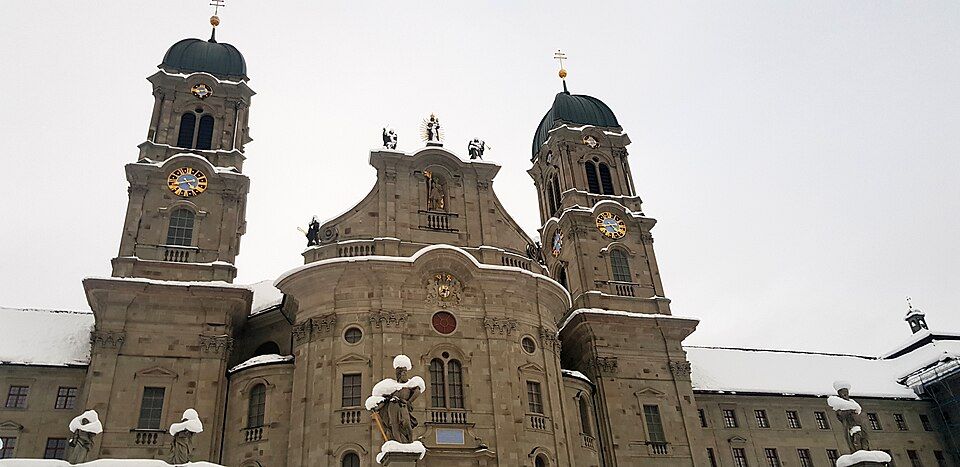
The Baroque abbey church, rebuilt in 1735 after a fire, is one of the finest examples of Swiss Baroque architecture. It faces an enormous forecourt with a large fountain — pilgrims bathe their eyes and hands in the 14 spouts. The Benedictine community of approximately 60 monks still maintains the Divine Office and provides the liturgical framework for the millions who come seeking the Black Madonna.