Hill of Crosses
Site · Other

Hill of Crosses

Šiauliai, Lithuania

"The Hill of Crosses (Kryžių kalnas) near the city of Šiauliai in northern Lithuania is one of the most rema..."

Highlights

  • 1Over 200,000 crosses placed spontaneously by pilgrims from around the world
  • 2Soviet authorities bulldozed all crosses THREE TIMES — the crosses reappeared each time
  • 3Pope John Paul II visited in 1993 and described it as a place of hope, peace, and love No authority administers or charges fees — pilgrims simply arrive and place their cross The tradition began as an act of resistance against Russian occupation in the 1830s

Getting There

📍

Address

Jurgaičiai village, Šiauliai district, Lithuania (12 km north of Šiauliai)

🗺

Directions

12 km north of Šiauliai on the A12 road. Šiauliai is 220 km from Vilnius and 130 km from Riga. From Šiauliai: buses and taxis run to the site. By car: well-signposted from the A12 highway. The site is in open farmland — free parking available nearby.

Open in Google Maps

Timings

Current time — Vilnius Time (EET)

--:--:--

WhenHours
Hill of Crosses Open 24 hours, 365 days a year Franciscan Friary Chapel8:00 AM - 7:00 PM

There is no entry fee, no ticket, no formal visiting hours. Pilgrims are invited to bring a cross and place it on the hill. Crosses are available from vendors at the entrance to the site. The experience is overwhelmingly spontaneous and personal.

Masses & Events

Daily Mass

Franciscan friary chapel, 8:00 AM

Daily liturgy by the resident Franciscan community

Exaltation of the Cross

September 14

A natural feast for this site

John Paul II's Visit

September 7

Commemorated annually

Must See

1

The Hill Itself

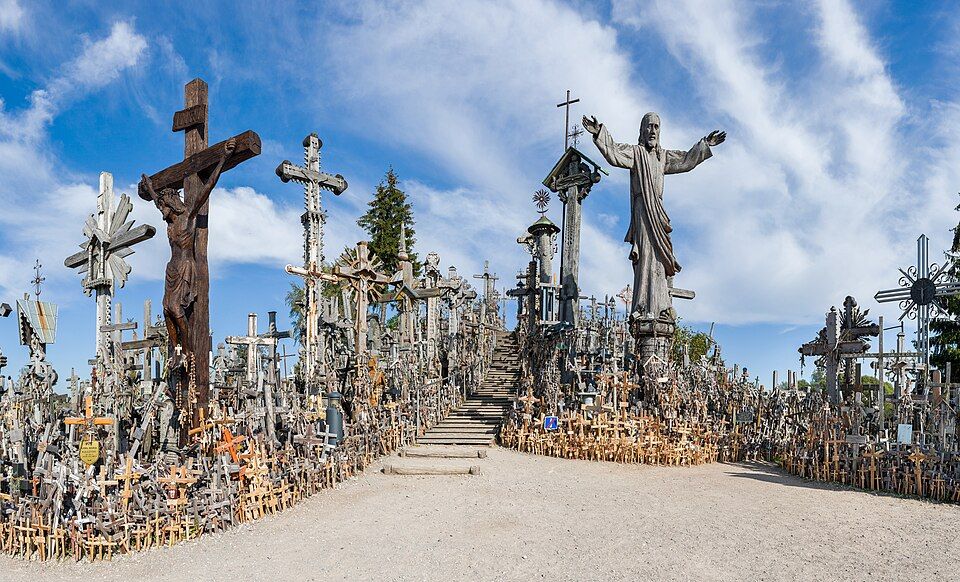
The central mound [OUTDOOR] The hill

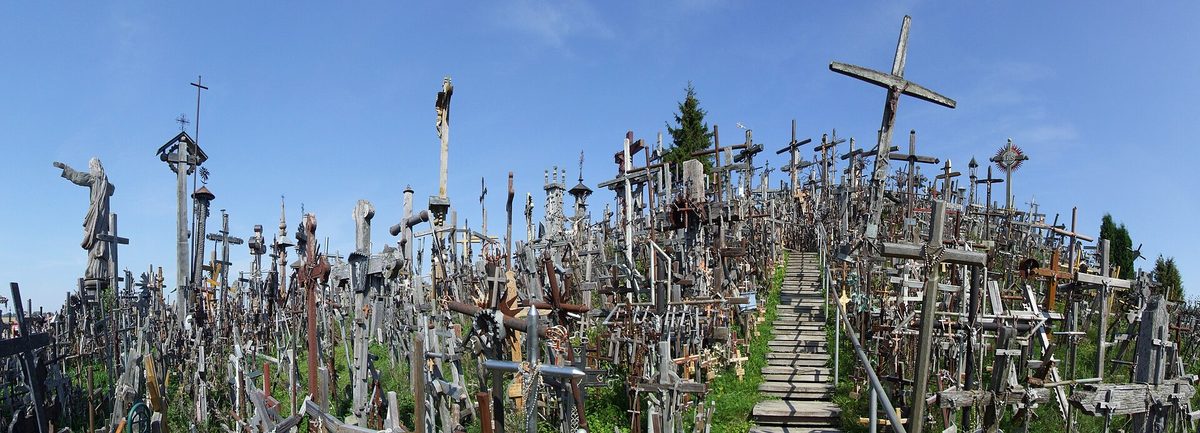
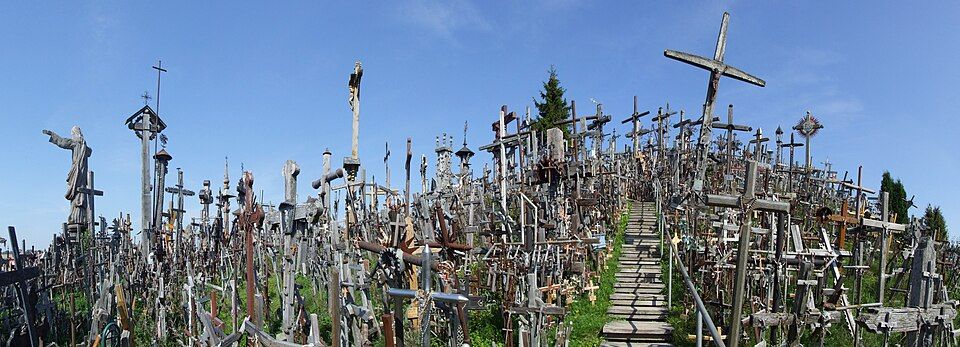
scarcely 5 metres high — disappears entirely beneath the accumulation of crosses. Every size from wooden toys to 5-metre carved timber crosses. Rosaries looped everywhere. Photographs of the dead. Notes and prayers tucked between crosses. The scale of accumulated human longing, grief, and hope materialised in wood and metal is without parallel in the Christian world.

2

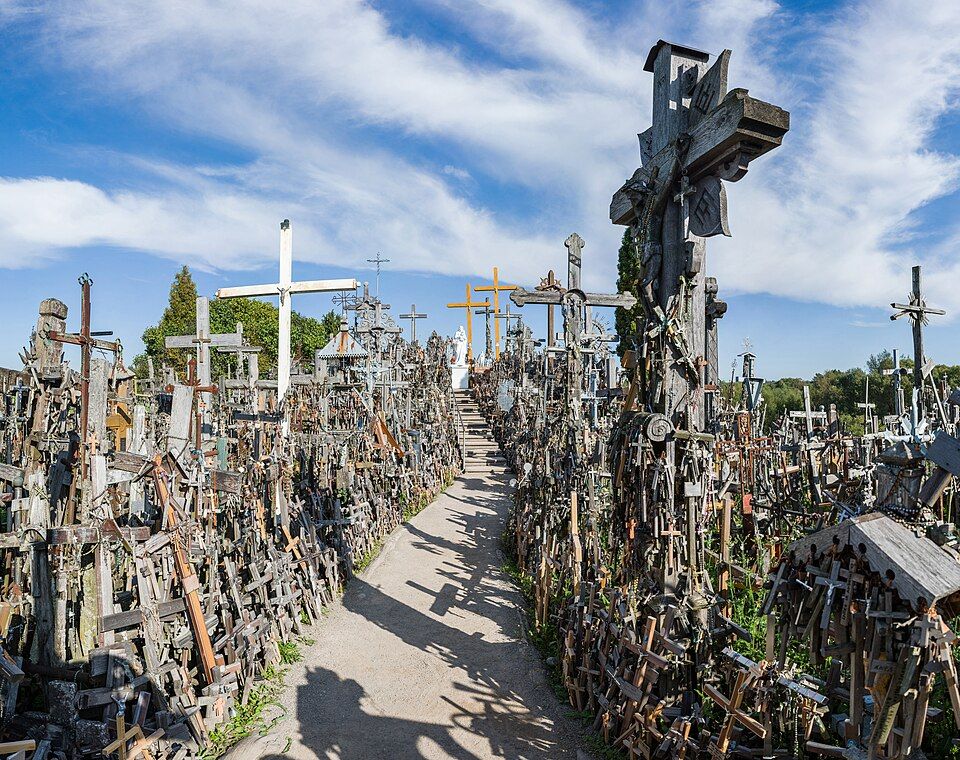
Walking Into the Crosses

Paths through the hill [OUTDOOR] Narrow paths wind through the crosses, allowing pilgrims to walk into the interior of the accumulation.

3

To be surrounded on all sides by crosses

above, beside, brushing your face

is an experience of disorientation and intense tenderness. The crosses placed by Lithuanians mourning relatives deported to Siberia stand beside crosses placed by American tourists last Tuesday.

4

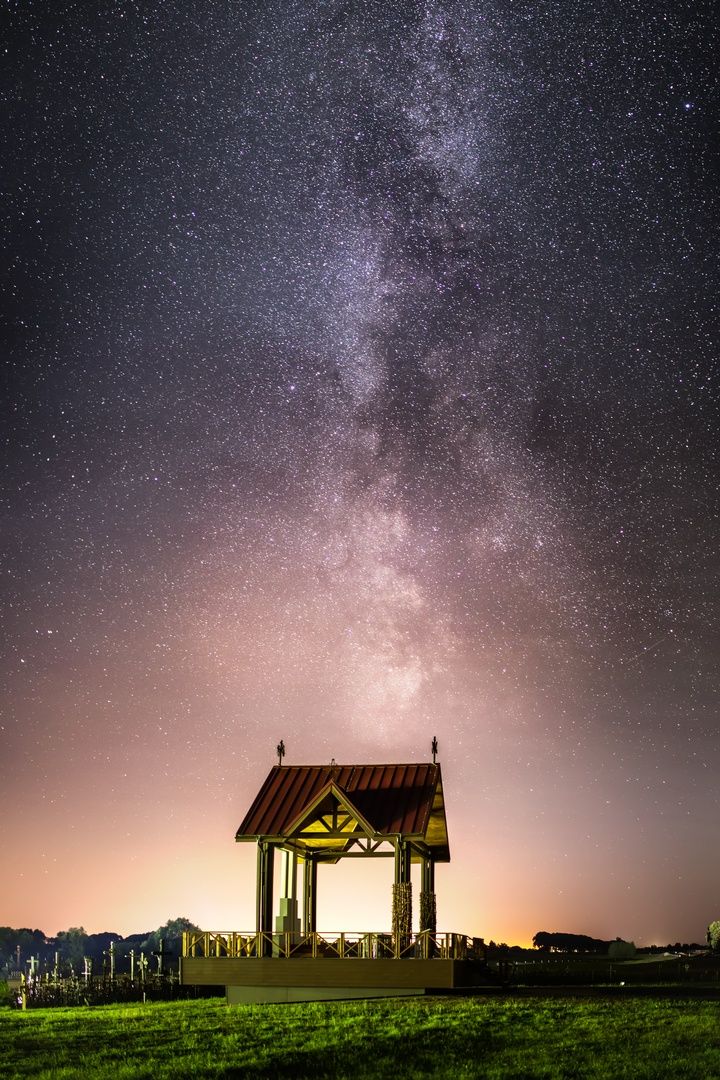
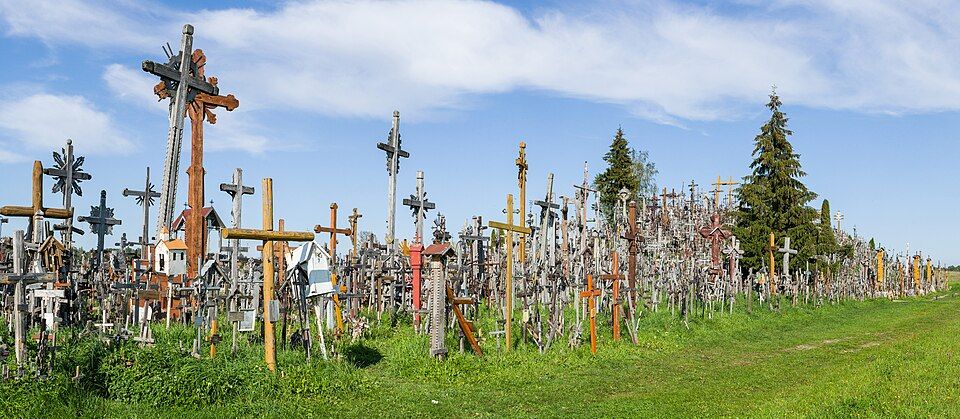
The Panorama at Dawn or Dusk

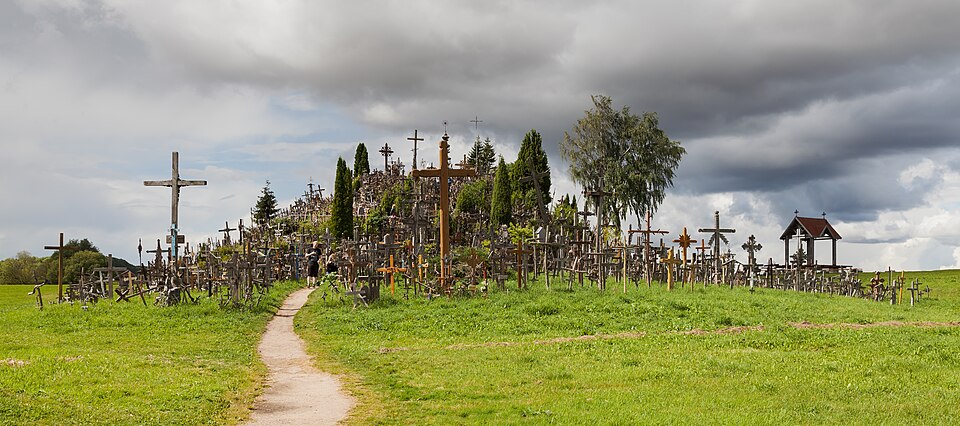
From the approach road [OUTDOOR] The silhouette of the hill against a Lithuanian sky at dawn or dusk

thousands of crosses against light — is one of the most visually striking images in European Christianity. Photographs cannot prepare you for the scale or the silence.

5

The Franciscan Friary

Base of the hill The friary, established after Pope John Paul II's visit, provides the liturgical anchor for the spontaneous pilgrimage tradition. The friars celebrate daily Mass, provide spiritual direction, and are the custodians of the site's story.

6

The Cross of Pope John Paul II

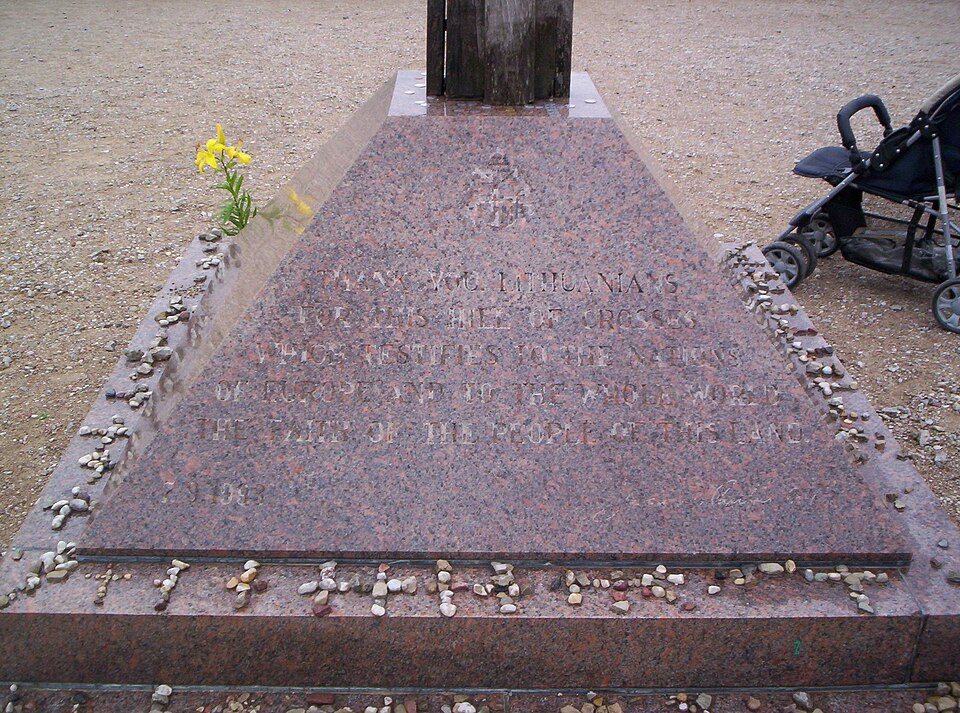
Marked position on the hill The cross placed by John Paul II in 1993 is marked and visible. The Pope who outlasted Soviet communism placed his cross on the hill that also outlasted Soviet communism. The symmetry is complete.

Intentions

Carry these intentions into the Basilica with you — pause at each sacred spot and lift them to God.

🙏

For Lithuania and for all the Baltic nations who suffered under Soviet occupation

🙏

For those who placed crosses here in secret and at risk during the Soviet era

🙏

For the deported — for the Lithuanian families sent to Siberia whose crosses are still here

🙏

For the dead whose photographs are pinned to these crosses

🙏

For those who resist oppression by praying rather than surrendering

🙏

For Pope John Paul II, who came here and understood immediately

🙏

For those who have lost faith and do not know whether to place a cross or walk away

🙏

For the persistence of love against the persistence of death

Reflection

The Soviet Union sent in bulldozers three times. Three times, every cross was removed. Three times, the crosses came back. The regime that had exterminated the kulaks, deported the Lithuanians to Siberia, and controlled every atom of public life in the USSR could not stop people from placing crosses on a small hill in the countryside. It could not be done, because the crosses were not placed by an organisation — they were placed by individuals, one at a time, who kept coming. That is what the Hill of Crosses means: the individual act of faith, repeated ten thousand times, defeats the collective act of erasure.

Suggested Scripture — Revelation 2:10

Be faithful, even to the point of death, and I will give you life as your victor's crown.

Read in full on Bible Gateway →

A Pilgrim's Prayer

Lord of the cross and of the crosses — I stand on a small hill covered with the prayers of a people who would not stop. Let me place my cross here: not as a grand gesture but as one cross among 200,000. Let it mean what every other cross means — I was here, I believed, I brought what I had. And let the faith that survived three Soviet bulldozers teach me that nothing I love will be permanently destroyed. Amen.

More

The Hill of Crosses (Kryžių kalnas) near the city of Šiauliai in northern Lithuania is one of the most remarkable and moving Christian pilgrimage sites in the world — a small glacial hill covered with hundreds of thousands of crosses, rosaries, statues of the Virgin and other religious objects, placed by pilgrims over a period of at least 200 years. No one administers the hill; no fee is charged; no authority determines who may place a cross. Pilgrims simply come and add to the accumulation.

Origins and Resistance

The exact origin of the practice is unknown. The earliest documented crosses appeared in the 1830s following a Lithuanian uprising against Russian rule. The practice became associated with Lithuanian national and religious identity — placing a cross on the hill as an act of resistance, mourning and faith. Soviet authorities bulldozed the hill three times — in 1961, 1973 and 1975 — removing all crosses each time. Each time, the crosses reappeared. By the 1980s there were an estimated 50,000 crosses on the hill; today there are estimated to be over 200,000.

Pope John Paul II

Pope John Paul II visited the Hill of Crosses on September 7, 1993, on his pastoral visit to Lithuania, and described it as a place of hope, peace and love. He placed a cross there himself. A Franciscan friary has since been established at the base of the hill, and the site has become part of the official pilgrimage infrastructure of the Lithuanian Catholic Church — though the essentially spontaneous, unauthorised accumulation continues.