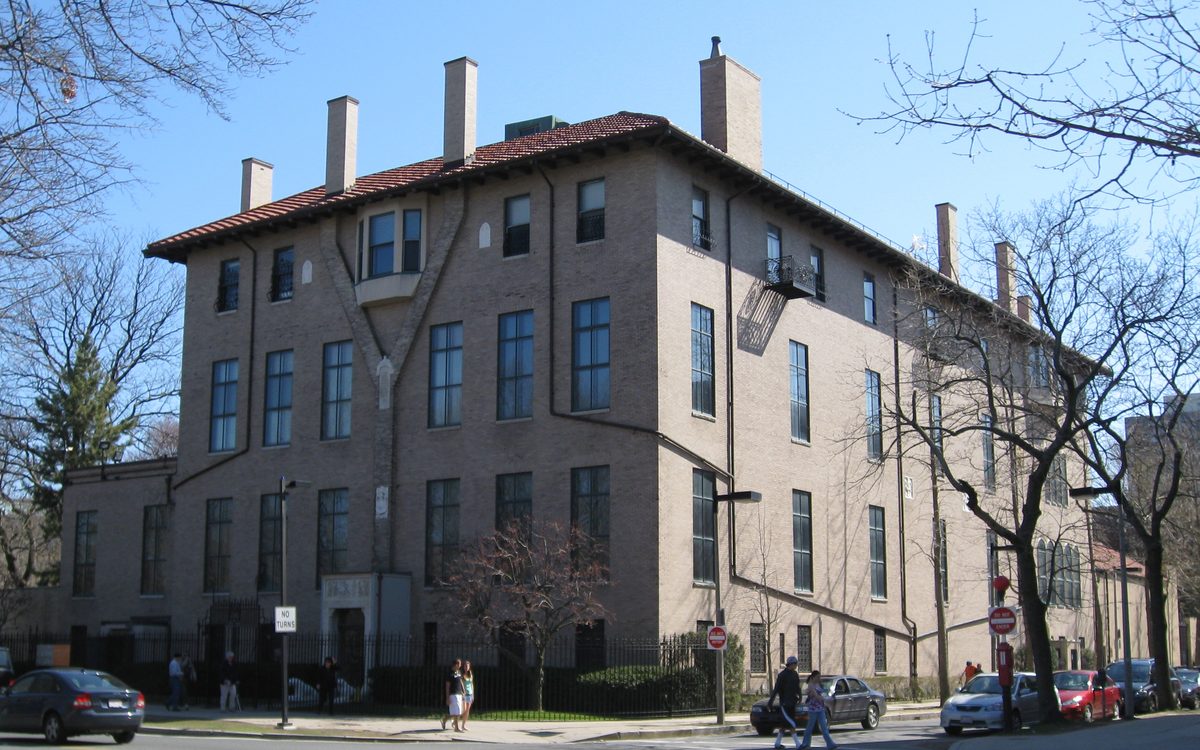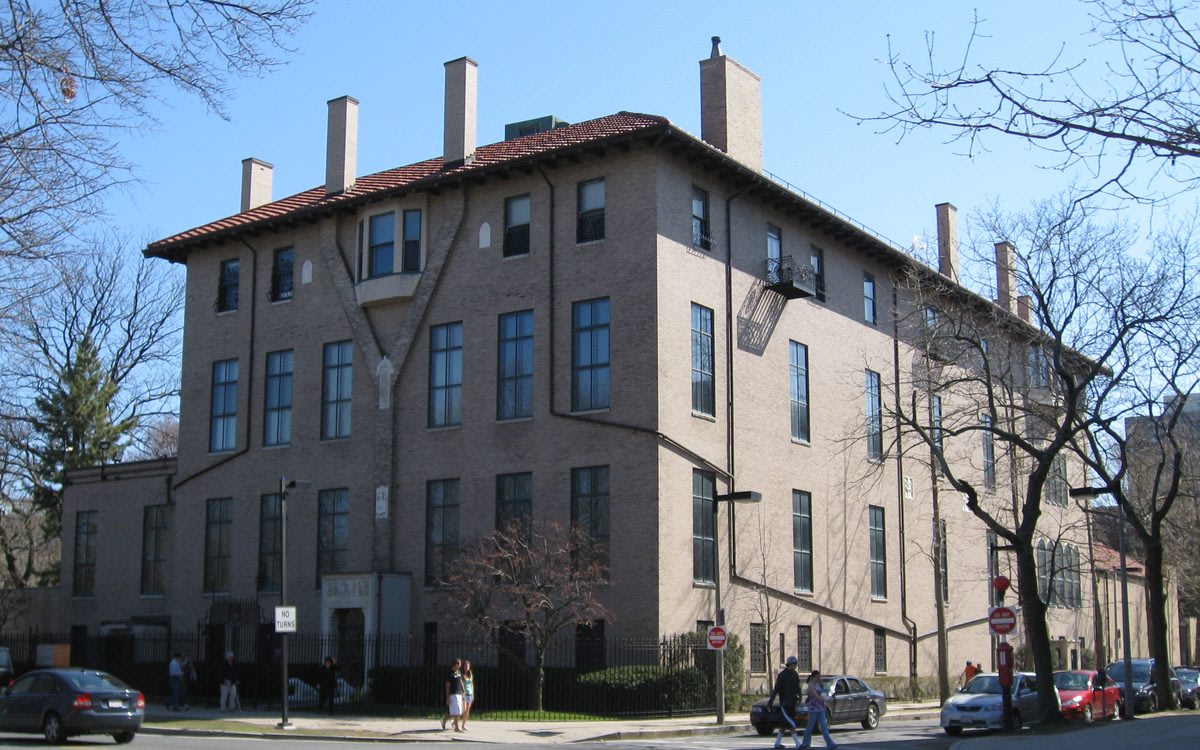
Isabella Stewart Gardner was the most extraordinary private art collector America has ever produced — not in the scale of her wealth (she was comfortably but not spectacularly rich by Gilded Age standards) but in the purity and authority of her taste, the range of her personal friendships with artists and scholars, and the audacity of the institution she created. Born in New York in 1840, she married John Lowell Gardner Jr. in 1860 and moved to Boston, where she became the most prominent figure in that city's cultural life for half a century — intimate with Henry James, John Singer Sargent, Bernard Berenson and Henry Adams, patron of emerging composers and painters, and a collector who bought on instinct, feeling and the counsel of the greatest connoisseurs of her age. The museum she built in the Fenway neighbourhood of Boston, completed in 1903, is designed in the manner of a fifteenth-century Venetian palazzo, with a four-storey courtyard at its centre open to the sky and planted with seasonal flowers, around which galleries of extraordinary paintings and decorative arts are arranged with an idiosyncratic logic that reflects Gardner's own vision rather than any scholarly taxonomy. The Christian art holdings of the Gardner Museum are of the first rank. Fra Angelico, the Florentine Dominican whose serene and luminous altarpieces represent the supreme flowering of early Renaissance sacred painting, is present in the collection. Titian contributes the Rape of Europa — not a religious but a mythological subject — alongside smaller works of devotional character. The concentration of Italian Renaissance painting, much of it with sacred subject matter, reflects Gardner's sustained engagement with the scholarship of Bernard Berenson, the Latvian-born American connoisseur who spent his career at Villa I Tatti near Florence and whose attribution opinions shaped the American collecting of Italian art more profoundly than anyone else's. Berenson functioned as Gardner's principal adviser and purchasing agent, and the collaboration between them — intellectually intense, personally complicated, sometimes financially questionable by modern standards — produced a collection of extraordinary quality and coherence. The museum is also inseparable from the greatest unsolved art theft in history. On the night of 18 March 1990, two men posing as police officers gained entry to the museum and removed thirteen works of art valued at an estimated half a billion dollars: a Vermeer, three Rembrandts, five Degas drawings, a Manet, a Flinck and a Napoleonic bronze finial. Among the stolen works was Rembrandt's Storm on the Sea of Galilee, his only known seascape, and Christ in the Storm on the Sea of Galilee — a painting of explicitly Christian subject matter, depicting the disciples's terror and Christ's calming of the storm. The empty frames in which these works once hung have been left in place according to Gardner's bequest, which specifies that nothing in the museum may be changed. They constitute the most powerful memorial to loss in any art institution in the world.
Fra Angelico's devotional panels and a constellation of Italian Renaissance religious works make the Gardner one of the finest repositories of early Christian painting in North America.
The Venetian-palazzo building, with its flowering central courtyard, is itself a work of art — an environment Gardner designed for the experience of beauty rather than the display of objects.
Bernard Berenson's scholarship and personal advice shaped the Italian collection into one of the most academically distinguished private gatherings of Renaissance art ever assembled.
The empty frames of the 1990 theft — including the frame of Rembrandt's Storm on the Sea of Galilee — hang undisturbed on the walls, the most powerful memorial to loss in any art museum.
Gardner's bequest prohibits any change to the arrangement of the collection, preserving her personal vision intact more than a century after her death.
Isabella Stewart Gardner: Life and Vision
Isabella Stewart Gardner defied Boston convention at every turn. She was notorious for her unconventional behaviour — appearing at the opera in a headband reading 'Oh You Red Sox,' walking a pair of lions through Beacon Street, posing for a portrait by John Singer Sargent in a dress cut so daringly that her husband reportedly refused to allow it exhibited during his lifetime. But beneath the theatricality was a person of genuine intellectual seriousness and aesthetic sensitivity. She read widely in Italian and French, corresponded with the leading minds of her age, and collected with a personal conviction that neither fashion nor financial prudence constrained. When she decided she wanted something, she bought it — the Titian Europa, purchased in Paris for what was then the largest price ever paid for a painting at auction, without hesitation.
Bernard Berenson and the Italian Collection
Bernard Berenson met Isabella Gardner in 1894 and became her principal adviser and purchasing agent in Italy. The relationship was one of the most productive — and morally complicated — in the history of collecting. Berenson received a percentage of the price of every work he recommended and brokered for Gardner, an arrangement that modern practice would consider a conflict of interest but that was common in the Gilded Age. Whatever the ethical questions, the results were outstanding: Berenson's attributions, built on decades of systematic study of Italian Renaissance painting and on his revolutionary concept of 'tactile values' as the defining quality of great art, gave Gardner's collection a scholarly credibility that most contemporary American collections lacked. The Fra Angelico, the Pesellino, the Botticelli and the Mantegna in the Gardner collection were all acquired through Berenson's guidance.
Fra Angelico and the Early Italian Panels
Fra Angelico — Giovanni da Fiesole, the Dominican friar who was beatified by Pope John Paul II in 1982 — is the most purely devotional painter in the history of Christian art. His gold-ground panels and fresco cycles, executed in the convents and churches of Florence between roughly 1420 and 1455, combine the luminous colour of the Gothic tradition with the spatial clarity of the emerging Renaissance in images of such calm and spiritual warmth that they seem to transcend their historical moment entirely. The Death and Assumption of the Virgin in the Gardner collection demonstrates his mastery of narrative complexity within a gold-ground format: the crowded scene of apostles surrounding the deathbed is organised with a composer's ear for rhythm and counterpoint, each figure distinct in expression and gesture while contributing to the work's overarching devotional serenity.
The 1990 Theft and Its Aftermath
At approximately 1:24 am on 18 March 1990, two men dressed as Boston police officers rang the museum's side entrance, were admitted by the night security guard, and spent eighty-one minutes removing thirteen works of art from the walls and cases. The theft was meticulously planned and efficiently executed: the thieves knew exactly what they wanted, moving purposefully through the Dutch Room, the Short Gallery and the Blue Room while the handcuffed guards watched helplessly. Among the stolen works were Vermeer's The Concert, three Rembrandts including the only seascape he is known to have painted — Storm on the Sea of Galilee, depicting the disciples' panic and Christ's supernatural calm on the lake — and Govaert Flinck's Landscape with an Obelisk. The theft has never been solved. Despite a five-million-dollar reward that remains standing, no artwork has been recovered. The frames hang empty on the walls where the paintings once hung.
The Building and the Courtyard
The Gardner Museum was built to Gardner's own design on the Venetian palazzo model, with a four-storey central courtyard open to the sky and planted with seasonal flowers — narcissus in spring, jasmine in summer, chrysanthemums in autumn. The galleries surrounding the courtyard on each floor are hung with paintings, tapestries, furniture and decorative objects in arrangements that Gardner herself devised and that her bequest has preserved unchanged since her death in 1924. A modern wing designed by Renzo Piano was completed in 2012, providing additional gallery space, a concert hall and visitor facilities without touching the original building.
Visiting
The Isabella Stewart Gardner Museum is open Wednesday through Monday, with Tuesdays closed. Admission is charged, with a reduced rate for visitors named Isabella. The museum is located in the Fenway neighbourhood of Boston, a short walk from the Museum of Fine Arts and easily reached from the Longwood Medical Area on the Green Line. The courtyard is one of the most beautiful interior spaces in American architecture and should not be missed at any season. Concerts are held regularly in the Calderwood Hall.