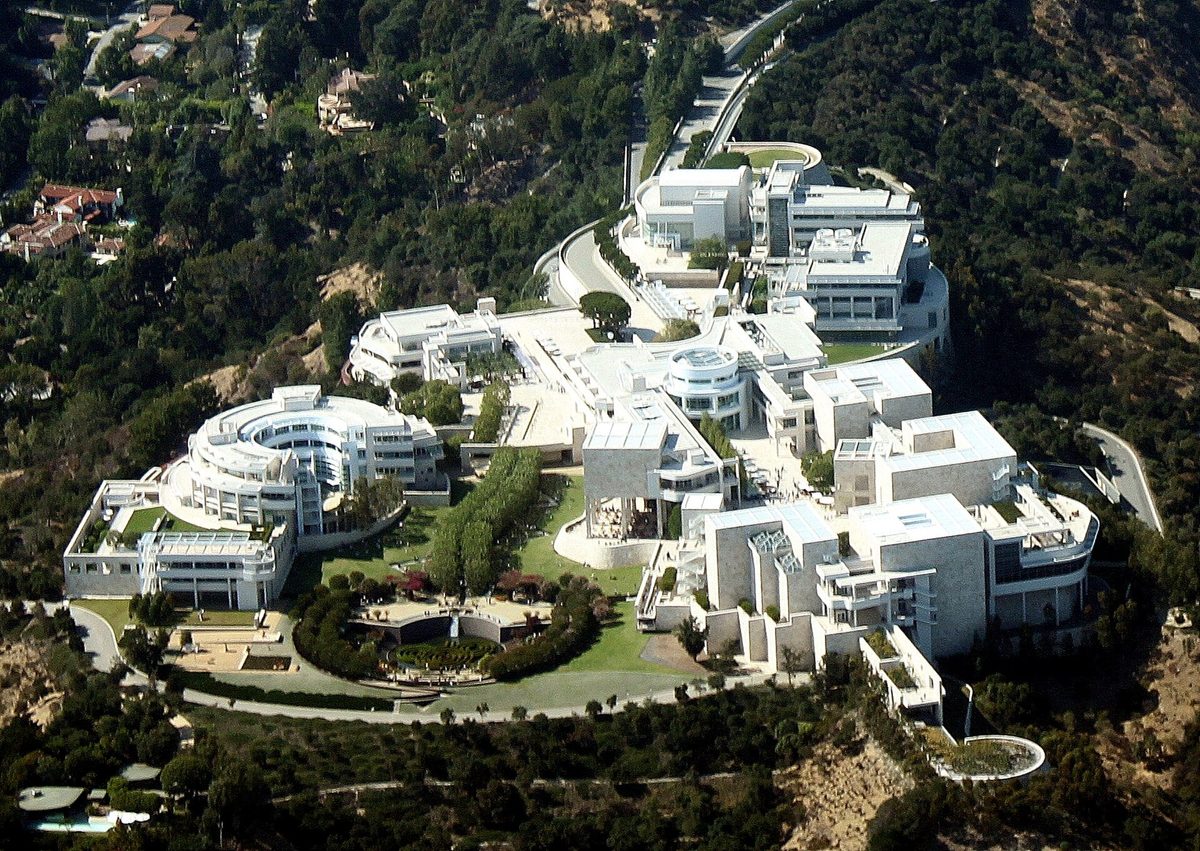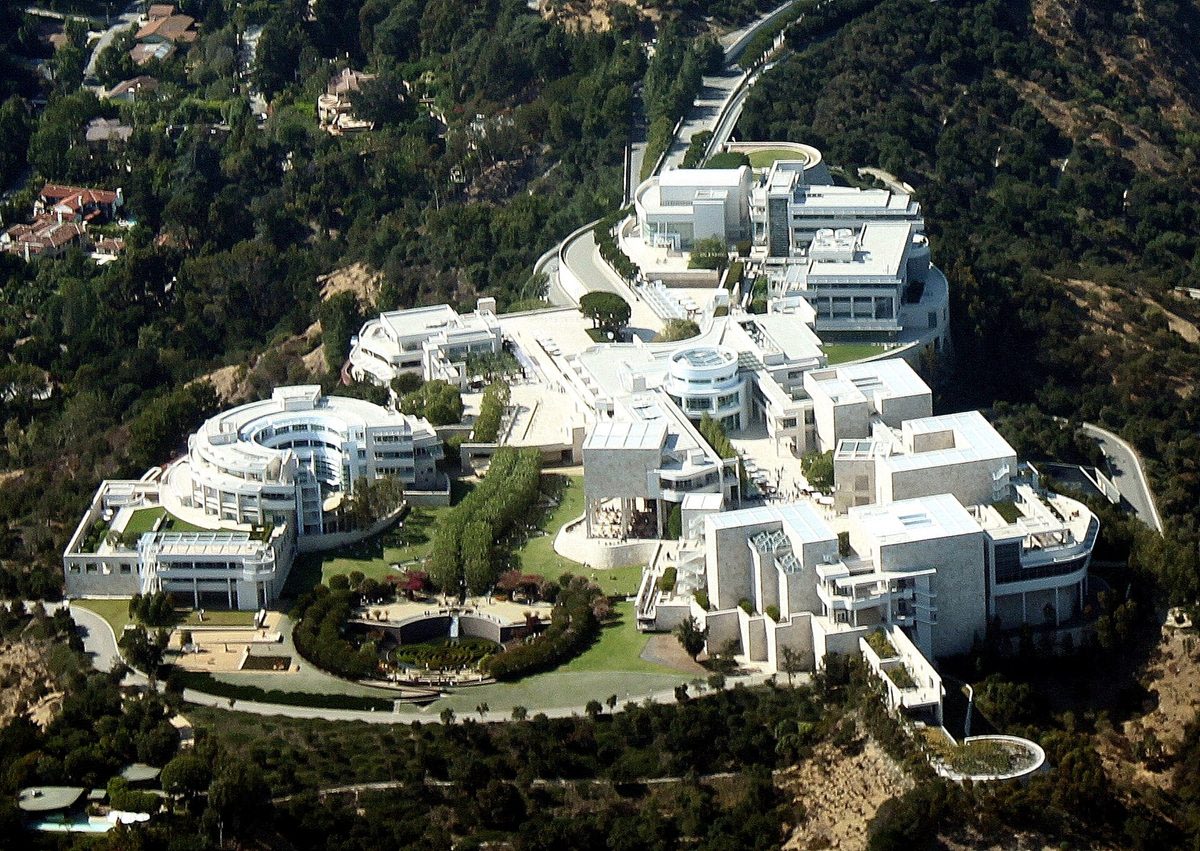
The J. Paul Getty Museum exists at a scale that no other art institution can quite match. When Jean Paul Getty died in 1976, he left the residue of his estate — the fruit of the world's first billion-dollar private fortune, built on oil leases in the Saudi Arabian desert — to the museum he had founded at his Malibu ranch in 1954. The eventual realisation of this bequest, combined with the steady appreciation of Getty Oil stock held by the trust, produced an endowment of approximately eleven billion dollars: a sum that gave the Getty Trust a purchasing power unprecedented in the history of private philanthropy and enabled the construction of the Getty Center, Richard Meier's monumental campus of travertine and glass on the hills above the San Diego Freeway, which opened in 1997 and immediately became one of the architectural landmarks of Southern California. For the Christian art scholar and pilgrim, the Getty Museum's most significant holdings are concentrated in two areas: medieval and Renaissance manuscripts, and early religious panel painting. The manuscripts collection, now one of the finest in North America, holds examples from across the full geographic and chronological range of the Western illuminated book tradition — Carolingian gospel lectionaries, Ottonian sacramentaries, Romanesque psalters, Gothic Books of Hours and Renaissance devotional manuscripts produced in the great ateliers of France, Flanders, Italy and Germany. These books, their pages blazing with gold and ultramarine, are among the most complete expressions of the medieval Christian imagination: objects designed simultaneously as tools of prayer and as demonstrations of the glory that the act of worshipping God was held to require. The Getty's manuscript holdings are regularly displayed in the galleries of the Getty Center and available to scholars through the Getty Research Institute. The panel paintings collection extends from the gold-ground Italian works of the thirteenth and fourteenth centuries — the age of Duccio and Cimabue, when Byzantine formal conventions were first inflected by the humanism that would culminate in Raphael — through the Flemish masters of the fifteenth century and the Italian High Renaissance to the Baroque and beyond. The Getty's acquisitions, made with unparalleled financial resources and guided by curators of international reputation, have consistently aimed at works of exceptional quality and scholarly importance, making the museum's permanent collection an unusually coherent statement about the history of European religious painting.
The largest art endowment of any museum in the world — approximately eleven billion dollars — gives the Getty unparalleled resources for acquisition and conservation of Christian art.
The manuscripts collection, including works from the Ludwig collection of Aachen, holds Carolingian, Romanesque, Gothic and Renaissance illuminated books of extraordinary quality.
Early Italian gold-ground panel paintings from the thirteenth through the fifteenth centuries represent the devotional art of medieval Christendom at its most refined.
Flemish Books of Hours from the Burgundian court tradition display illumination of matchless technical virtuosity, with miniatures containing entire atmospheric landscapes.
Richard Meier's Getty Center campus is itself one of the great works of late twentieth-century architecture, perched on a travertine promontory above Los Angeles.
Jean Paul Getty and the Origins of the Museum
Jean Paul Getty was born in Minneapolis in 1892, the son of an oil lawyer who had made a modest fortune in Oklahoma. He made his own first million before he was twenty-four through astute purchases of Oklahoma oil leases, and he spent much of the 1920s and 1930s collecting art in Europe — initially antique furniture and Greek and Roman antiquities, later Old Master paintings — while simultaneously expanding his oil business through the Middle East. His acquisition in 1949 of the mineral rights to the so-called Neutral Zone between Kuwait and Saudi Arabia, which proved to contain vast petroleum reserves, transformed him from a wealthy man into the world's first private billionaire. He spent the last decades of his life at Sutton Place, a Tudor manor in Surrey, rarely returning to the United States but continuing to collect voraciously through agents and auction houses.
The Getty Center and Richard Meier's Architecture
The Getty Center, designed by Richard Meier and Partners and completed after fourteen years of construction in 1997, occupies 110 acres on a promontory in the Santa Monica Mountains above the San Diego Freeway. The campus consists of six interconnected pavilions clad in Italian travertine and aluminium panels, organised around a central arrival plaza and connected by a tramway from the parking structure below. The design is simultaneously monumental and intimate: the travertine walls, split-faced and rough on the exterior to catch the California light, smooth and precise on the interior, give the buildings a material presence unusual in contemporary architecture. The garden, designed by Robert Irwin, descends from the central plaza in a series of terraces planted with azaleas, bougainvillea and a winding stream channel — one of the most visited designed landscapes in Los Angeles.
The Manuscripts Collection
The Getty's manuscripts collection began with acquisitions from the Ludwig collection of Aachen, purchased in 1983 for an undisclosed sum estimated at forty million dollars — then the largest purchase of medieval manuscripts in history. The Ludwig collection included Carolingian gospel books, Romanesque psalters, Gothic Books of Hours of the highest quality, and Renaissance secular and devotional manuscripts that together constituted a comprehensive anthology of the illuminated book tradition in Western Christendom. Subsequent acquisitions have extended the collection's range and depth, and it now includes examples from every major centre of manuscript production: Tours, Reims and Chartres in France; Canterbury, Winchester and Oxford in England; the Rhine and Meuse valleys in Germany; Ghent, Bruges and Brussels in Flanders; Florence, Venice and Naples in Italy. The collection is displayed in rotating exhibitions in the manuscripts gallery of the Getty Center.
Early Panel Paintings
The Getty's early panel paintings — gold-ground works from central Italy, Siena and Florence from the thirteenth through the fifteenth centuries — represent some of the most beautiful objects in the museum's collection. These small devotional panels and altarpiece fragments, painted in egg tempera on prepared gesso grounds and gilded with burnished gold leaf, were produced for private chapels, confraternities and individual patrons who required portable images of the Madonna, the saints and the narrative of the Passion for private devotion. The Getty's examples include works from the circle of Duccio di Buoninsegna, the Sienese master who brought Byzantine formal grandeur into the humanist tradition of the early Trecento, and from the great Florentine workshops of the period that culminated in Masaccio and Fra Angelico.
Flemish Illumination and the Northern Tradition
The Flemish and Franco-Flemish manuscripts in the Getty collection represent the northern tradition of illumination at its most technically refined. The great Books of Hours produced in Bruges and Ghent in the late fifteenth and early sixteenth centuries — the period of the Master of Mary of Burgundy, of Simon Marmion and of the illuminators who worked for the Burgundian court — are among the most technically demanding objects in the entire history of the applied arts: their miniatures, often no larger than a playing card, contain entire landscapes with atmospheric perspective, interior scenes with cast shadows and reflective surfaces, portraits of recognisable individuals, and marginal decorations of flowers, insects and birds of breathtaking naturalism. The devotional texts these images accompany — the Hours of the Virgin, the Office of the Dead, the Penitential Psalms — were intended to structure the daily prayer of their lay owners, and the images were designed to make that prayer vivid and immediate.
The Getty Villa
The Getty's other site, the Getty Villa in Malibu, houses the museum's collection of ancient Greek, Roman and Etruscan art in a building modelled on the Villa dei Papiri at Herculaneum. While the Villa's holdings are not Christian in character, the ancient Mediterranean world they document provides the cultural context for the emergence of Christianity — the religious, artistic and philosophical landscape into which the Christian faith was born. Visitors to the Getty Center who are interested in the origins of Christian art and theology will find the Villa an essential complement.
Visiting
The Getty Center is open Tuesday through Sunday, with Mondays closed. Admission to the museum is free; parking is charged. The Getty Center tram connects the parking structure to the campus and is included in the parking fee. The museum's café and restaurant, with panoramic views of Los Angeles, are open to visitors with and without museum tickets. The manuscripts gallery rotates displays approximately every six months. The Getty Villa in Malibu requires a free timed ticket reservation.