Kevelaer Basilica
Basilica · Other

Kevelaer Basilica

Kevelaer, Germany

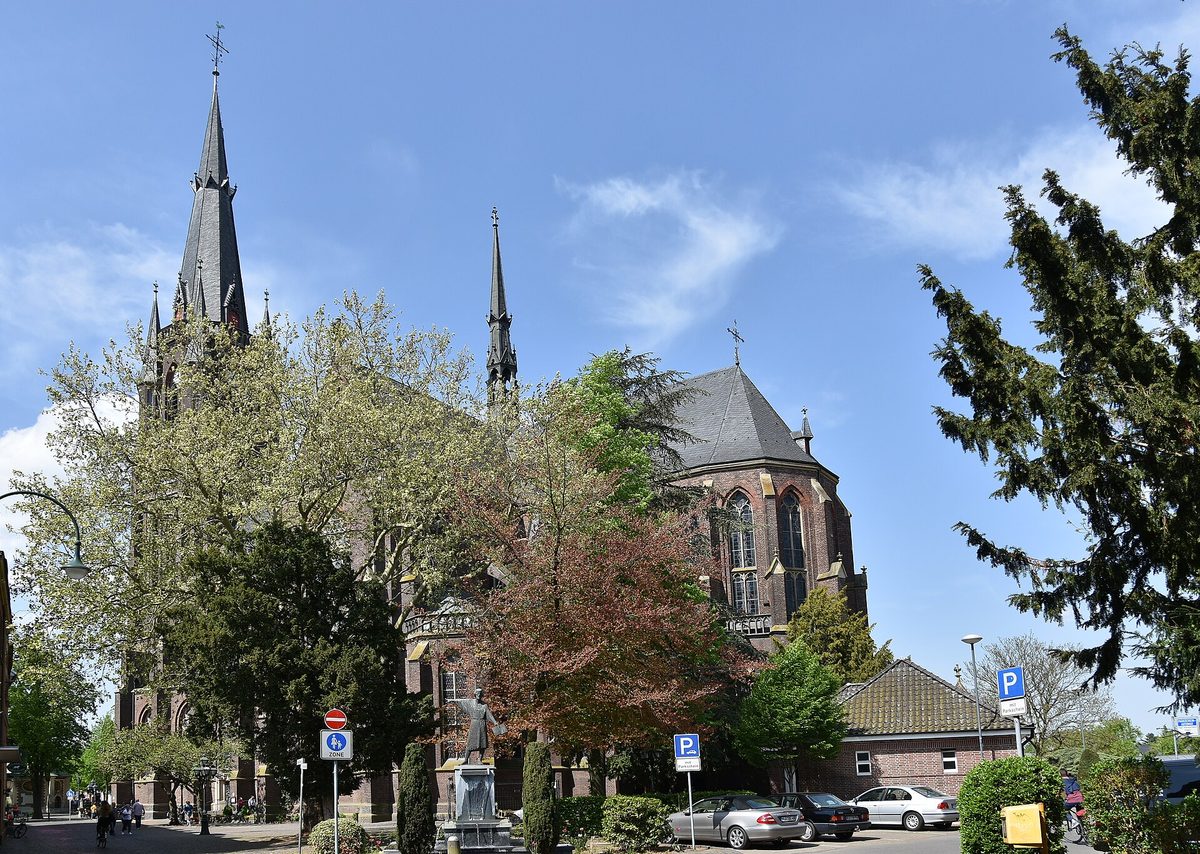
"The Marian Basilica of Kevelaer in the Lower Rhine region of Germany is one of the largest pilgrimage sites..."

Highlights

  • 1The largest Marian pilgrimage site in northwest Europe — approximately 1 million pilgrims per year The devotion began in 1641 following a vision received by a tradesman Organized pilgrimage groups from hundreds of German and Dutch parishes walk to Kevelaer each year The candlelit evening processions in the Kapellplatz are a living medieval pilgrimage tradition
  • 2The image venerated — Our Lady of Luxembourg — was distributed as a copper engraving in the 17th century

Getting There

📍

Address

Kapellenplatz 26, 47623 Kevelaer, NRW, Germany

🗺

Directions

Kevelaer is 50 km north of Düsseldorf. Direct regional trains from Düsseldorf (1h). By car: A57 motorway from Düsseldorf, exit Kevelaer. The pilgrimage site is in the town centre.

Open in Google Maps

Timings

Current time — Berlin Time (CET)

--:--:--

WhenHours
Basilica7:00 AM - 7:00 PM

Gnadenkapelle Open throughout basilica hours Peak pilgrimage is May to October; the Assumption feast (August 15) is the busiest day. Evening processions take place on warm evenings in summer. The confessional facilities operate extensively during the pilgrimage season.

Masses & Events

Daily Mass

Multiple from 7:30 AM in both basilicas

Active schedule

Evening Candlelight Procession

Most evenings May-October

Pilgrims process with candles around the

Kapellplatz Feast of the Assumption

August 15

The largest single feast day

Must See

1

The Gnadenkapelle (Chapel of Grace)

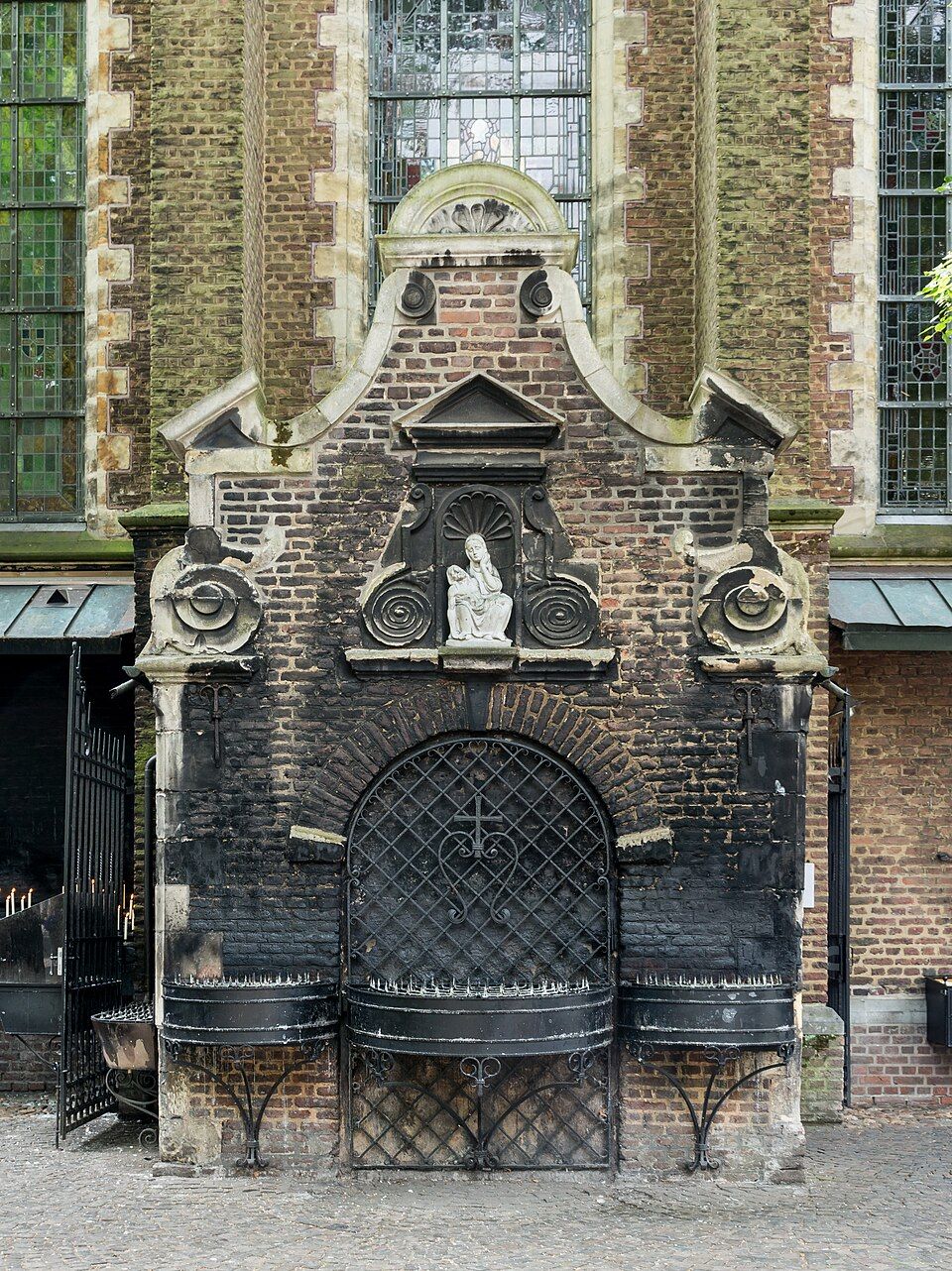
Centre of the pilgrimage complex The original small hexagonal chapel, built in 1642, preserves the small copper-engraving image of Our Lady of Luxembourg behind its altar. The chapel is tiny; pilgrims enter two or three at a time. The intimacy of the original chapel within the vast pilgrimage complex it generated mirrors the intimacy of all great Marian devotions. The Candle Chapel (Kerzenkapelle)

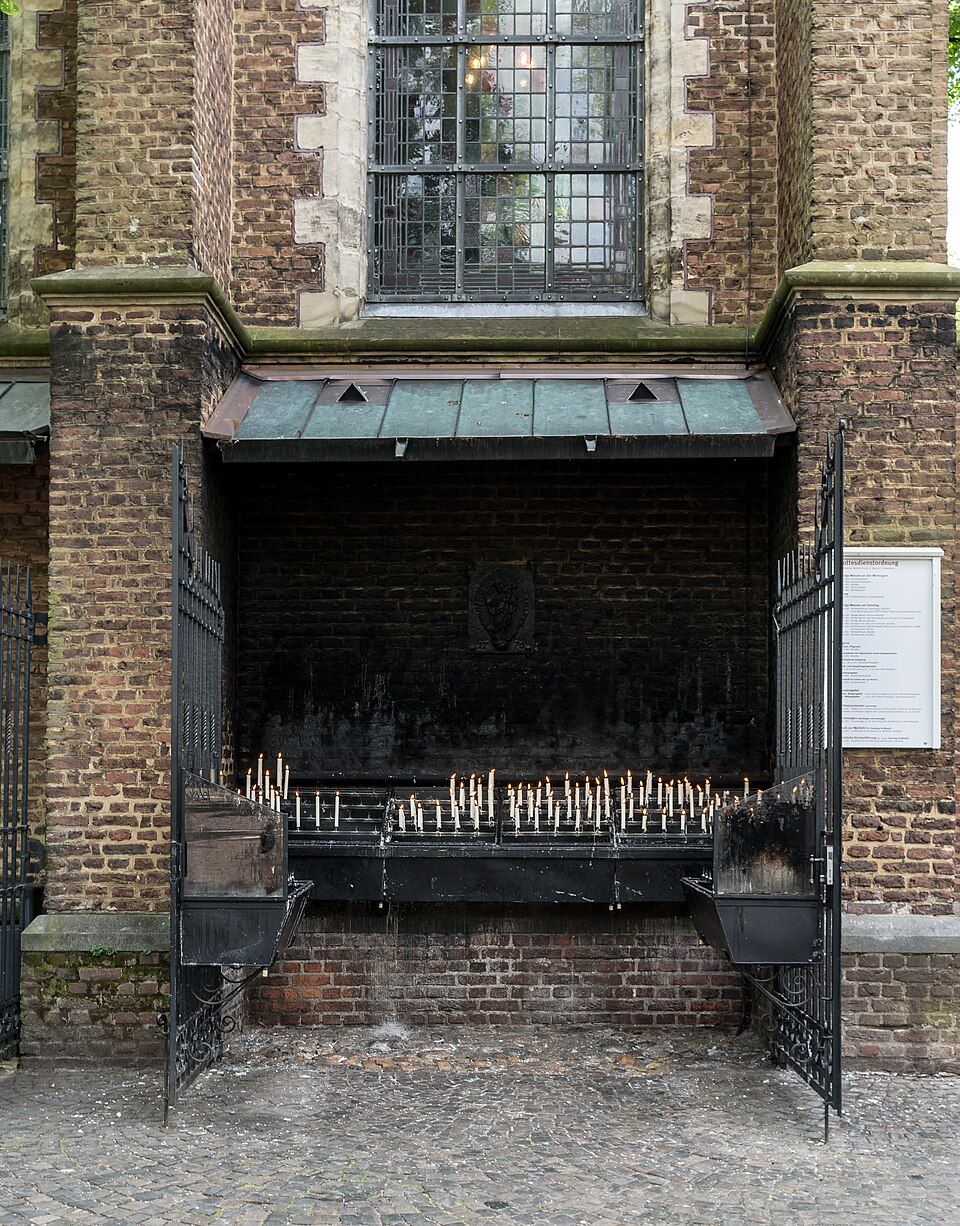
Adjacent to the Gnadenkapelle The large 17th-century chapel where pilgrims have burned their candles for over 380 years. The air is thick with wax and smoke; thousands of candles burn simultaneously. The sight and smell of this chapel communicate a sensory history of prayer.

2

The Kapellplatz Procession

The central square [OUTDOOR] On summer evenings, pilgrims process around the Kapellplatz with lit candles, singing Marian hymns. The sight of hundreds of candles moving in the dark Lower Rhine evening, the voices of German and Dutch pilgrims, and the illuminated chapel facade is one of the great atmospheric experiences in German Catholicism.

3

The Main Basilica

Alongside the Gnadenkapelle The larger 19th-century basilica accommodates major pilgrimage Masses. Its neo-Gothic interior is notable for the large stained glass windows donated by individual pilgrimage groups.

4

The Pilgrimage Museum

Kevelaer town Documents the history of the devotion and the pilgrimage tradition

the extraordinary culture of organised group pilgrimages, parish processions, and ex-votos that constitute Kevelaer's living heritage.

Intentions

Carry these intentions into the Basilica with you — pause at each sacred spot and lift them to God.

🙏

For the Catholic faith in the Lower Rhine and the Netherlands

🙏

For those who make organised pilgrimages and those who come alone

🙏

For peace in the region that has seen much war across its centuries of pilgrimage

🙏

For those who burn candles as prayers — all the intentions held in this smoky chapel

🙏

For Dutch and German Catholics, navigating faith in a deeply secular landscape

🙏

For Our Lady of Luxembourg, whose image has travelled far from her homeland

🙏

For families who have made the Kevelaer pilgrimage for generations

🙏

For the vision that a tradesman received in 1641 — that God speaks to ordinary people

Reflection

A tradesman on the road to Nijmegen in 1641 received a vision: build a chapel here. He did. Within a generation, the chapel was attracting thousands of pilgrims. Within a century, it was the most visited Marian shrine in northwest Europe. The copper engraving of the Virgin he enshrined was a cheap popular print. The shrine it generated is one of the most visited in northern Europe. God chooses the accessible image and makes it holy.

Suggested Scripture — 1 Corinthians 1:28

God chose the lowly things of this world and the despised things — and the things that are not — to nullify the things that are.

Read in full on Bible Gateway →

A Pilgrim's Prayer

Our Lady of Kevelaer, image on a copper print, small and ordinary and venerated for 380 years — let my small, ordinary prayer be received with the same generosity. I bring no great virtue and no special offering. I bring a candle and a need. Let the smoke of ten thousand candles carry mine upward, as it has carried the prayers of everyone who has stood here since 1641. Amen.

More

The Marian Basilica of Kevelaer in the Lower Rhine region of Germany is one of the largest pilgrimage sites in northwest Europe, drawing approximately one million pilgrims per year from Germany, the Netherlands, Belgium and across the Catholic world. The devotion began in 1641 when a tradesman named Hendrik Busman received a vision instructing him to build a chapel at a particular crossroads on the road to Nijmegen. A small image of the Virgin on a copper engraving was enshrined there, and within years the chapel was attracting thousands of pilgrims.

Our Lady of Luxembourg

The image — Our Lady of Luxembourg — is based on a Marian image from Luxembourg that was popularised as a copper engraving in the 17th century. The original small chapel (the Gnadenkapelle — Chapel of Grace) is still preserved, now surrounded by a vast pilgrimage infrastructure: two large basilicas (the Candle Chapel and the main Basilica), extensive confessional areas, and a pilgrimage museum.

The Pilgrimage Season

The pilgrimage season at Kevelaer runs from May to October, with hundreds of organised pilgrimage groups from parishes across Germany and the Netherlands making the journey on foot or by bus. The tradition of candlelit evening processions in the Kapellplatz is one of the most atmospheric pilgrimage experiences in northwestern Europe.