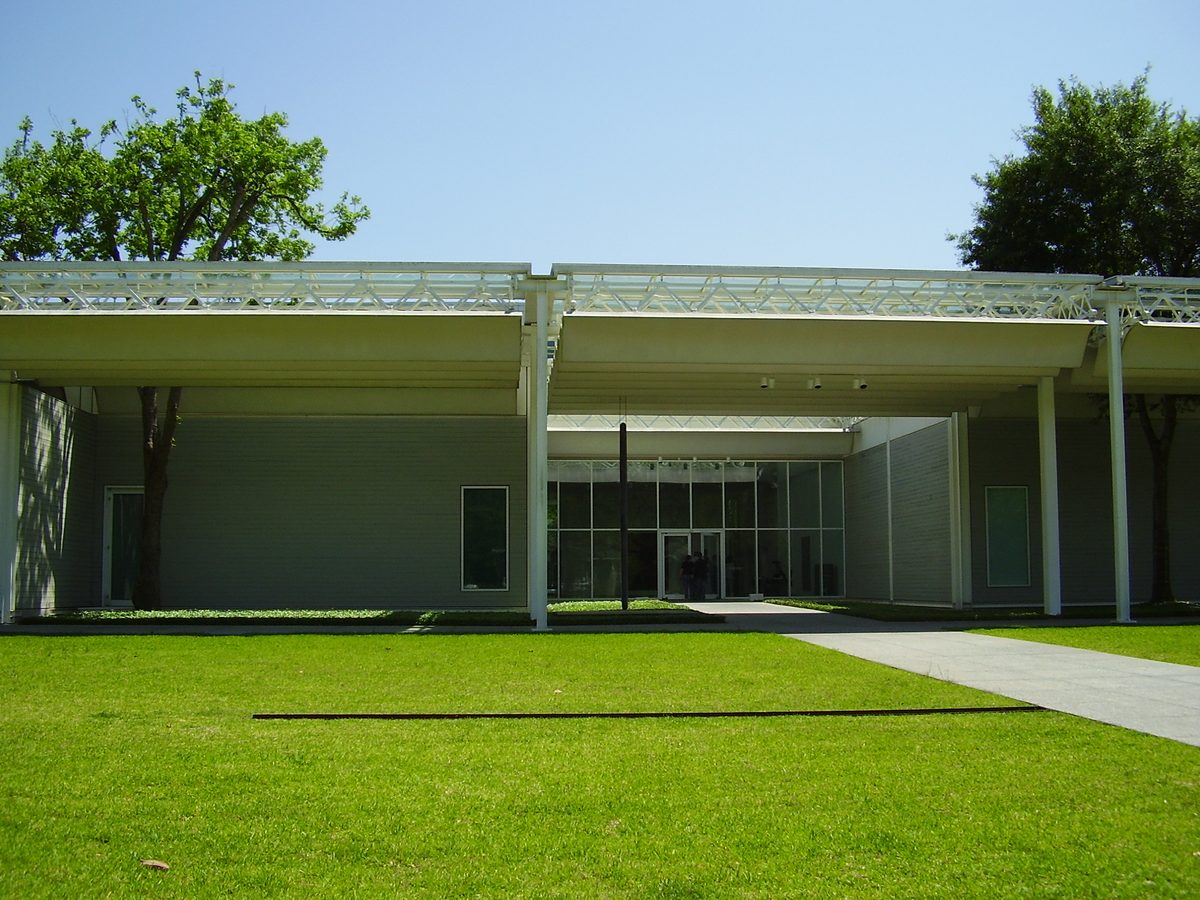
The Menil Collection stands apart from every other art institution in America, and indeed from most in the world, because it was shaped not by a desire for civic prestige or financial investment but by a theology of vision. John de Menil, born in Paris into an aristocratic French family, and Dominique Schlumberger, the daughter of the founder of the oilfield services giant Schlumberger, were married in 1931 and moved to Houston in 1941, where John ran the American operations of his father-in-law's company. Both were practising Catholics of deep and seriously held faith, and both were shaped in their understanding of art by the great Dominican priest and philosopher Father Marie-Alain Couturier, who convinced them — and the generation of French Catholic intellectuals to whom he ministered — that the encounter with great art was itself a form of encounter with the divine. From this conviction grew one of the most important private collections in the history of American art, and one of the most remarkable philanthropic legacies of the twentieth century. The Christian art holdings of the Menil Collection are extraordinary in their range and their specificity. The Byzantine and medieval gallery holds objects that belong among the greatest treasures of Eastern Christendom: icons, manuscripts, liturgical vessels and, most spectacularly, the Byzantine frescoes from the Chapel of Panagia Kanakaria in Cyprus. These thirteenth-century frescoes, depicting Christ Pantocrator and individual apostles in the gold and jewel-toned palette of the Byzantine pictorial tradition, were looted from their chapel during the Turkish invasion of Cyprus in 1974 and sold through disreputable dealers to private collectors around the world. The Menil Foundation, recognising the frescoes' sacred and cultural significance, launched a decade-long legal campaign to recover the works, eventually securing their repatriation to Cyprus in 1991 — one of the most significant acts of cultural restitution in modern art history. The Menil's commitment to Christian art was not merely acquisitive; it was ethical and theological. The Rothko Chapel, commissioned by John and Dominique de Menil from Mark Rothko in 1964 and completed after John de Menil's death in 1971, is the most famous expression of this theological vision. The octagonal non-denominational chapel holds fourteen large paintings by Rothko — deep, near-black canvases that hover between pure abstraction and the threshold of mystical experience. Dominique de Menil intended the space as a site of genuinely universal spiritual encounter, and it has served that purpose for more than five decades, hosting meditation, prayer and interfaith dialogue from people of every tradition.
Founded by John and Dominique de Menil, devout Catholics whose theology of art held that great painting was itself a path to the divine.
The Byzantine collection includes thirteenth-century icons, liturgical vessels and manuscripts of exceptional rarity, representing the Eastern Christian tradition at its peak.
The Menil Foundation rescued and repatriated looted thirteenth-century frescoes from the Chapel of Panagia Kanakaria in Cyprus — one of the most significant acts of cultural restitution in modern art history.
The Rothko Chapel, commissioned in 1964, holds fourteen monumental near-black canvases in an octagonal space intended as a site of universal spiritual encounter.
Admission is free, making the Menil one of the most accessible repositories of Byzantine and medieval Christian art in North America.
John and Dominique de Menil
John de Menil grew up in Paris and trained as a banker before marrying Dominique Schlumberger in 1931. The Schlumberger fortune, built on the invention of wire-line electrical logging for oil wells, was one of the largest in France, and when John took charge of the American operations he brought to Houston not only French business acumen but French cultural assumptions — the belief that serious collecting was a civic and moral duty, not merely a personal pleasure. Dominique, educated at the Sorbonne and later at the Institut des Hautes Études de Paris, was equally serious and considerably more systematic. She was the intellectual architect of the collection, directing its acquisitions, its research programmes and its eventual institutional home with a clarity of vision rare among collectors of any kind.
Father Couturier and the Theology of Art
The pivotal intellectual influence on the de Menils was Father Marie-Alain Couturier OP, a Dominican priest who had worked as a painter and fabric designer before taking holy orders and developing, during the wartime years he spent in North America, a theology of artistic encounter that became enormously influential in French Catholic circles. Couturier argued that great art — regardless of whether it was explicitly religious in subject matter — was a path to the transcendent, and that the Church's failure to engage with the greatest artists of the modern age represented a theological as well as aesthetic failure. He was the impresario behind Le Corbusier's chapel at Ronchamp and Matisse's chapel at Vence, and his friendship with the de Menils shaped the direction of their collection decisively toward works of spiritual intensity.
The Byzantine Collection
The Menil's Byzantine holdings are among the finest outside specialist institutions in Athens, Istanbul and Washington. The collection includes gold-ground icons of the Madonna, Christ Pantocrator and individual saints in the hieratic style of the tenth through fourteenth centuries, when Byzantine art reached its greatest refinement. Liturgical objects — chalices, patens, reliquaries and processional crosses — of exceptional quality illuminate the material culture of the Eastern Church. Illuminated manuscripts on vellum, some with gold and silver lettering on purple-dyed pages, demonstrate the Byzantine tradition of making the physical book itself an object of sacred beauty. The collection reflects Dominique de Menil's particular engagement with the Christian East, and with the conviction that the Western and Eastern traditions of Christian art were complementary rather than competing expressions of a single theological vision.
The Cyprus Frescoes and Their Repatriation
In 1988, the Menil Foundation learned that thirteenth-century frescoes from the looted Chapel of Panagia Kanakaria in the Turkish-occupied north of Cyprus were in the possession of a private dealer. The chapel, located in the village of Lythrangomi, had been stripped of its mosaics and frescoes after the 1974 invasion, and the works had made their way through the illegal art market to collectors and dealers in Europe and America. Dominique de Menil authorised the purchase of the frescoes from the dealer — not to keep them but to secure them — and then engaged in negotiations with the Cyprus government and the Orthodox Church of Cyprus that resulted in their return to the island in 1991. The episode demonstrated that the de Menils' commitment to Christian art was inseparable from a commitment to its proper stewardship, and it set a precedent for repatriation claims that has influenced art law globally.
The Rothko Chapel
Mark Rothko received the commission for the Houston chapel in 1964 and worked on the fourteen large canvases — each nearly five metres high — until 1967. The paintings are among the most sombre works of his career: deep maroons, purples and near-blacks that absorb rather than reflect light, creating an atmosphere of concentrated interiority that many visitors experience as genuinely transcendent. Rothko himself described the chapel project as the most important work of his life, and his suicide in 1970, a year before the chapel's dedication, gave the already austere paintings an additional weight of personal tragedy. The chapel is open to visitors of all faiths and none, and hosts an annual lecture series on human rights, art and the sacred.
Visiting
The Menil Collection is free and open to the public Wednesday through Sunday in the museum's distinctive grey clapboard buildings in the Montrose neighbourhood of Houston. The Rothko Chapel is located a short walk from the main museum and is open seven days a week, also free of charge. The neighbourhood around the museum includes several other Menil-related buildings, including the Cy Twombly Gallery and the Byzantine Fresco Chapel (now hosting rotating Menil exhibitions). Houston's museums are most comfortably visited by car, though the area is walkable once you arrive.