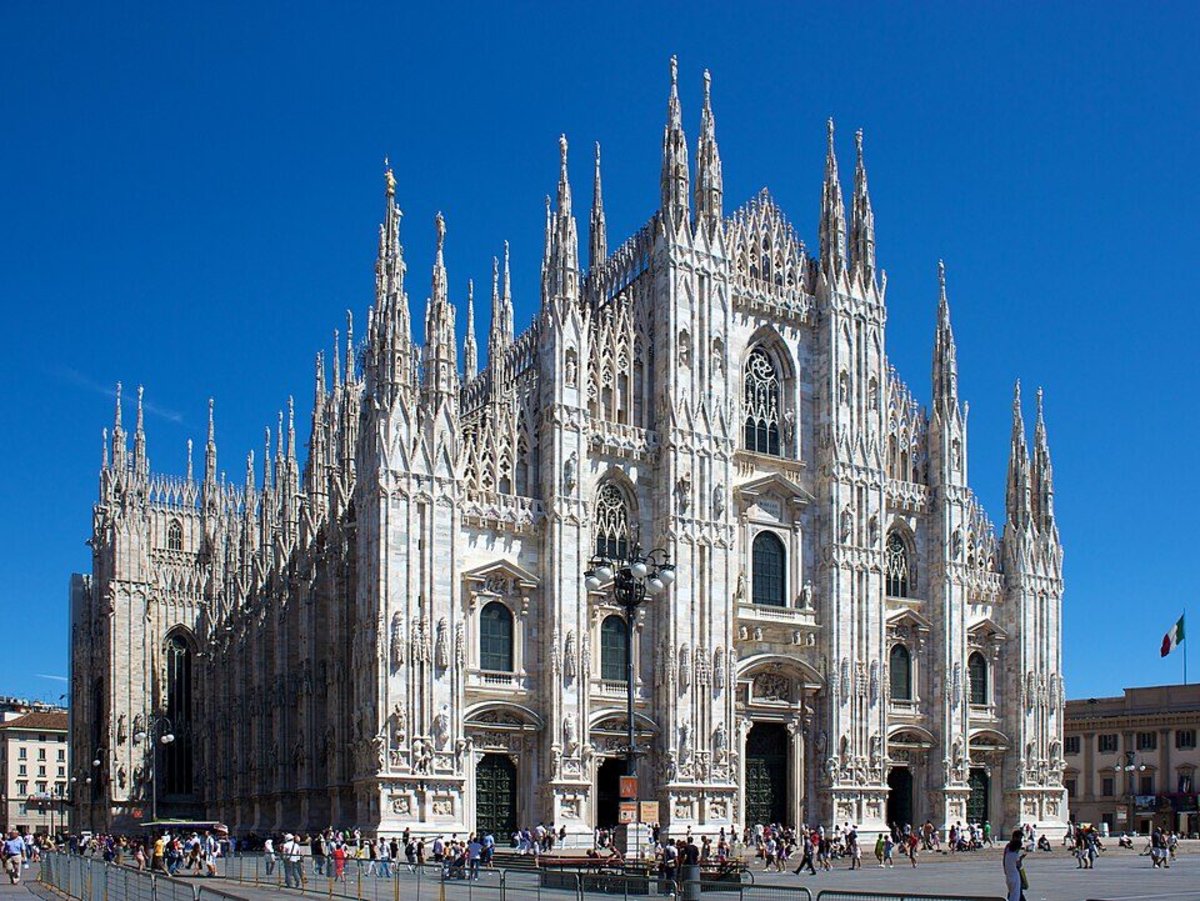
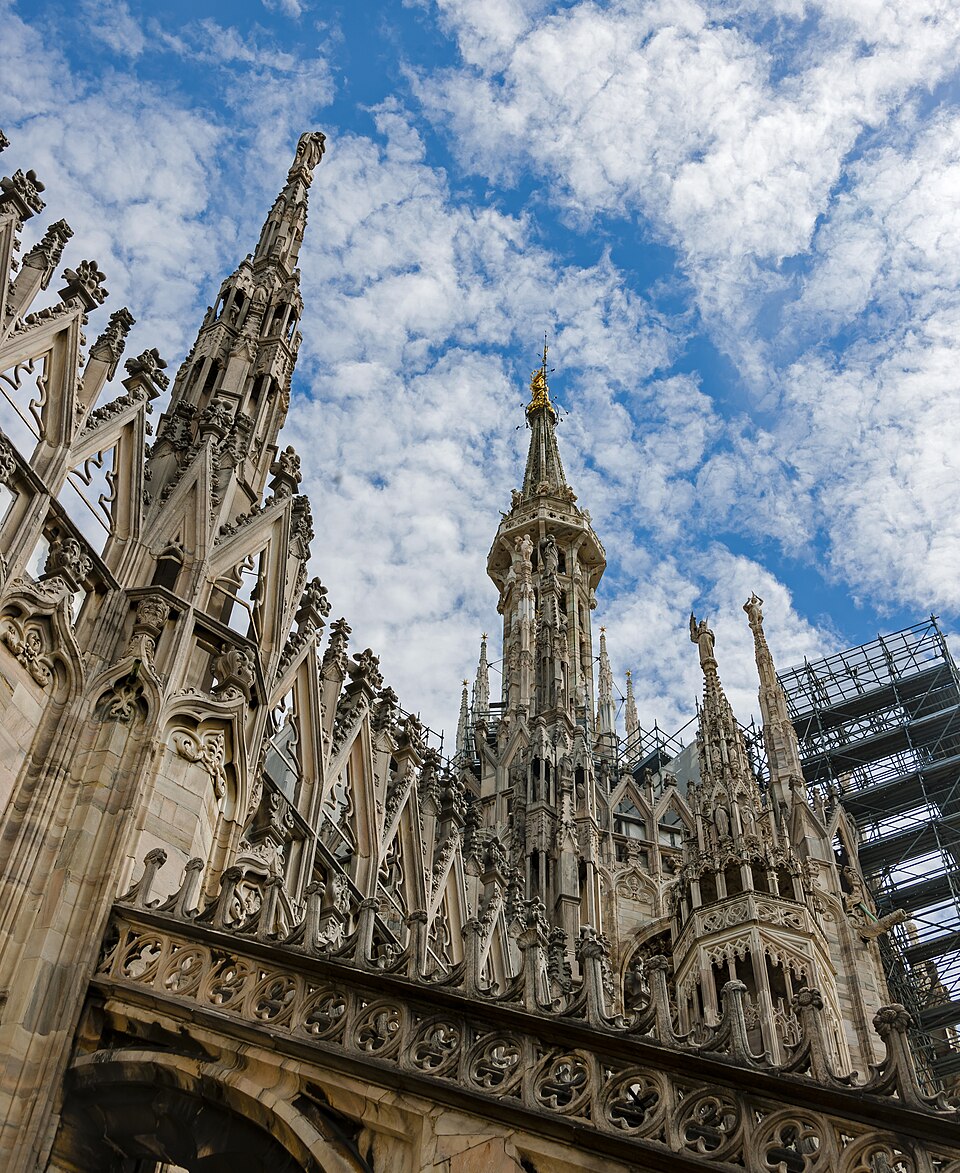
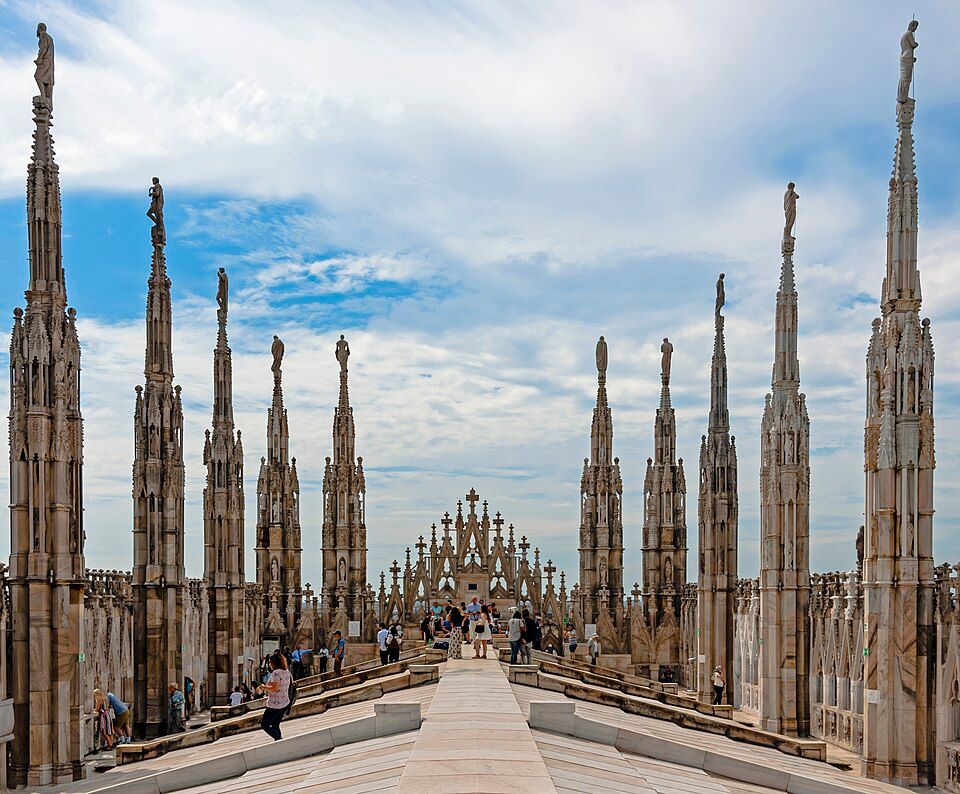
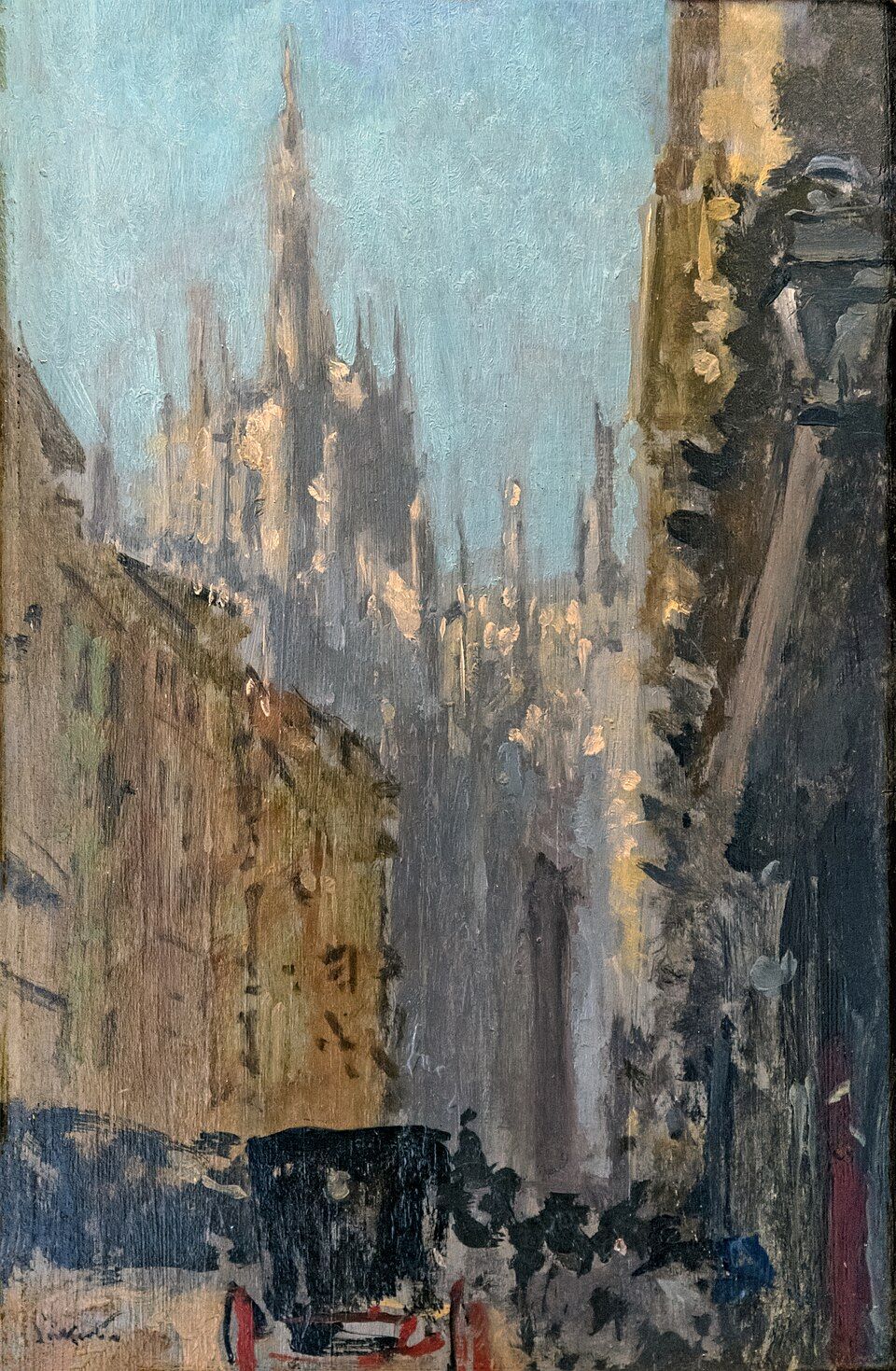
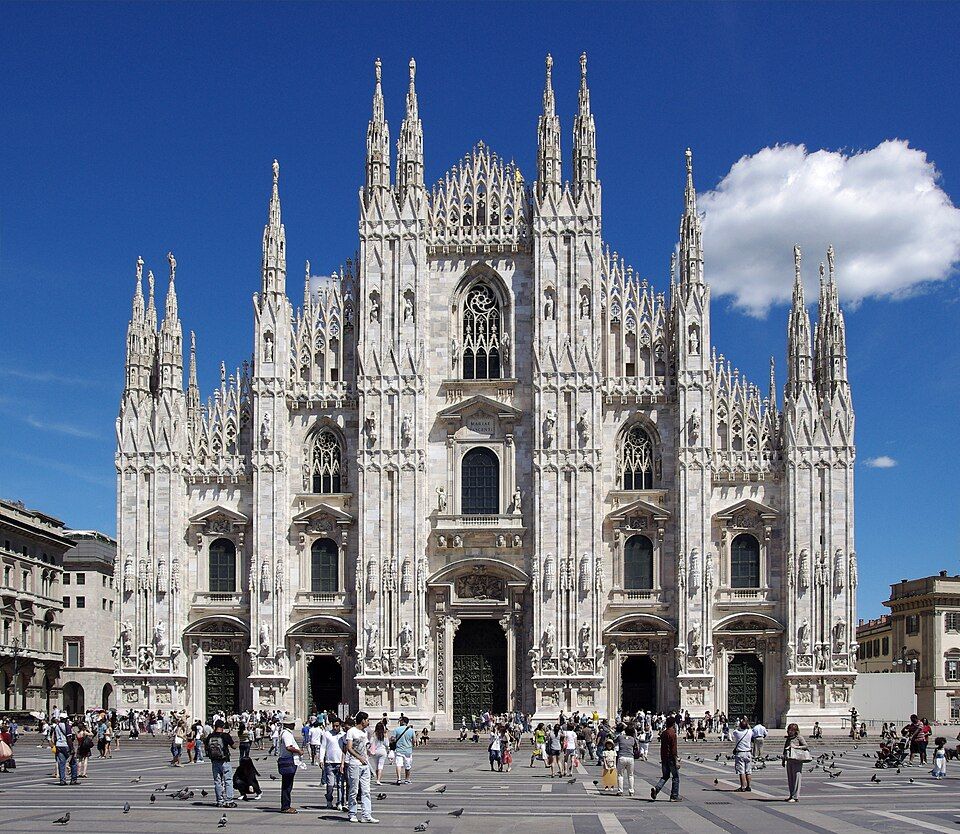
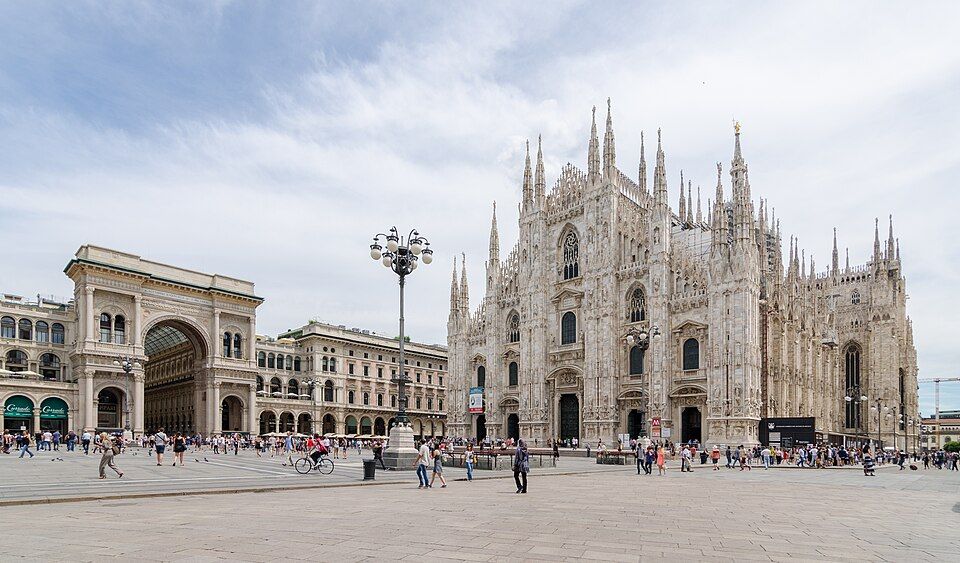
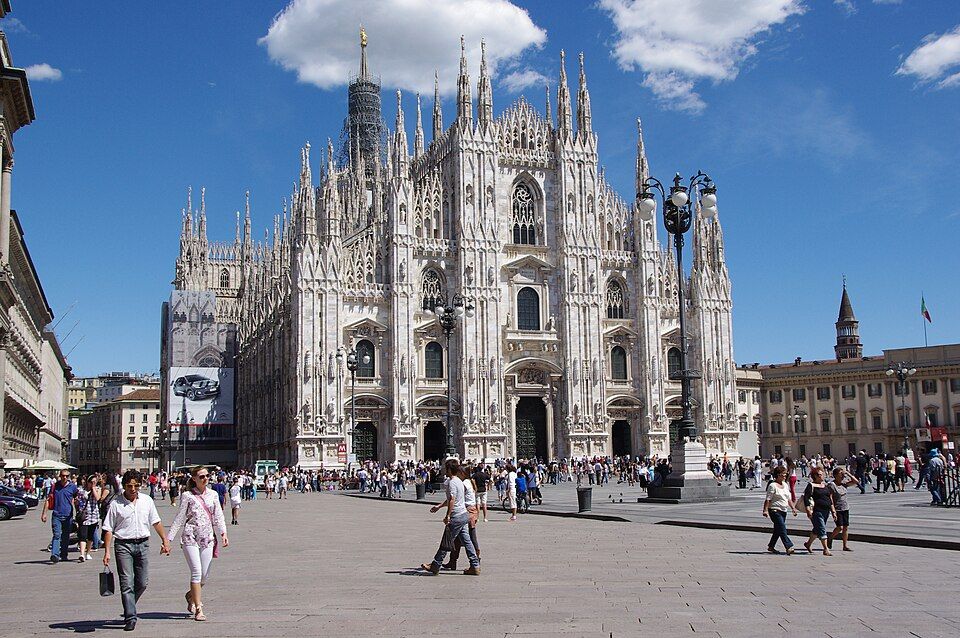
The Duomo di Milano is the largest Gothic cathedral in Italy, the third largest in the world, and one of the most extraordinary acts of collective architectural ambition in history. Construction began in 1386 under Gian Galeazzo Visconti and continued, under 400 different architects and across five centuries, until the final bronze doors were completed in 1965. The exterior is a riot of white marble, 135 spires, 3,400 statues, and flying buttresses that have given rise to the Italian idiom fabbrica del Duomo — the never-ending construction site.
The Madonnina
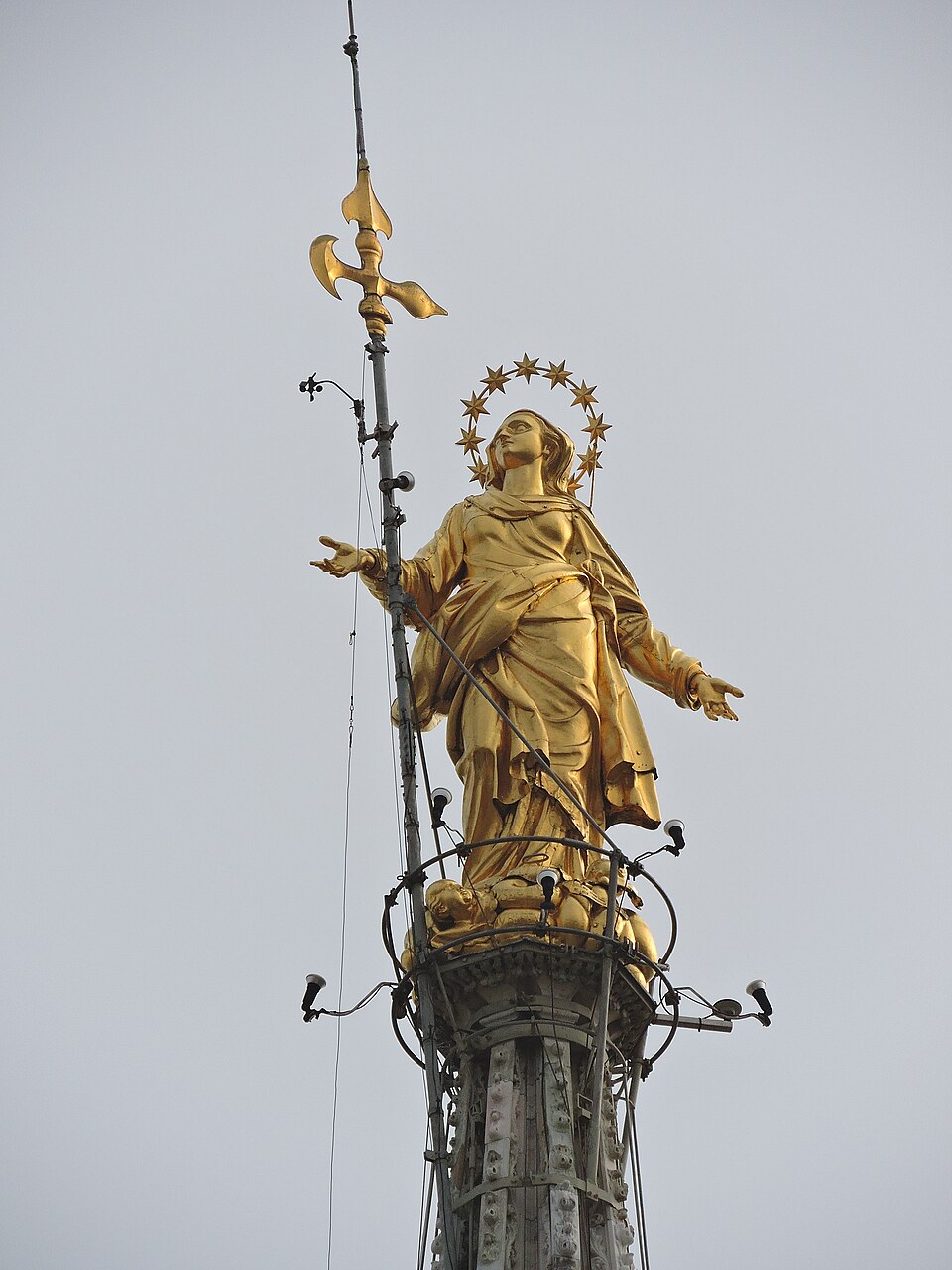
At the apex of the central spire, 108 metres above the piazza, stands the Madonnina — a gilded copper statue of the Virgin, 4 metres tall. By a Milanese tradition preserved until 1958, no building in Milan was permitted to be taller than the Madonnina. The tradition was broken when the Pirelli Tower was completed; a small replica of the Madonnina was placed on its roof in compensation, and the practice has continued on subsequent skyscrapers.
Visiting
The Duomo is Milan’s geographic and spiritual heart. The piazza in front of it is the stage on which Milan’s public life has always been played: festivals, protests, proclamations, and millions of daily crossings. The rooftop terrace, accessible by elevator or 250 steps, offers a promenade among the spires and statues with the Alps visible on clear days — one of the great urban experiences in Europe.