St Peter's Basilica
Vatican City, Italy
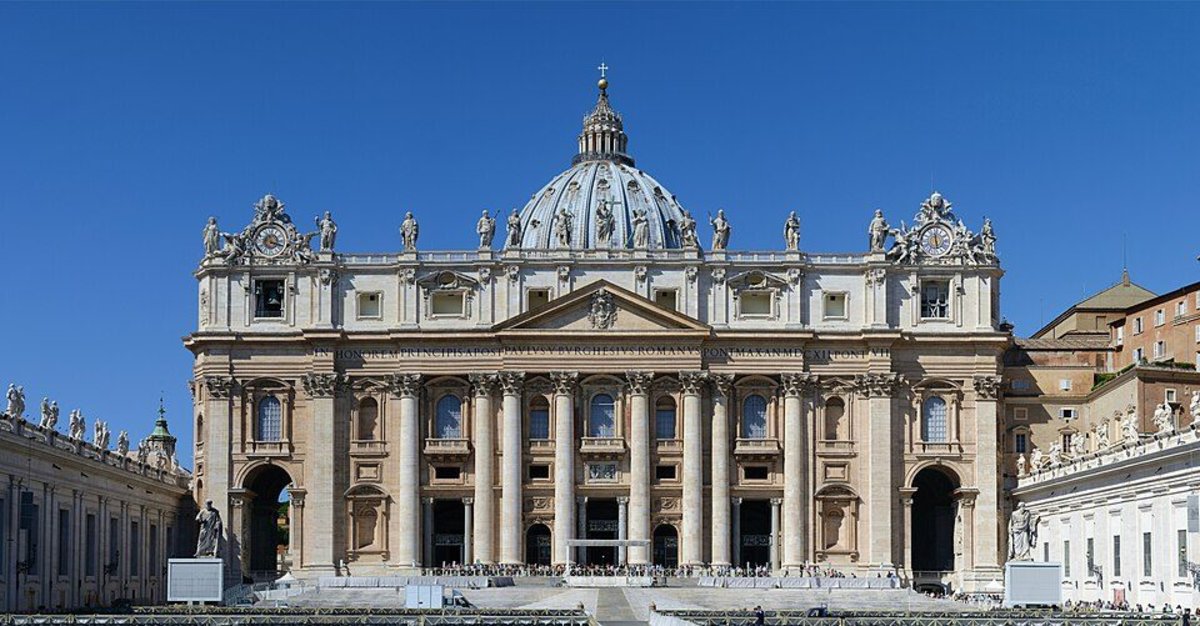
"St Peter's Basilica is the largest Roman Catholic Basilica in the world and is located in the Vatican City."
Highlights
- 1The work of masters such as Michelangelo, Carlo Maderno, Donato Bramante and Gian Lorenzo Bernini it was for many centuries, the largest church in the world
- 2Traditionally held to be the burial site of St Peter, the first among the Apostles of Jesus, it is also the resting place of numerous Popes as well as royalty
- 3The tomb of St Peter is believed to be directly beneath the main altar
- 4The first Basilica on the site was built by the Emperor Constantine in the fourth century
- 5Braving fires, earthquakes, depredations by invaders and deterioration brought about with the passage of time, the basilica lasted for over a thousand years
Getting There
Address
Piazza San Pietro, 00120 CittΓ del Vaticano, Vatican City
Directions
Take Metro Line A to Ottaviano (15-min walk) or Cipro station. Bus routes 23, 40, 62 and 64 stop near St Peter's Square. From the centre of Rome the Basilica is a 30-minute walk across the Tiber. Taxis are plentiful from Termini station.
Timings
Current time β Vatican Time (Rome)
--:--:--
| When | Hours |
|---|---|
| Basilica β Apr to Sep | 7:00 AM β 7:00 PM |
| Basilica β Oct to Mar | 7:00 AM β 6:30 PM |
| Dome β on foot | 8:00 AM β 5:00 PM |
| Dome β by elevator | 8:00 AM β 5:00 PM |
| Vatican Grottoes | 7:00 AM β 6:00 PM |
| Treasury Museum | 8:00 AM β 6:15 PM |
The Basilica closes during papal ceremonies and on major feast days. Visitors must dress modestly β shoulders and knees must be covered. Check vatican.va for current hours.
Masses & Events
Morning Masses
Monday β Saturday: 8:00 AM, 9:00 AM, 10:00 AM, 11:00 AM, 12:00 PM
Celebrated at the side altars; open to all pilgrims
Evening Mass
Daily at 5:00 PM (in Italian)
Celebrated at the Altar of the Confession, directly above the Tomb of St Peter
Papal Mass
Major feast days and select Sundays at 10:00 AM
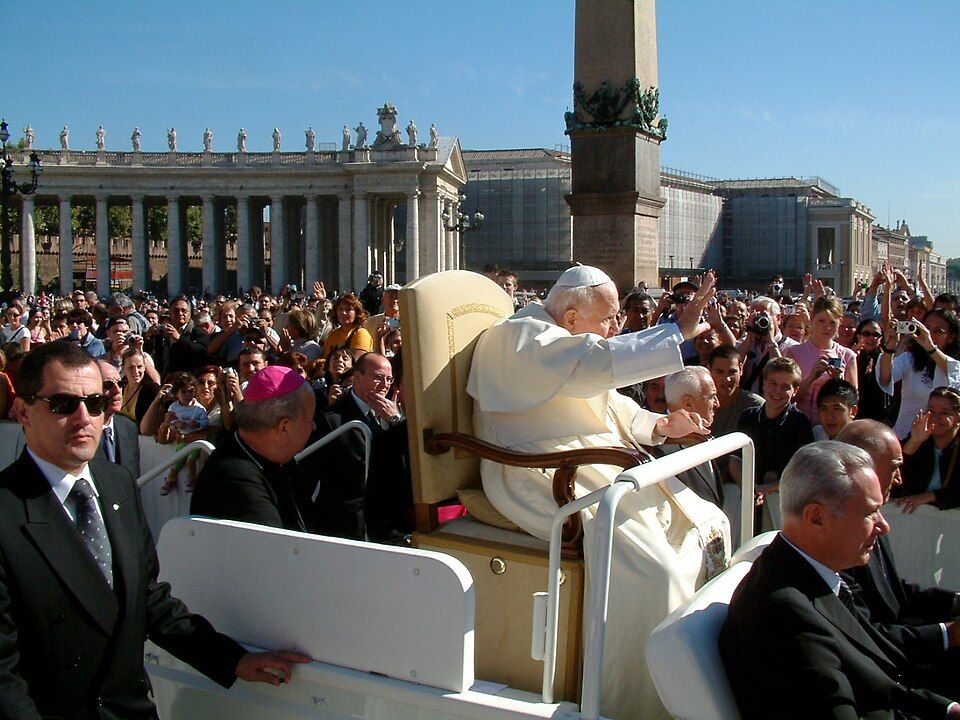
Usually in St Peter's Square when the Pope celebrates; check Vatican News for schedule
Wednesday General Audience
Every Wednesday at 9:30 AM
In St Peter's Square (AprβOct) or Paul VI Audience Hall. Free tickets required β request via the Papal Prefecture (prefecture.va)
Sunday Angelus
Every Sunday at 12:00 noon
The Pope appears at his window in the Apostolic Palace overlooking St Peter's Square to pray the Angelus
Vespers & Evening Prayer
Select Sundays and Solemnities at 5:00 PM
Celebrated by the canons of the Basilica; dates published on the Vatican website
Must See
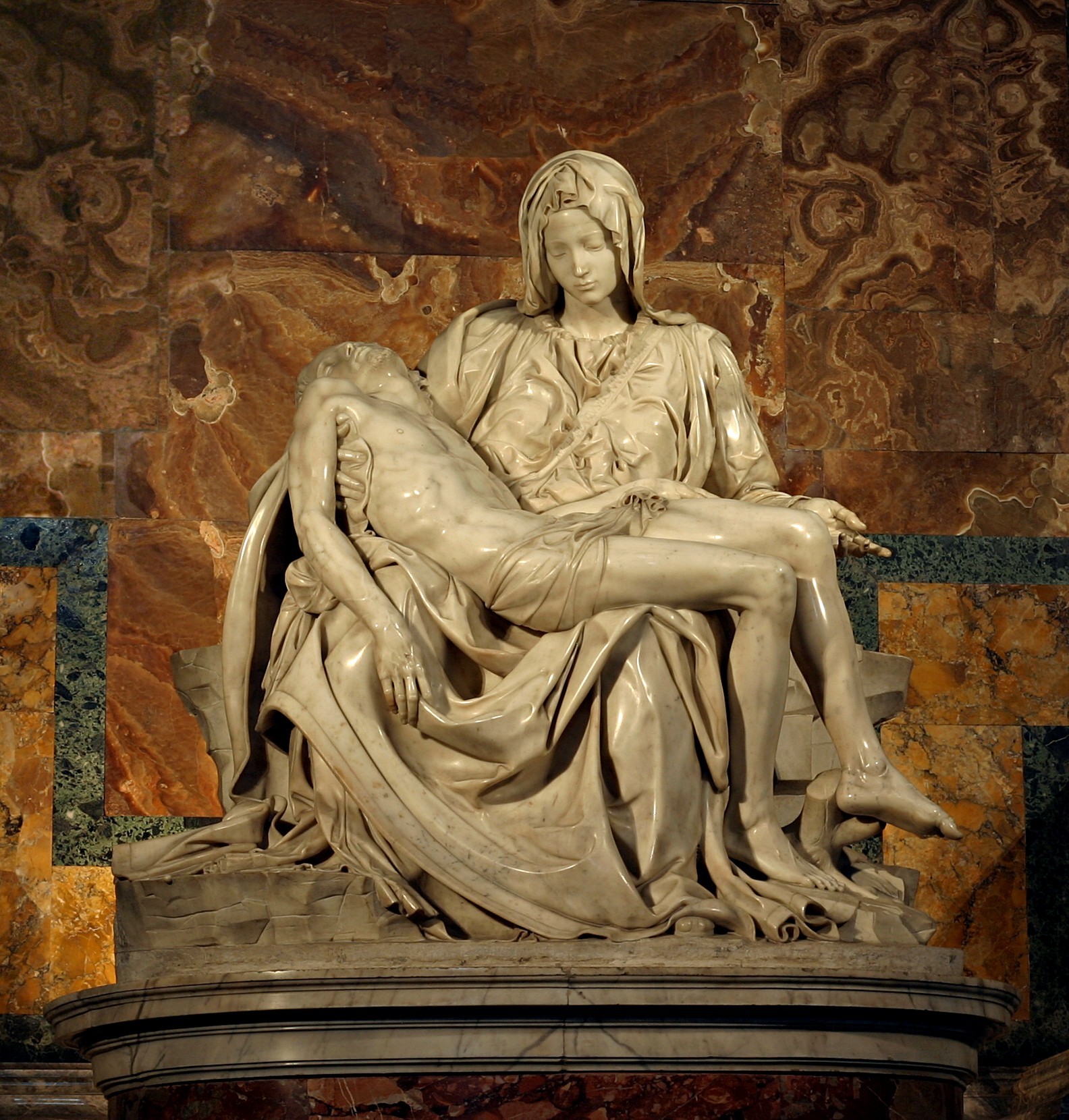
La PietΓ β Michelangelo, 1499
First chapel on the right (Cappella della PietΓ ) as you enter the main doors
Carved when Michelangelo was just 24 years old, this is arguably the most perfect marble sculpture in existence. Mary cradles the body of the crucified Christ with a serenity that transcends grief. It is the only work Michelangelo ever signed β his name is carved across the sash on Mary's chest, reportedly after he overheard the sculpture being credited to another artist.
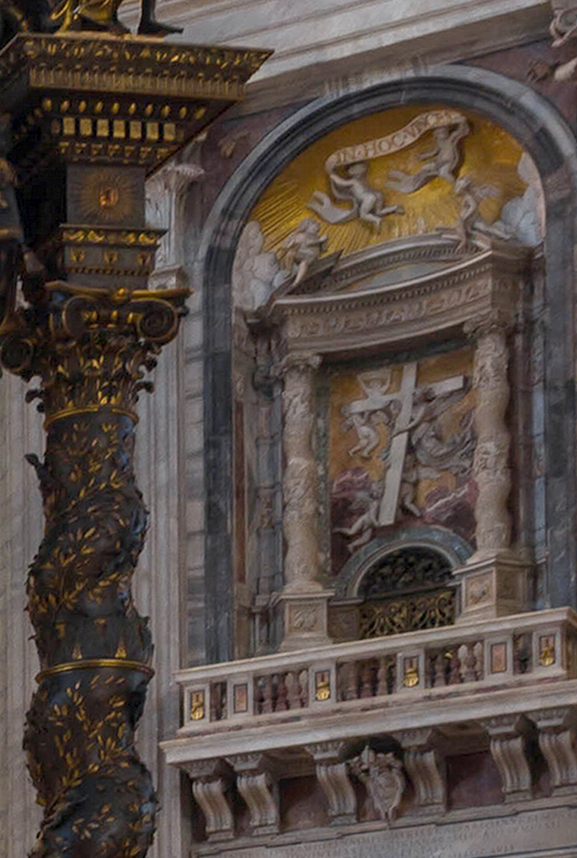
The Baldachin β Bernini, 1623β33
At the crossing, directly above the Papal Altar and the Tomb of St Peter
A colossal 29-metre bronze canopy β taller than the Palazzo Farnese β marking the site of St Peter's tomb. Bernini cast it using bronze stripped from the Pantheon portico, prompting the quip "what the barbarians did not do, Barberini did" (Urban VIII's family name). The twisted columns echo the original Constantinian columns said to have come from Jerusalem.
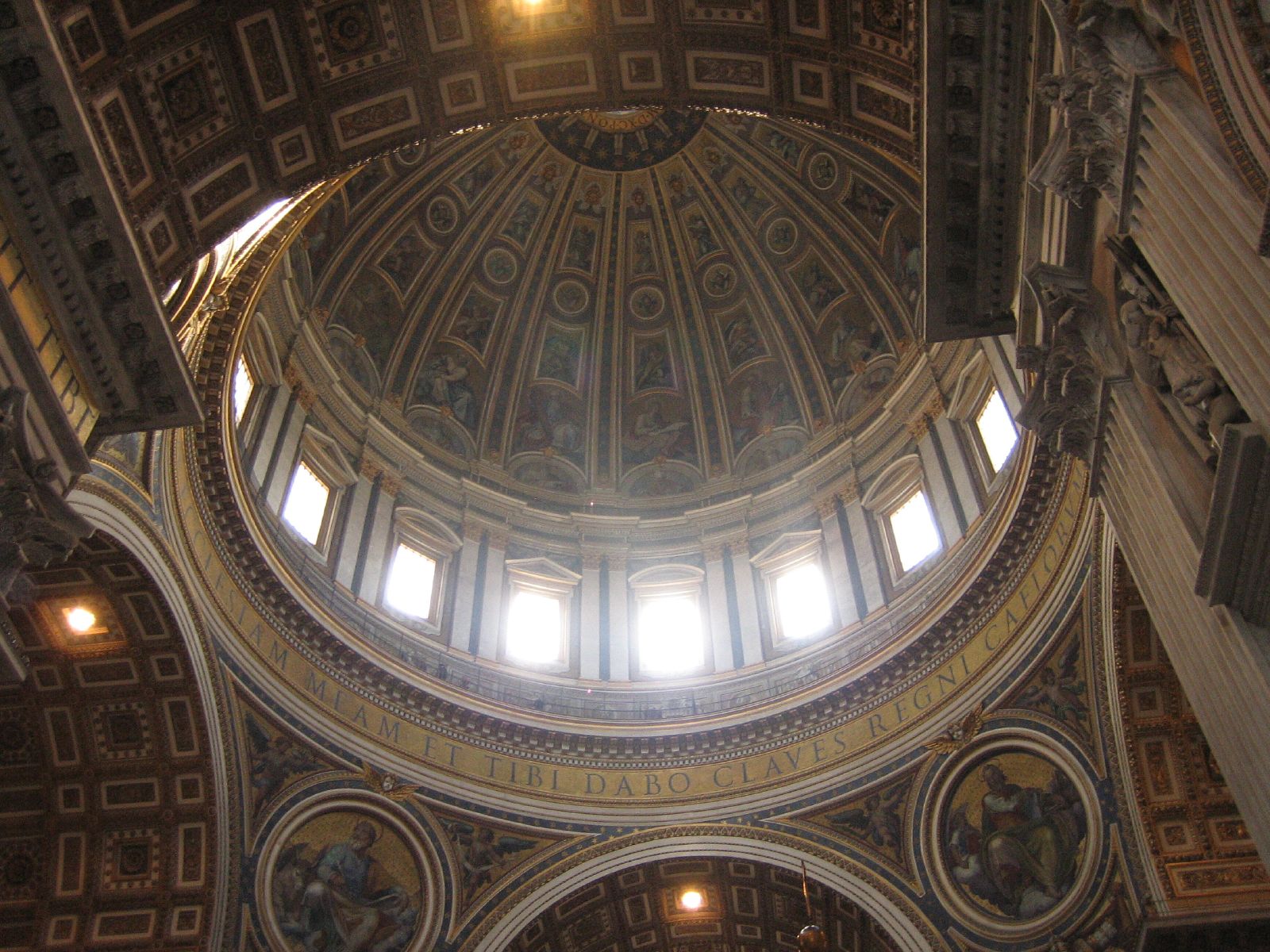
The Dome β Michelangelo & Giacomo della Porta, 1590
The central dome, 136 metres above the floor; ascend for panoramic views of Rome
Michelangelo designed the dome before his death in 1564; della Porta completed it. Standing beneath it, look up to read the great inscription in letters more than two metres tall: "Tu es Petrus et super hanc petram aedificabo ecclesiam meam et tibi dabo claves regni caelorum" β the words Christ spoke to Peter in Matthew 16:18.
The Confessio β Tomb of St Peter
Beneath the high altar; descend via the Vatican Grottoes (free, separate entrance)
A gilded niche marks the spot where Constantine built his first memorial over St Peter's grave. Excavations in the 1940sβ60s (the Scavi) revealed ancient tombs and bones beneath, widely accepted as those of the Apostle. Pilgrims traditionally kneel at the bronze grille and gaze down toward the tomb β one of the holiest spots in Christendom.
Cathedra Petri β Bernini, 1666
The apse at the far end of the Basilica, directly opposite the entrance
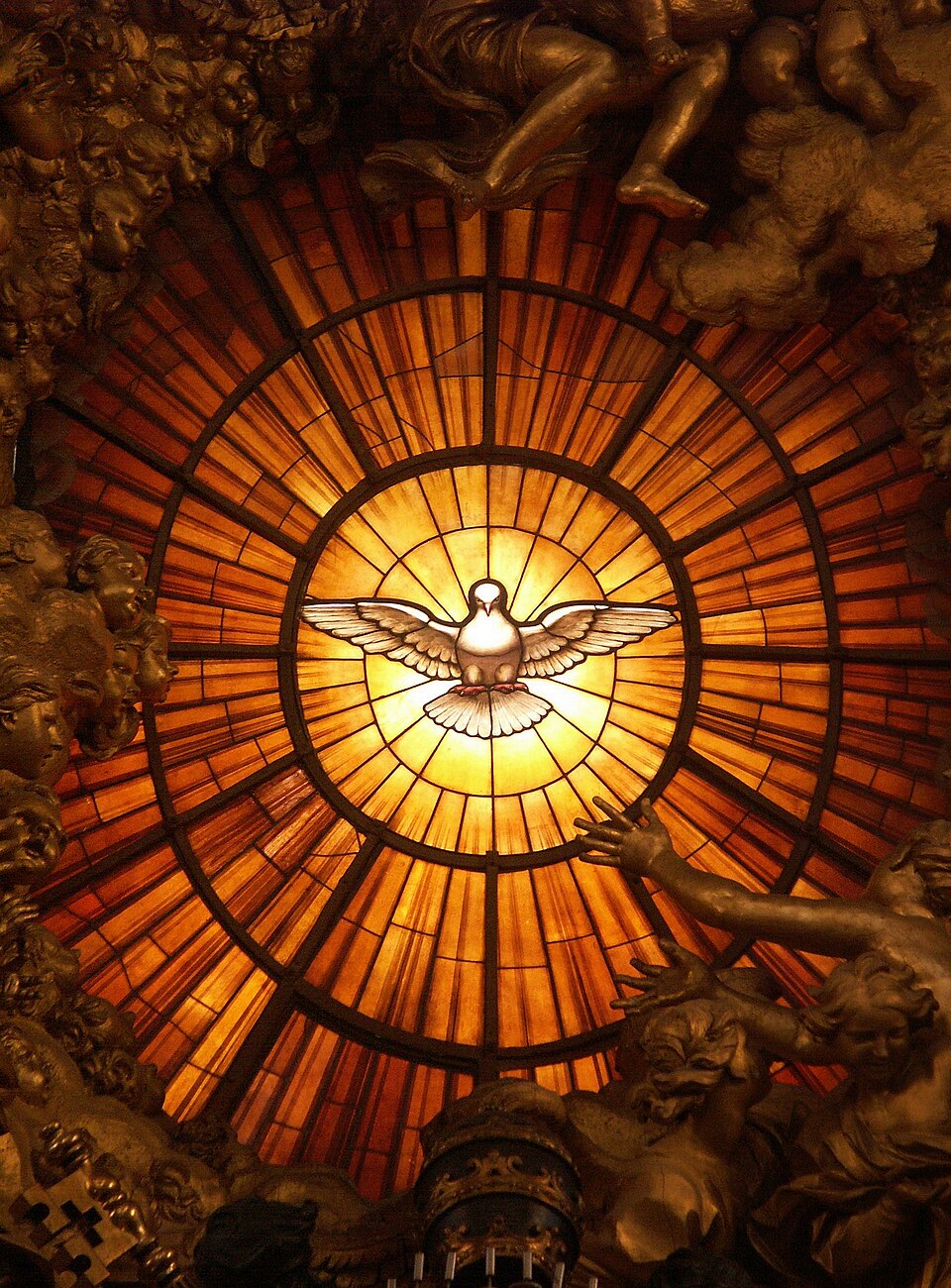
Bernini's gilded bronze throne dramatically encases the ancient wooden Chair of St Peter β believed to be the actual seat used by the Apostle. Above it, a window of golden alabaster depicts the Holy Spirit as a dove, surrounded by a blaze of bronze rays and clouds. It is one of the greatest theatrical compositions in Baroque art.
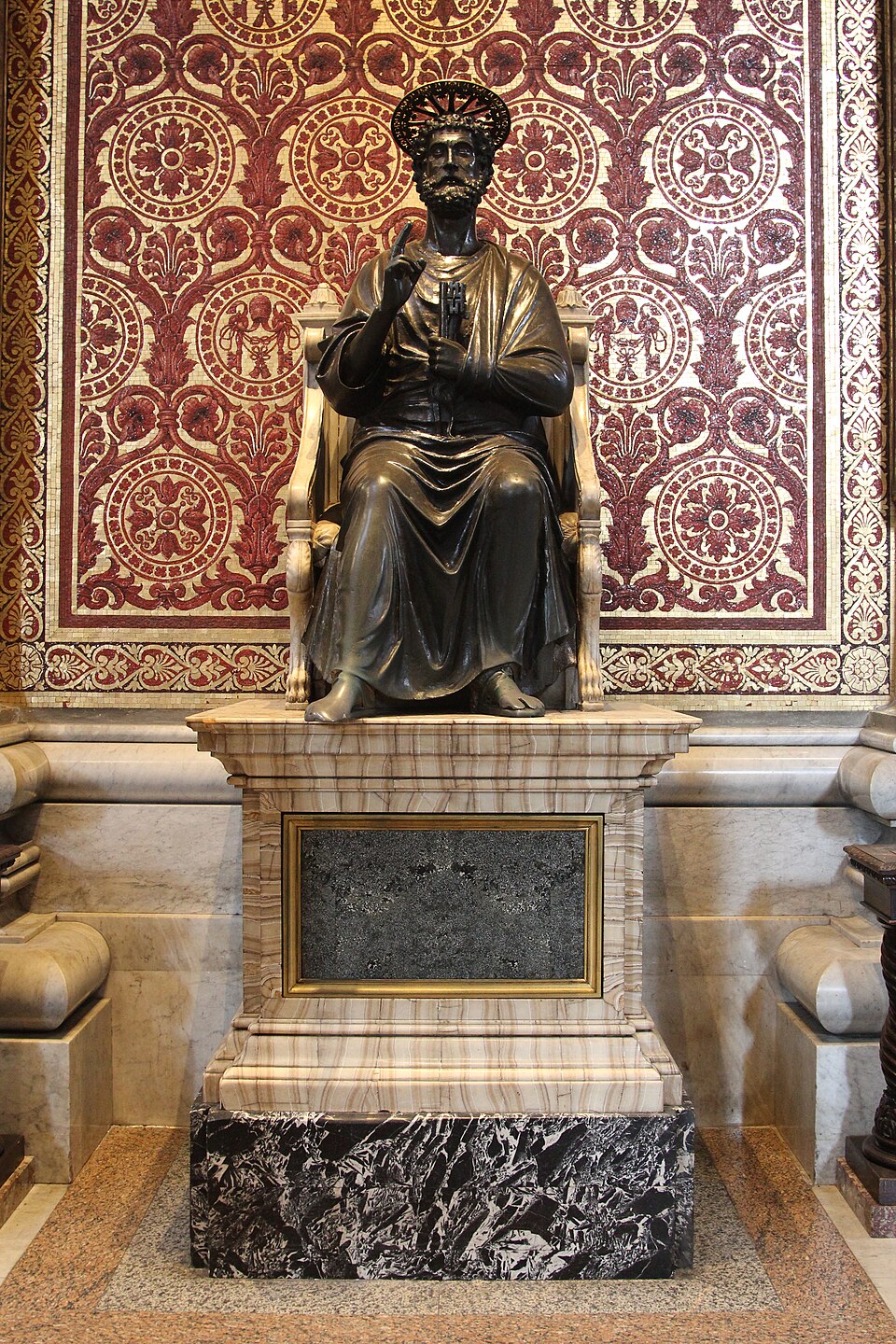
Bronze Statue of St Peter
Right aisle near the crossing, on an elevated throne
A 13th-century bronze attributed to Arnolfo di Cambio, though some scholars date it earlier. The right foot has been worn smooth by centuries of pilgrim kisses and touches β a tradition older than the current Basilica. On feast days the statue is dressed in full papal vestments and a tiara.
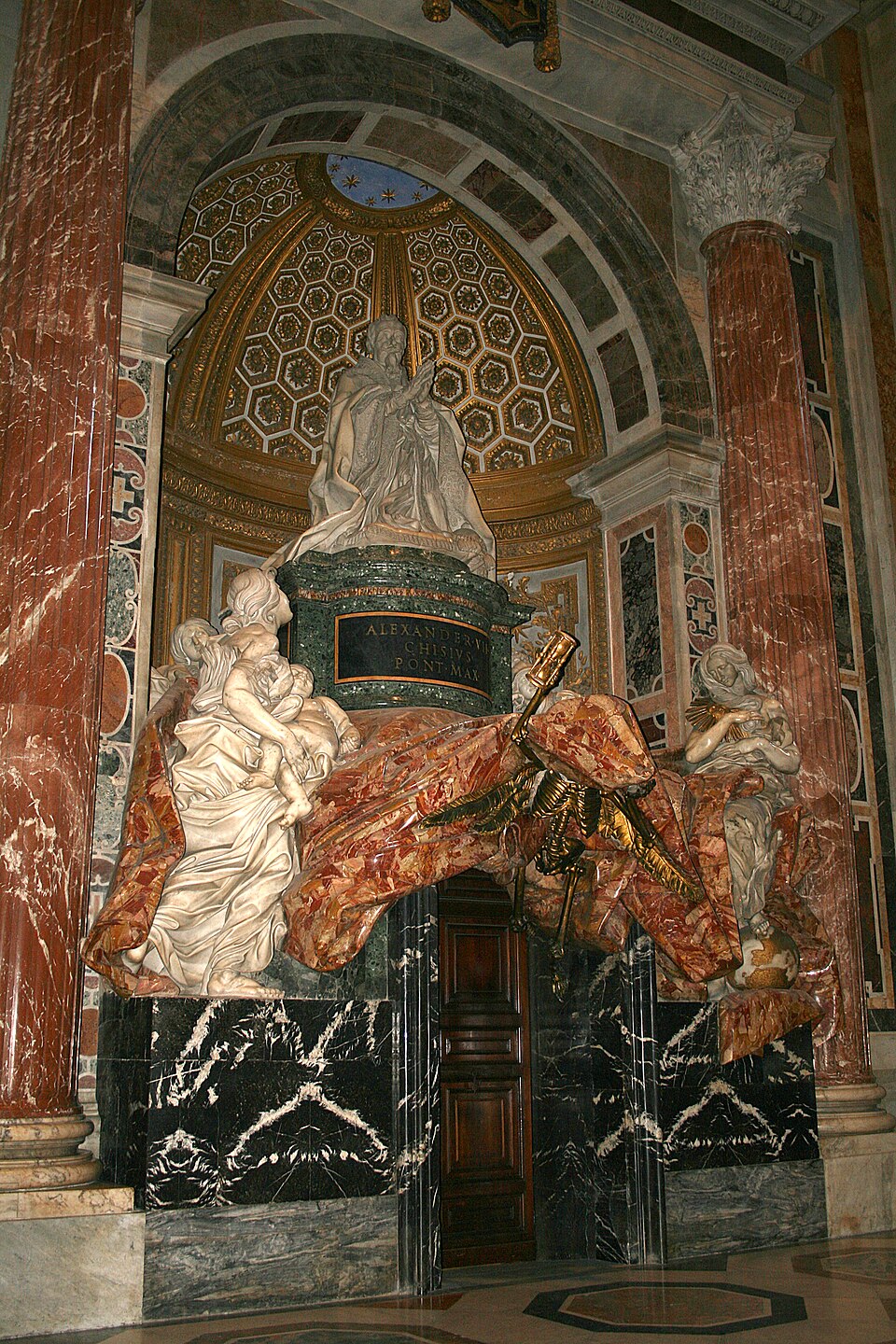
Monument to Alexander VII β Bernini, 1678
South transept (Porta della Morte end)
Completed when Bernini was in his eighties, many consider this his greatest sculpture. A skeleton in marble holds up an hourglass from beneath a billowing jasper drape, flanked by allegorical figures. The door into which the skeleton leans was not there when Bernini designed the tomb β it was added later, yet it only seems to enhance the composition.
The Colonnade β Bernini, 1656β67
St Peter's Square (outside the Basilica)
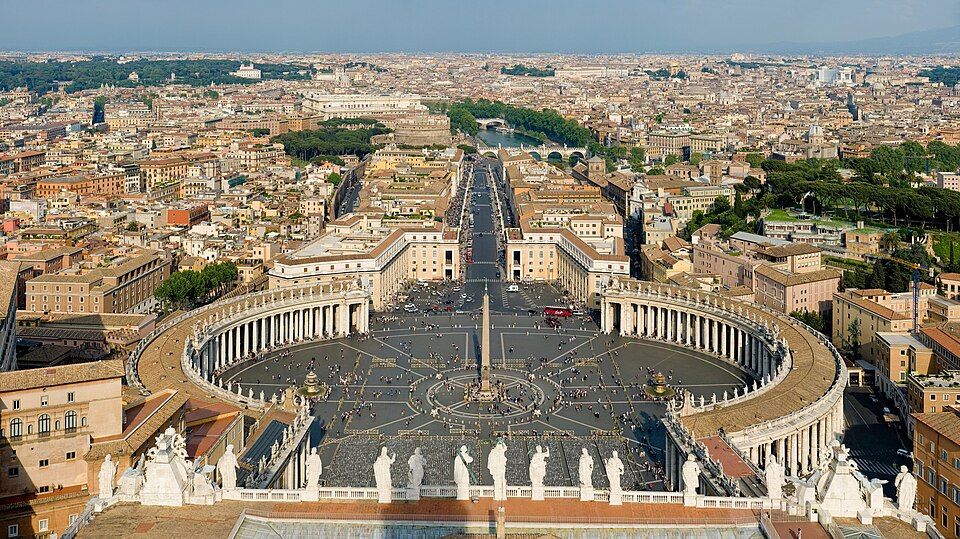
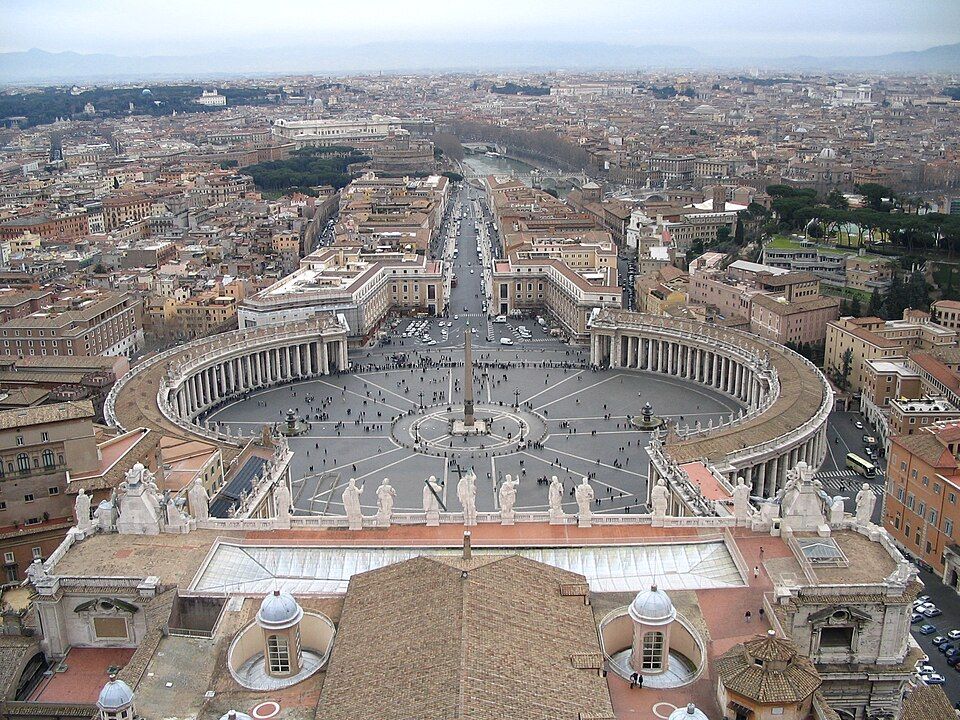
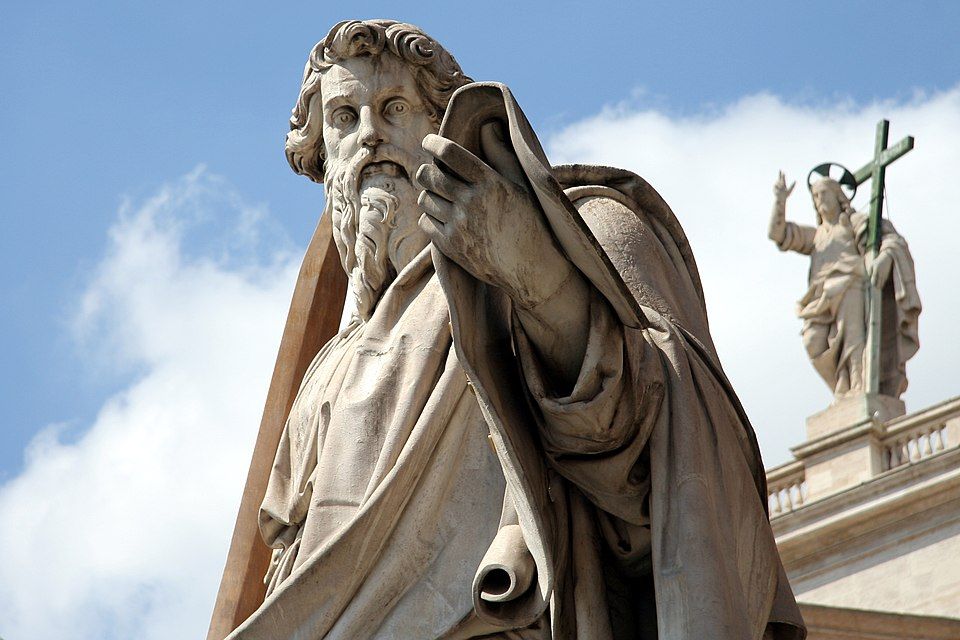
284 columns and 88 pilasters arranged in a sweeping ellipse, topped by 140 statues of saints. Stand on either of the two circular stones set into the piazza floor β marked "Centro del Colonnato" β and the four rows of columns appear perfectly as one. Bernini described the colonnade as the arms of the Church reaching out to embrace the world.
Intentions
Carry these intentions into the Basilica with you β pause at each sacred spot and lift them to God.
For the unity of all Christians throughout the world
For the Holy Father and his ministry to the Church
For priests, bishops, and all who serve in consecrated life
For the conversion of those who have turned away from God
For the souls of the faithful departed, especially those in Purgatory
For peace in nations suffering from war and persecution
For your own family and their most pressing needs
In thanksgiving for the gift of faith passed on through the Church
Reflection
To stand in St Peter's Basilica is to stand at the convergence of twenty centuries of Christian faith. This ground was first consecrated by the martyrdom of an ordinary fisherman from Galilee who, when asked "Who do you say I am?", answered with words that changed history: "You are the Christ, the Son of the Living God." What began as a simple memorial over a grave in the 4th century has grown into the most visited religious site on earth β not because of its art or architecture, remarkable as they are, but because it remains what it always was: a place of pilgrimage to the tomb of Peter, first shepherd of the Church Christ founded. Every Pope, every great artist and architect who contributed to this building, every pilgrim who has knelt at the Confessio across twenty centuries, forms part of an unbroken river of faith that flows directly back to the Upper Room. You are now part of that river.
Suggested Scripture β Matthew 16:18β19
"And I tell you that you are Peter, and on this rock I will build my church, and the gates of Hades will not overcome it. I will give you the keys of the kingdom of heaven; whatever you bind on earth will be bound in heaven, and whatever you loose on earth will be loosed in heaven."
Read in full on Bible Gateway βA Pilgrim's Prayer
Lord Jesus, I stand at the tomb of your Apostle Peter β the man who walked on water and then sank, who confessed your name and then denied it, and who was restored by your mercy to lead your Church. I come as a pilgrim, aware of my own weakness and my own need for your grace. As you looked at Peter across the charcoal fire and asked "Do you love me?", you ask me the same today. Deepen my answer. Strengthen what is wavering in me. May the witness of all the saints whose memory fills this place β the martyrs, the mystics, the ordinary faithful β inspire me to live more fully for you. Through the intercession of St Peter, grant me the grace I need for the journey ahead. Amen.
More
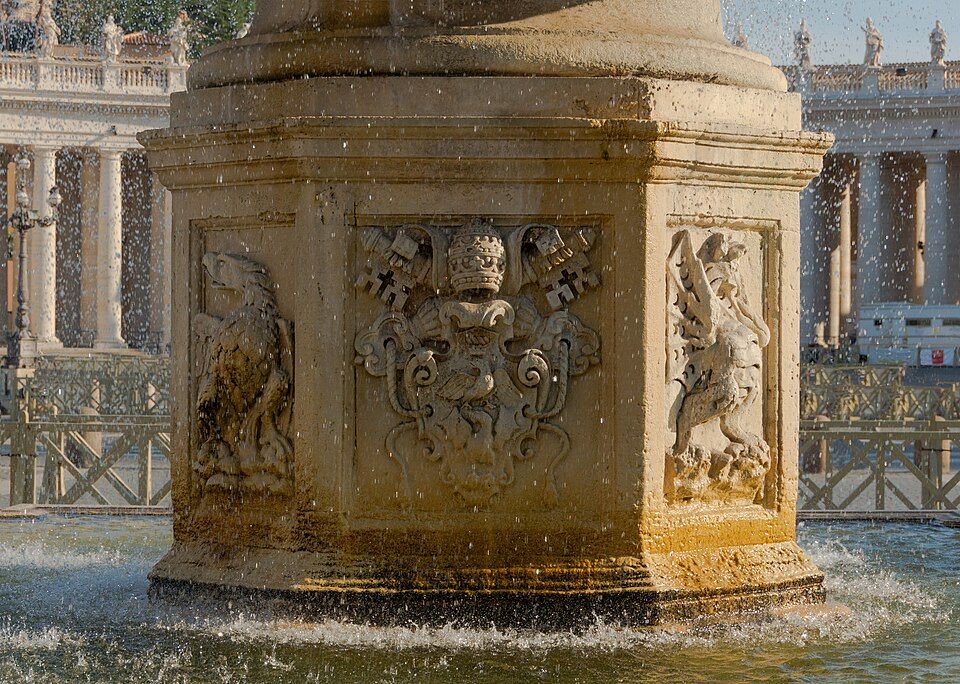
Widely renowned as the foremost piece of Renaissance architecture, St Peterβs Basilica in Rome captivates the senses with its monumental grandeur and the lavish scale of its design. The work of masters such as Michelangelo, Carlo Maderno, Donato Bramante and Gian Lorenzo Bernini it was for many centuries, the largest church in the world. It also is one of only four Major Basilicas, all of them being located in Rome. Although it is not the seat of the Bishop of Rome, St Peterβs Basilica holds a lofty position among Catholic churches and without exaggeration could be classed as the greatest of all churches in Christendom. Traditionally held to be the burial site of St Peter, the first among the Apostles of Jesus, it is also the resting place of numerous Popes as well as royalty. The tomb of St Peter is believed to be directly beneath the main altar. The first Basilica on the site was built by the Emperor Constantine in the fourth century. Braving fires, earthquakes, depredations by invaders and deterioration brought about with the passage of time, the basilica lasted for over a thousand years. In 1506, Pope Julius II ordered it razed to make way for a new structure which today is the most recognised building in the Vatican City and is synonymous with it in popular perception. Work on the new structure was completed over a century later on 18 November 1626, with a succession of architects and sculptors keeping pace with changes in design as the work progressed. Such is the majestic spectacle of its appearance and the breathtaking colonnade it is regarded as the greatest building of its age. The shrine in the first basilica was adorned by a canopy supported by four serpentine pillars brought by the Emperor Constantine from Jerusalem . This concept was enormously magnified and is the inspiration of the baldachin created by Gian Lorenzo Bernini between the years 1623-33 and is the showpiece of the Basilica. The other works credited to Bernini is the colonnade, the fountain for the piazza, the brilliantly executed Scala regia or Royal Stairs besides several major pieces of sculpture reveal a mastery over his art much ahead of its time. In sum the planning, labour, faith of a succession of popes, the skill of legions of artists and craftsmen produced a work of art that remains to this day a testament of what human skill when blessed with divine grace can produce.
Photo Gallery
5 photosKey Facts
- Type
- Basilica
- Region
- Italy / Vatican
- Location
- Vatican City, Italy
Open in Google Maps
Piazza San Pietro, 00120 CittΓ del Vaticano, Vatican City
Pilgrim's Note
We encourage all visitors to enter in a spirit of prayer and respect for the faith traditions of each place.