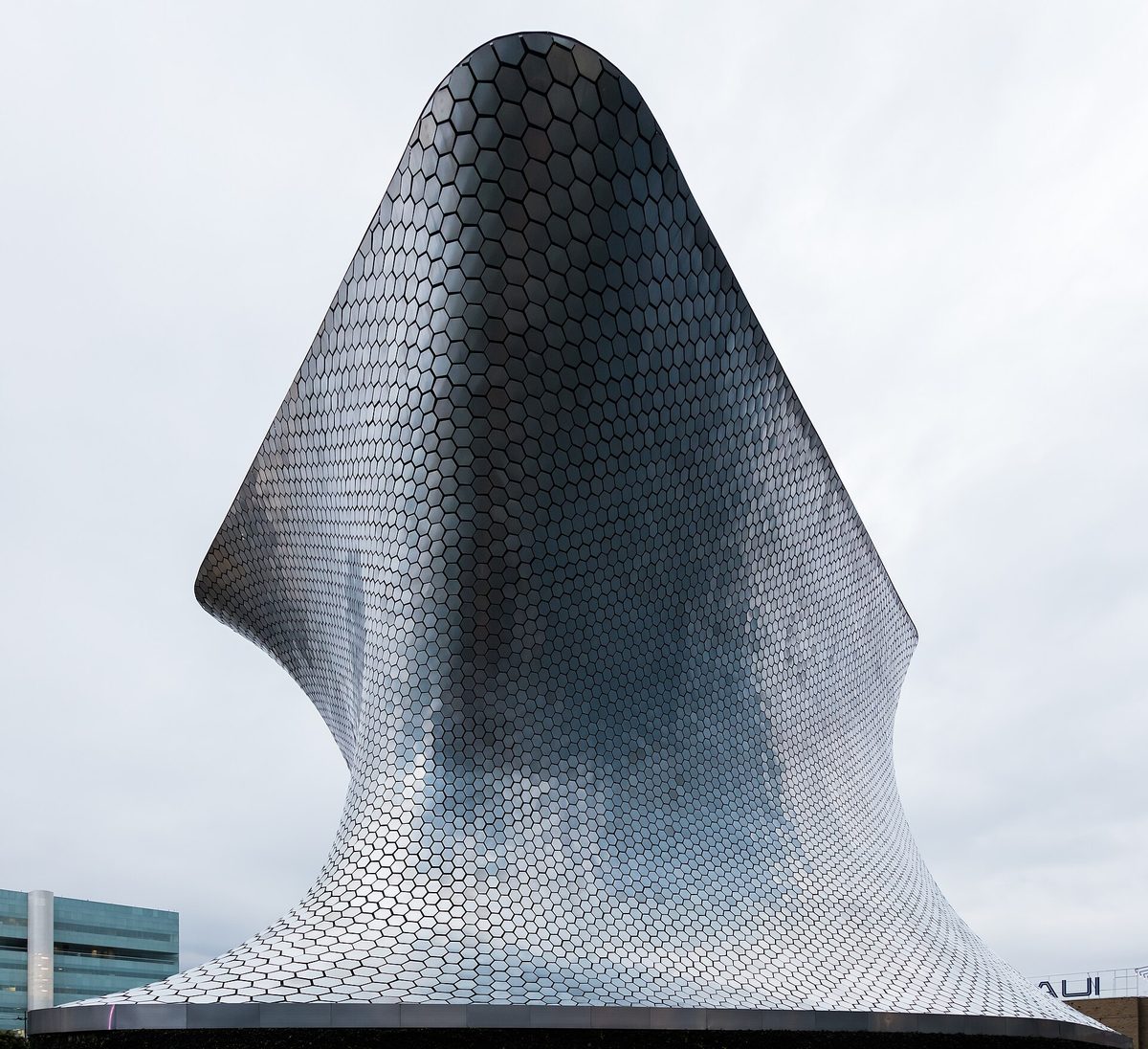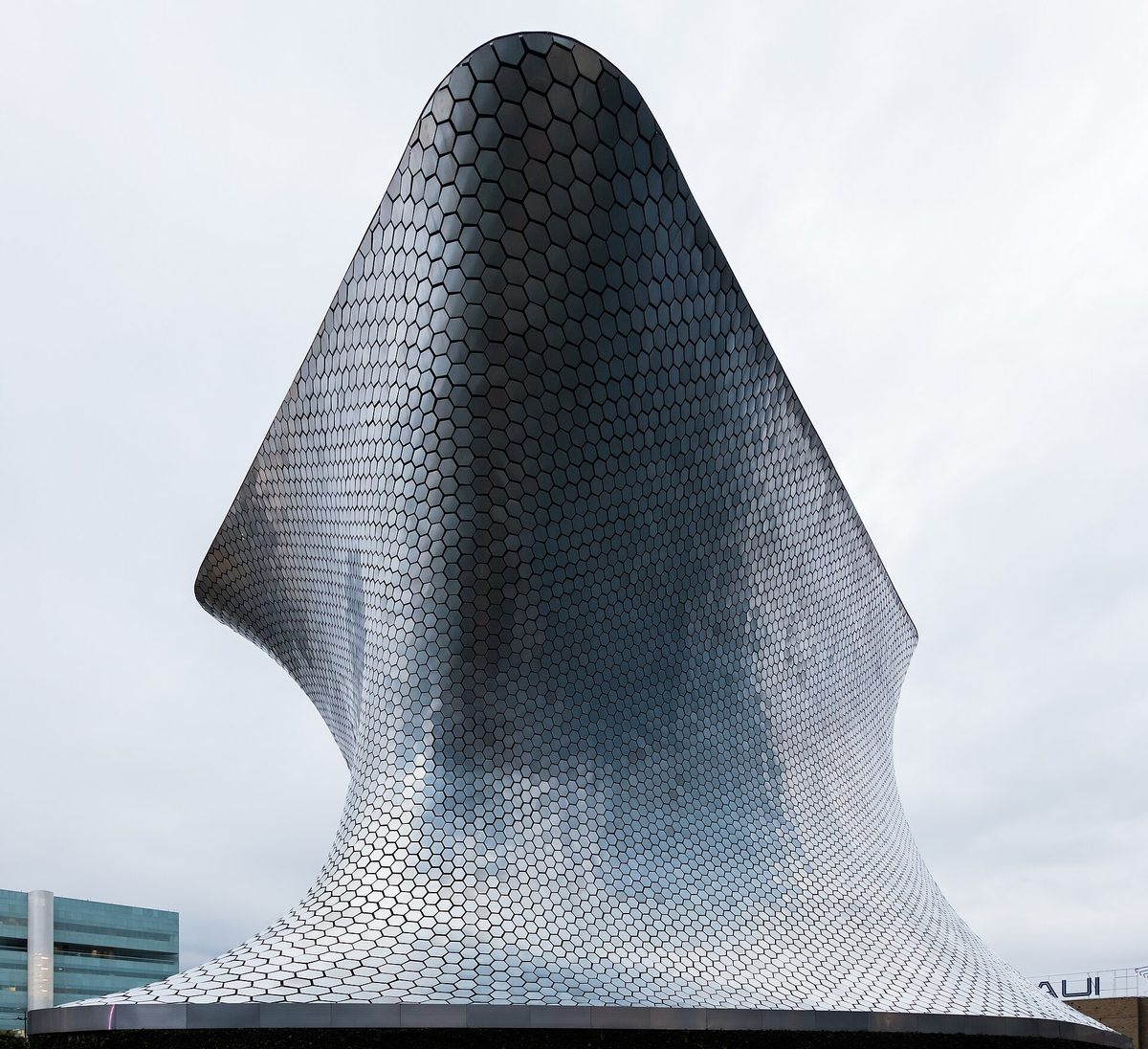
The Museo Soumaya is the personal vision of Carlos Slim Helú, the telecommunications magnate who at various points in the early twenty-first century was listed as the wealthiest person in the world. Named after Slim's late wife, Soumaya Domit, who died in 1999, the museum opened in its present dramatic building — a freeform aluminium-clad tower designed by Slim's son-in-law Fernando Romero and completed in 2011 — in the Polanco neighbourhood of Mexico City. With more than 66,000 objects spanning five millennia of human creative output, the museum is simultaneously a tribute to Slim's wife, a celebration of Mexican cultural ambition, and a public repository of one of the largest private art collections in the Americas. Admission is free, an act of philanthropy that places these extraordinary holdings within reach of every Mexican citizen and every visitor to the city. For the student of Christian art, the Museo Soumaya offers a particularly rich engagement with European religious painting and the material culture of devotion. The collection holds major works by European Old Masters — Italian, Spanish, Flemish and Dutch paintings that trace the history of Christian imagery from the late medieval period through the Counter-Reformation and into the eighteenth century. Spanish religious painting is especially strongly represented, reflecting Mexico's colonial inheritance from the Viceroyalty of New Spain, where the imagery of Spanish Catholicism — the dramatic saints, the ecstatic Madonnas, the gruelling Passion scenes — shaped the visual culture of an entire continent for three centuries. Devotional ivories and liturgical objects of extraordinary craftsmanship, many of them products of the great European workshops that supplied churches and wealthy households across the Catholic world, form another major category of the Christian holdings. The collection's most famous component is its assembly of works by Auguste Rodin — over three hundred sculptures, making it the world's largest collection of Rodin outside the Musée Rodin in Paris. Rodin's relationship to Christian art is complex and ambivalent: his figures of Adam and Eve, his monumental Gates of Hell, his Thinker (originally conceived as Dante above the inferno) engage with biblical and theological themes through a lens of Symbolist tragedy rather than orthodox devotion. But they constitute a crucial chapter in the history of how Western art has processed the Christian inheritance in the secular age, and their presence in Mexico City gives the Soumaya a breadth that purely devotional collections cannot match.
With over 66,000 objects spanning five millennia, the Museo Soumaya is one of the largest private museums in the Americas, open free to the public.
European Old Master religious paintings — Italian, Spanish, Flemish and Dutch — trace the full tradition of Christian devotional imagery from the medieval to the Baroque.
Devotional ivories and liturgical objects from European and colonial Mexican workshops represent the most intimate tradition of private Christian prayer.
The world's largest collection of Rodin sculpture outside France includes the Gates of Hell and The Thinker, engaging with the Christian theological tradition through a Symbolist lens.
The building itself — a freeform aluminium tower designed by Fernando Romero — is among the most striking works of contemporary Mexican architecture.
Carlos Slim and the Vision of the Museum
Carlos Slim Helú was born in Mexico City in 1940, the son of Lebanese Christian immigrants. He studied civil engineering at the National Autonomous University of Mexico and built his first fortune in stockbroking before acquiring — cheaply, during Mexico's 1982 debt crisis — a series of industrial and commercial enterprises that he consolidated into the Grupo Carso conglomerate. His purchase in 1990 of Telmex, Mexico's state telephone company, at privatisation gave him control of the country's telecommunications infrastructure and, over the following decade, made him one of the richest men in the world. Slim has consistently presented his wealth as a tool for Mexican development rather than personal consumption, and the Museo Soumaya — built with private funds and offered to the public free of charge — is the most visible expression of this philosophy.
The Building
The Museo Soumaya's Plaza Carso building, designed by Fernando Romero and completed in 2011, is one of the most photographed buildings in contemporary Mexico. Its curved form — like a collapsed cylinder or an abstract vase — is clad in sixteen thousand hexagonal aluminium tiles that catch the Mexican light at different angles throughout the day, shifting from silver to gold to a warm pewter depending on the time and weather. The interior provides approximately 6,000 square metres of exhibition space across six floors linked by a central spiral ramp — a circulation concept that invites visitors to ascend through history rather than to move through it horizontally. The engineering challenges of building a structure with no vertical load-bearing walls were considerable, and the building's completion was celebrated as a demonstration of Mexican architectural ambition.
European Old Master Religious Painting
The painting collection spans Italian, Spanish, Flemish and Dutch work from the fourteenth through the eighteenth centuries. Spanish Baroque religious painting is particularly well represented: artists from the circle of Francisco de Zurbarán, whose stark white-habited monks in meditation became the defining image of Spanish monastic piety, and from the tradition of Juan de Ribera, whose Tenebrist saints and martyrs combined Italian chiaroscuro with Spanish psychological intensity. Italian devotional panels and altarpieces from the late Gothic and early Renaissance periods demonstrate the transitions between the hieratic formality of the Byzantine tradition and the emerging naturalism of the Quattrocento. The collection also includes substantial holdings of Flemish painting from the sixteenth and seventeenth centuries — the tradition that produced van Eyck, Rogier van der Weyden and Rubens, and that dominated the visual culture of the Catholic Netherlands.
Devotional Ivories and Liturgical Objects
Among the most extraordinary objects in the Soumaya collection are the devotional ivories — carved objects produced in the great workshops of Dieppe, Paris, South Germany and the colonial Philippines across five centuries from the fourteenth to the nineteenth. These small-scale works — triptychs, diptychs, statuettes of the Virgin, crucifixes and nativity groups — represent the most intimate tradition of Christian devotion: objects made for private prayer, handled and kissed by generations of believers before entering the art market. The Mexican colonial tradition of blending European Catholic iconography with indigenous craft materials and formal sensibilities is also represented in the collection, providing a distinctive perspective on the global spread of Christian visual culture.
Rodin and the Christian Inheritance
Auguste Rodin's relationship to Christianity was shaped by his education in French Catholic schools and by his early training as a sculptor of architectural ornament for the newly rebuilt churches of Haussmann's Paris. His monumental Gates of Hell, begun in 1880 and never completed to his satisfaction, draws on Dante's Inferno — itself a profound theological meditation on sin, judgment and redemption — for a cast of writhing, despairing figures that constitute his most ambitious statement about the human condition. The Thinker, perched above the Gates, was originally conceived as Dante himself contemplating the souls below him. These works, present in multiple casts in the Soumaya collection, represent the intersection of Christian theological tradition and modern secular humanism that characterises the intellectual culture of the late nineteenth century.
Visiting
The Museo Soumaya at Plaza Carso is open daily, with free admission. It is located in the Miguel Hidalgo delegation of Mexico City, near the Polanco neighbourhood, and is easily reached by metro (Polanco station) or taxi. The museum's six floors are connected by a continuous ramp, making it largely accessible for visitors with mobility limitations. Photography is permitted throughout the museum. A café and gift shop are located on the ground floor.