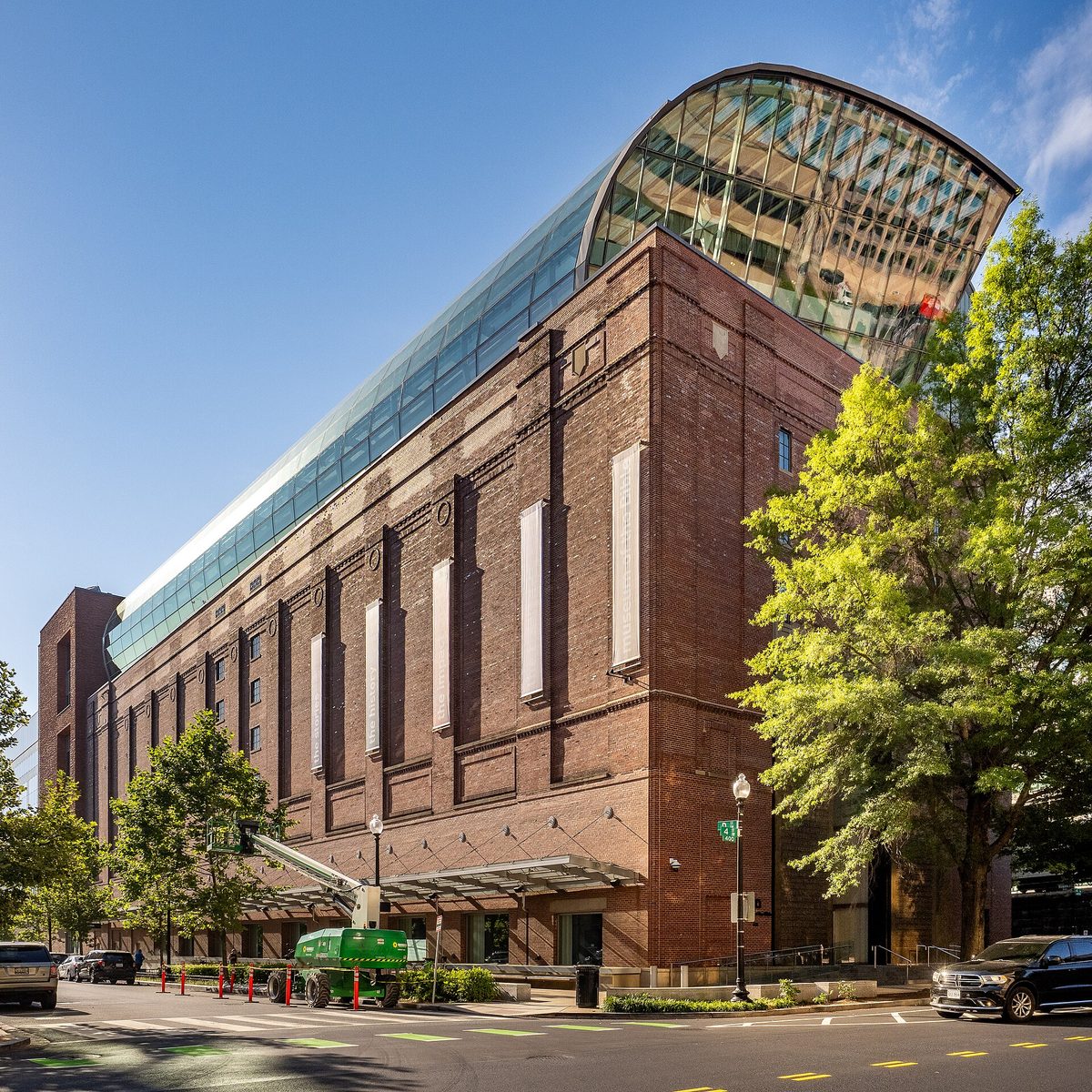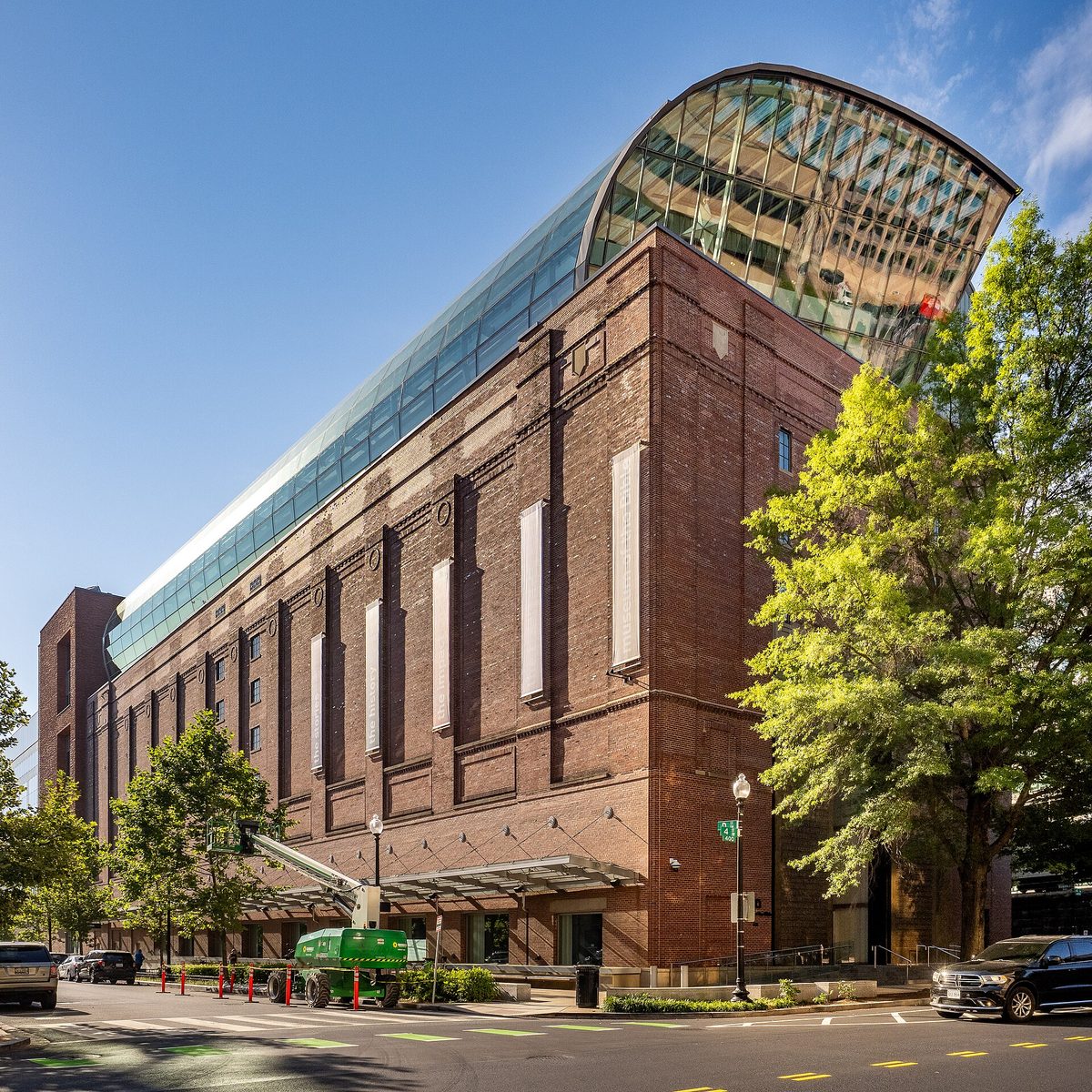
The Museum of the Bible opened in Washington DC in 2017 as the most ambitious attempt in modern times to present the history and cultural impact of the biblical text to a broad public audience. Founded and funded by the Green family — Steve Green, the president of Hobby Lobby, the craft supply chain, and his family, who are evangelical Christians of deep personal faith — the museum occupies 430,000 square feet in a former cold-storage warehouse two blocks from the National Mall, a building comprehensively reimagined by the architects SmithGroup into a structure of considerable ambition, with bronze doors cast with passages from Genesis and Exodus, a rooftop garden with views of the Capitol, and a flying theatre that carries visitors over a recreation of ancient Jerusalem. The museum's collection, which the Green family began assembling in the mid-2000s and which numbers approximately 40,000 objects, encompasses the full range of the Bible's material history: cuneiform tablets and ancient Near Eastern artefacts that provide the archaeological context for the Old Testament narratives; Dead Sea Scroll fragments from the Qumran caves that represent the oldest surviving witnesses to the Hebrew scriptures; Torah scrolls in every tradition from Ashkenazi to Sephardic to Ethiopian; early codices and papyri of the New Testament; medieval illuminated manuscripts of extraordinary beauty; Gutenberg Bible pages — fragments of the first major book printed in the West, in which Gutenberg's revolutionary moveable type made the scriptures available on a scale previously impossible; and a comprehensive collection of early printed Bibles in dozens of languages, tracing the global spread of the scriptural text through the Reformation and the age of missions. The museum has not been without controversy. In 2020, the Justice Department confirmed that approximately 5,000 artefacts purchased by the Green family — including ancient cylinder seals, cuneiform tablets and papyri — had been illicitly acquired and smuggled from Iraq, and these were subsequently returned to Iraq and other countries of origin. The museum has engaged in a comprehensive review of its collection's provenance and has committed to restitution where looting can be demonstrated. The episode has cast a shadow over what is otherwise a genuine achievement of Christian cultural philanthropy: a building and a collection that make the material history of the Bible accessible to a mass audience in the capital of the most powerful English-speaking nation on earth.
Approximately 40,000 objects make this the world's largest museum dedicated to the history of the Bible, from ancient Near Eastern cuneiform to early printed scriptures.
Gutenberg Bible leaves — fragments of the first major book printed with moveable type — connect the collection to the technological revolution that transformed Christianity.
Torah scrolls spanning every tradition of the Jewish diaspora, from Ashkenazi Europe to Yemenite antiquity, illuminate the textual transmission of the Hebrew scriptures.
Medieval illuminated manuscripts of extraordinary beauty embody the conviction that the physical book containing God's word should be as beautiful as human craft can make it.
Located two blocks from the National Mall in Washington DC, the museum makes the Bible's material history accessible to one of the world's most visited public spaces.
The Green Family and the Mission
Steve Green's father David Green founded Hobby Lobby in Oklahoma City in 1972 from a home workshop making miniature picture frames, and built it into a chain of more than 900 craft stores with revenues exceeding five billion dollars annually. The family's evangelical faith shapes their business practices — Hobby Lobby closes on Sundays and has been party to landmark litigation over religious freedom — and it shapes their philanthropy. Steve Green began purchasing biblical manuscripts and antiquities around 2009, initially for the purpose of founding a museum that would demonstrate the Bible's pervasive influence on Western civilisation. The collection grew rapidly, sometimes too rapidly, as the provenance controversies subsequently revealed.
The Gutenberg Bible
Johannes Gutenberg completed his great printed Bible in Mainz around 1455, using moveable metal type in a process that he had developed over the preceding decade. The Gutenberg Bible — properly the forty-two-line Bible, from the number of lines per column — was printed in an edition of approximately 180 copies, of which 49 are known to survive in varying degrees of completeness. Leaves and fragments of the Gutenberg Bible are among the most precious objects in the Museum of the Bible's collection, connecting the institution's holdings to the technological revolution that made the scriptures available to ordinary readers and provided the material foundation for the Protestant Reformation. The sight of Gutenberg type — so precise, so beautiful, so unlike manuscript calligraphy and yet so clearly aspiring to its elegance — is one of the most moving experiences the museum offers.
Dead Sea Scroll Fragments
The Museum of the Bible holds a collection of fragments purporting to be from the Dead Sea Scrolls, discovered between 1947 and 1956 in the caves near Qumran on the western shore of the Dead Sea. These scrolls, preserved for two millennia in the arid conditions of the Judaean Desert, represent the oldest surviving manuscripts of the Hebrew scriptures and provide extraordinary evidence of the textual traditions current among Jewish communities in the Second Temple period. However, in 2020 the museum announced that extensive scientific testing by independent experts had determined that all sixteen fragments it held were modern forgeries — fake patinations applied to ancient leather in order to create the appearance of age. The museum returned the fragments to their sellers and engaged in a comprehensive review of its acquisition practices.
Torah Scrolls and Jewish Manuscript Traditions
The museum's holdings of Torah scrolls — handwritten parchment rolls containing the five books of Moses, produced by trained scribes following precise halakhic requirements — represent one of the most comprehensive collections of this type outside specialist Jewish institutions. The scrolls span the full geographic and chronological range of the Jewish diaspora: Ashkenazi scrolls from Central and Eastern Europe, Sephardic scrolls from Spain, North Africa and the Ottoman Empire, Yemenite scrolls of extraordinary antiquity, and Ethiopian scrolls that reflect the isolated Falasha tradition. Each scroll embodies a theological claim — that the text it contains must be transmitted without alteration across every generation — and a craft tradition of corresponding exactitude.
Medieval Illuminated Manuscripts
The museum's medieval manuscripts range from simple monastic working copies of the scriptures to lavishly illuminated Books of Hours and Gospel books decorated with gold leaf, lapis lazuli and brilliant mineral pigments. These books, produced in the great scriptoria of France, England, Flanders and Italy between the eighth and the fifteenth centuries, are among the most beautiful objects ever made in the Western tradition. They embody the medieval conviction that the physical book containing the word of God should itself be as beautiful as human hands and imagination could make it — a theology of craft that produced works of art inseparable from their religious function.
The Building
The Museum of the Bible occupies a former cold-storage and refrigerated warehouse built in 1923, comprehensively redesigned by SmithGroup to provide eight floors of exhibition, education and event space. The building's most striking exterior feature is its north and south facades, sheathed in cast bronze panels engraved with text from the Book of Genesis and the Gospel of John. The rooftop garden provides one of Washington's most unusual views — across the Capitol dome and the Washington Monument — and serves as a venue for evening events. The flying theatre on the top floor immerses visitors in a seven-minute aerial simulation of first-century Jerusalem.
Visiting
The Museum of the Bible is open daily, with admission charged. It is located two blocks south of the National Mall, a short walk from the L'Enfant Plaza metro station, which serves multiple lines. The museum's eight floors require a full day to explore properly. Audio guides, guided tours and digital interactives are available at every level. The rooftop restaurant is open to both museum visitors and the public.