The Original Painting
Main altar, basilica The 16th-century painting of Our Lady with the Rosary, brought to Pompei on a fertiliser cart, has been embellished with a gold and gemstone frame of extraordinary opulence.
 Pilgrimstays
The Basilica of Our Lady of the Rosary of Pompei stands in the city of Pompei (spelled without the double p, distinct from the ancient Roman ruins nearby) in the shadow of Mount Vesuvius. It was founded by Blessed Bartolo Longo, a former Satanist who converted to Catholicism and dedicated his life to spreading the Rosary. His story — from active opponent of the Church to the founder of a major Marian basilica — is one of the most dramatic conversion narratives in 19th-century Catholicism. In 1875, Longo came to a poor valley town south of Naples at the invitation of the local bishop, bringing a worn and dilapidated painting of the Virgin of the Rosary on a cart carrying fertiliser. Within a decade, the painting was venerated by thousands, a grand basilica was rising, and miraculous cures were reported. The basilica was completed in stages between 1887 and 1939. Longo also founded schools, orphanages, and a printing house alongside the basilica. The two Supplications to Our Lady of the Rosary of Pompei — prayed at noon on the first Sunday of May and the first Sunday of October — have been observed continuously since 1883. Millions across the world join in these prayers simultaneously, making them among the most globally participated devotional acts in Catholicism. Longo was beatified by Pope John Paul II in 1980.
Founded by a former Satanist turned devoted Catholic — one of the most dramatic conversion stories in the Church The Supplications of Pompei (May and October) are prayed simultaneously by millions worldwide
The original painting of the Virgin of the Rosary was brought to Pompei on a cart carrying fertiliser in 1875 Blessed Bartolo Longo is the only beatified lay founder of a major basilica in modern Catholic history The basilica combines religious activity with schools, orphanages, and social services — faith in action
Main altar, basilica The 16th-century painting of Our Lady with the Rosary, brought to Pompei on a fertiliser cart, has been embellished with a gold and gemstone frame of extraordinary opulence.
looks down on a basilica built entirely on the faith that a battered painting could change a valley.
a theological contrast that pilgrims have always noted.
Side chapel, basilica The chapel containing the tomb of Blessed Bartolo Longo tells the story of his conversion and his extraordinary life. From Satanist to beatified foundoer in one lifetime. The story is simultaneously an argument against determinism and a testimony to the power of the Rosary.
Around the basilica complex Longo built schools and orphanages for the children of the valley alongside the basilica. The social mission is as much a part of Pompei as the devotion. This fusion of Marian devotion and practical social service is the most distinctive characteristic of Pompei.
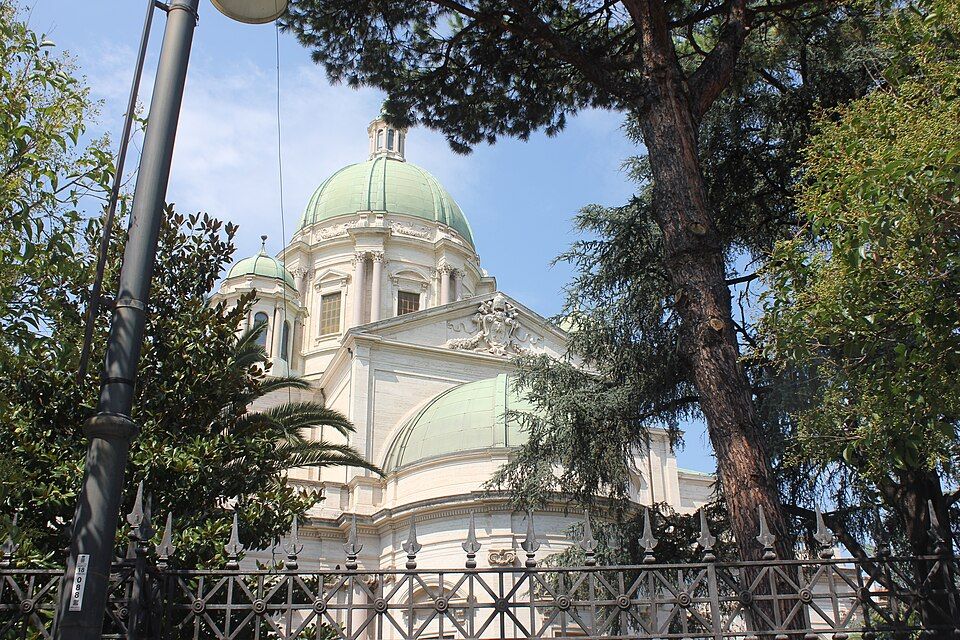
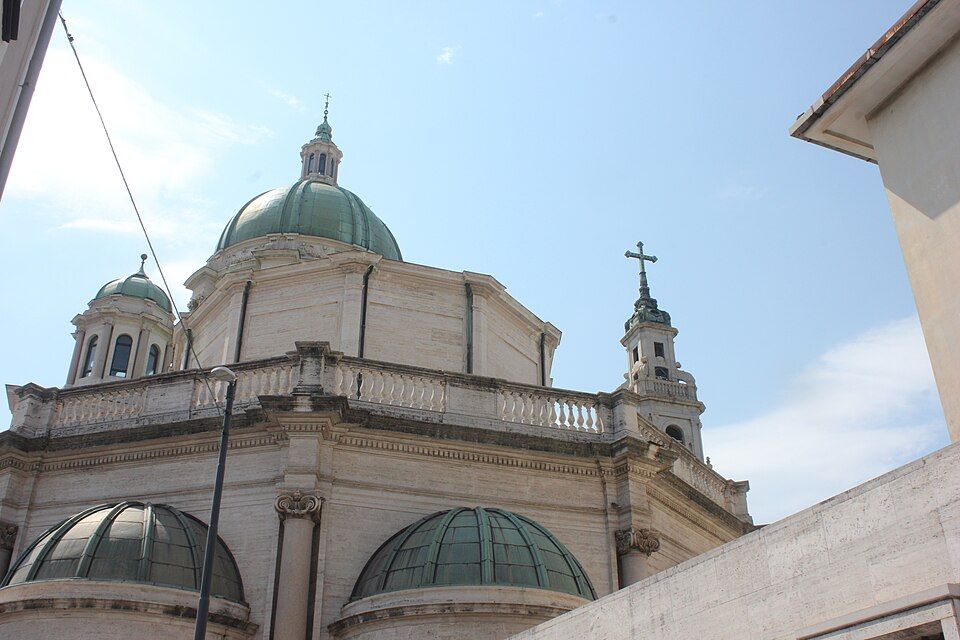
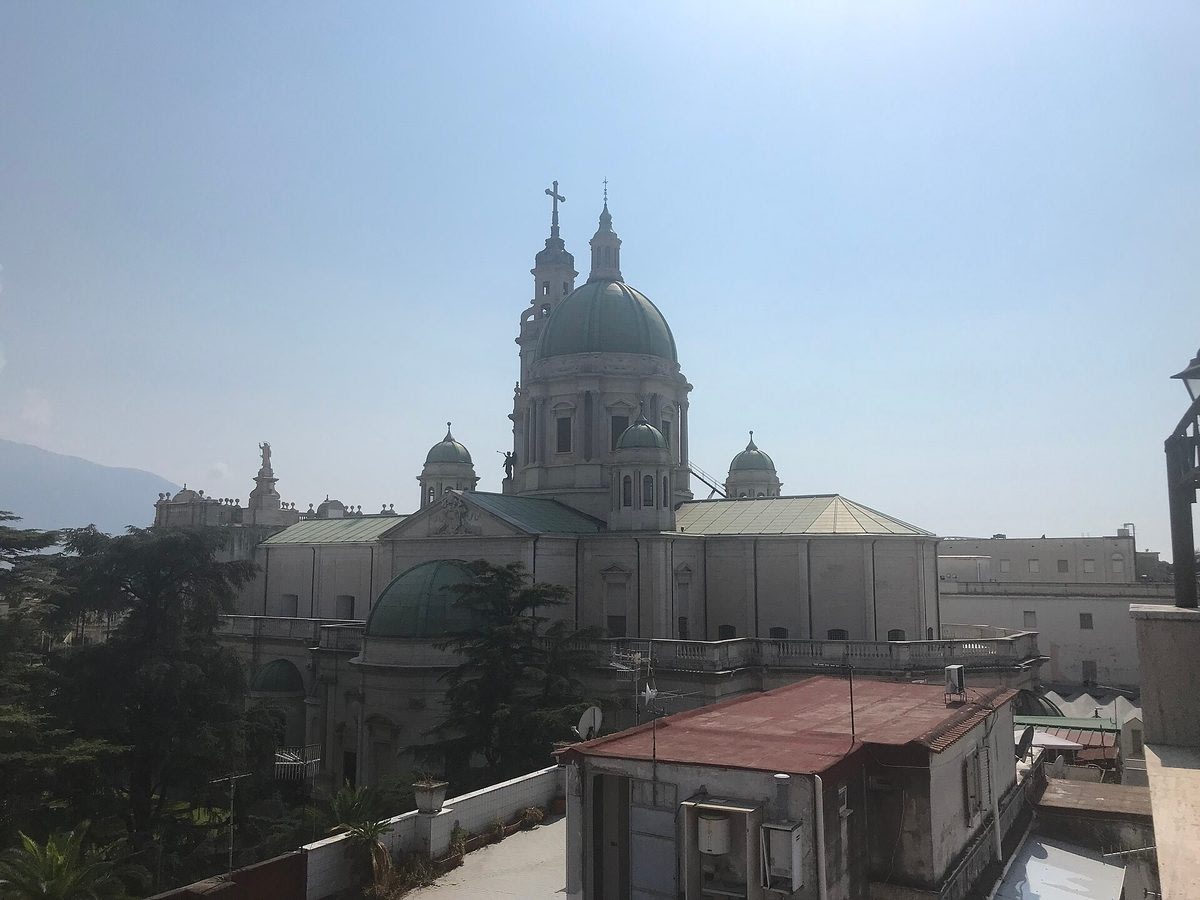
its characteristic flat-topped profile dominating the horizon. The pilgrimage basilica standing in the shadow of the volcano that destroyed the ancient city below is one of the great visual ironies of Italian Catholic geography.
Bartolo Longo arrived in the valley of Pompei as a former Satanist carrying a battered painting on a fertiliser cart. Within fifty years, the painting was in a basilica receiving millions of pilgrims. Within a century, he was beatified. This is not an argument for being a Satanist. It is an argument that the distance between where you are and where you could be is not fixed. The cart that carried the painting also carried the man who would build the basilica. He did not know this yet.
“And we know that in all things God works for the good of those who love him, who have been called according to his purpose.”
Read in full on Bible Gateway →The Basilica of Our Lady of the Rosary of Pompei stands in the city of Pompei (spelled without the double p, distinct from the ancient Roman ruins nearby) in the shadow of Mount Vesuvius. It was founded by Blessed Bartolo Longo, a former Satanist who converted to Catholicism and dedicated his life to spreading the Rosary. His story — from active opponent of the Church to the founder of a major Marian basilica — is one of the most dramatic conversion narratives in 19th-century Catholicism.
In 1875, Longo came to a poor valley town south of Naples at the invitation of the local bishop, bringing a worn and dilapidated painting of the Virgin of the Rosary on a cart carrying fertiliser. Within a decade, the painting was venerated by thousands, a grand basilica was rising, and miraculous cures were reported. The basilica was completed in stages between 1887 and 1939. Longo also founded schools, orphanages and a printing house alongside the basilica.
The two Supplications to Our Lady of the Rosary of Pompei — prayed at noon on the first Sunday of May and the first Sunday of October — have been observed continuously since 1883. Millions across the world join in these prayers simultaneously, making them among the most globally participated devotional acts in Catholicism. Longo was beatified by Pope John Paul II in 1980.