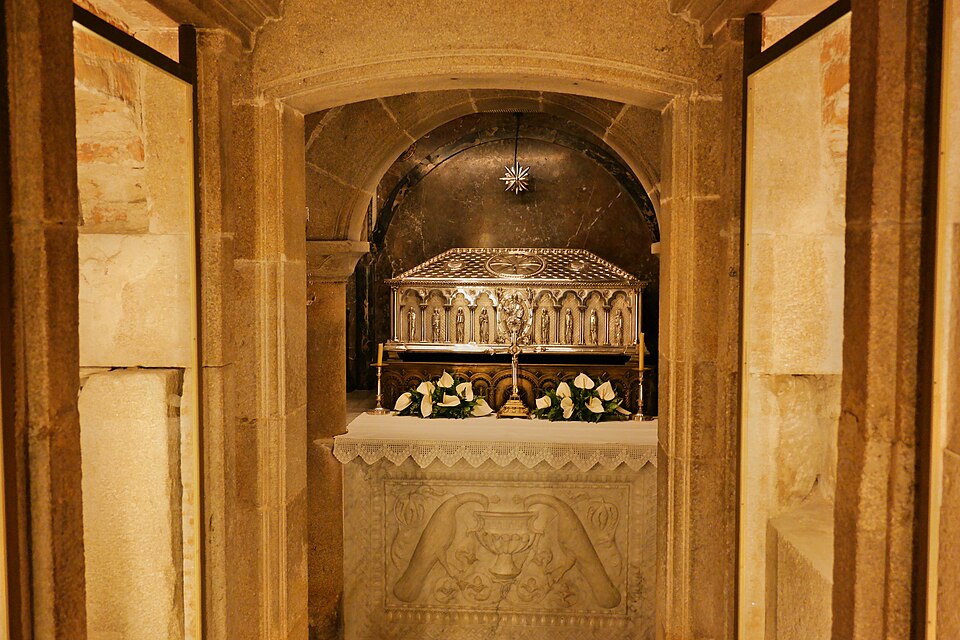
The Tomb of St James
Inside the west entrance Master Mateo's 1188 sculptural programme shows Christ in Majesty flanked by Apostles and Evangelists, with St James directly below Christ at the central column.
 Pilgrimstays
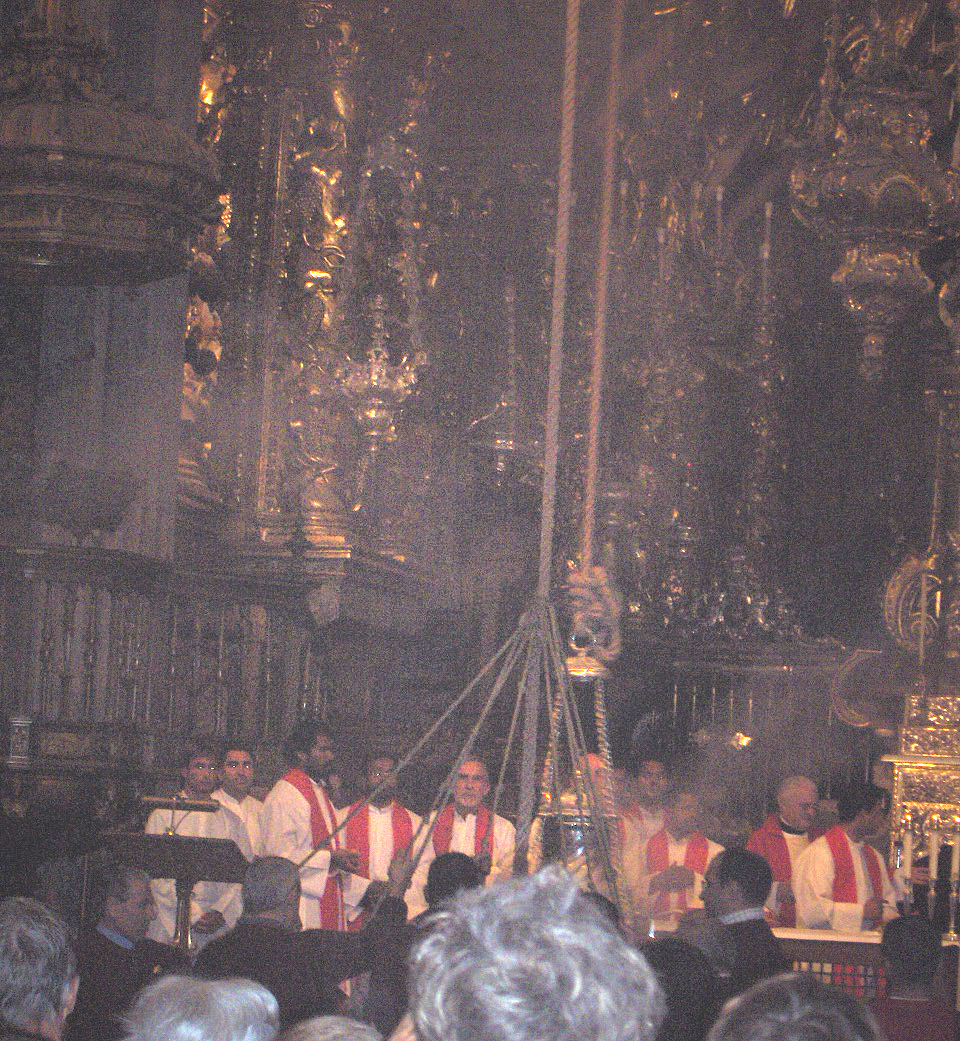
The Cathedral of Santiago de Compostela is the destination of the Camino de Santiago — the most famous pilgrimage route in the world. Tradition holds that the Apostle James the Great is buried beneath the high altar. His tomb was rediscovered in the 9th century, and within decades the route to Santiago became one of the three great medieval pilgrimages (with Rome and Jerusalem). In 2024, a record 499,239 pilgrims received the Compostela certificate after walking one of the routes. The cathedral, begun in 1075 and completed in stages over the following centuries, is one of the finest examples of Romanesque architecture in the world, though later additions include a spectacular Baroque west façade (1750) by Fernando de Casas Novoa — the most photographed image of the Camino. The Pórtico de la Gloria, the 12th-century carved portico by Master Mateo inside the cathedral, is one of the supreme achievements of Romanesque sculpture. The Pilgrim Mass, celebrated daily at 12:00 PM, is the liturgical climax of the Camino. At the main feasts, the Botafumeiro — a 54-kg incense burner on a 65-metre rope — is swung in a great pendulum arc over the transept by eight red-robed tiraboleiros, filling the church with smoke and the air with the brass sound of its passage. The combination of the Botafumeiro, the pilgrim Mass with its reading of nationalities, and the tomb of the Apostle beneath make the Santiago Mass one of the great liturgical experiences on earth.
A record 499,239 pilgrims received the Compostela certificate in 2024 — the highest ever The Botafumeiro incense
burner weighs 54 kg and swings on a 65-metre rope — a sight like no other in
liturgy The Pórtico de la Gloria by Master Mateo (1188) is one of the supreme works of
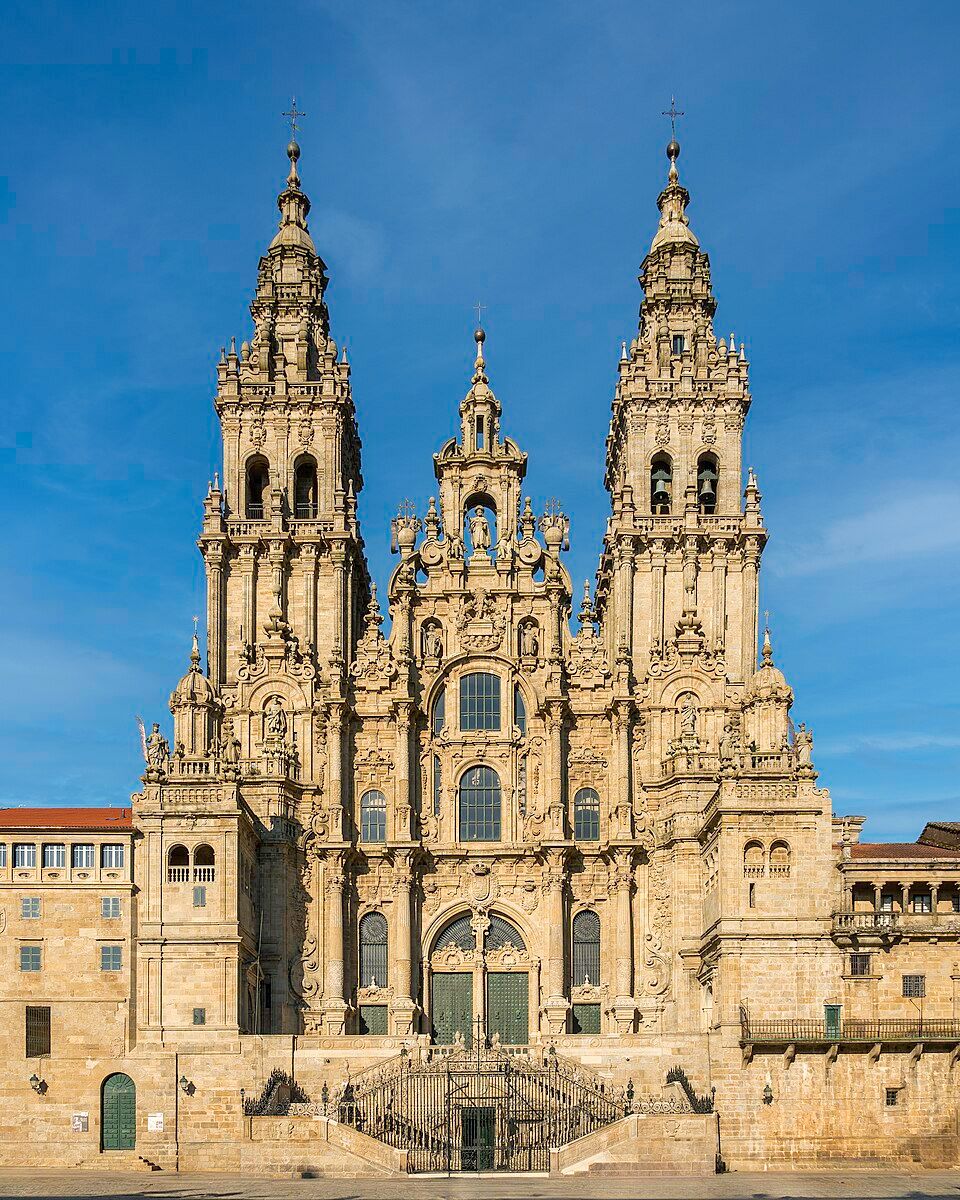
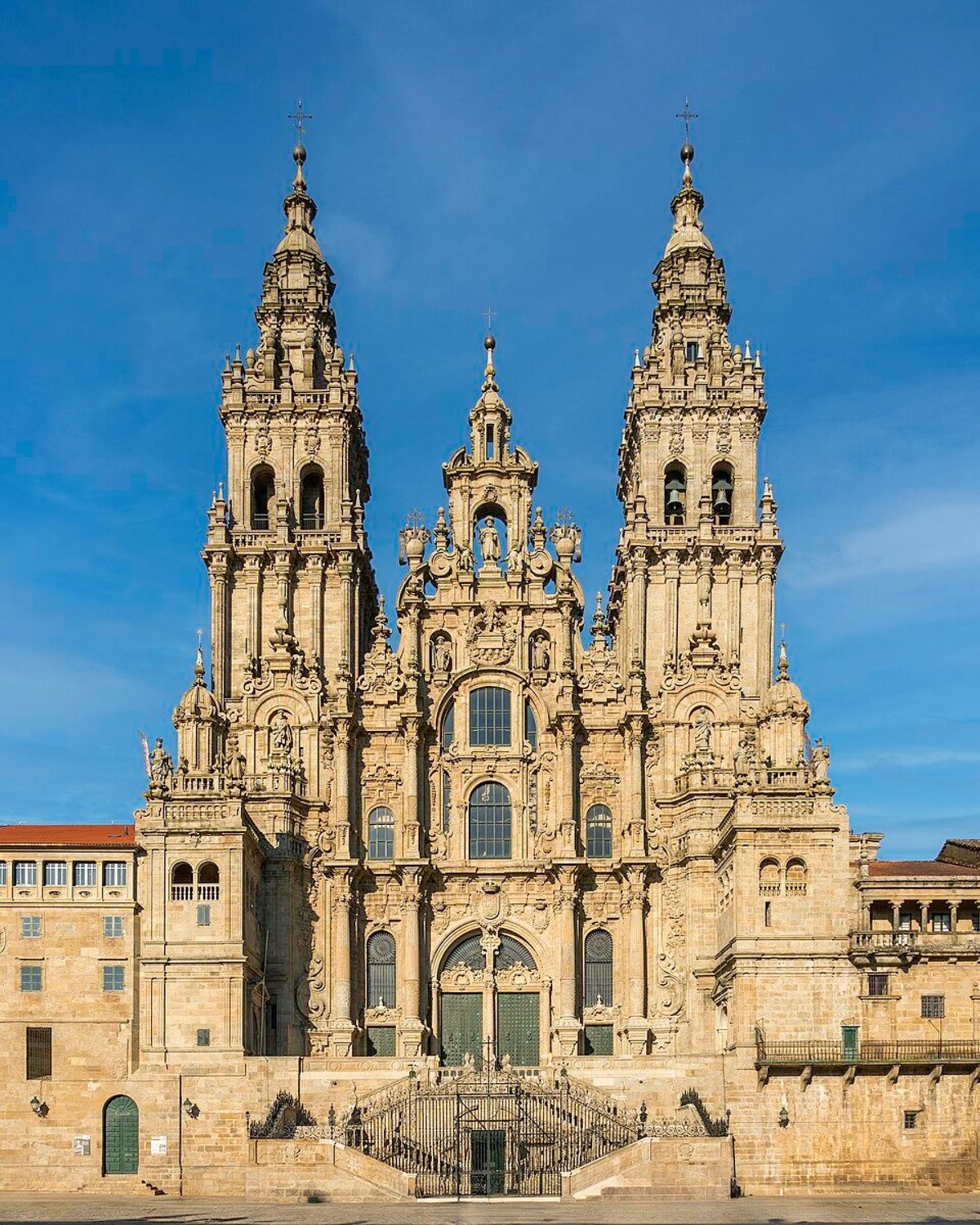
Romanesque sculpture The Baroque west façade (1750) is the most photographed image of the Camino de Santiago
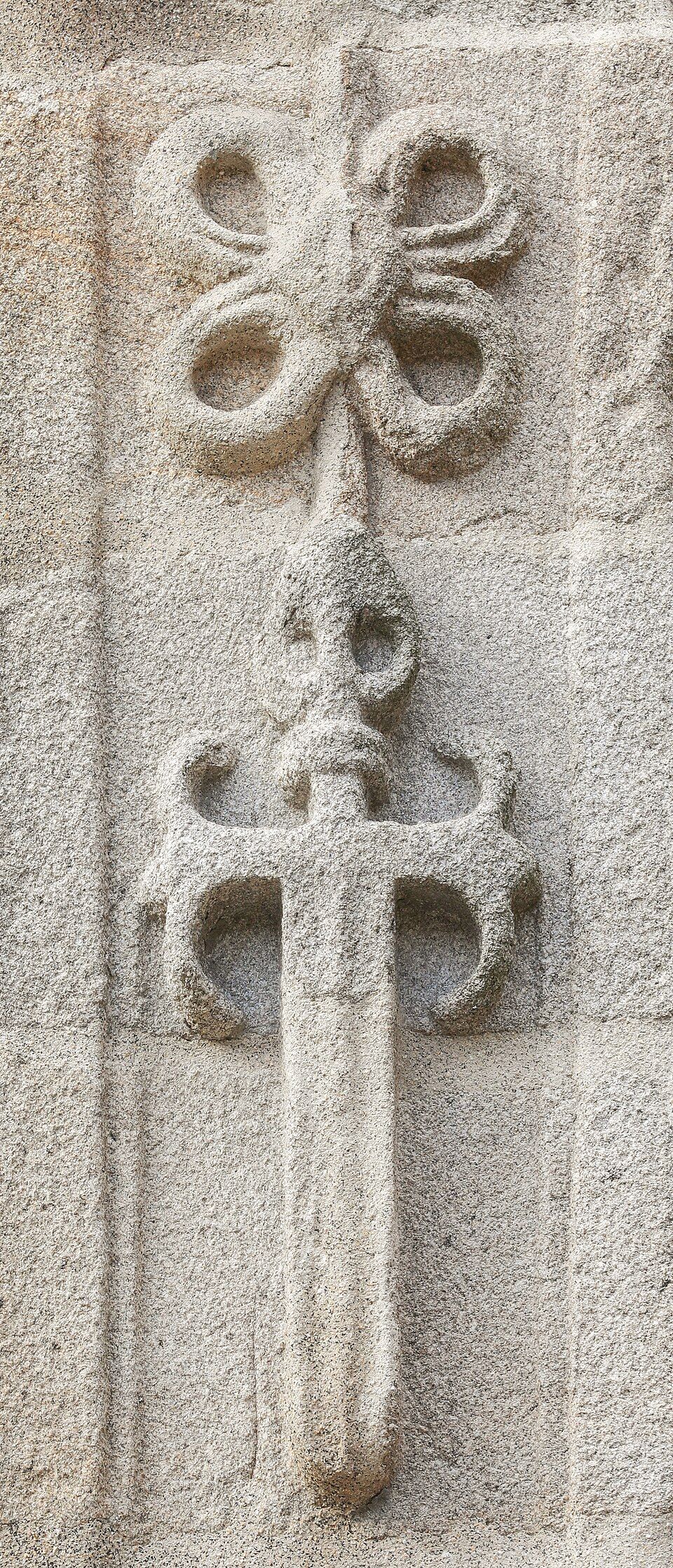
The Apostle James's tomb beneath the high altar has been a pilgrimage destination for over 1,000 years
Inside the west entrance Master Mateo's 1188 sculptural programme shows Christ in Majesty flanked by Apostles and Evangelists, with St James directly below Christ at the central column.
is staggering. Pilgrims traditionally touched the column below St James; the practice is now restricted to protect the sculpture.
there is nothing else like it in Christian liturgy.
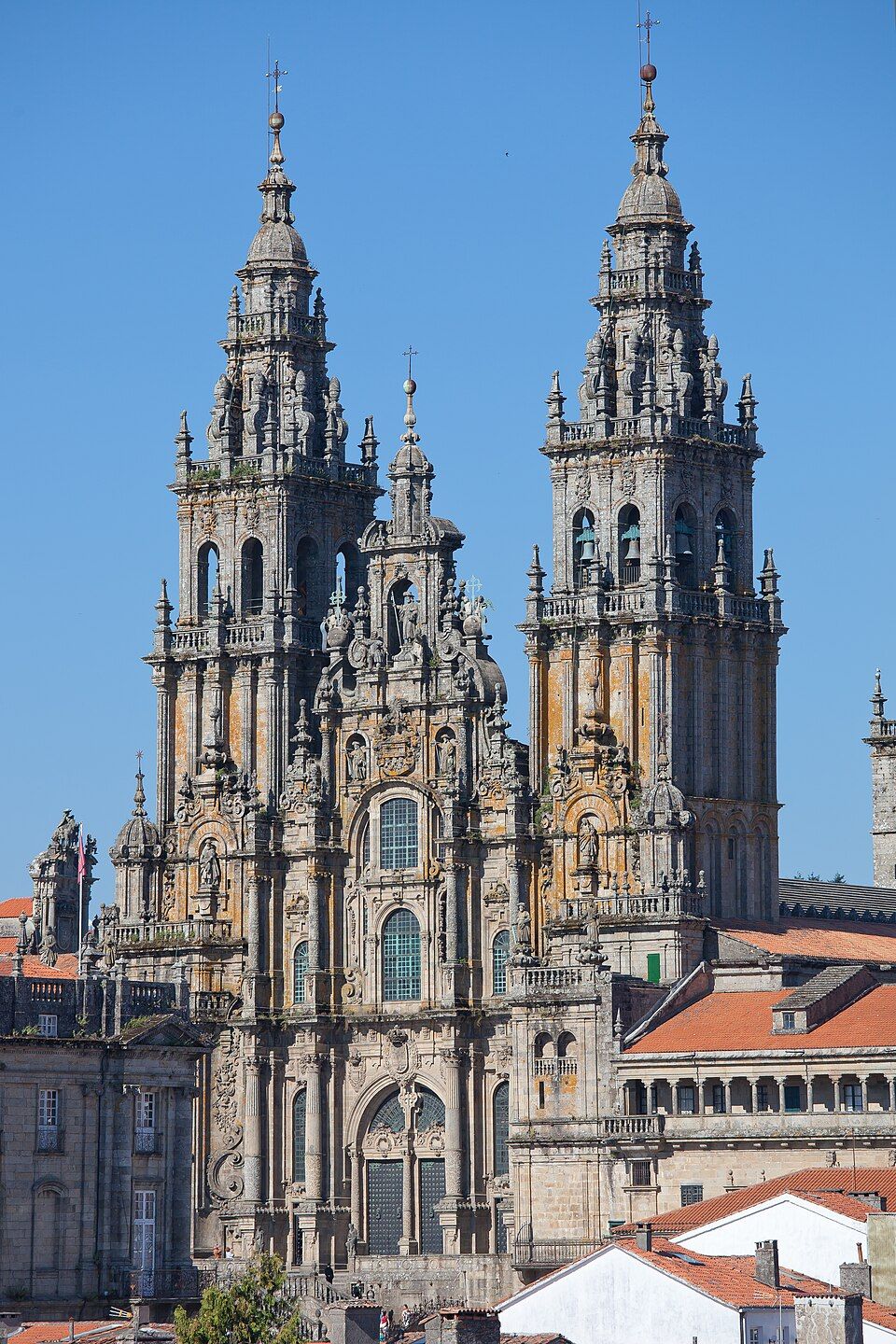
West façade exterior [OUTDOOR] The great Baroque façade, completed 1750, faces the Obradoiro square. Pilgrims who arrive after days or weeks on the Camino typically drop their packs and weep, or stand in silence, or embrace strangers who walked the same route. The square is the most emotionally charged public space in pilgrimage.
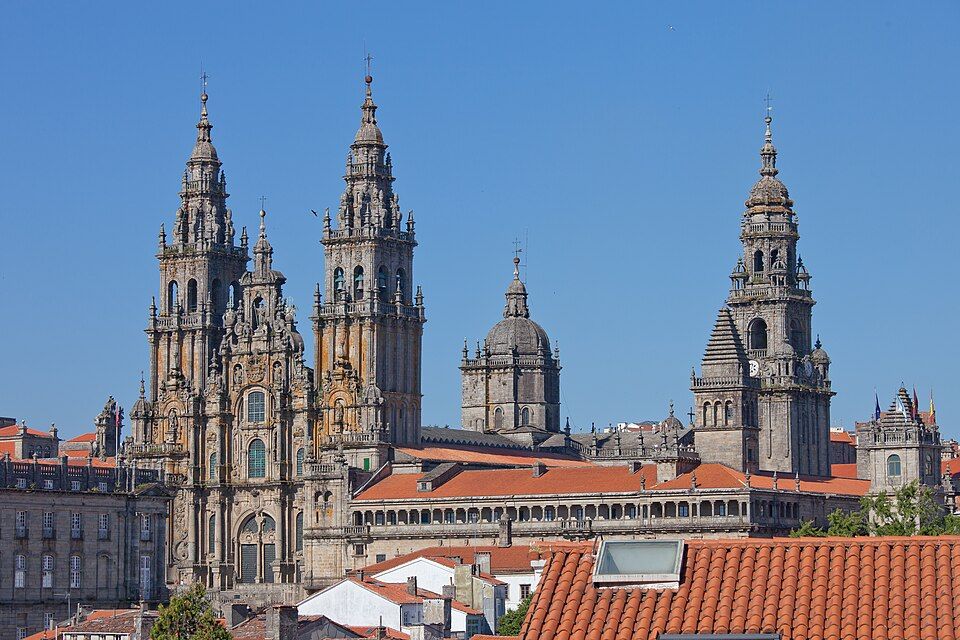
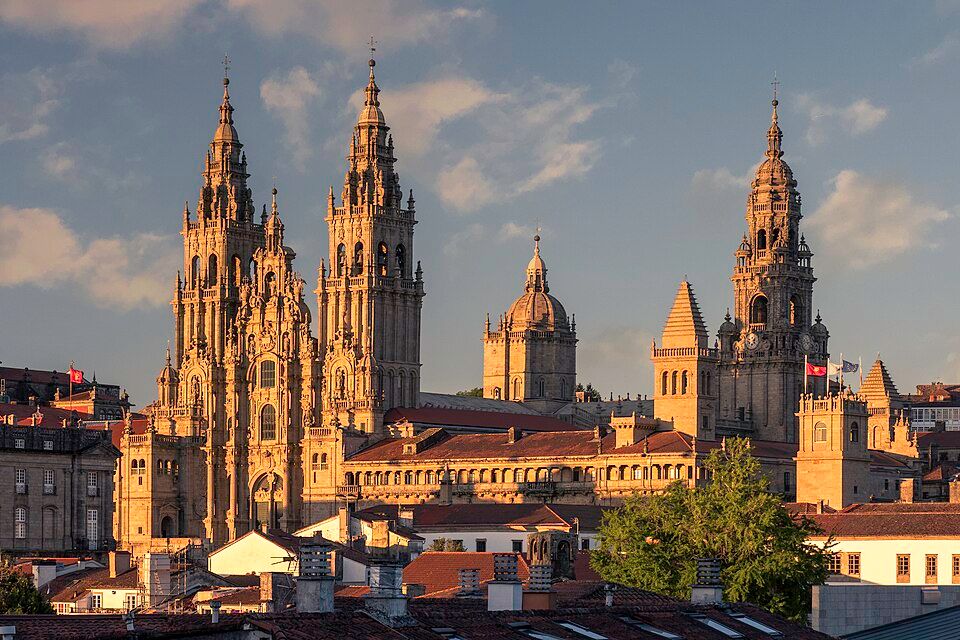
Via guided tour from the cathedral Guided tours of the cathedral rooftop allow pilgrims to walk above the nave with views over the old city, the Bell Tower, and the extraordinary Baroque cupolas. Booking required.
Half a million people walked to this cathedral in 2024. They came from every country on earth. They were young and old, religious and irreligious, grieving and hopeful, strong and broken. They all arrived at the same square, in front of the same facade, and stood there in the same silence. The Camino does something to people that resists explanation. Whatever it does, it does it at the rate of 500,000 people per year, which is enough evidence that something real is happening on the road.
“Those who hope in the Lord will renew their strength. They will soar on wings like eagles; they will run and not grow weary, they will walk and not be faint.”
Read in full on Bible Gateway →The Cathedral of Santiago de Compostela is the destination of the Camino de Santiago — the most famous pilgrimage route in the world. Tradition holds that the Apostle James the Great is buried beneath the high altar. His tomb was rediscovered in the 9th century, and within decades the route to Santiago became one of the three great medieval pilgrimages, alongside Rome and Jerusalem. In 2024, a record 499,239 pilgrims received the Compostela certificate after walking one of the routes.
The cathedral, begun in 1075 and completed in stages over the following centuries, is one of the finest examples of Romanesque architecture in the world, though later additions include a spectacular Baroque west façade (1750) by Fernando de Casas Novoa — the most photographed image of the Camino. The Pórtico de la Gloria, the 12th-century carved portico by Master Mateo inside the cathedral, is one of the supreme achievements of Romanesque sculpture.
The Pilgrim Mass, celebrated daily at 12:00 PM, is the liturgical climax of the Camino. At the main feasts, the Botafumeiro — a 54-kg incense burner on a 65-metre rope — is swung in a great pendulum arc over the transept by eight red-robed tiraboleiros, filling the church with smoke and the air with the brass sound of its passage. The combination of the Botafumeiro, the pilgrim Mass with its reading of nationalities, and the tomb of the Apostle beneath make the Santiago Mass one of the great liturgical experiences on earth.