
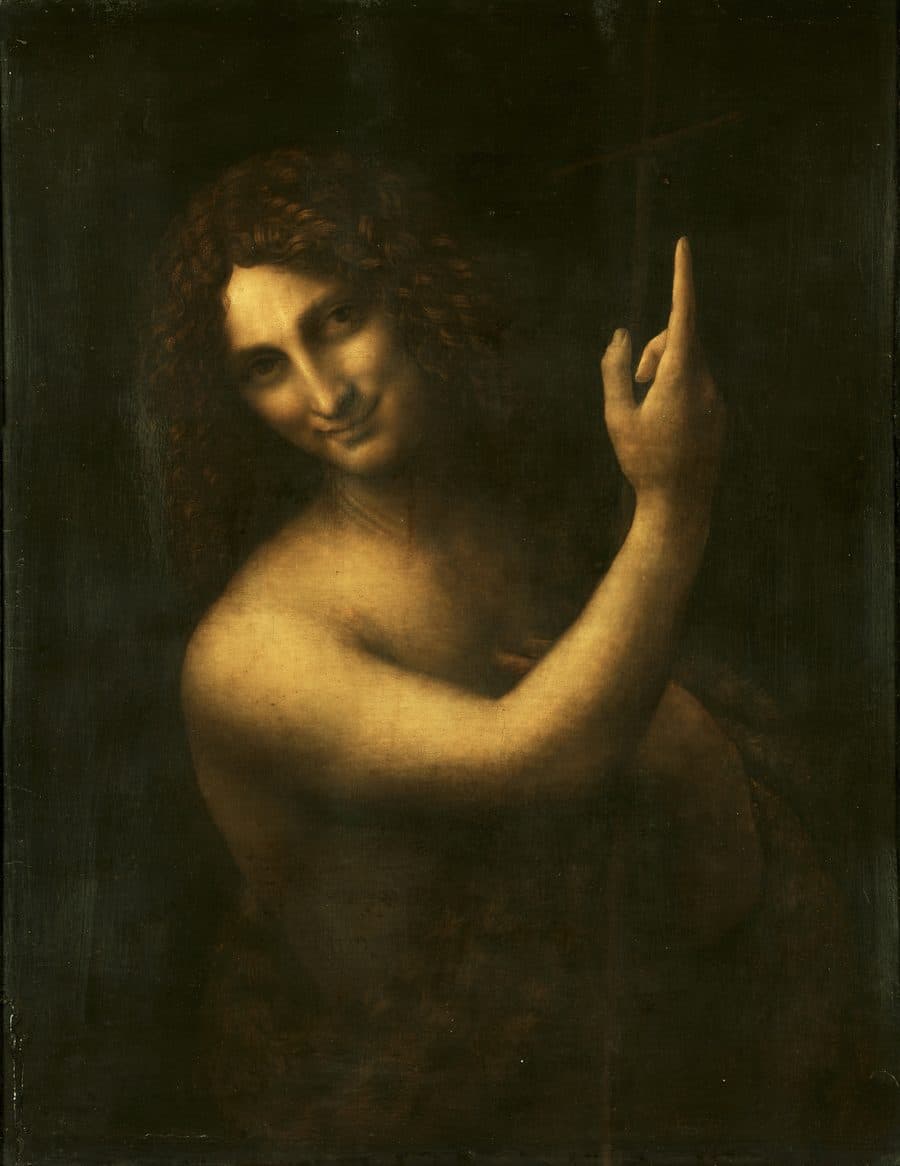
The Life
John the Baptist was the last prophet and the first Christian saint — the voice crying in the wilderness that prepared the way for Jesus, the bridge between the Old and New Testaments, the one who was filled with the Holy Spirit from his mother's womb (he leapt with joy when Mary, pregnant with Jesus, visited his mother Elizabeth). He is the patron of baptism not because he invented it — ritual washing was common in Second Temple Judaism — but because he gave baptism its new meaning: a preparation for the one who was coming, whose sandal he was not worthy to untie.
He grew up in the Judean wilderness, eating locusts and wild honey, wearing camel-hair clothing and a leather belt — the deliberate echo of the prophet Elijah's clothing that the Gospels make explicit. He was the son of the priest Zechariah and Elizabeth, both elderly and childless until the angel Gabriel announced the pregnancy to Zechariah in the Temple and struck him mute for his disbelief. When John was born, Zechariah's tongue was loosed and he sang the Benedictus — one of the great canticles of the Church.
John's ministry of baptism in the Jordan River drew enormous crowds — and confronted them. He calls the Pharisees and Sadducees a brood of vipers and tells them that God can raise up children of Abraham from stones, so their ancestry is no protection. He preaches repentance — the specific repentance of each person: to tax collectors, give back what you have wrongly taken; to soldiers, stop extorting money; to the crowd, share what you have with those who have nothing. Then Jesus comes to him in the Jordan, and John tries to prevent him: I need to be baptised by you, and you come to me? Jesus insists. John baptises him. The Spirit descends. The Father speaks. The public ministry begins.
John was arrested by Herod Antipas for publicly criticising Herod's marriage to his brother's wife Herodias. He was imprisoned in the fortress of Machaerus, east of the Dead Sea. At Herod's birthday banquet, Herodias's daughter danced and pleased Herod so much that he offered her anything she wanted. Prompted by her mother, she asked for the head of John the Baptist on a platter. Herod, having made his promise publicly, felt unable to refuse. He sent the executioner. John was beheaded in his prison cell. His disciples came and took the body and buried it.
The Visitation — leaping in the womb
When Mary, newly pregnant with Jesus, visits her cousin Elizabeth, who is in her sixth month of pregnancy with John, Elizabeth is immediately filled with the Holy Spirit and cries out: Why am I so favoured, that the mother of my Lord should come to me? As soon as the sound of your greeting reached my ears, the baby in my womb leaped for joy. John the Baptist, six months in the womb, already recognises the presence of the one he will baptise. His prophetic vocation begins before birth. This encounter — the two pregnant women, the two unborn children — is the hidden beginning of everything that is to come. The Baptism of Jesus The baptism of Jesus by John in the Jordan River is the moment when the Trinity is publicly revealed for the first time. John baptises the one he has described as coming after him, whose sandals he is not worthy to carry. As Jesus comes up from the water, the heavens open, the Spirit descends like a dove, and the voice of the Father says: This is my beloved Son, in whom I am well pleased. John's prophetic ministry reaches its appointed climax at this moment. He is the precursor — the one who runs ahead to announce the arrival — and here the arrival comes. His role is complete; the One he was sent to prepare for has arrived. The Wilderness — the asceticism of preparation John lived in the wilderness — the Judean desert — before his public ministry. He ate what the wilderness provides (locusts and wild honey), wore what the wilderness provides (camel hair and leather). This was not accident or eccentricity: it was prophetic action, the deliberate embodiment of Elijah's lifestyle, the statement that the voice crying in the wilderness must itself come from the wilderness. He had stripped away everything that was not necessary, so that what remained was the call. The asceticism was not self-punishment; it was preparation. You cannot cry the word in the wilderness if you are comfortable in the city. He Must Increase, I Must Decrease After the baptism, when John's disciples come to him worried that everyone is now following Jesus instead of him, John says: A man can receive only what is given him from heaven. You yourselves can testify that I said I am not the Christ but am sent ahead of him. The bride belongs to the bridegroom. The friend who attends the bridegroom waits and listens for him, and is full of joy when he hears the bridegroom's voice. That joy is mine, and it is now complete. He must become greater; I must become less. This is the purest statement of prophetic vocation ever articulated: the meaning of the prophet is to make himself unnecessary.
Walk in Their Footsteps
Pilgrimage sites connected to St John the Baptist
Ask St John the Baptist to Intercede
Bring these intentions to this saint in prayer:
He must increase; I must decrease. This is the sentence that defines John's vocation. He was born for the express purpose of becoming unnecessary — of preparing the way for someone so much greater than himself that his own greatness had to be systematically reduced so as not to obscure what was coming. There is a kind of greatness that consists entirely in pointing away from itself. John embodied it completely. He is the greatest of those born of women (Jesus's own assessment) and he achieved his greatness by making himself small.
“The next day John saw Jesus coming toward him and said, Look, the Lamb of God, who takes away the sin of the world!”
St John Baptist, voice in the wilderness, friend of the bridegroom — help me find the desert season productive rather than frightening. Help me say what must be said, regardless of who is listening or what they will do in response. Help me make the preparation that the moment requires. And teach me the hardest lesson of your vocation: that my greatest contribution may be to make myself unnecessary. Amen.