
The Life
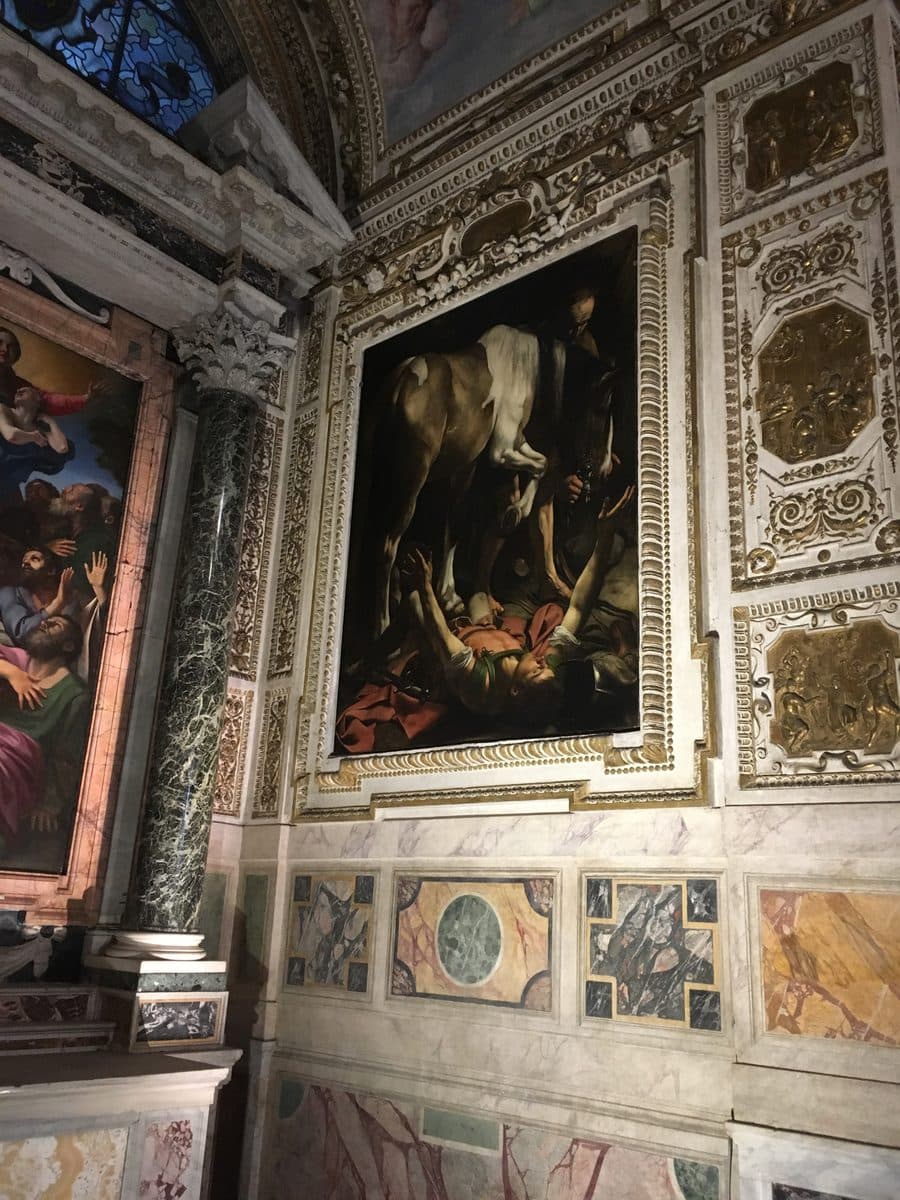
Saul of Tarsus was a Roman citizen, a Pharisee of the Pharisees, a student of the great rabbi Gamaliel, and one of the most zealous persecutors of the earliest Christians. He was present at the stoning of Stephen — the first Christian martyr — and held the cloaks of those who threw the stones. He obtained letters from the high priest to arrest Christians in Damascus and was on his way there when, at midday, a light brighter than the sun struck him down and a voice said: Saul, Saul, why do you persecute me? He said: Who are you, Lord? And the voice said: I am Jesus, whom you are persecuting.
Three days of blindness followed. Then Ananias — a Damascus Christian, clearly terrified of this man — came to him and restored his sight and baptised him. Saul became Paul. The persecutor became the apostle. The man who had been destroying the Church from without spent the rest of his life building it from within, carrying the Gospel across the entire Mediterranean world — four major missionary journeys, over 20,000 kilometres of travel, multiple imprisonments, floggings, shipwrecks, stonings, and finally martyrdom by beheading in Rome under Nero, in approximately 64-68 AD.
Paul is the author of at least seven and possibly thirteen of the letters that constitute the New Testament. He is the theologian of grace — the person who worked out in detail what the death and resurrection of Jesus means for the relationship between God and human beings. His letter to the Romans is the most comprehensive exposition of Christian theology ever written. His letter to the Galatians is the charter of Christian freedom: There is neither Jew nor Gentile, neither slave nor free, nor is there male and female, for you are all one in Christ Jesus. His first letter to the Corinthians contains the earliest written account of the Eucharist and the most famous description of love in the history of literature.
He had what he describes as a thorn in the flesh — some chronic condition, variously identified as epilepsy, an eye condition, or malaria — which he asked God three times to remove and which God declined to remove, saying: My grace is sufficient for you, for my power is made perfect in weakness. Paul accepted the weakness. He then wrote, with extraordinary counter-intuition: Therefore I will boast all the more gladly about my weaknesses, so that Christ's power may rest on me.
Damascus — the road and the light
The conversion of Saul on the road to Damascus is one of the most dramatic events in the New Testament and in the history of religion. A man committed to the destruction of Christianity, armed with legal authority to arrest and imprison Christians, is struck down by light and addressed by the voice of the one he is persecuting. He arrives in Damascus blind, fasting, waiting. Ananias comes. The scales fall from his eyes. He is baptised and immediately begins preaching that Jesus is the Son of God. Those who hear him are astonished: Is not this the man who raised havoc in Jerusalem among those who call on this name? The conversion is complete, immediate, and public. The Letters — theology as pastoral care Paul's letters are not theological textbooks — they are pastoral responses to specific communities in specific crises. The letter to the Galatians is written in anger at people who are trying to impose Jewish law on Gentile converts. The two letters to the Corinthians deal with a community torn apart by factions, sexual scandal, and disputes about spiritual gifts. The letter to the Philippians is written from prison, in chains, and is one of the most joyful documents in the Bible: Rejoice in the Lord always. I will say it again: Rejoice! The theology emerges from the pastoral engagement, not before it. Paul thinks through the implications of the Gospel by attending to the actual problems of the actual communities he has planted. Shipwrecked — and preaching Acts 27-28 describes the shipwreck of Paul on Malta during his journey to Rome as a prisoner. The ship is caught in a storm for fourteen days; Paul encourages the crew with calm faith; they run aground on the Maltese coast; all 276 people on board survive. On Malta, Paul is bitten by a viper but suffers no harm. He heals the father of the island's chief official and many others. He stays on Malta for three months, preaching. Then he continues to Rome — still a prisoner — and spends two years under house arrest in Rome, continuing to preach and to write. He uses every circumstance as an opportunity. Death and the crown Paul was martyred in Rome under Nero, beheaded on the Ostian Way at a site called the Three Fountains (Tre Fontane) — the tradition says that his head bounced three times and a spring rose at each spot. His final letter, 2 Timothy, written from prison and knowing death is imminent, contains one of the most serene passages in Scripture: I have fought the good fight, I have finished the race, I have kept the faith. Now there is in store for me the crown of righteousness. The man who was struck blind on the road to Damascus ends his life in a Roman prison cell, writing letters, waiting for a crown.
Walk in Their Footsteps
Pilgrimage sites connected to St Paul
Ask St Paul to Intercede
Bring these intentions to this saint in prayer:
Paul was the most unlikely apostle. He was not one of the twelve. He had not followed Jesus during the ministry. He had been trying to destroy the Church. And yet he became the most prolific and influential writer in the New Testament, the founder of churches across the Mediterranean, the theologian of grace who articulated more clearly than anyone else what the death and resurrection of Jesus means. God's choice of instruments is consistently baffling. It is almost as if the most effective ones are the ones who know they have no reason to be there — so they give everything, because everything was given to them.
“I have been crucified with Christ and I no longer live, but Christ lives in me. The life I now live in the body, I live by faith in the Son of God, who loved me and gave himself for me.”
St Paul, Apostle to the Gentiles, theologian of grace, prisoner of Christ — pray for me. I have my own thorn in the flesh: the weakness that I have asked God to remove and that has not been removed. Help me receive God's answer: My grace is sufficient for you. Let me boast gladly about my weakness, so that the power of Christ may rest on me. Amen.