The Incorrupt Body of St Francis Xavier
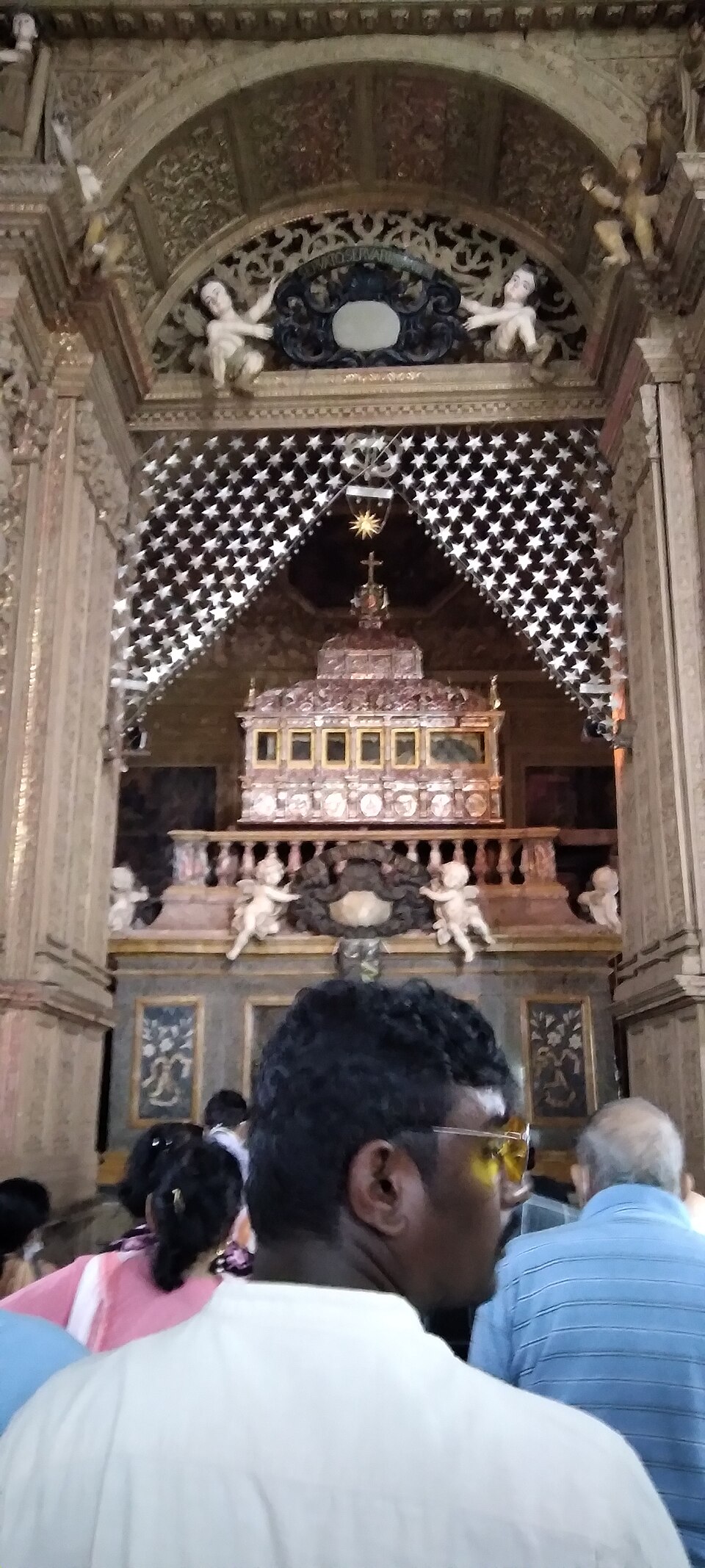
a fact verified by medical examination in 1951. To stand before this casket is one of the most profound encounters available to a Christian pilgrim in Asia.
 Pilgrimstays
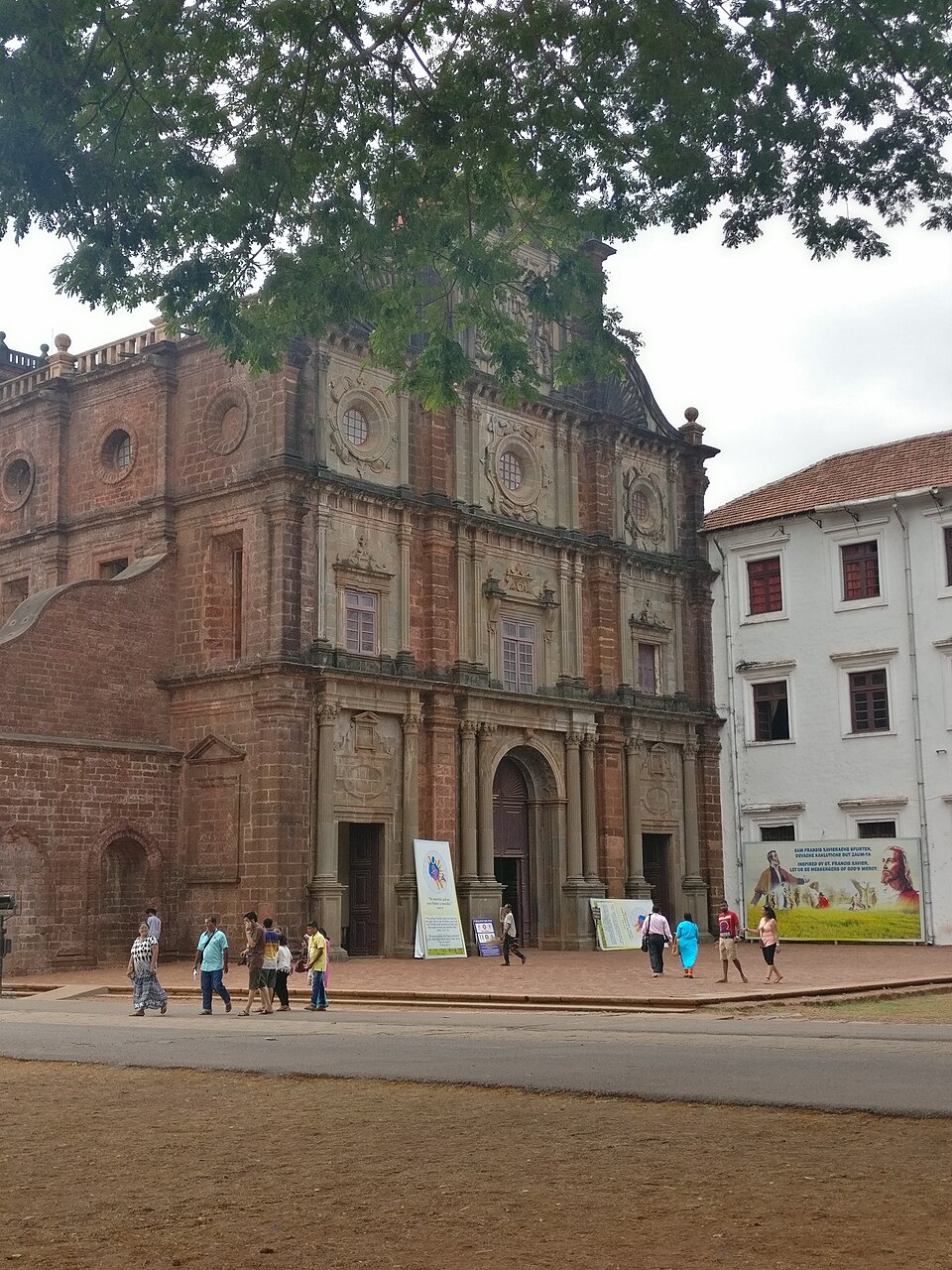
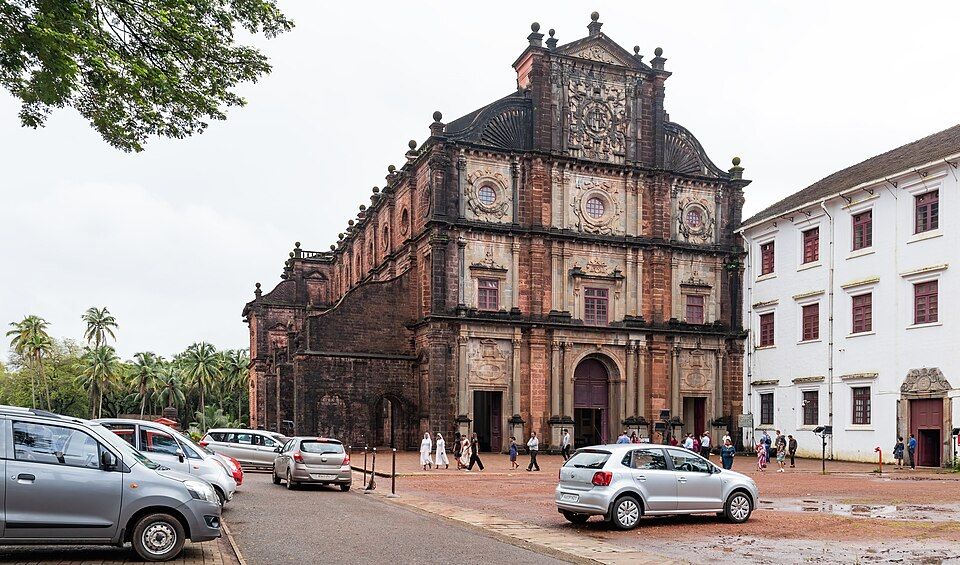
Completed in 1605, the imposing Basilica of Bom Jesus, Goa is an outstanding example of the architecture of Portuguese colonial India. This elaborate late-Renaissance structure contains the tomb and mortal remains of St Francis Xavier, a close friend of St Ignatius Loyola with whom he founded the Society of Jesus, better known as the Jesuits . St Francis Xavier’s missionary voyages throughout the East became legendary. Much of the early missionary work in India can be attributed to the efforts of the Saint. He is rightly termed the ‘Apostle of the Indies’ for the influence of his work which continues centuries after his death. St Francis died on Sancian Island, Chuandao, Taishan while en route to continental China on 3 December 1552. His body is placed in the mausoleum to the right, in a glass-sided coffin amid a shower of gilt stars. St Francis Xavier is considered to be one of the greatest missionaries of the Church, since Paul the Apostle. Visitors to the Basilica of Bom Jesus, Goa will be struck by the exterior which remains unplastered. This was the handiwork of a zealous Portuguese conservationist who in 1950, ordered the lime plaster removed in the mistaken belief that the laterite stone of which the basilica is constructed would be strengthened if it were to be exposed to the elements. To date, no one has got around to replacing the plaster; hence, some of the intricate carving is eroded with the battering of each successive monsoon. Crowds throng the Basilica of Bom Jesus, Goa during the annual Feast of St Francis Xavier, held on 3 December each year. Once every 10 years, the saint is given an exposition, and his body viewed by multitudes of pilgrims. The next exposition will be held in 2024. Standing next to the Basilica is the Professed House of the Jesuits, a two-storey lime plastered building made of laterite. It is even older than the Basilica, having been completed in 1585. Jesuit missions to the East were planned and organised from this very building. Old Goa is the place from where the Roman Catholic Church expanded in the East. Although this former colonial capital boasts of several beautiful churches, the Basilica of Bom Jesus occupies pride of place among them.
Completed in 1605, the imposing Basilica of Bom Jesus, Goa is an outstanding example of the architecture of Portuguese colonial India
This elaborate late-Renaissance structure contains the tomb and mortal remains of St Francis Xavier, a close friend of St Ignatius Loyola with whom he founded the Society of Jesus, better known as the Jesuits
Much of the early missionary work in India can be attributed to the efforts of the Saint
He is rightly termed the ‘Apostle of the Indies’ for the influence of his work which continues centuries after his death
St Francis Xavier is considered to be one of the greatest missionaries of the Church, since Paul the Apostle
a fact verified by medical examination in 1951. To stand before this casket is one of the most profound encounters available to a Christian pilgrim in Asia.
Right transept of the basilica The white marble mausoleum, designed by Florentine sculptor Giovanni Battista Foggini and donated by the Grand Duke of Tuscany in 1698, is one of the most accomplished Baroque funerary monuments in Asia. Four levels of marble reliefs narrate the life and miracles of the saint above the silver casket.
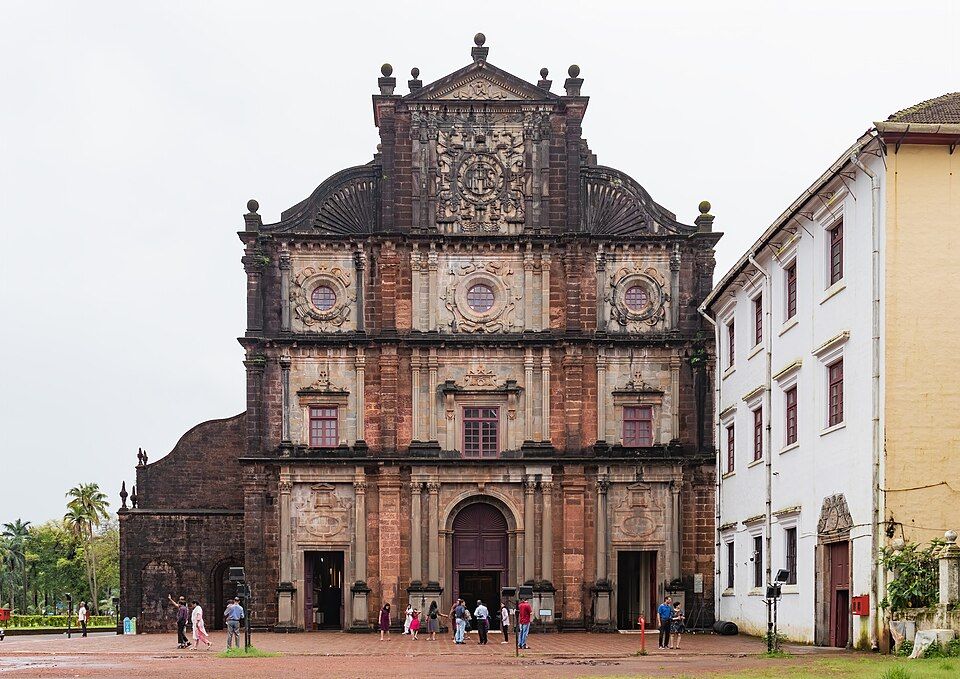
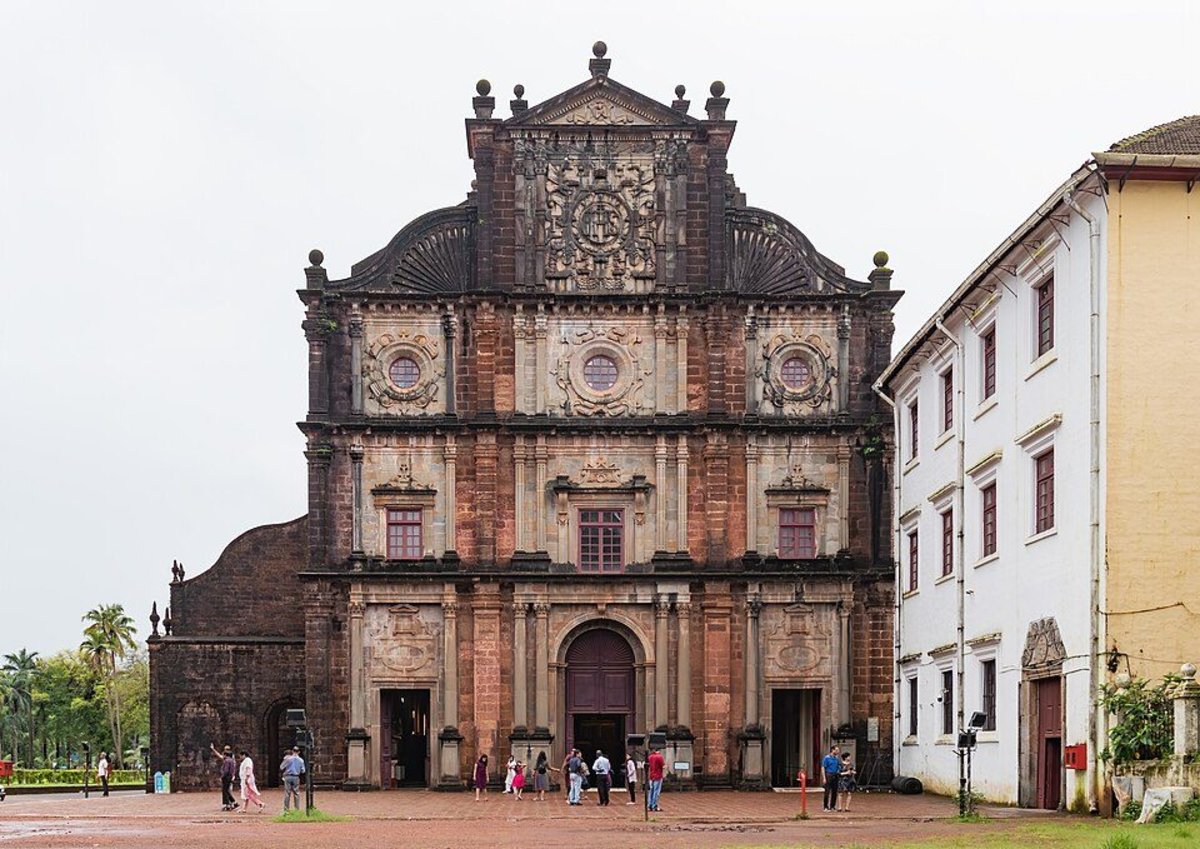
Exterior of the basilica [OUTDOOR] The red laterite baroque facade of the Basilica of Bom Jesus, built 1594-1605, is the defining image of Goa. The dark red stone, the Jesuit IHS monogram in gilded relief, the twin bell towers flanking the entrance, and the Portuguese-Baroque ornamentation are without parallel in Indian church architecture.
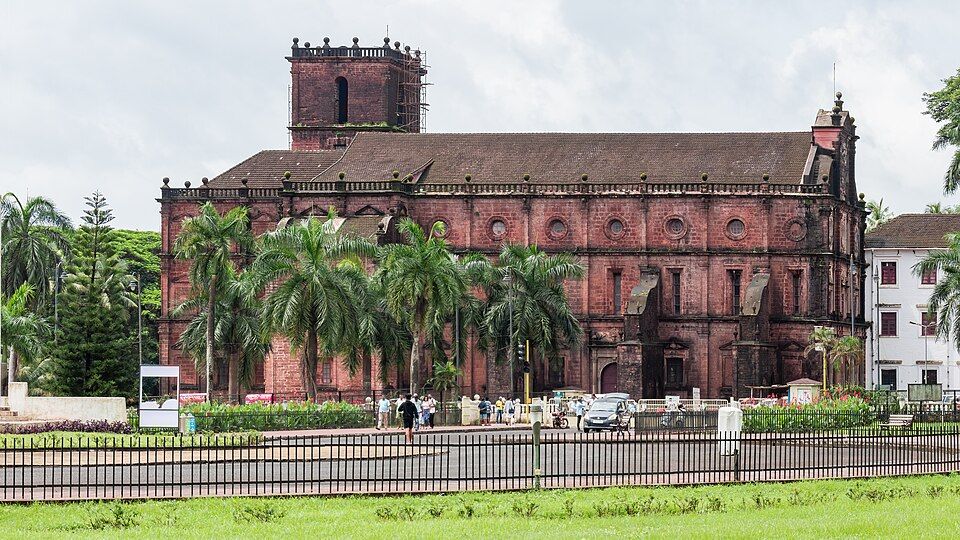
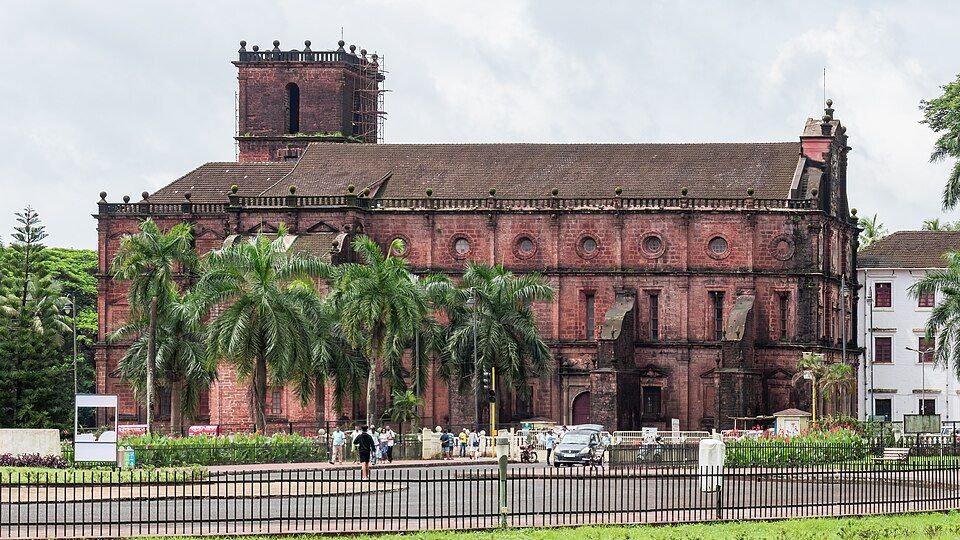
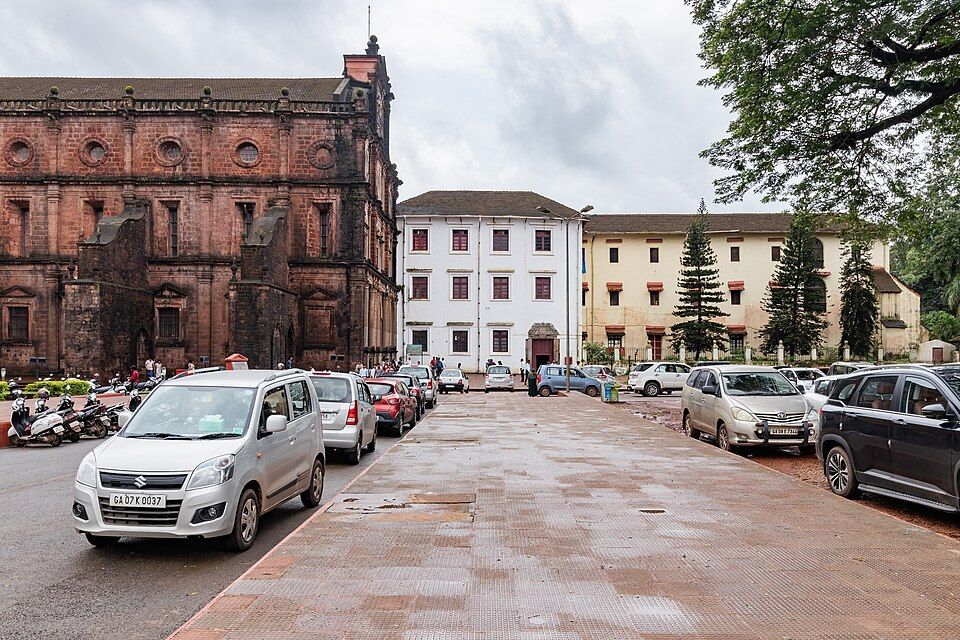
Around the basilica [OUTDOOR] The Basilica of Bom Jesus stands within the UNESCO-protected archaeological zone of Old Goa, alongside Se Cathedral (the largest church in Asia), the Church of St Francis of Assisi, and St Cajetan Church. Spending a morning walking between these churches communicates the full scale of Goa's extraordinary religious heritage.
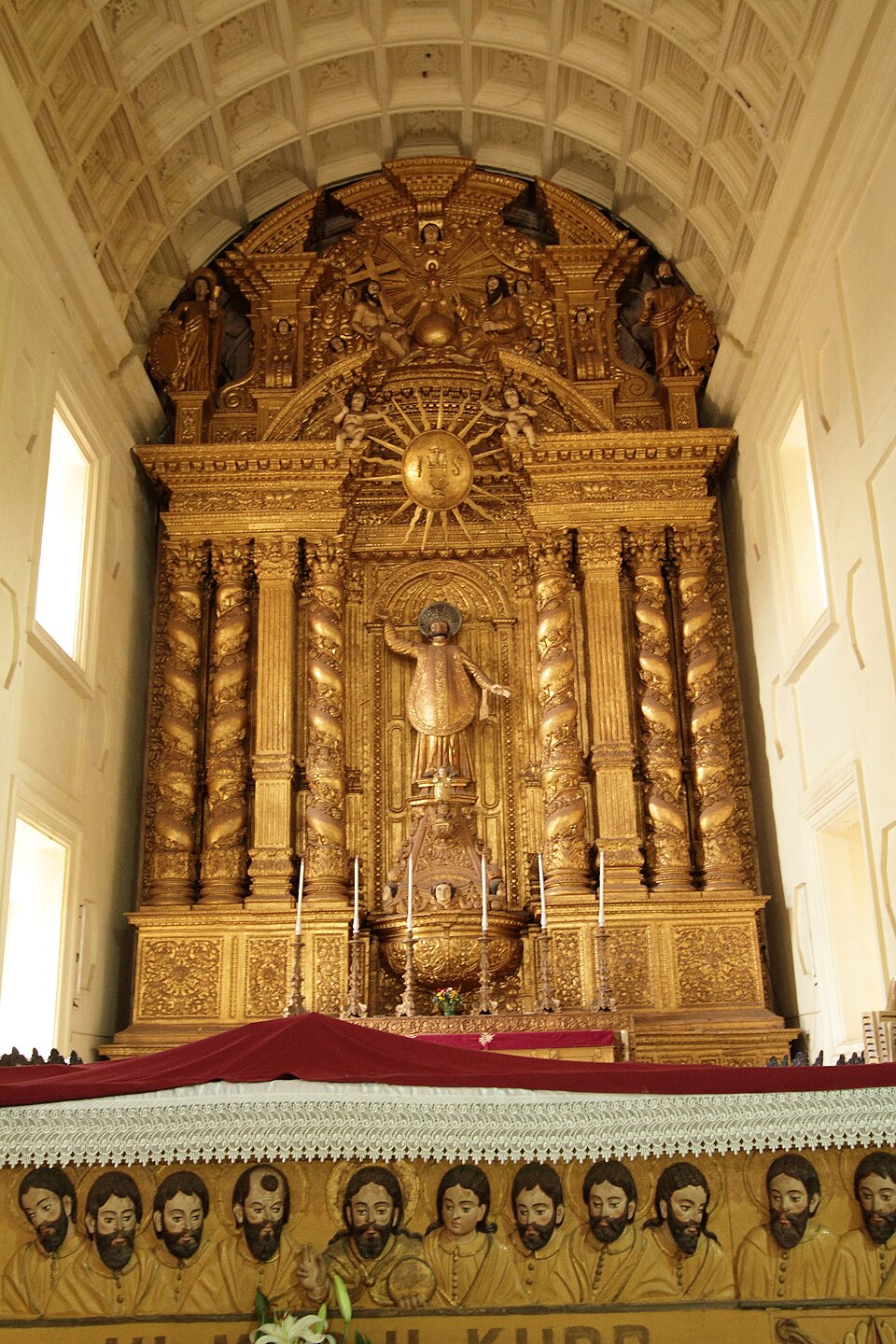
depicted with a crucifix, surrounded by the peoples he evangelised — is one of the most important images of Christian mission in Asia. Below it, pilgrims leave notes, letters, and candles.
Francis Xavier was a Spaniard from Navarre who had never planned to go to Asia. He was sent by Ignatius of Loyola and King John III of Portugal. He arrived in Goa in 1542 and spent ten years baptising hundreds of thousands across the Indian Ocean world. He died in 1552, alone on a small island near China, aged 46, before he could enter the last country he wanted to reach. His body was brought back to Goa. It has not decomposed in 470 years. The man who gave everything is still here, in the city where his mission began.
“Go and make disciples of all nations, baptising them in the name of the Father and of the Son and of the Holy Spirit, and teaching them to obey everything I have commanded you.”
Read in full on Bible Gateway →Completed in 1605, the imposing Basilica of Bom Jesus, Goa is an outstanding example of the architecture of Portuguese colonial India. This elaborate late-Renaissance structure contains the tomb and mortal remains of St Francis Xavier, a close friend of St Ignatius Loyola with whom he founded the Society of Jesus, better known as the Jesuits.
St Francis Xavier’s missionary voyages throughout the East became legendary. Much of the early missionary work in India can be attributed to the efforts of the saint. He is rightly termed the ‘Apostle of the Indies’ for the influence of his work, which continues centuries after his death. St Francis died on Sancian Island, Chuandao, Taishan, while en route to continental China on 3 December 1552. His body is placed in the mausoleum to the right, in a glass-sided coffin amid a shower of gilt stars. St Francis Xavier is considered to be one of the greatest missionaries of the Church since Paul the Apostle.
Visitors to the Basilica of Bom Jesus will be struck by the exterior, which remains unplastered. This was the handiwork of a zealous Portuguese conservationist who, in 1950, ordered the lime plaster removed in the mistaken belief that the laterite stone of which the basilica is constructed would be strengthened if it were exposed to the elements. To date, no one has got around to replacing the plaster; hence some of the intricate carving is eroded with the battering of each successive monsoon.
Crowds throng the basilica during the annual Feast of St Francis Xavier, held on 3 December each year. Once every 10 years the saint is given an exposition, and his body viewed by multitudes of pilgrims. The next exposition will be held in 2024. Standing next to the Basilica is the Professed House of the Jesuits, a two-storey lime-plastered building made of laterite. It is even older than the Basilica, having been completed in 1585, and Jesuit missions to the East were planned and organised from this very building.
Old Goa is the place from where the Roman Catholic Church expanded in the East. Although this former colonial capital boasts several beautiful churches, the Basilica of Bom Jesus occupies pride of place among them.