Basilica of the Holy Rosary, Bandel

Basilica of the Holy Rosary, Bandel

Built in 1599, the Basilica of the Holy Rosary is one of the oldest churches in Bengal

Type
Basilica
Country
India
Location
Sahaganj, Chinsurah, West Bengal 712104
Scroll
01At a Glance

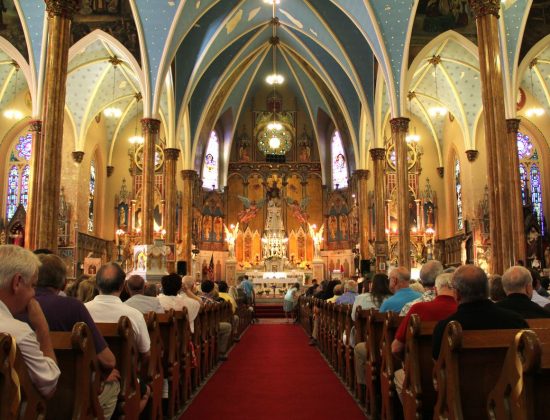
Built in 1599, the Basilica of the Holy Rosary, popularly known as the Bandel Church is one of the oldest churches in West Bengal. The Portuguese first arrived in Bengal in 1537, in response to a request for military assistance by the local Nawab. The Portuguese Admiral Sampayo sailed up the river Hooghly with nine Portuguese vessels against the mighty Sher Shah Suri. In reward, a grateful Nawab, Muhammad Shah, permitted the Portuguese to set up their first factory in Bengal. In 1579, the Portuguese constructed a port on the river Hooghly which soon flourished as a new and bustling business centre. They also built a fort to safeguard their interests. Around 1580, a certain Captain Pedro Tavares, a Portuguese sailor who was a favourite of the Emperor Akbar, obtained permission from him to preach Christianity and to erect churches. The services of Augustinian friars from Goa were enlisted by the Portuguese to help them in their mission. In 1599 a monastery and church were established at Bandel, a village about a mile from the factory. In 1632 Hooghly was attacked by Emperor Shah Jahan during which the first Bandel church was burnt down. Four of the five priests were killed and only Father Joan da Cruz survived. The captured priest and his followers were taken to Agra where the Emperor ordered them trampled upon by a herd of wild elephants. Tradition has it that instead of trampling the priest, the elephant lifted him by its trunk and placed him upon his back. So impressed was the Emperor at this miracle that he freed the priest forthwith and let them return to Hooghly. Shah Jahan also gifted about 311 acres of land, besides funds to reconstruct the church. About three decades later in 1630, a newer church was constructed over the ruins of the old one by John Gomez de Soto. A keystone from the previous church bearing the date 1599 can be seen on the eastern gate of the monastery. Inside the church are beautiful paintings depicting the life of Jesus. A replica of the caves in Lourdes is present on the expansive grounds which face the Hooghly River. Built in Doric-style and dedicated to Nossa Senhora di Rozario (Our Lady of the Rosary), this beautiful Portuguese church attracts devotees from many faiths. On November 25th 1988, Pope John Paul II elevated the church to a minor basilica.

1

Built in 1599, the Basilica of the Holy Rosary, popularly known as the Bandel Church is one of the oldest churches in West Bengal

2

The Portuguese first arrived in Bengal in 1537, in response to a request for military assistance by the local Nawab

3

In reward, a grateful Nawab, Muhammad Shah, permitted the Portuguese to set up their first factory in Bengal

4

In 1579, the Portuguese constructed a port on the river Hooghly which soon flourished as a new and bustling business centre

5

They also built a fort to safeguard their interests

02Plan Your Visit
Getting There
Bandel Basilica Road, Bandel, Hooghly District, West Bengal 712123

Bandel is on the Howrah–Bardhaman railway line, 40 km north of Howrah (Kolkata). Local trains from Howrah station take about 1 hour. By road from Kolkata: 1.5–2 hours on NH19. From Bandel railway station the basilica is a 10-minute walk toward the river.

Open in Google Maps →
IST (UTC+5:30)
--:--:--

The November feast (Our Lady of Happy Voyage) is the biggest pilgrimage gathering. Christmas at Bandel is celebrated with particular warmth by the Hooghly river Christian communities. The basilica is also very popular during Durga Puja season when Kolkata families make a day trip.

Opening Hours
Basilica6:00 AM - 8:00 PM daily
03Must See

What to seek out, and why it matters

I
Main altar

The Miraculous Statue of Our Lady

The statue of Our Lady of Happy Voyage — said to be the same image that survived the Mughal destruction in 1632 by floating downstream — stands above the main altar. It is the single most venerated object in the basilica and the reason a million pilgrims make the journey to Bandel each year. The statue is dressed and crowned for feast days.

II
Basilica forecourt

The Courtyard Pillar and Cross

The tall pillar in the forecourt, surmounted by a cross, is one of the most distinctive Christian monuments in Bengal and one of the oldest surviving above-ground Christian structures in eastern India. Standing in the courtyard with the Hooghly River flowing beyond the compound walls and this ancient cross above, one feels the weight of 425 years of history.

III
Behind the basilica

The Hooghly Riverside Setting

The basilica sits close to the Hooghly River, and the view from the riverbank — the white church visible through the trees with the wide river beyond — is one of the iconic images of Bengali Catholic history. This is the river that the Portuguese navigated, that Shah Jahan controlled, that the British East India Company fought over. The church has watched all of it.

IV
Inside the basilica

The Anchor of a Portuguese Ship

Among the ex-voto offerings in the basilica is the anchor from a Portuguese ship — brought here as a thanksgiving offering by sailors who survived a near-shipwreck and attributed their survival to Our Lady of Happy Voyage. It is a vivid and unusual object: a ship's anchor as an act of prayer, hung in a church as permanent gratitude.

V
From the approach road

The East-Facing Facade

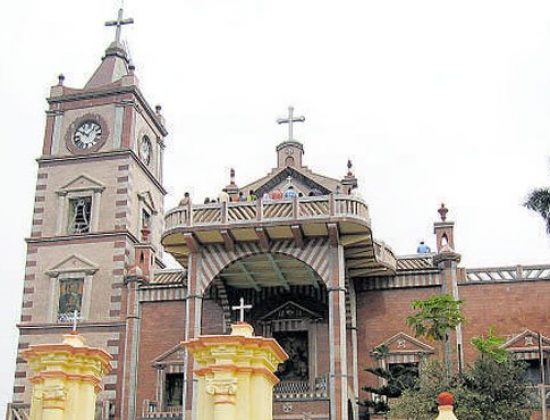
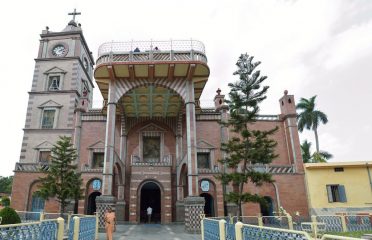
The basilica facade, whitewashed and with a characteristic Portuguese-influenced double-tower design, faces east toward the Hooghly. The approach through the old Bandel Catholic quarter — with its Portuguese colonial bungalows and the sound of the church bells — creates an atmosphere of extraordinary historical depth that is unique in eastern India.

04Masses & Events
Daily Mass6:00 AM, 8:00 AM, 6:00 PM

Regular daily Masses

Feast of Our Lady of Happy VoyageNovember (varies)

The principal feast; major pilgrimage gathering

ChristmasDecember 24-25

Major Christmas celebration by the Hooghly riverbanks

5Reflection & Prayer

In 1632, Shah Jahan's Mughal forces attacked the Portuguese settlement at Bandel and destroyed the church. According to tradition, the miraculous statue of Our Lady floated downstream and was recovered. The Portuguese rebuilt the church. The statue was reinstalled. It has been venerated without interruption from that day to this. The Mughals, the Portuguese, the British, and independent India have all come and gone. Our Lady of Happy Voyage is still here.

Psalm 107:29-30

He stilled the storm to a whisper; the waves of the sea were hushed. They were glad when it grew calm, and he guided them to their desired haven.

Read in full on Bible Gateway →
A Pilgrim's Prayer

Our Lady of Happy Voyage, patroness of those who sail uncertain waters — I stand at the river where Portuguese sailors prayed to you four centuries ago. My waters are different: the uncertain waters of my career, my relationships, my health, my faith. Guide me to my desired haven. Still whatever storms are building on my horizon. And let me, when I arrive safely, bring back something like an anchor to hang here in gratitude. Amen.

06More

Built in 1599, the Basilica of the Holy Rosary, popularly known as the Bandel Church, is one of the oldest churches in West Bengal. The Portuguese first arrived in Bengal in 1537, in response to a request for military assistance by the local Nawab.

The Portuguese in Bengal

The Portuguese Admiral Sampayo sailed up the river Hooghly with nine Portuguese vessels against the mighty Sher Shah Suri. In reward, a grateful Nawab, Muhammad Shah, permitted the Portuguese to set up their first factory in Bengal. In 1579, the Portuguese constructed a port on the river Hooghly which soon flourished as a new and bustling business centre. They also built a fort to safeguard their interests.

Around 1580, a certain Captain Pedro Tavares, a Portuguese sailor who was a favourite of the Emperor Akbar, obtained permission from him to preach Christianity and to erect churches. The services of Augustinian friars from Goa were enlisted by the Portuguese to help them in their mission. In 1599, a monastery and church were established at Bandel, a village about a mile from the factory.

The Legend

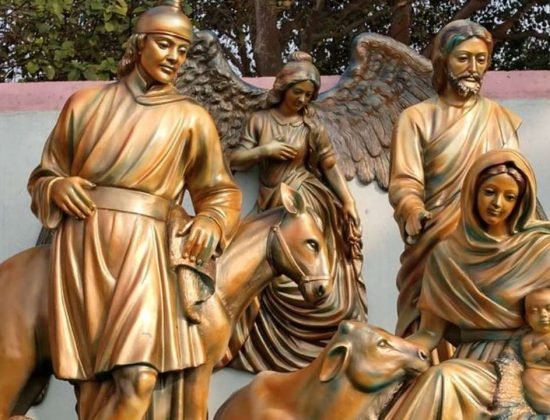
In 1632, Hooghly was attacked by Emperor Shah Jahan, during which the first Bandel church was burnt down. Four of the five priests were killed and only Father Joan da Cruz survived. The captured priest and his followers were taken to Agra, where the Emperor ordered them trampled upon by a herd of wild elephants. Tradition has it that instead of trampling the priest, the elephant lifted him by its trunk and placed him upon its back. So impressed was the Emperor at this miracle that he freed the priest forthwith and let them return to Hooghly. Shah Jahan also gifted about 311 acres of land, besides funds to reconstruct the church.

Architecture

About three decades later, in 1660, a newer church was constructed over the ruins of the old one by John Gomez de Soto. A keystone from the previous church bearing the date 1599 can be seen on the eastern gate of the monastery. Inside the church are beautiful paintings depicting the life of Jesus. A replica of the caves in Lourdes is present on the expansive grounds, which face the Hooghly River.

Pilgrimage

Built in Doric style and dedicated to Nossa Senhora di Rozario (Our Lady of the Rosary), this beautiful Portuguese church attracts devotees from many faiths. On 25 November 1988, Pope John Paul II elevated the church to a minor basilica.

More from India
Church of St John the Evangelist (Afghan Church), Mumbai
Shahid Bhagat Singh Road, Navy Nagar, Colaba
All Saints Cathedral, Allahabad
Sarojini Naidu Marg, Civil Lines, Prayagraj (Allahabad)
Archdioceasan Heritage Museum, Mumbai
Archdiocesan Heritage Museum, St Pius X College, Aarey Road
Basilica of Bom Jesus, Goa
Basilica of Bom Jesus, Old Goa Road, Bainguinim