The Tribune of David
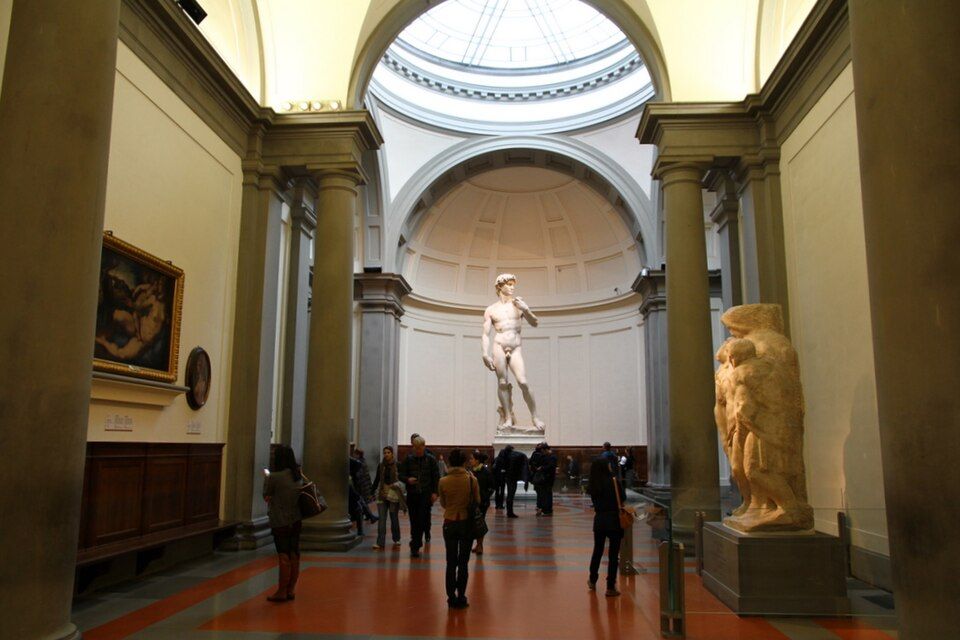
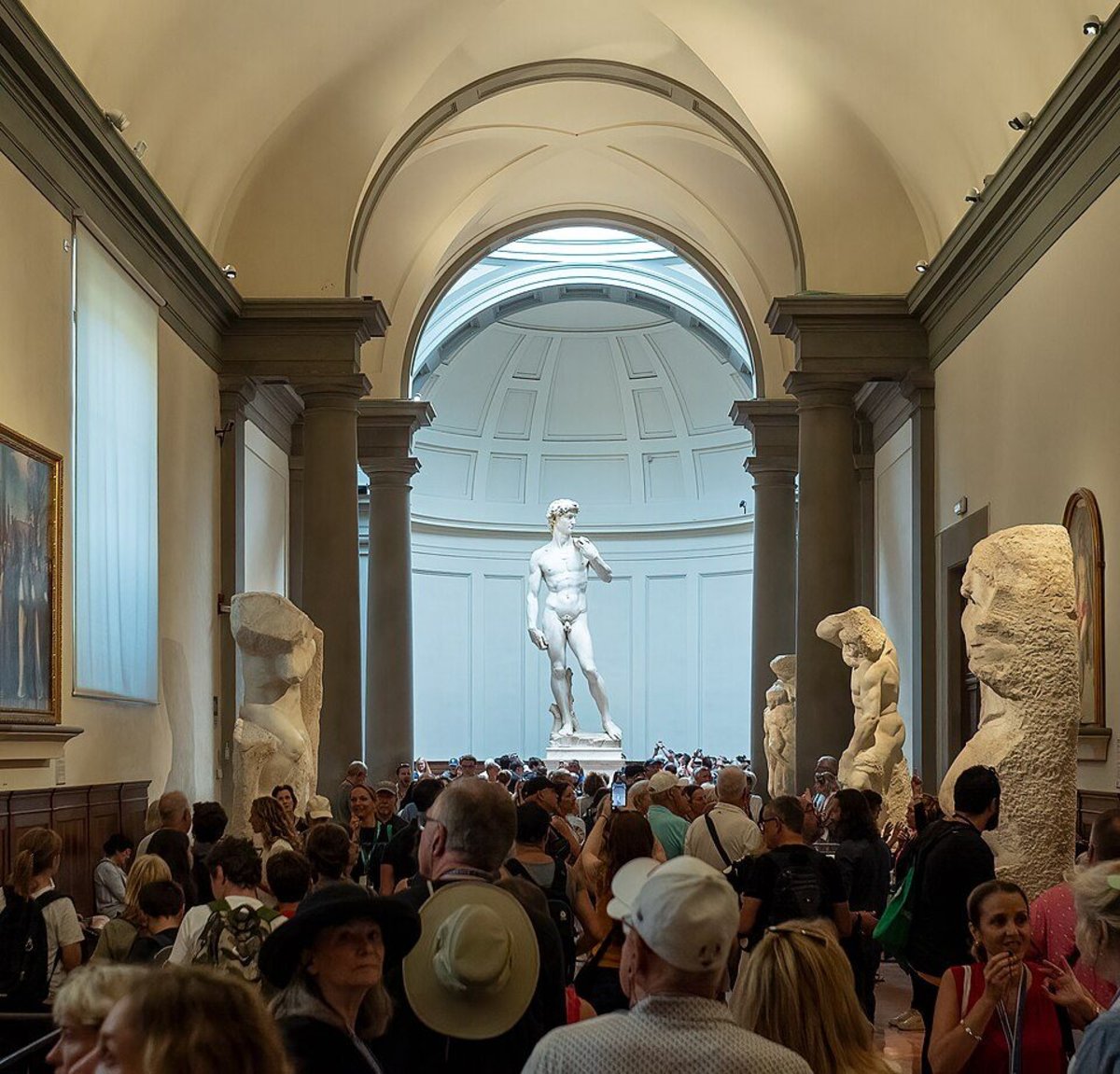
Central hall of the gallery The long hall approaches the David slowly, with Michelangelo's unfinished Prisoners lining the walls on either side.
 Pilgrimstays
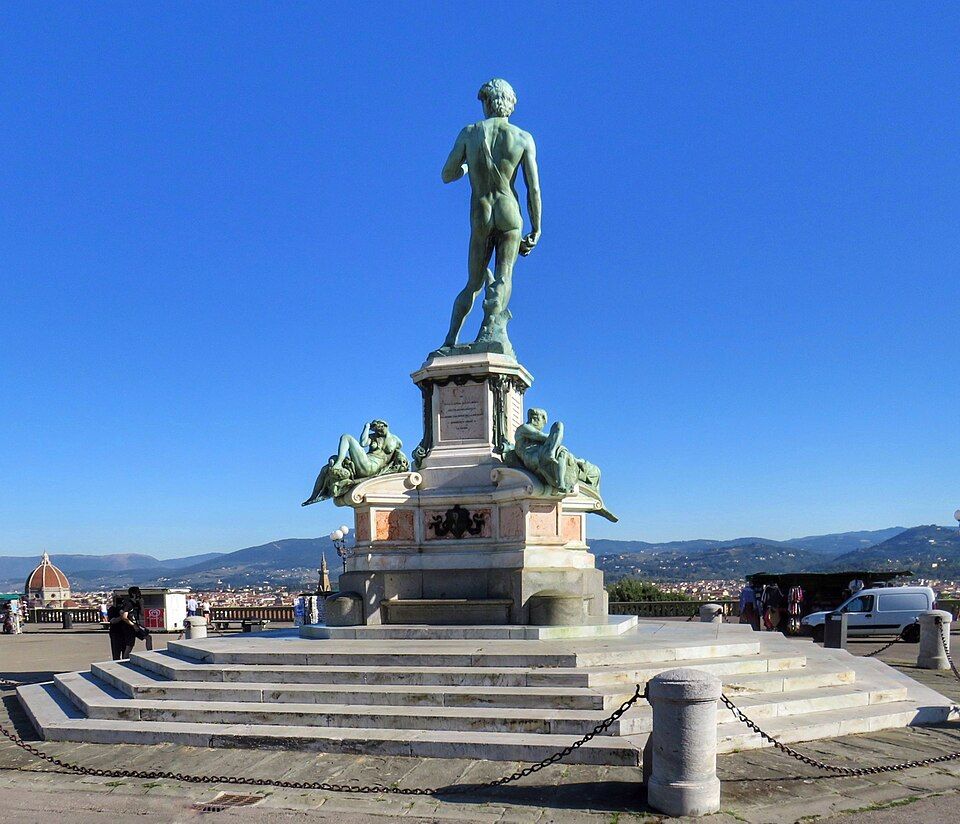
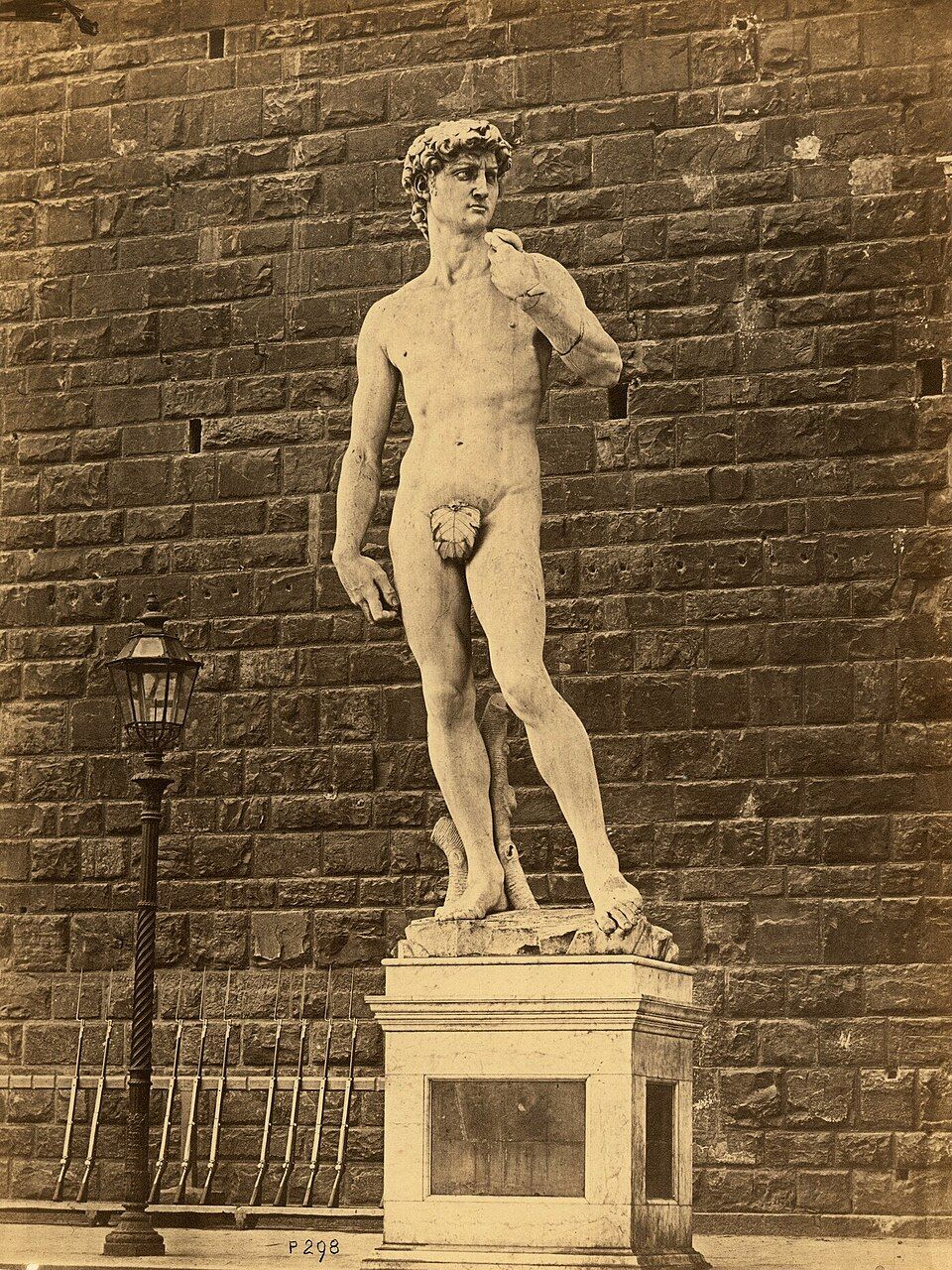
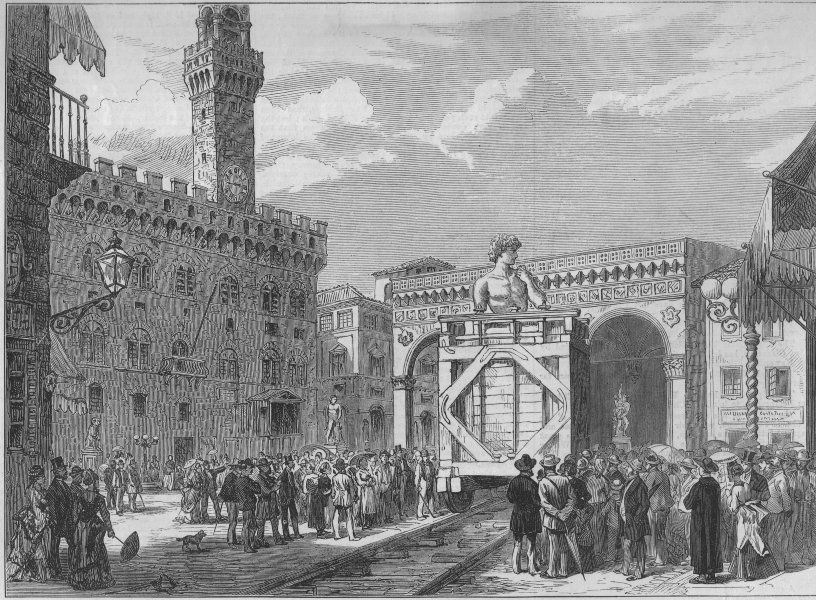
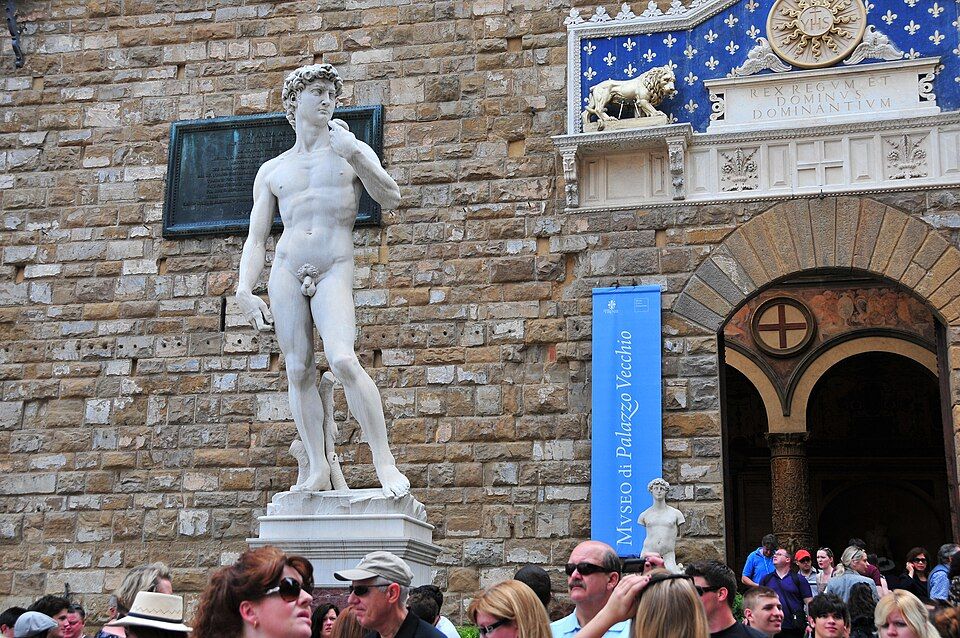
The Galleria dell'Accademia in Florence is the home of Michelangelo's David — the most famous sculpture in the world. Originally created between 1501 and 1504 to stand outside the Palazzo della Signoria as a civic symbol, the 5.17-metre marble figure has stood in its purpose-built Tribune in the Accademia since 1873, when it was moved indoors to protect it from weather damage. Approximately 1.7 million people visit each year. The David was carved from a single block of Carrara marble that had been quarried in 1464 and abandoned for 25 years — considered by other sculptors to be too shallow and flawed to work. Michelangelo received the commission aged 26 and completed the figure in two years and two months. The statue represents the biblical David at the moment before his confrontation with Goliath — not in triumph, as earlier sculptures depicted him, but in focused, controlled preparation. The veins of the right hand, the tension in the neck, the slight asymmetry of the eyes — the result is simultaneously the most perfect realisation of Renaissance ideals and an entirely specific, utterly alive human being. The gallery also contains Michelangelo's unfinished Prisoners (Prigioni) — four marble figures of men straining to emerge from the rough stone in which they are embedded. The contrast between the imprisoned and incomplete Prisoners and the perfectly realised David articulates Michelangelo's concept of sculpture as the liberation of the figure already present within the stone.
Home of Michelangelo's David — the most famous sculpture in the world at 5.17 metres The David was carved from a single block of marble abandoned for 25 years as unworkable
Michelangelo received the commission aged 26 and completed it in two years and two months The unfinished Prisoners show figures straining to emerge from uncut marble —
Michelangelo's sculptural philosophy made visible 1.7 million visitors per year — one of the most sought-after museum tickets in Italy
Central hall of the gallery The long hall approaches the David slowly, with Michelangelo's unfinished Prisoners lining the walls on either side.
is designed to give the David maximum presence. The experience of arrival at the statue after the corridor of the Prisoners is one of the most carefully staged encounters in museum design. The Prisoners (Prigioni) — Main corridor leading to the Tribune Four unfinished marble figures — captives, slaves, or the human soul struggling toward liberation — line the approach to the David. They are deliberately unfinished, or were left so by circumstance. In either case they say more about Michelangelo's theory of sculpture than any text: the figure is already in the stone, and the sculptor's task is to release it.
Tribune of David Visitors who spend time with the David rather than photographing it notice the extraordinary detail: the asymmetry of the eyes (one side expectant, one side calculating); the tension in the neck and shoulders; the oversized hands and head (calibrated for the original outdoor location, where the statue was viewed from below). Every element repays attention.
models, casts of classical sculpture, and Bartolini's originals. Less visited than the David, the plaster room communicates the pedagogy of 19th-century art education and is hauntingly beautiful in its ghostly whiteness.
Orcagna, Daddi, and earlier Florentine painters whose work contextualises the transition from Byzantine to Renaissance. For those interested in the development of Christian art, this gallery is invaluable.
The block of marble that became the David was quarried in 1464 and abandoned. Two other sculptors tried to begin it and gave up. For 25 years it sat in a cathedral workshop, too shallow, too damaged, too difficult. Then a 26-year-old Michelangelo accepted the commission. What was abandoned became the most famous sculpture in the world. This is also a theological statement: the stone that the builders rejected becomes the cornerstone.
“The stone the builders rejected has become the cornerstone.”
Read in full on Bible Gateway →The Galleria dell’Accademia in Florence is the home of Michelangelo’s David — the most famous sculpture in the world. Originally created between 1501 and 1504 to stand outside the Palazzo della Signoria as a civic symbol, the 5.17-metre marble figure has stood in its purpose-built Tribune in the Accademia since 1873, when it was moved indoors to protect it from weather damage. Approximately 1.7 million people visit each year.
The David was carved from a single block of Carrara marble that had been quarried in 1464 and abandoned for 25 years — considered by other sculptors to be too shallow and flawed to work. Michelangelo received the commission aged 26 and completed the figure in two years and two months. The statue represents the biblical David at the moment before his confrontation with Goliath — not in triumph, as earlier sculptures depicted him, but in focused, controlled preparation. The veins of the right hand, the tension in the neck, the slight asymmetry of the eyes — the result is simultaneously the most perfect realisation of Renaissance ideals and an entirely specific, utterly alive human being.
The gallery also contains Michelangelo’s unfinished Prisoners (Prigioni) — four marble figures of men straining to emerge from the rough stone in which they are embedded. The contrast between the imprisoned and incomplete Prisoners and the perfectly realised David articulates Michelangelo’s concept of sculpture as the liberation of the figure already present within the stone.