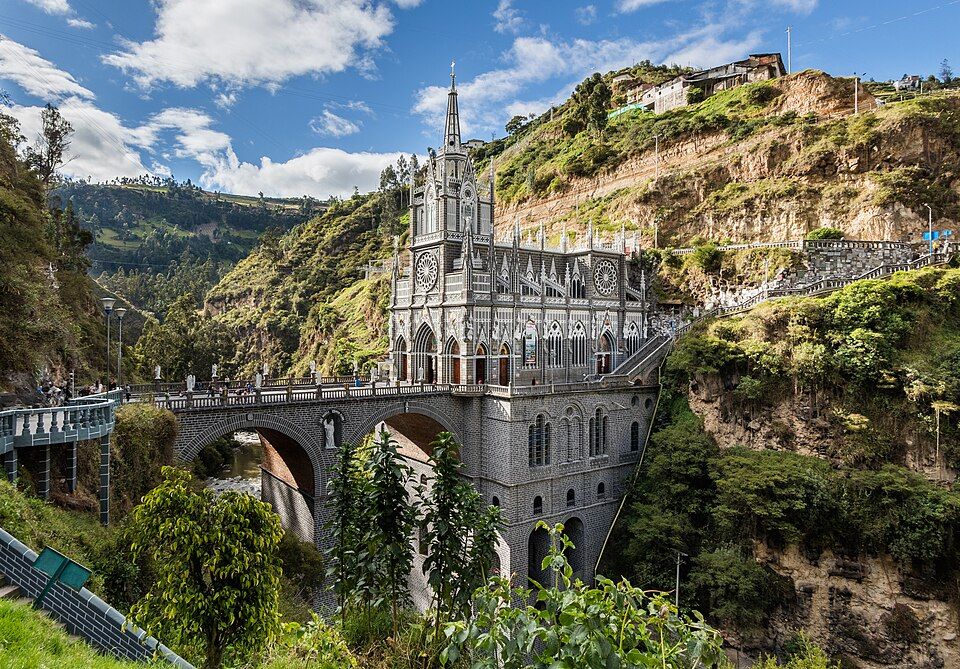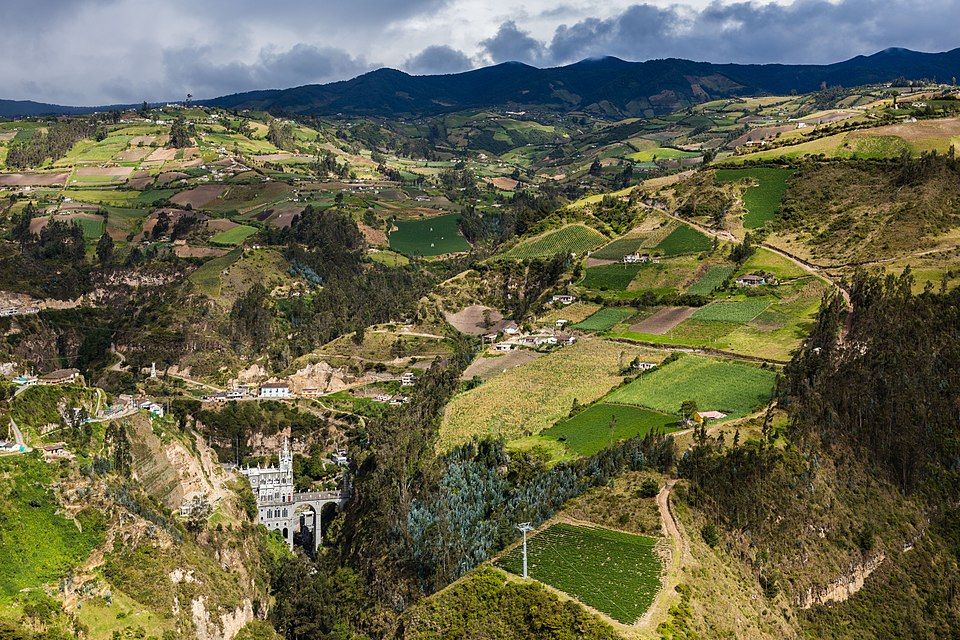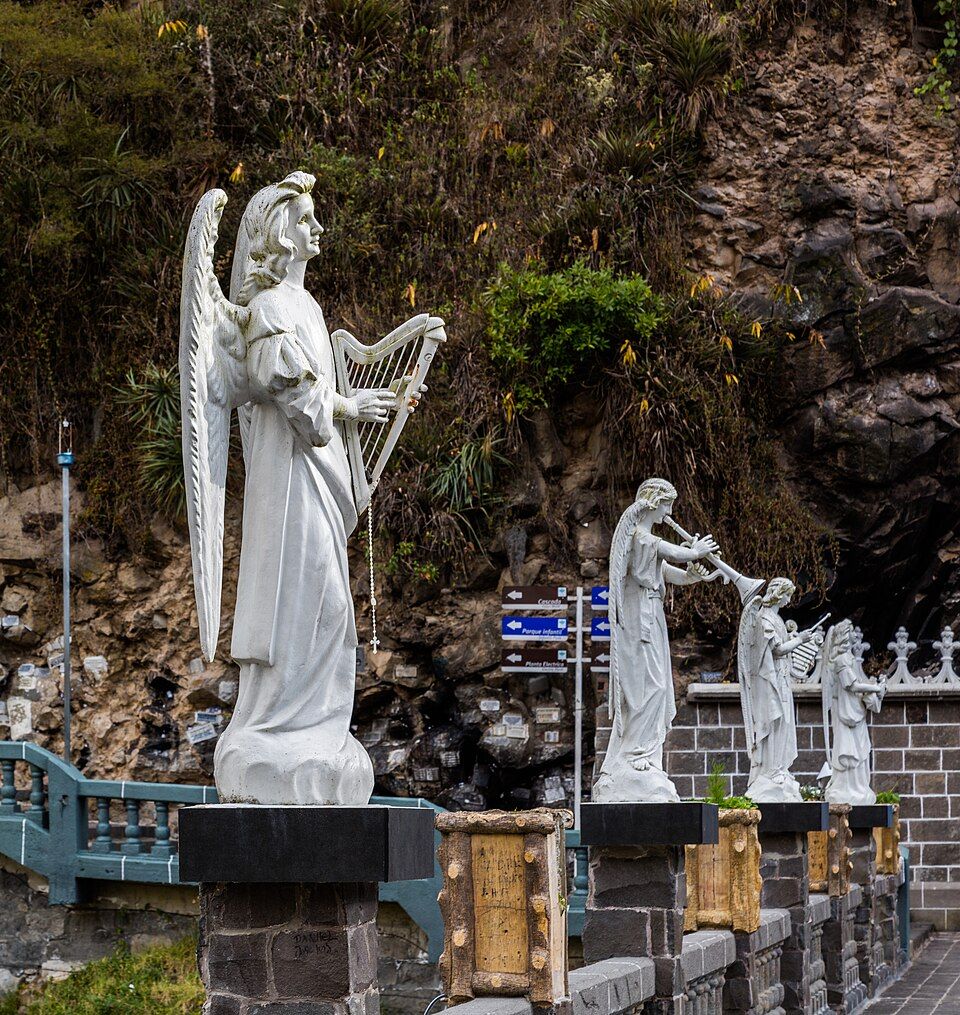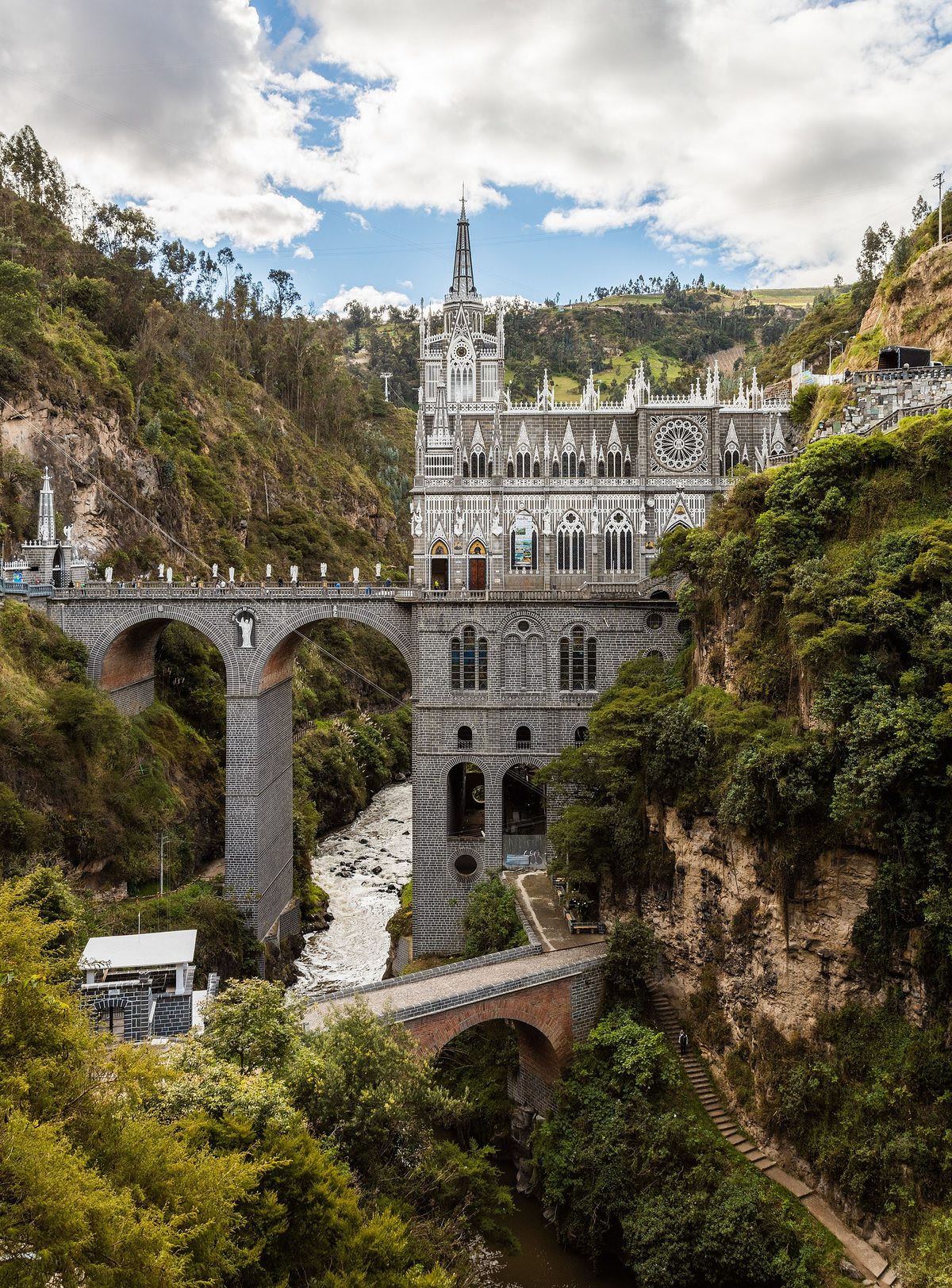
The Canyon Approach
Gothic towers above, the river far below, the mountains of Nariño rising on every side. This approach is one of the great pilgrim arrivals in South America.
 Pilgrimstays
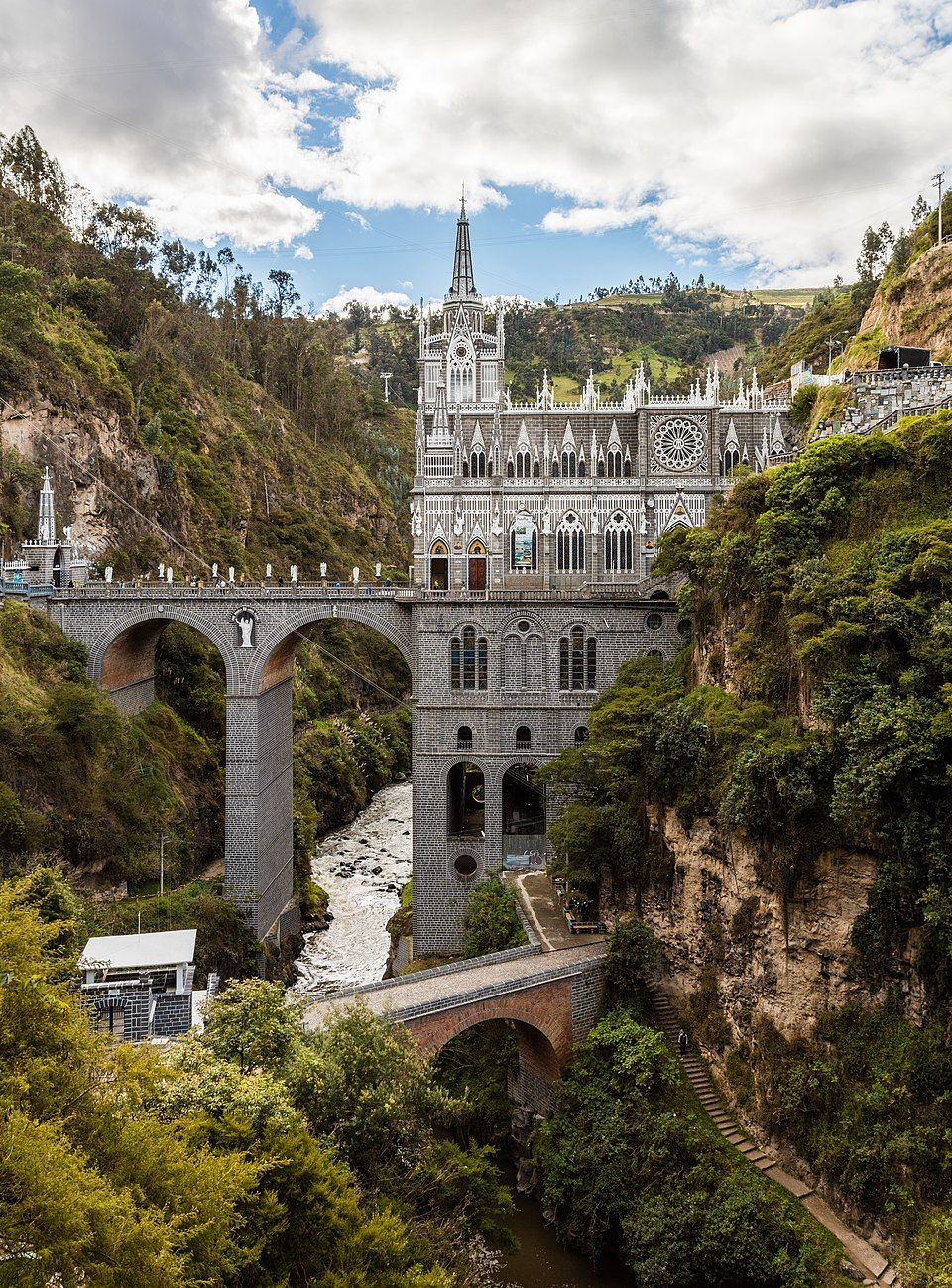
The Sanctuary of Our Lady of Las Lajas is one of the most architecturally dramatic pilgrimage sites in the world. A neo-Gothic basilica spanning the Guáitara River canyon in southern Colombia near the Ecuadoran border, it was built between 1916 and 1949 on the site of a reported Marian apparition and clings to the canyon walls 45 metres above the river. The combination of Gothic tracery, Colombian mountain landscape, and the roar of the Guáitara below creates an experience unlike any other shrine on earth. The apparition tradition dates to 1754, when a Quechua woman named María Mueces and her deaf-mute daughter Rosa were caught in a storm on the canyon path. Rosa reportedly said: Mother, the Lady is calling me from among the stones. An image of the Virgin Mary with the Child Jesus was subsequently found painted — not engraved — on the rock face of the canyon: an image that could not be removed or painted over, and that endures to this day behind the basilica's high altar. The cliff walls surrounding the sanctuary are covered with the plaques of answered prayers — thousands of ex-votos from grateful pilgrims, affixed directly to the canyon stone. The result is one of the most visually powerful expressions of popular devotion anywhere: the canyon itself becomes a wall of intercession, covered in gratitude from floor to ceiling.
One of the most architecturally dramatic sanctuaries in the world — a neo-Gothic basilica spanning a canyon
The image of Our Lady is reportedly painted on the rock face of the canyon wall — not engraved or added The canyon walls are covered with thousands of ex-voto plaques from pilgrims across South America The basilica spans 45 metres above the Guáitara River — a bridge-basilica unique in Catholic architecture The devotion has been continuous since 1754 at the site of the reported apparition
Gothic towers above, the river far below, the mountains of Nariño rising on every side. This approach is one of the great pilgrim arrivals in South America.
Bridge over the Guáitara [OUTDOOR] A bridge crosses the Guáitara River directly in front of the basilica, offering the most photographed view: the neo-Gothic towers rising from the canyon wall, reflected in the river below. At dusk the stone glows and the waterfall sounds drift up from below.
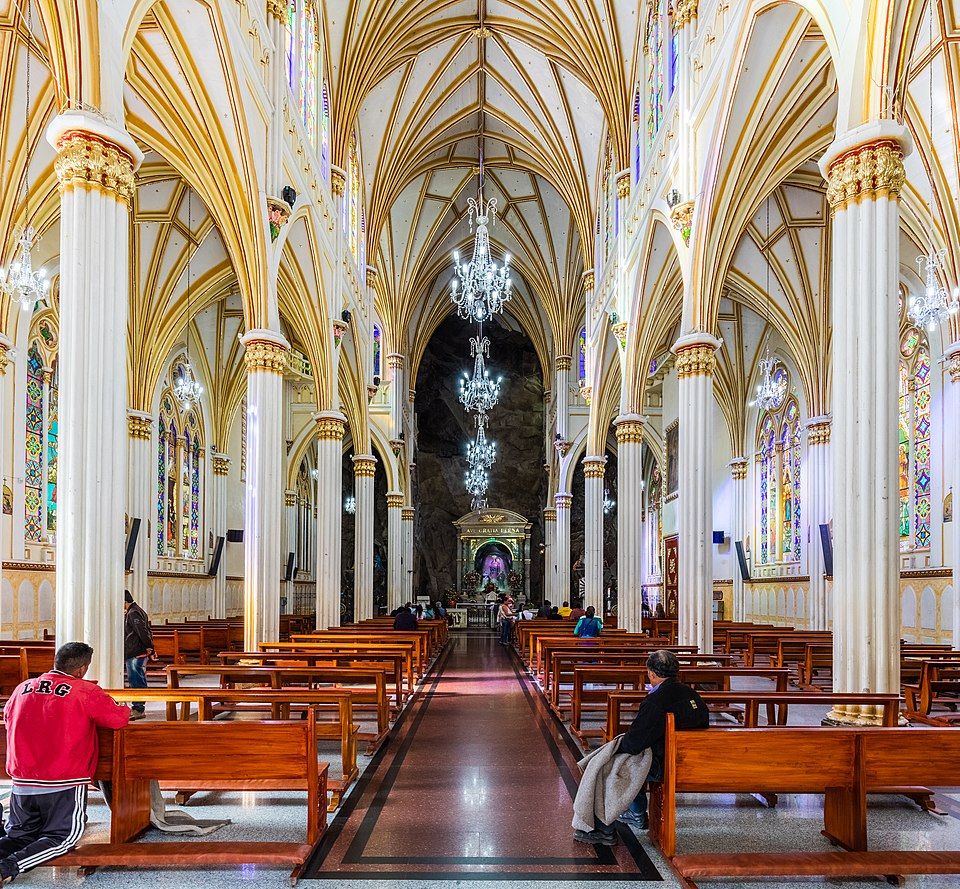
Behind the high altar The rock face bearing the image of Our Lady with the Child Jesus is visible through the glass behind the altar. The image is reported to go several centimetres deep into the rock, rather than being applied to the surface. Pilgrims gaze at it through the altar glass.
Along the canyon cliff faces around the sanctuary Thousands of ceramic and metal plaques cover the canyon walls: En Agradecimiento (In Gratitude), followed by the miracle received and the name of the pilgrim. Cures, accidents survived, marriages restored, children born. The canyon is a record of the answered prayers of the Colombian poor.
Guáitara River, visible from the bridge [OUTDOOR] The Guáitara River rushes through the narrow canyon below the sanctuary. The sound of the water accompanies all prayer at Las Lajas. At high water the roar is overwhelming. At low water, the green of the canyon bottom and the Gothic spires above produce one of the most beautiful landscapes in Colombian pilgrimage.
A woman named María Mueces and her deaf-mute daughter were caught in a storm on a canyon path in 1754. The child said she heard a voice calling from the stones. This is the origin of Las Lajas. The image appeared on the rock. The canyon walls filled with gratitude. A basilica was built across the void. All of it — the architecture, the art, the ex-votos, the prayers — began with a mother and daughter in a storm, and a child who heard something in the rock.
“He lifted me out of the slimy pit, out of the mud and mire; he set my feet on a rock and gave me a firm place to stand.”
Read in full on Bible Gateway →The Sanctuary of Our Lady of Las Lajas is one of the most architecturally dramatic pilgrimage sites in the world. A neo-Gothic basilica spanning the Guáitara River canyon in southern Colombia near the Ecuadoran border, it was built between 1916 and 1949 on the site of a reported Marian apparition and clings to the canyon walls 45 metres above the river. The combination of Gothic tracery, Colombian mountain landscape, and the roar of the Guáitara below creates an experience unlike any other shrine on earth.
The apparition tradition dates to 1754, when a Quechua woman named María Mueces and her deaf-mute daughter Rosa were caught in a storm on the canyon path. Rosa reportedly said: “Mother, the Lady is calling me from among the stones.” An image of the Virgin Mary with the Child Jesus was subsequently found painted — not engraved — on the rock face of the canyon: an image that could not be removed or painted over, and that endures to this day behind the basilica’s high altar.
The cliff walls surrounding the sanctuary are covered with the plaques of answered prayers — thousands of ex-votos from grateful pilgrims, affixed directly to the canyon stone. The result is one of the most visually powerful expressions of popular devotion anywhere: the canyon itself becomes a wall of intercession, covered in gratitude from floor to ceiling.