Mariazell Basilica
Mariazell, Austria
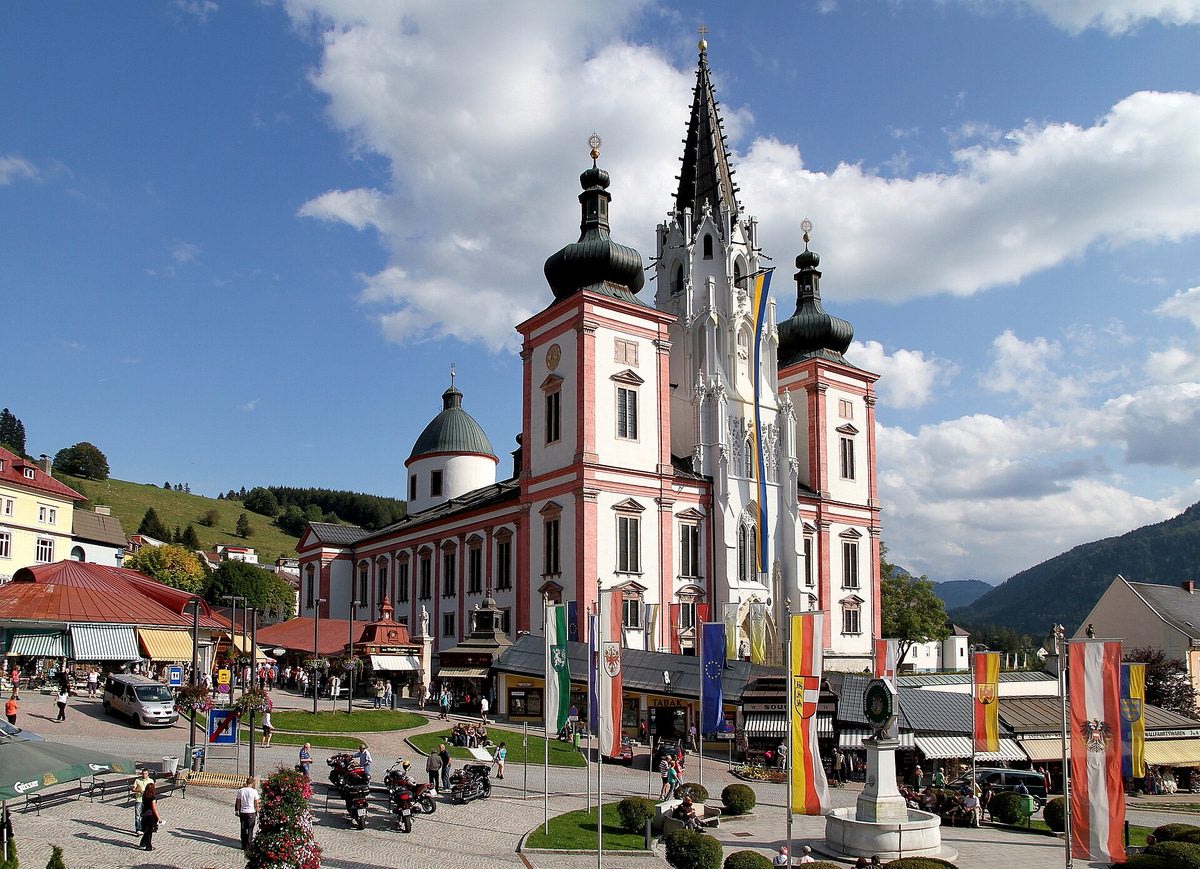
"The Basilica of the Birth of the Virgin Mary in Mariazell, set in the Styrian Alps at 868 metres, is the na..."
Highlights
- 1Austria's national shrine and the spiritual heart of Central European Catholicism
- 2The 12th-century linden-wood Madonna carved by the monk Magnus is still venerated above the altar Pilgrims from seven Central European nations have been coming here for over 850 years
- 3Pope John Paul II gave the shrine his Golden Rose during his 1983 visit The 85 km walking pilgrimage from Vienna (Wiener Wallfahrt) is walked each year by thousands
Getting There
Address
Kardinal-Tisserant-Platz 1, 8630 Mariazell, Styria, Austria
Directions
Mariazell is 160 km from Vienna and 90 km from Graz. The historic Mariazellerbahn narrow-gauge railway (3h from St Pölten, connecting to Vienna) is the most atmospheric approach. By car: Route 20 through the Styrian mountains.
Timings
Current time — Vienna Time (CET)
--:--:--
| When | Hours |
|---|---|
| Basilica | 6:00 AM - 8:00 PM |
| Schatzkammer | 10:00 AM - 4:00 PM |
; ticket required Peak pilgrimage is from May to October; the August 15 feast is the largest single gathering. The walking pilgrimage from Vienna arrives each year in August.
Masses & Events
Daily Mass
Multiple from 6:30 AM
Active pilgrimage schedule
Feast of the Nativity of Mary
September 8
Second principal feast after
Assumption Feast of the Assumption
August 15
The busiest pilgrimage day of the year
Must See
The Gnadenaltar (Altar of Grace)
Central chapel within the basilica The original medieval chapel has been preserved within the baroque basilica. The silver and gold altar, surrounding the tiny 12th-century linden-wood Madonna, is the focus of all devotion. Pilgrims file through the small space to kneel before the image in the intimate original chapel. The Schatzkammer (Treasure Chamber)
Adjacent to the basilica Contains ex-votos from Austrian, Hungarian, and Bohemian royal families — the Habsburgs in particular regarded Mariazell as their family shrine. Silver hearts, gold plaques, royal vestments, and military decorations tell the story of Central European Catholic history from the 14th century to the present.
The Alpine Setting
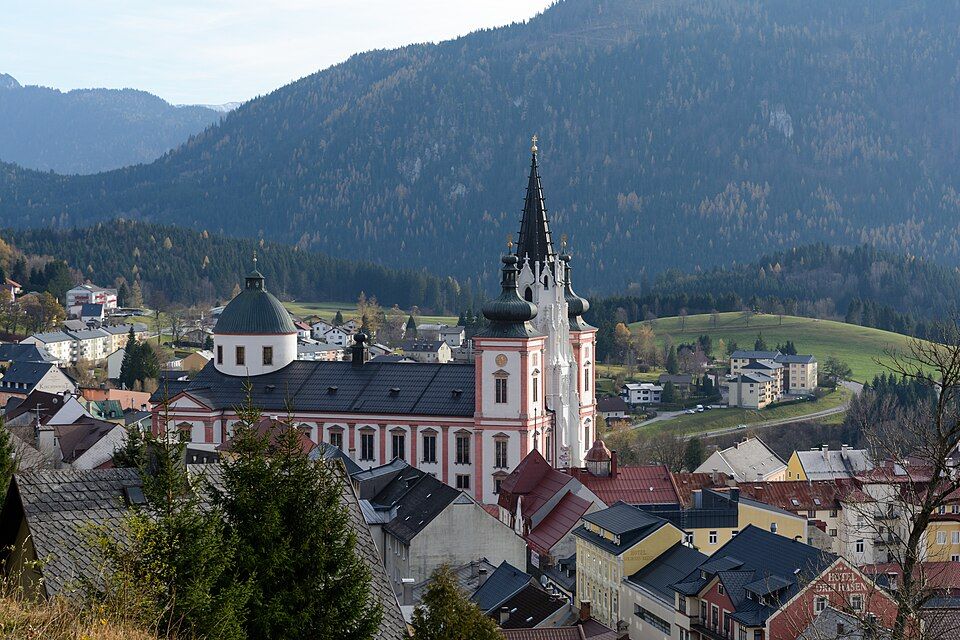
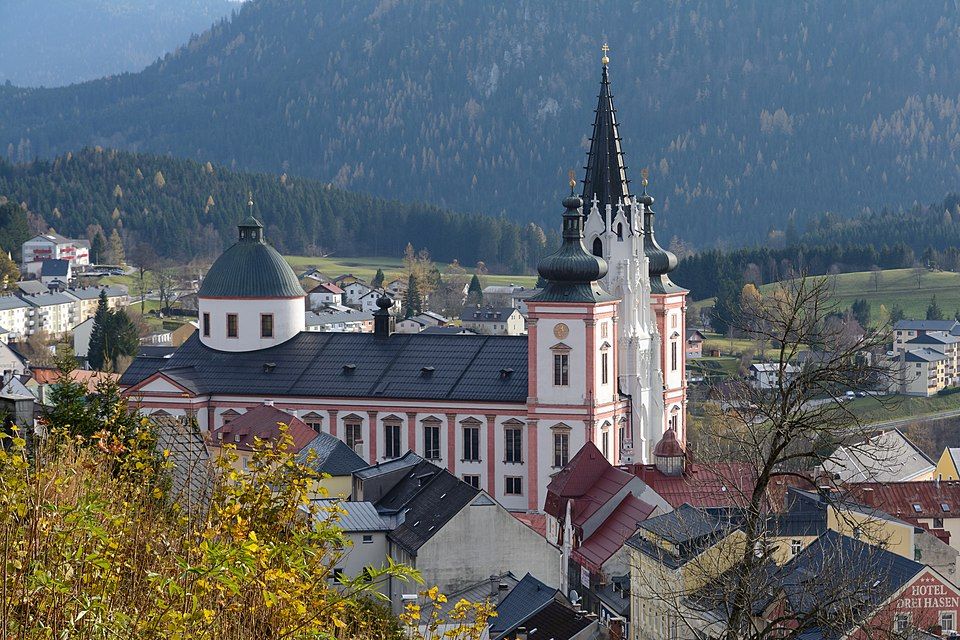
Mariazell and surrounding mountains [OUTDOOR] The basilica stands in a valley surrounded by the high Styrian Alps. Walking the mountain paths above the town offers views of the basilica against the forest and peaks
a landscape of extraordinary beauty that has drawn pilgrims for eight centuries. The combination of alpine air, mountain silence, and Marian devotion is uniquely Austrian.
The Wiener Wallfahrt Route
From Vienna [OUTDOOR] The 85 km walking pilgrimage from Vienna to Mariazell takes 4 days and is walked each year by thousands of pilgrims in late August. The route through the Vienna Woods and the Styrian foothills is itself the pilgrimage
the arrival is its culmination.
The High Altar
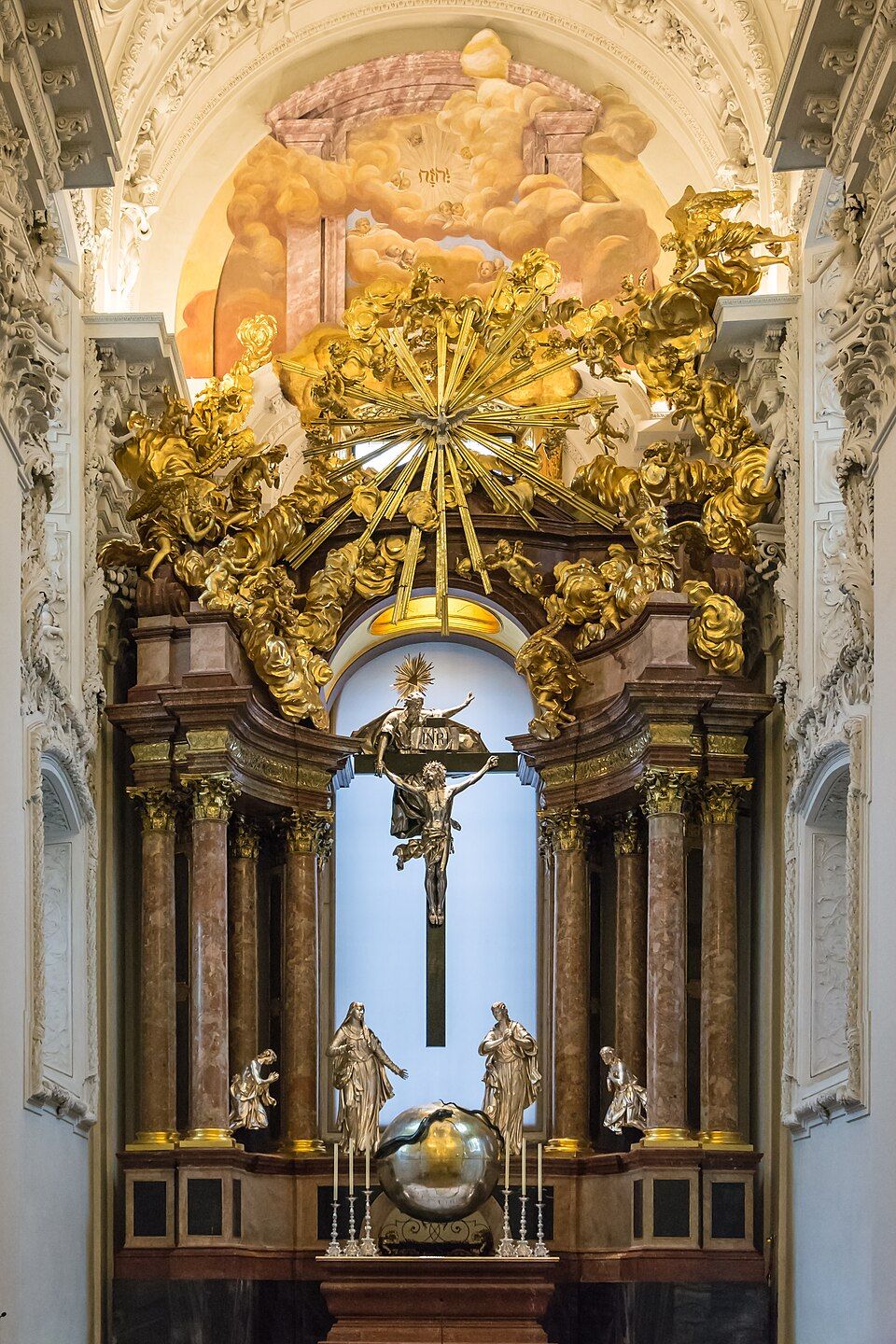
East end of the main nave The High Altar of the main basilica, with its silver baldachin and frescoes, is the formal liturgical centre. The Gnadenaltar (with the Madonna) is the devotional heart, and the main High Altar the ceremonial one. Together they define the dual function of a great pilgrimage basilica: intimate prayer and solemn liturgy.
Intentions
Carry these intentions into the Basilica with you — pause at each sacred spot and lift them to God.
For Austria and Central Europe — for the faiths that survived communism and survive secularism
For the Hungarian people, whose centuries of devotion to Mariazell is one of history's longest pilgrimages
For the Habsburg legacy — complex and worthy of prayer, not merely judgement
For those who walk long distances in the Alps as an act of faith
For the beauty of the natural world — that the Alps may be seen as part of creation
For the Benedictine tradition that began this devotion
For those who find God in mountains as much as in churches
For the unity of the Central European nations whose history is entangled at this shrine
Reflection
A monk named Magnus walked to a mountain valley in Styria in 1157, set a small carved Madonna on a rock, prayed, and went to sleep. When he woke, the cell he had built had become immovable, and he understood he was meant to stay. From that cell a basilica grew. From that basilica a national shrine grew. From that national shrine, the pilgrimage traditions of seven nations grew. All of it from one monk, one carved Madonna, and one immovable cell.
Suggested Scripture — Genesis 28:16
When Jacob awoke from his sleep, he thought: Surely the Lord is in this place, and I was not aware of it.
Read in full on Bible Gateway →A Pilgrim's Prayer
Our Lady of Mariazell, enthroned in your alpine valley where a monk was surprised by God's presence — let me also be surprised. Let me find what I did not expect to find here. Let the mountains that surround this basilica teach me that the sacred is not only in churches but in the creation that frames them. And let me walk away from this valley lighter, and higher. Amen.
More
The Basilica of the Birth of the Virgin Mary in Mariazell, set in the Styrian Alps at 868 metres, is the national shrine of Austria and one of the most important Marian pilgrimage sites in Central Europe. Pilgrims from Austria, Hungary, Croatia, Slovakia and the Czech Republic have been coming here since the 12th century. The name means Mary’s cell — a reference to the small cell built by a Benedictine monk named Magnus in 1157, who is said to have carved the small linden-wood statue of Our Lady that is still venerated above the high altar.
The Basilica
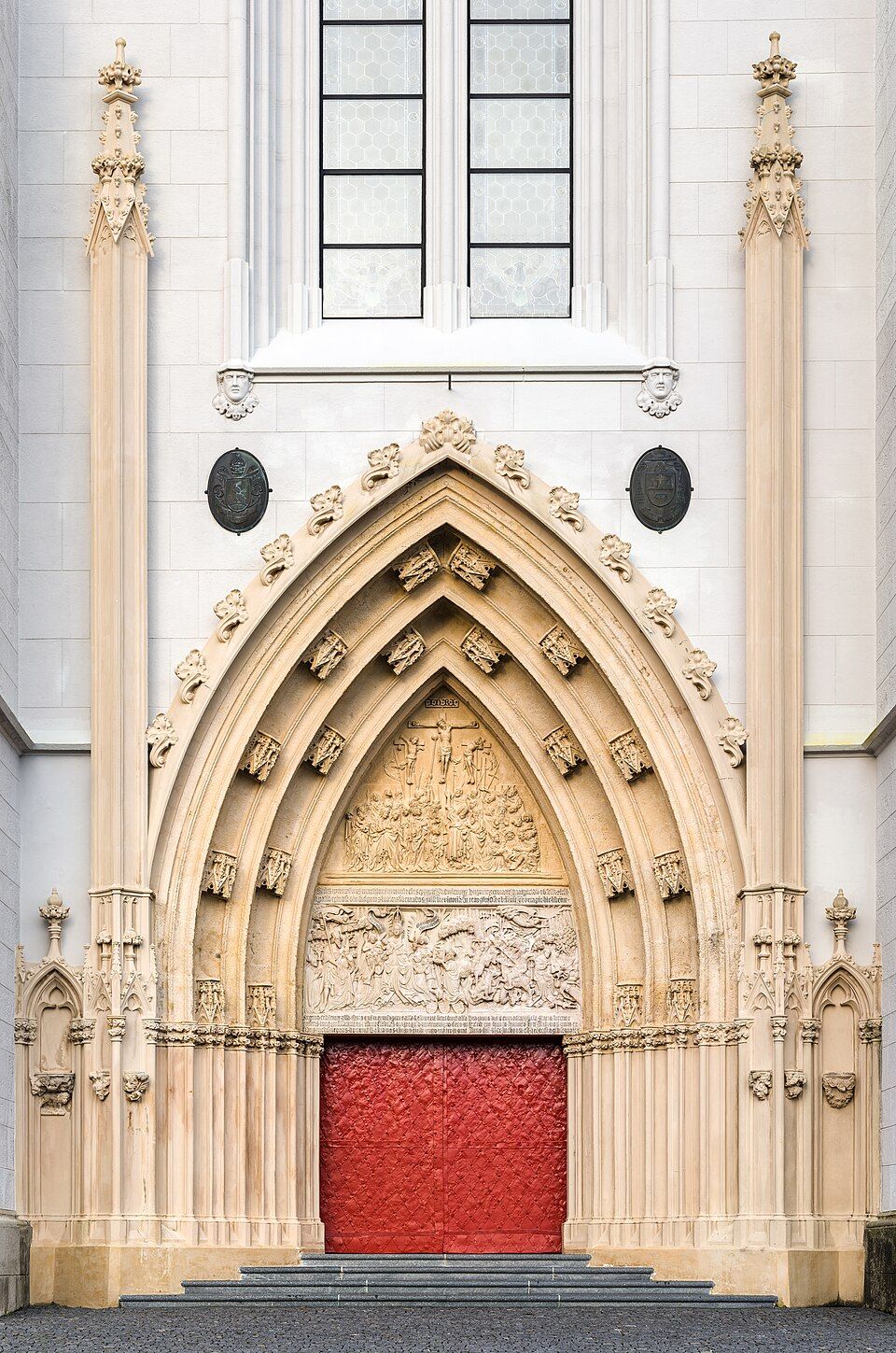
The baroque basilica, designed by Johann Bernhard Fischer von Erlach and consecrated in 1744, incorporates the original medieval chapel within its fabric. The silver and gold altar surrounding the 12th-century Madonna is one of the finest examples of Austrian Baroque metalwork. The pilgrimage tradition has been continuous for over 850 years. Pope John Paul II visited Mariazell in 1983 and gave the shrine his Golden Rose. Pope Benedict XVI came in 2007 for the 850th anniversary.
Pilgrim Routes
The Hungarian connection is particularly strong: Hungarian pilgrims have been walking to Mariazell for centuries, including the royal families of the House of Habsburg. The most famous walk to Mariazell is the 85 km Wiener Wallfahrt from Vienna — walked each year by thousands of pilgrims.
Photo Gallery
5 photosKey Facts
- Type
- Basilica
- Region
- Other
- Location
- Mariazell, Austria
Open in Google Maps
Kardinal-Tisserant-Platz 1, 8630 Mariazell, Styria, Austria
Pilgrim's Note
We encourage all visitors to enter in a spirit of prayer and respect for the faith traditions of each place.