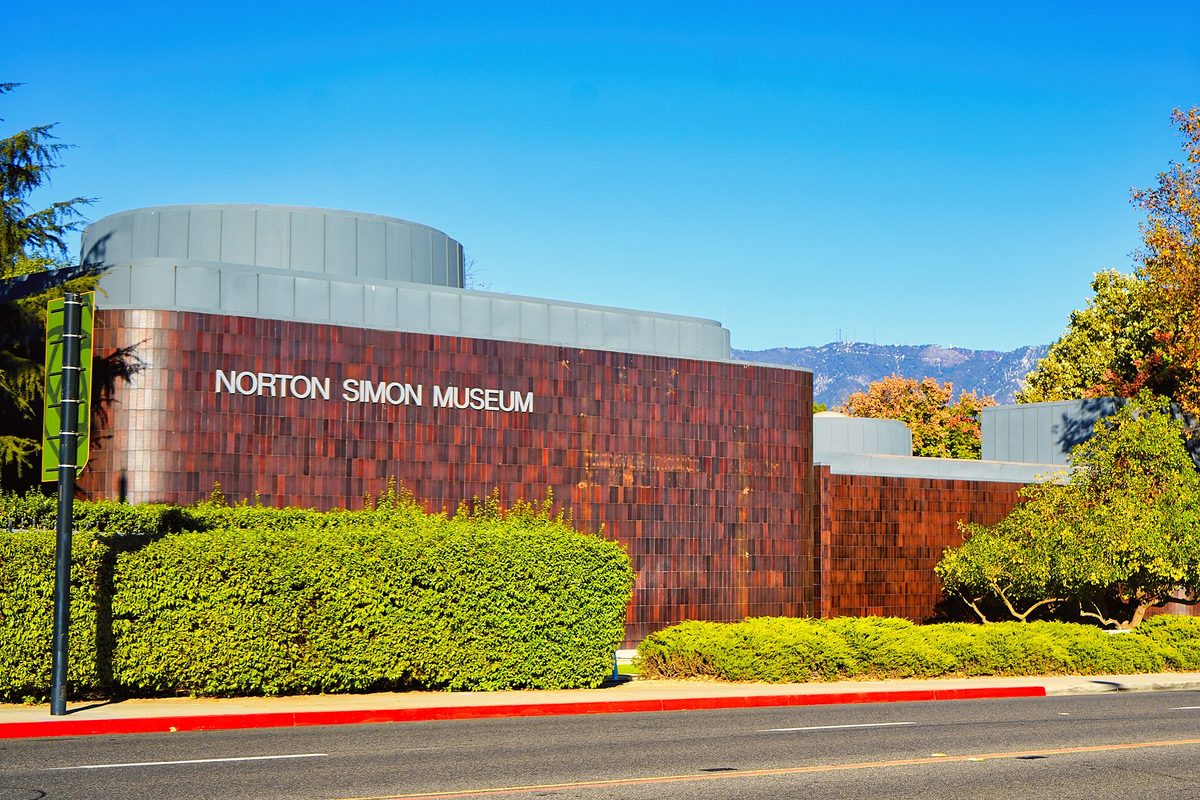
Norton Simon was one of the most aggressive and instinctive art buyers of the twentieth century — a self-made industrialist from Portland, Oregon, who built a diversified consumer goods empire (Hunt Foods, Canada Dry, McCall's magazine) and used the proceeds to assemble, between the 1950s and the 1980s, one of the great private art collections in American history. Simon was competitive, intellectually restless and personally difficult: he fought with dealers, renegotiated prices after agreeing terms, and pursued works that other collectors had given up on with a tenacity that sometimes crossed the line into acquisition by attrition. But his eye was exceptional — he had an instinctive ability to identify quality across styles, periods and cultures — and the collection he assembled, now housed in a redesigned building in Pasadena and bearing his name, is a monument to three decades of sustained connoisseurship. The Christian art holdings of the Norton Simon Museum are particularly strong in Renaissance and Baroque religious painting. Raphael's Madonna and Child with Book (c. 1502–1503), a small, exquisite panel from the artist's early Florentine period, demonstrates with jewel-like precision the formal and emotional qualities that would make Raphael the defining painter of the High Renaissance: the tender geometry of the Madonna's inclined head, the Christ Child's alert and engaged expression, the soft modelling of flesh against the warm Umbrian landscape background. Francisco de Zurbarán contributes multiple works: his depictions of Jeronymite monks — the habit-clad figures absorbed in devotion or scholarship, set against plain backgrounds with a simplicity of means that produces maximum spiritual intensity — are among the finest works of the Spanish Baroque outside Spain. Guariento di Arpo, the fourteenth-century Paduan painter, is represented by a remarkable series of angel panels that once formed part of a large polyptych, their gold wings and blue robes luminous against gilded grounds of extraordinary preservation. Simon's collecting philosophy was characterised by a commitment to depth as well as breadth: rather than acquiring one representative example of each artist or school, he pursued multiple works by the artists he most valued, creating within the museum a series of mini-retrospectives that allow visitors to understand the development of a style over time. This approach is nowhere more evident than in the Christian art holdings, where sequences of works by Zurbarán, Ribera and Rubens illuminate the full range of each artist's engagement with devotional subject matter.
Raphael's Madonna and Child with Book, painted around 1502, demonstrates with jewel-like precision the formal harmony and emotional warmth that define the High Renaissance ideal.
Zurbarán's Jeronymite monks — white-habited figures absorbed in prayer against plain backgrounds — are among the finest works of the Spanish Baroque outside Spain.
Guariento di Arpo's fourteenth-century angel panels, originally part of a large polyptych, are extraordinary survivals of Trecento devotional art in exceptional preservation.
Norton Simon's collecting philosophy prioritised depth over breadth, creating within the museum mini-retrospectives of Zurbarán, Ribera and Rubens.
The Japanese-influenced garden with reflecting pool, stone lanterns and sculpture by Rodin and Henry Moore makes the museum one of the most beautiful museum settings in California.
Norton Simon: Collector and Character
Norton Simon was born in Portland, Oregon, in 1907, the son of a merchant. He dropped out of the University of California, Berkeley, during his freshman year and began his business career buying a failing orange juice bottling plant in Fullerton, California. Over the following three decades he built this into Hunt Foods, one of the largest canned food companies in the United States, and then diversified into beverages (Canada Dry), publishing (McCall's, Saturday Review) and industrial products (Avis Rent-a-Car). He began collecting art in the early 1950s, initially driven more by investment instinct than aesthetic passion, but the passion developed rapidly as he educated himself, visiting museum collections across Europe and America and consulting with the leading dealers and scholars of the day.
Raphael's Madonna and Child with Book
The Madonna and Child with Book in the Norton Simon collection was painted around 1502–1503, during Raphael's early years in Perugia and Florence, when he was absorbing the lessons of Perugino's graceful compositional formulas and beginning to encounter the revolutionary innovations of Leonardo and Michelangelo. The small panel — 55 by 40 centimetres — shows the Virgin seated, supporting the Christ Child on her lap as he holds an open book. The Virgin's gaze is directed downward and slightly away from the viewer, as if absorbed in private thought, while the Child engages directly and alertly with the world before him. Raphael achieves in this early work a combination of formal clarity and emotional warmth that would become his signature: the figures are precisely drawn and elegantly posed, but their relationship has the naturalness of observed life rather than the formality of pictorial convention.
Zurbarán and Monastic Life
Francisco de Zurbarán's paintings of Jeronymite and Mercedarian monks represent the most concentrated evocation of Spanish monastic life in the history of European painting. The Jeronymites — the Order of Saint Jerome, founded in Castile in the fourteenth century and housed in great monasteries like the Escorial and Guadalupe — were among the most important patrons of Spanish religious art, and Zurbarán worked for them extensively from the 1620s onward. His monks in the Norton Simon collection are painted with the same quiet intensity that characterises all his best work: figures absorbed in reading, in prayer or in the manual labour of monastic observance, their white habits rendered with a sculptural precision and luminosity that transforms the physical reality of cloth into a metaphor for spiritual purity.
Guariento's Angel Hierarchy
Guariento di Arpo was one of the leading painters in the Veneto in the mid-fourteenth century, a generation before Gentile da Fabriano and the International Gothic style that would transform Italian painting in the early fifteenth century. His panel paintings of angels — archangels, cherubim, seraphim and the other orders of the celestial hierarchy described in the theological writings of Pseudo-Dionysius the Areopagite — were originally part of a large polyptych altarpiece, probably for a church in the Veneto. The Norton Simon panels, depicting individual angel figures against gold grounds with the heraldic clarity of the best Trecento painting, are extraordinary objects: the gold wing feathers, the jewelled vestments, the intense and somewhat alien faces of the celestial beings all carry the conviction of a tradition that still believed in the literal existence of what it was depicting.
The Building and Garden
The Norton Simon Museum building was originally constructed as the Pasadena Art Museum in 1969 to the design of the architect Ladd and Kelsey. Norton Simon rescued the struggling institution from bankruptcy in 1974 and subsequently commissioned the architect Frank Gehry to redesign the interior in 1996–1999, creating a sequence of intimate gallery spaces of varying proportion suited to different scales of work. The garden, redesigned by the landscape architect Nancy Goslee Power in a Japanese-influenced style with stone lanterns, water features and a reflecting pool, provides one of the most peaceful outdoor settings of any museum in California. Works by Rodin and Henry Moore are installed throughout the garden.
Simon's Acquisition Philosophy
Simon's approach to collecting was described by his critics as predatory and by his admirers as visionary. He was notorious for buying works at auction, withdrawing them from the catalogue, and renegotiating with the seller; for purchasing entire private collections rather than individual works; and for pursuing works that other collectors had been unable to acquire through sheer persistence. But the results vindicate the method: the Norton Simon holds a higher concentration of truly great works — as distinct from merely expensive or famous ones — than almost any comparably sized collection in America.
Visiting
The Norton Simon Museum is open Thursday through Monday, with Tuesday and Wednesday closures. Admission is charged, with discounts for students, seniors and children. The museum is located in central Pasadena on Colorado Boulevard, approximately thirty minutes from downtown Los Angeles by Metro Gold Line (the Del Mar station is a ten-minute walk from the museum). The garden is open during museum hours. The museum shop carries a comprehensive selection of catalogues and art books.