Basilica of Our Lady of Luján
Basilica · Other

Basilica of Our Lady of Luján

Luján, Argentina

"The Basilica of Our Lady of Luján is the most important Marian shrine in Argentina and the most visited pil..."

Highlights

  • 1The Patroness of Argentina, Uruguay, and Paraguay — the most nationally significant Marian shrine in the Southern Cone The devotion began in 1630 when an oxcart became miraculously immovable on the pampas
  • 2Approximately 6 million pilgrims per year — third most visited Latin American shrine after Guadalupe and Aparecida The October walking pilgrimage from Buenos Aires (65 km) draws hundreds of thousands of young people
  • 3Pope Francis has spoken of particular devotion to Our Lady of Luján

Getting There

📍

Address

Brasil 900, Luján, Buenos Aires Province B6700, Argentina

🗺

Directions

Luján is 65 km west of Buenos Aires. Direct trains from Once Station (Buenos Aires) to Luján station (1.5 hours). Buses from Liniers and Retiro bus terminals. The walking pilgrimage from Buenos Aires follows Route 7 westward.

Open in Google Maps

Timings

Current time — Buenos Aires Time (ART)

--:--:--

WhenHours
Basilica7:00 AM - 8:00 PM

October pilgrimage weekend Extended hours, open 24h The October first-Sunday pilgrimage is the biggest single event. The December 8 (Immaculate Conception) feast is the second largest. The basilica is open for pilgrims year-round and receives visitors every day.

Masses & Events

Daily Mass

7, 8, 9, 10, 11 AM; 12, 3, 5, 7 PM

Active pilgrimage schedule

October Youth Pilgrimage Mass

First Sunday of October

The climax of the walking pilgrimage; celebrated at the basilica Feast of Our Lady of Luján: May 8 — The principal liturgical feast; and December 8 (Immaculate Conception) is a second major feast

Must See

1

The Image of Our Lady of Luján

Main altar, basilica The small terracotta image

just 38 cm — stands in an elaborate gold and silver shrine above the high altar, dressed in a wide-brimmed Argentine gaucho hat on feast days and in traditional pilgrim attire at other times. The smallness of the image and the vastness of the devotion it generates is one of the great theological proportions of South American Catholicism.

2

The Twin Towers and Gothic Facade

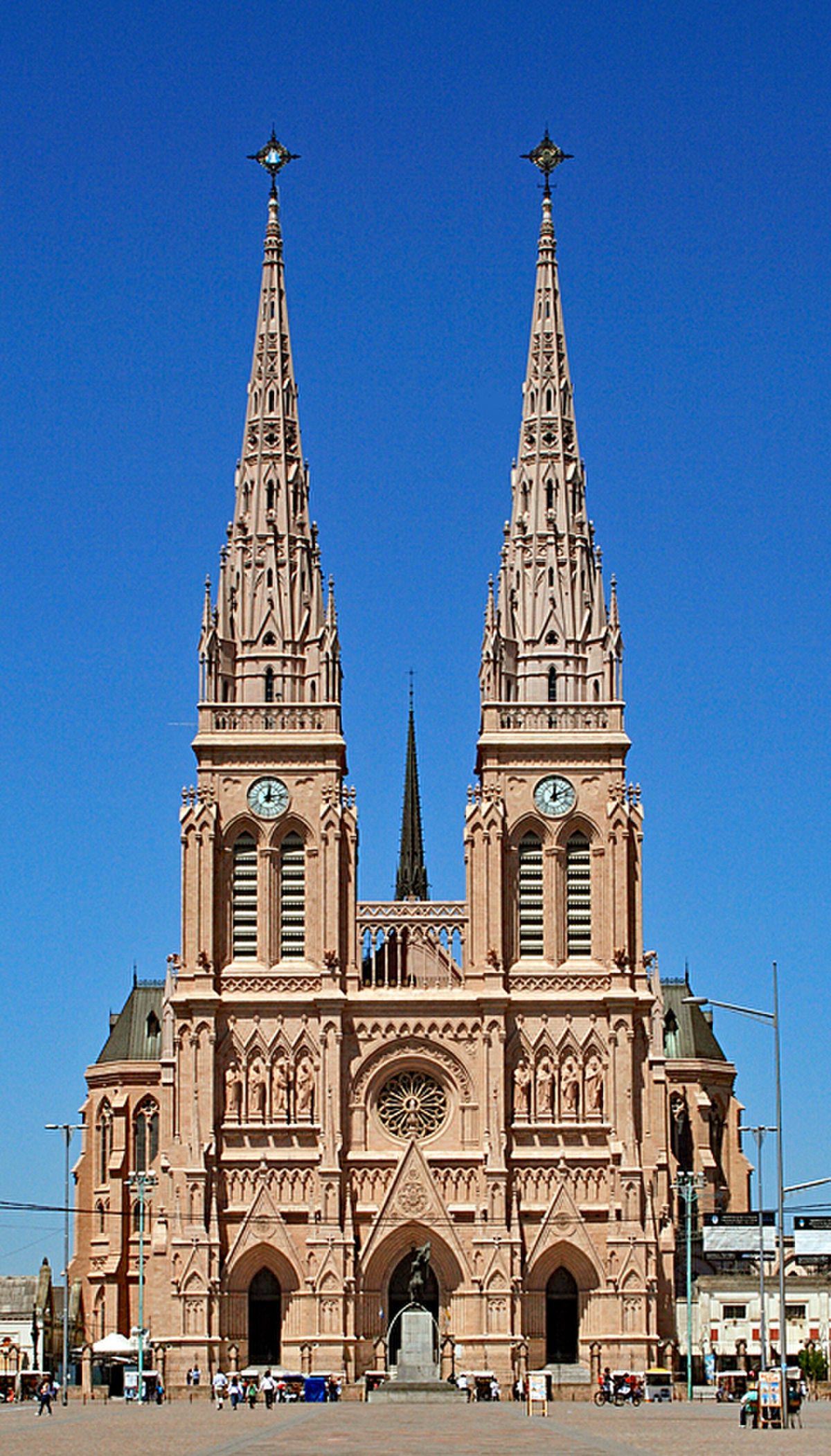
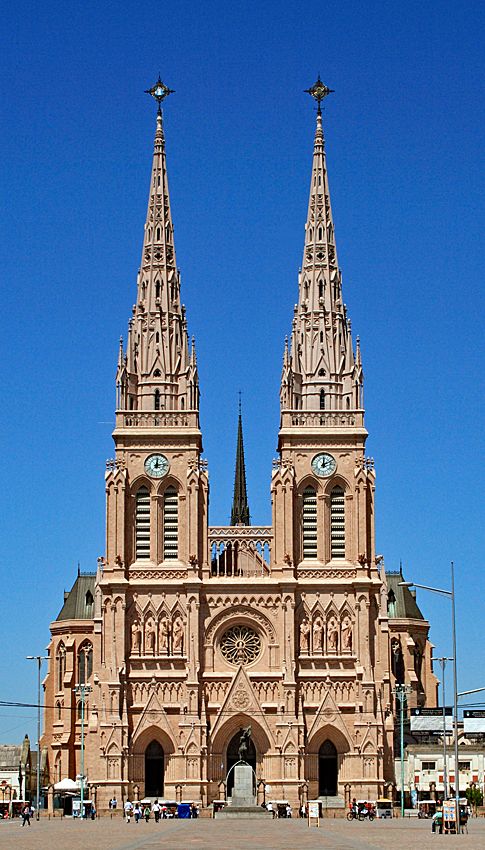
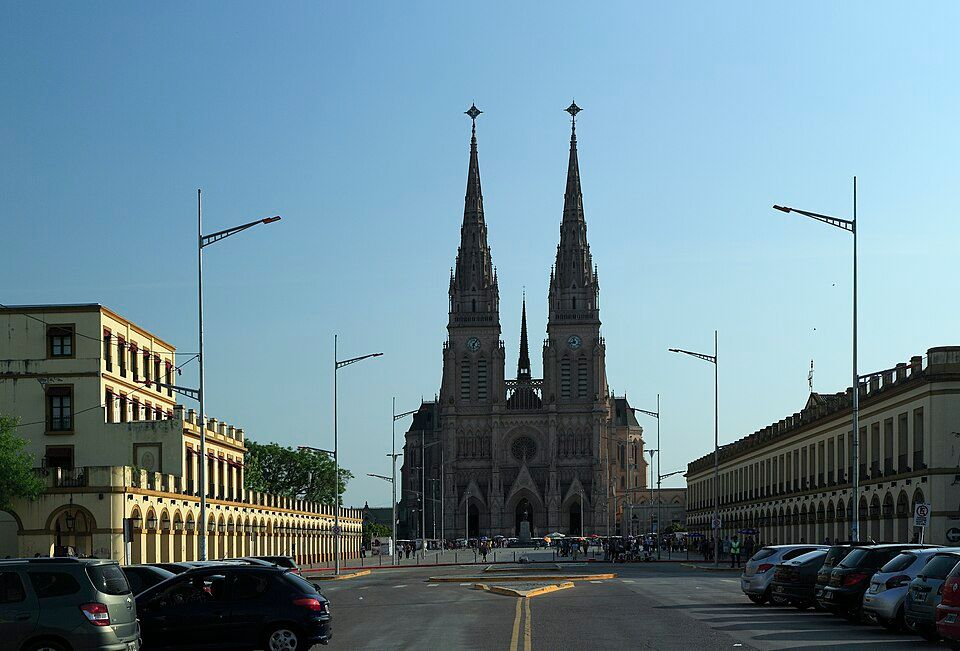
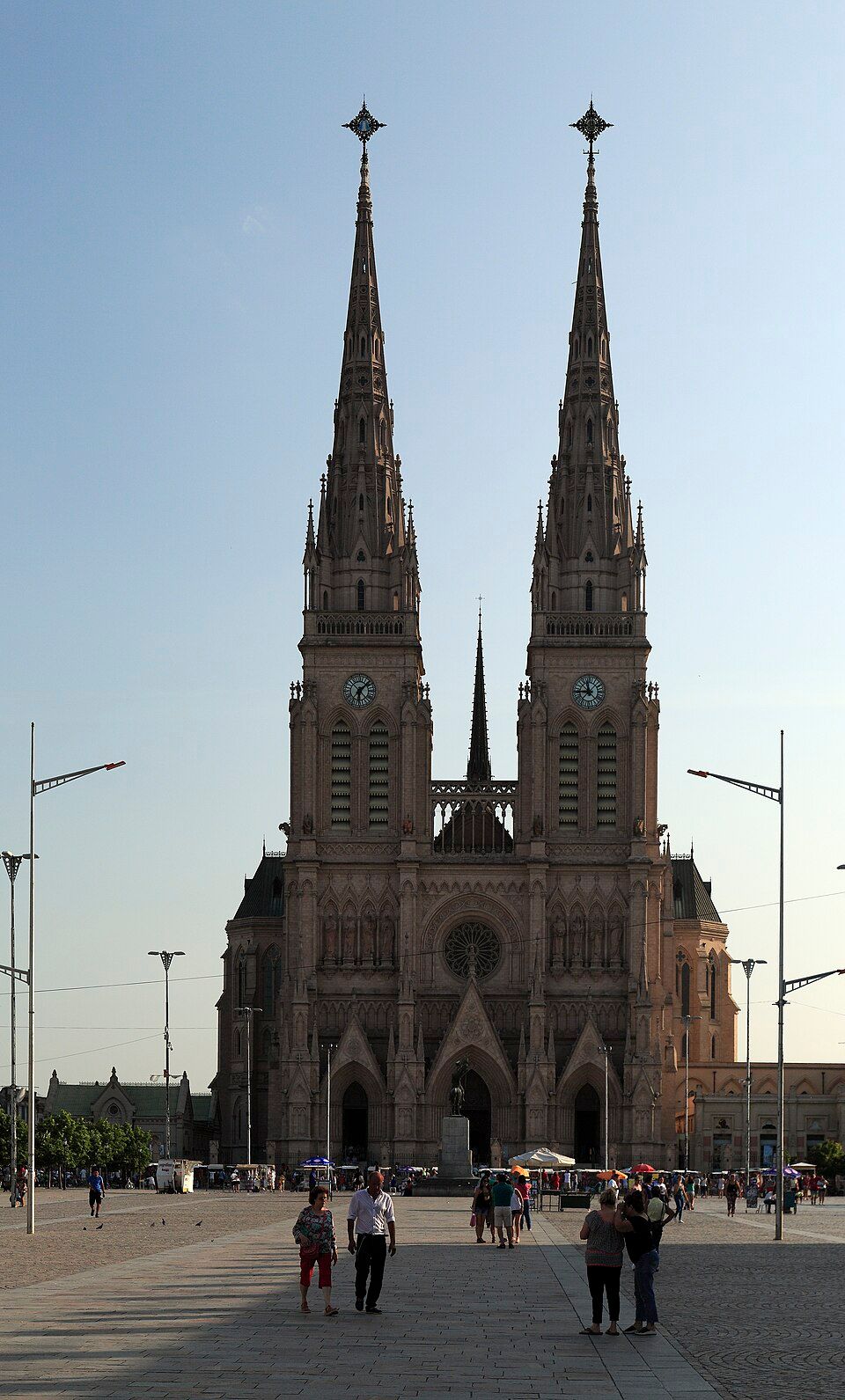
Exterior [OUTDOOR] The twin spires at 98 metres are visible from the pampas long before arrival. The neo-Gothic facade in pinkish stone, with its pointed arches and rose window, contrasts with the flat Argentine landscape surrounding it. The approach from the east, with the towers growing as you walk, is the pilgrim experience in miniature.

3

The Pilgrim Road from Buenos Aires

Route 7 along the Luján River [OUTDOOR] The 65-kilometre walk from Buenos Aires follows the Luján River through the pampas. Many pilgrims walk through the night, arriving at Luján at dawn.

4

The October road at night

lit by the candles and torches of hundreds of thousands of young pilgrims

is one of the most extraordinary sights in South American Catholic life.

5

The Colonial Church of the Virgen

Adjacent to the basilica The original 1730 colonial church, where the image was first enshrined, still stands next to the towering Gothic basilica.

6

The contrast

the tiny colonial chapel and the enormous neo-Gothic cathedral

makes the history of the devotion visible.

7

The Transport Museum

In the basilica complex Unusually, the Luján complex includes a Transport Museum with historic Argentine vehicles

including a 17th-century carriage and the carts that carried the Virgin's image across the pampas. A reminder that the history of devotion is also the history of movement, of people going somewhere.

Intentions

Carry these intentions into the Basilica with you — pause at each sacred spot and lift them to God.

🙏

For Argentina and the nations of the Southern Cone

🙏

For young people who walk through the night to honour Our Lady

🙏

For gaucho culture and the Argentine countryside

🙏

For Pope Francis and his Argentinian Church

🙏

For those separated from their homeland — who carry devotion to Our Lady across the world

🙏

For the poor, for workers, for those whose lives are built on the flat, difficult pampas

🙏

For the unity of families, communities, and nations

🙏

For those who are inexplicably stopped — like the oxcart — and have to accept the place where they are meant to stay

Reflection

An oxcart became inexplicably immovable on the pampas in 1630. The oxen would not move. The cart would not move. The image of the Virgin was taken down, and the cart moved. The same conclusion was reached: this is where she wants to be. Sometimes the most important thing in our lives is not the journey but the moment when we are stopped, and we have to decide what it means. The cart that stopped in Luján became the origin of a national devotion.

Suggested Scripture — Psalm 46:10

Be still, and know that I am God.

Read in full on Bible Gateway →

A Pilgrim's Prayer

Our Lady of Luján, Patroness of Argentina, you stopped a cart on the pampas and said: here. You have been here ever since. I come to the place where you decided to stay. Let me also find the place where I am meant to stop — not from defeat, but from recognition. Be my patroness on all the roads I still have to travel. Amen.

More

The Basilica of Our Lady of Luján is the most important Marian shrine in Argentina and the most visited pilgrimage site in Latin America after Guadalupe and Aparecida, receiving approximately six million pilgrims per year. Our Lady of Luján is the Patroness of Argentina, Uruguay and Paraguay. The devotion began in 1630, when an oxcart carrying a small terracotta image of the Immaculate Conception from Brazil became inexplicably immovable on the pampas near Luján, and the image was understood to wish to remain at that spot.

The Pilgrimage

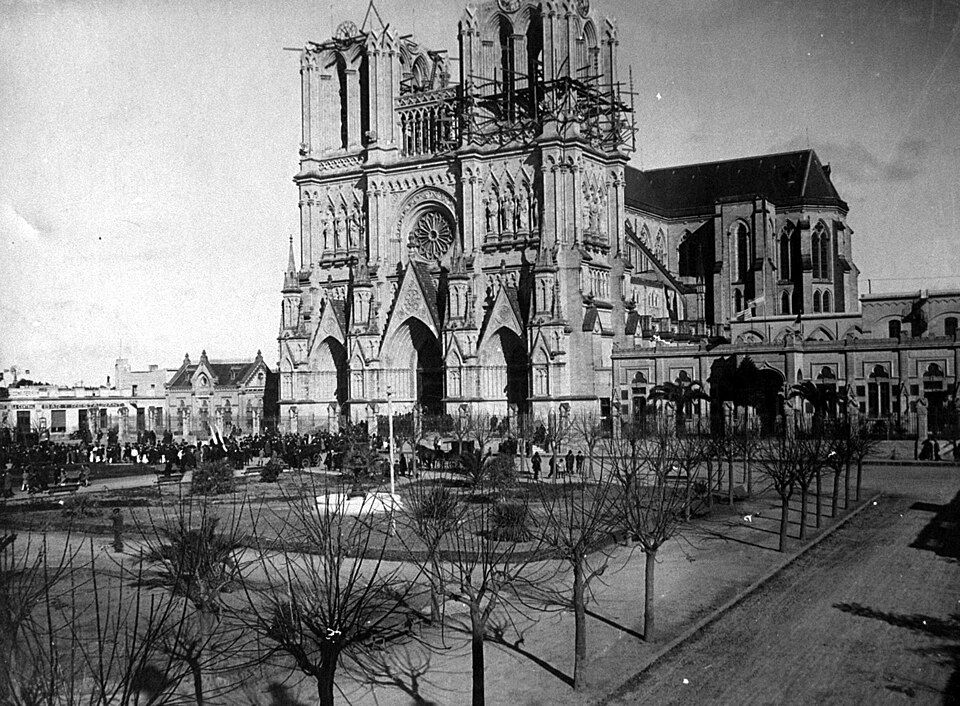
The October pilgrimage from Buenos Aires to Luján — approximately 65 km — is one of the great walking pilgrimages of the Americas. Hundreds of thousands of young people, many walking through the night, complete the journey each first Sunday of October. The sight of the long procession of pilgrims stretching along the pampas road in the predawn hours is one of the most moving pilgrimages in South America.

The Basilica

The Gothic-style basilica, begun in 1887 and completed in 1937, rises above the flat pampas with extraordinary presence — its twin towers visible from a great distance across the plain. The interior contains a rich collection of Argentine religious art and ex-votos spanning three centuries. Pope Francis, who was born and ordained in Argentina, has spoken of Our Lady of Luján with particular devotion, and the shrine holds a special place in the Argentine national consciousness.