
The Life
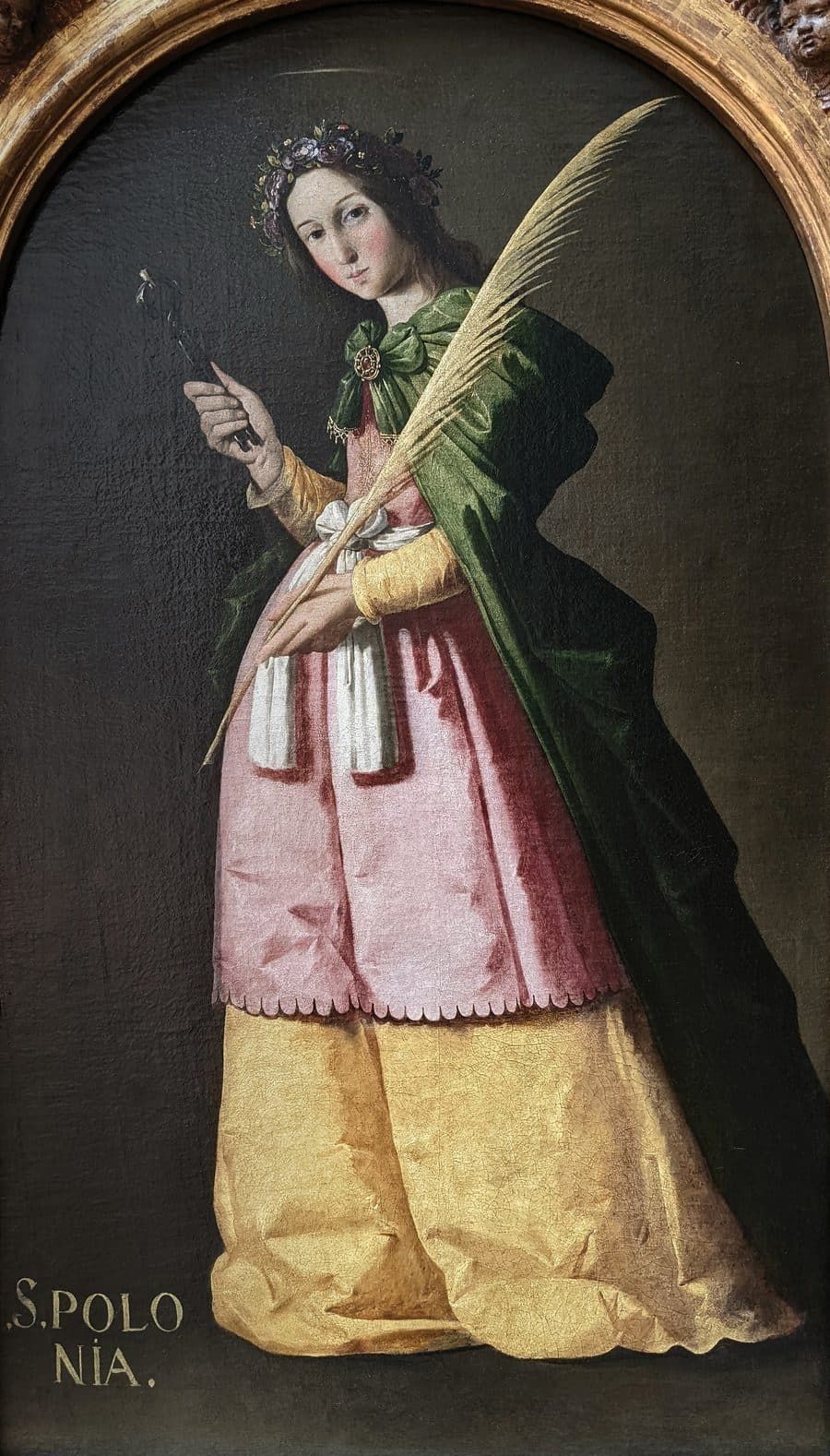
Apollonia was a deaconess in Alexandria, Egypt, during the reign of the Emperor Philip the Arab. The account of her martyrdom, written by Bishop Dionysius of Alexandria to Bishop Fabius of Antioch around 249 AD, is one of the earliest and most specific martyr narratives. She is unusual among the martyrs in several respects: she was elderly, she was apparently a deaconess (a recognized Church ministry), and her death involved a voluntary choice that created a theological problem the early Church debated for centuries.
During an anti-Christian riot in Alexandria in 249 — initiated not by imperial decree but by a pagan mob, apparently inflamed by a prophet who incited them against the Christians — Apollonia was seized. Her teeth were beaten out with stones or pincers — in some accounts all of them, in others the front ones. She was threatened with burning alive if she did not renounce Christianity.
She asked her captors for a moment — apparently to consider — and then leapt into the fire herself. She was not pushed. She chose to die, and chose to do so proactively, jumping into the fire before they could throw her in. Dionysius's account presents this as an act of divine inspiration rather than suicide. Augustine later discussed whether her death constituted suicide and concluded it did not — she acted under divine inspiration, which places her outside the ordinary moral category.
Her patronage of dentistry comes from the torture of her teeth. The image of the elderly woman having her teeth pulled out by a mob — and then walking into the fire — is one of the starkest in the martyrology. She is depicted in art with her teeth held in a pair of pincers.
The Riot in Alexandria — mob martyrdom
Apollonia's martyrdom was not ordered by an emperor or a prefect; it was the product of a mob riot, inflamed by a pagan agitator in Alexandria in 249 AD. The spontaneous, mob-violence character of the martyrdom distinguishes it from the formally conducted judicial martyrdoms of the imperial persecution. A group of citizens seized Christians, beat them, burned their houses, and destroyed their goods. Apollonia was among those seized. The mob violence is both more chaotic and, in some ways, more recognizable to modern experience than formal judicial execution. The Teeth — and the patronage of dentists Apollonia's teeth were beaten out in the riot — in some accounts all of them were knocked out or pulled out with pincers. The specific, graphic nature of the torture created a specific, graphic patronage. She is the patron of dentists and dental patients because of her specific suffering. In art she is nearly always depicted with a pair of pincers holding a tooth. The image of the elderly deaconess being tortured in the teeth before walking into the fire is one of the most starkly specific in the entire martyrology. The Leap into the Fire — the theological problem The most unusual element of Apollonia's martyrdom is the manner of her death: she was not thrown into the fire by the mob, she jumped. She asked for a moment — as if to consider — and then leapt in voluntarily. This created a theological problem for the early Church, since the prohibition on suicide was absolute. Augustine addressed it directly in the City of God: Apollonia's voluntary death was not suicide because it was performed under divine inspiration. She was moved by the Holy Spirit to leap, not by despair or fear or a desire to avoid suffering. The theological solution opened the category of martyrdom to voluntary action. Dionysius's Letter — the earliest source Everything known about Apollonia comes from a letter written by Bishop Dionysius of Alexandria to Bishop Fabius of Antioch around 249-250 AD — one of the most valuable documents of early Christian martyrdom. Dionysius was bishop during the Decian persecution and wrote extensively about the sufferings of the Alexandrian church. His account of Apollonia is specific, circumstantial, and written close in time to the events — making it one of the most historically reliable early martyrdom narratives.
Walk in Their Footsteps
Pilgrimage sites connected to St Apollonia
Ask St Apollonia to Intercede
Bring these intentions to this saint in prayer:
Apollonia had her teeth beaten out and then she jumped into the fire before they could push her. The theology of her martyrdom is interesting; the image is unforgettable. An elderly woman with broken teeth walking voluntarily into the fire she was being threatened with. Augustine said: divine inspiration. The mob had given her a moment to decide. She used it to decide to die on her own terms rather than theirs. Patronage of dentists is almost a footnote; patronage of those who go through something frightening instead of waiting to be pushed through it is the real gift.
“Do not be afraid of what you are about to suffer. Be faithful, even to the point of death, and I will give you life as your victor's crown.”
Apollonia, who jumped into the fire — give me your courage for the frightening thing that is coming. The appointment I have been avoiding. The conversation I have been putting off. The procedure I need to have. Give me your moment of grace: the pause before the leap, the decision to go through rather than to wait to be pushed. And if it involves a dentist — be especially close. Amen.